 Housekeeper
Care for built-up cooking residue
Oven Cleaning in Kensington
We clean Kensington oven cavities when a sticky door edge, a spill under a roasting tray or grease on shelves needs attention. We inspect the residue and condition of the finish, then clean suitable reachable surfaces and compatible accessories.
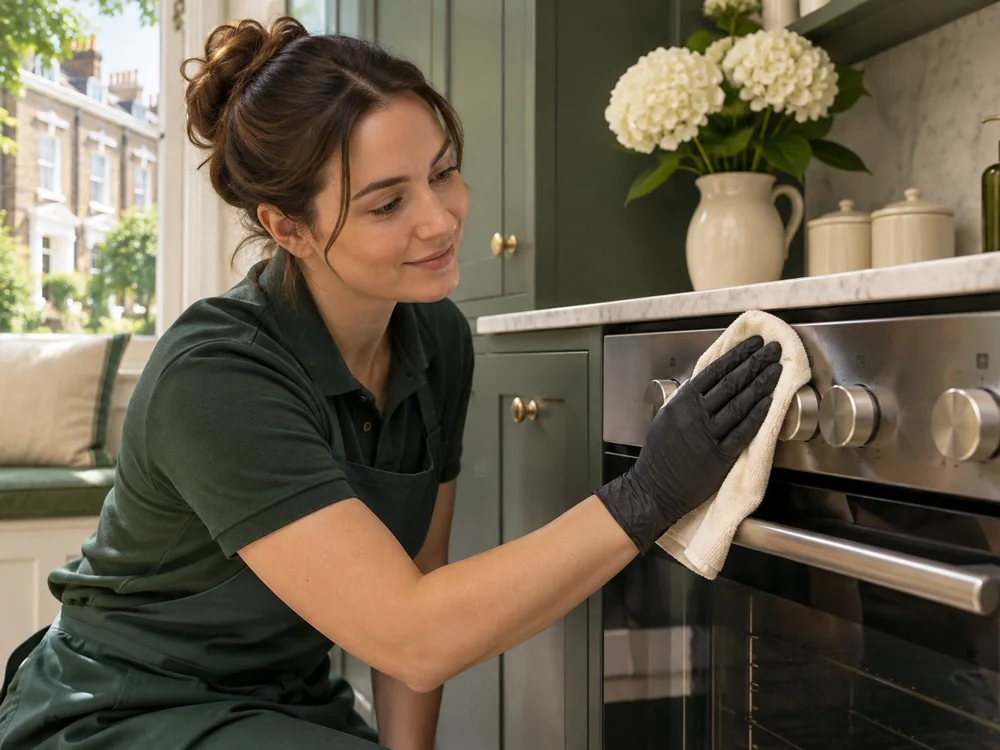
Can sticky oven racks be included?
Yes. We check their fit and finish and can clean suitable removable racks alongside the booked cavity.
Can I include sticky racks in the same request?
Yes. Tell us how many racks there are and point out any coated or sliding pieces.
Trace the residue from the trays to the oven floor
An overflow can leave a thick layer beneath the lowest shelf and a thin trail along the lip of the door. We assess both rather than working only on the patch visible when the oven is shut.
We inspect the finish where the residue stops. If there is worn enamel or a patch that has changed colour permanently, we make that distinction before treating the deposits.
- Name the compartment with the heaviest deposit.
- State where grease extends beyond the base.
- Point out visible changes to the original finish.
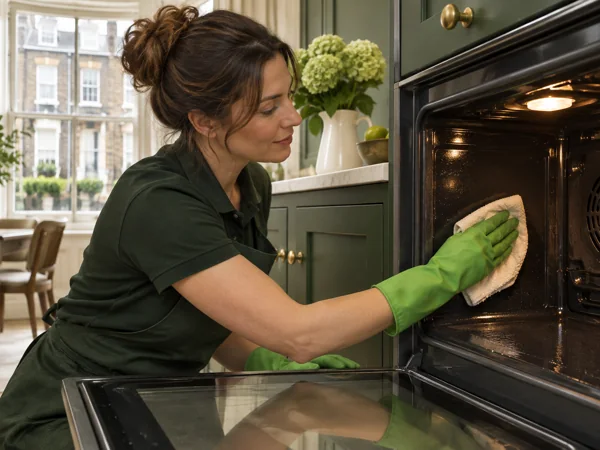
Check where earlier cleaning left a mark
An earlier oven product can leave a dull boundary beside areas that are still greasy. We check which surface can be cleaned and explain whether part of the change sits in the coating.
A cleaning programme can affect a cavity differently from a tray or shelf. We assess compatible loose accessories separately and handle sound exposed finishes according to their condition.
Remove compatible accessories for a closer clean
We assess the bars of the rack, the rims of a compatible tray and the reverse of any loose grill insert. Cleaning those parts out of the oven gives better reach and exposes the cavity behind them.
A shelf that does not slide normally or a fitted support that cannot be removed safely stays in place. We work on the accessible edges and identify any areas concealed by that fitting.
- Count each plain rack, shelf and grill insert.
- Describe sliding assemblies and unusual finishes.
- Leave parts that are hard to move for inspection.
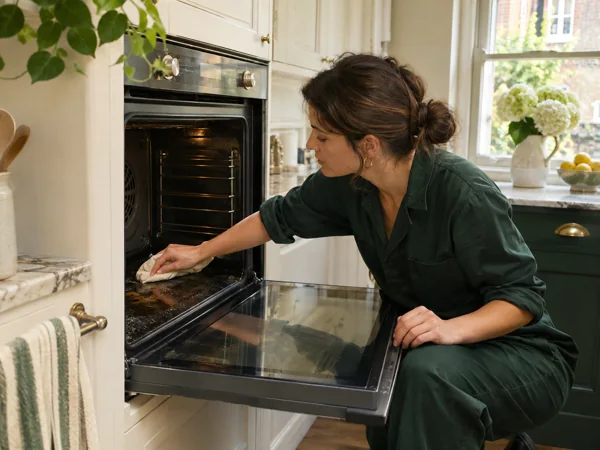
Describe where grease sits
| Location | Observation to send | Assessment on arrival |
|---|---|---|
| Lower floor | Shape and age of a baked spill | Residue and exposed finish |
| Upper cavity | Position relative to the grill | Accessible surfaces and deposits |
| Door | Visible side or possible space between panes | Construction and condition of the door |
Clean reachable glass and review haze separately
We inspect the exposed cooking-side glass and the visible edges before selecting the work. A sealed section with haze may be out of reach even where the accessible glass can be cleaned.
Loose trim or chips in the surround can limit what we can do at the glass edge. We explain this before treating the booked exposed faces.
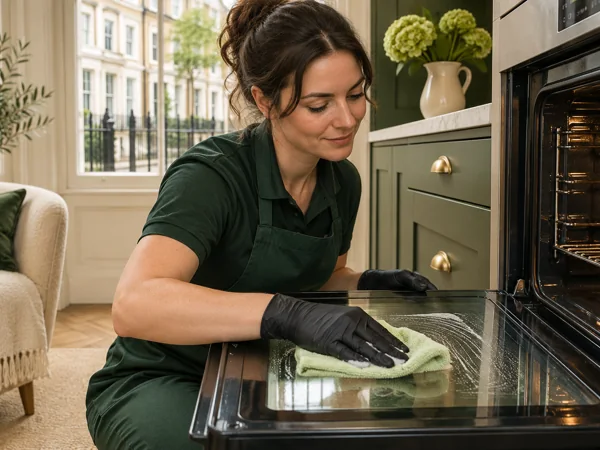
Make space for working on the inside of the cooker
We agree where a removable shelf or tray can sit while we check the exposed oven floor. This keeps the parts close to their cavity and the door opening free throughout the clean.
With the appliance off and cool, we can inspect the lining behind the racks and treat suitable residue without working around personal cookware. The fitted oven stays in its ordinary position.
- Clear the counter closest to the oven.
- Move portable obstructions out of the doorway.
- Agree kitchen access if someone else is at home.
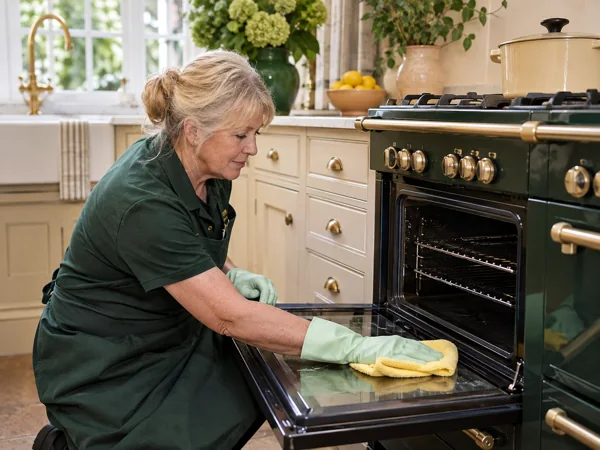
List parts by construction
| Part | Detail to supply | Decision to discuss |
|---|---|---|
| Wire shelves | Number and whether all belong to this oven | Suitability for removal and soaking |
| Sliding runners | Position and movement | Safe handling and finish restrictions |
| Grill insert | Whether it sits in a separate tray | Which pieces belong on the quote |
Explain the route into your Kensington kitchen
The Royal Borough of Kensington and Chelsea lists Leighton House on Holland Park Road and names High Street Kensington among the nearby stations. A street or station can help orient an arrival message, but the complete postal address and authorised door are what we need for a visit. Explain if the kitchen is reached through a separate lower-ground entrance or a shared lobby. Mention any steps down from the pavement that an arriving technician might miss when looking at the main entrance from across the road.
For a conversion with door numbers beside two sets of steps, give the number on the bell and say how the visitor should get from the street to that bell. At a block with shared access, check if reception requires visitors to bring equipment through a specific entrance. Tell us about any confirmed loading arrangement and how far it is from the kitchen. If access requires an appointment with a building contact, agree their availability before asking us to confirm the oven visit.
Agree any grease work around the oven
For the hob, identify the material and tell us where the grease has spread. Include a separate request for a gas hob with pan supports or a flat hob with residue concentrated at one side. A built-in cooker may sit below a splashback made of another material, so ask separately if you want that surface considered. Tell us about any manufacturer guidance for the finishes and send a photo showing the actual width and arrangement. We can discuss which items belong alongside the oven on the quote.
Describe the extractor by its position, height and filter type where known. A metal filter that can be reached from below and a disposable insert inside a cabinet are different items to discuss. Mention the upper cover if grease is visible there and ask what accessible surfaces can be included. A quote listing each appliance makes it easier to check that the part you meant is covered. If the hob is in daily use, agree when it can be left free alongside the cooker.
- Describe the hob finish and specific surfaces.
- Tell us where the extractor opens and how high it sits.
- Confirm optional work as separate items.
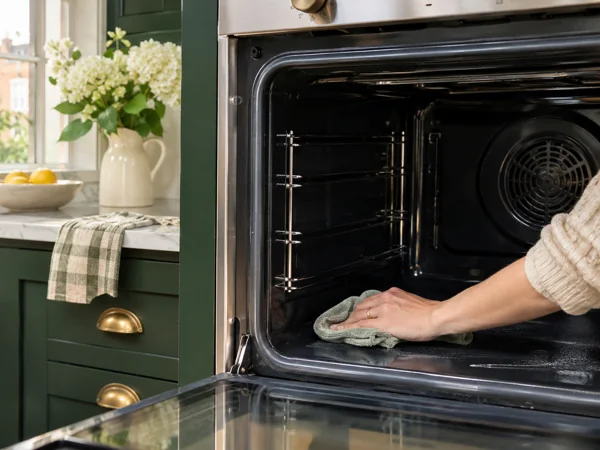
Return the oven and show the area that prompted the visit
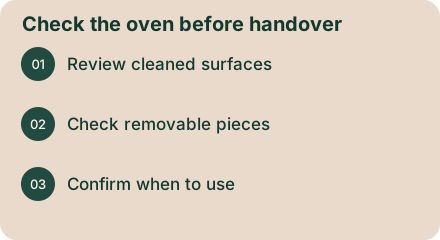
At handover we review the original grease or spill and check the cleaned removable parts against the booked cavity. If a hob or hood was also agreed, it is reviewed separately.
We confirm when the oven can return to use and point out any remaining wear, permanent colour change or residue behind a fixed part.
Plan the approach to your kitchen
| Property feature | Detail for booking | Practical reason |
|---|---|---|
| Lower entrance | Steps and correct bell | Equipment can go to the agreed door |
| Reception desk | Arrival procedure and preferred entrance | Visitor can be admitted on time |
| Cooker opposite furniture | Clearance with the door open | Enough room for inspection and access |
Get an oven cleaning quote in Kensington
Tell us the oven type, number of cavities and whether the hob or extractor also needs cleaning.
Get a QuoteOther Cleaning Services in Kensington
Local references · Royal Borough of Kensington and Chelsea, Leighton House
Kensington oven cleaning questions
Can I enquire after an oven spray left a film?
Yes. Tell us which product you used, where you applied it and when.
Should I photograph the roof of the grill compartment?
A photo from the cool oven’s opening is enough. Describe any area you cannot see clearly.
Can I include an enamel roasting tray that was sold separately?
Ask for it separately and give details of the finish so suitability can be assessed.
What if I can see a haze only when the door is shut?
Tell us how it appears and include a photo if possible. Access depends on where the mark sits and how the door is built.
Who should arrange access for a property with a reception desk?
Have the resident or building contact confirm the entry procedure, arrival times and working route before booking.
Can I book an oven with one cavity still used for storage?
Explain which compartment holds pans and which ones you want cleaned. Empty the agreed working areas before the visit.