 Housekeeper
Care for built-up cooking residue
Oven Cleaning in Wimbledon
Request deep oven cleaning in Wimbledon after cooking spills or grease have built up. Show the areas affected and identify how the oven, grill or range is fitted. Tell us which removable parts need assessment and give the property entrance and timing so we can discuss the visit.
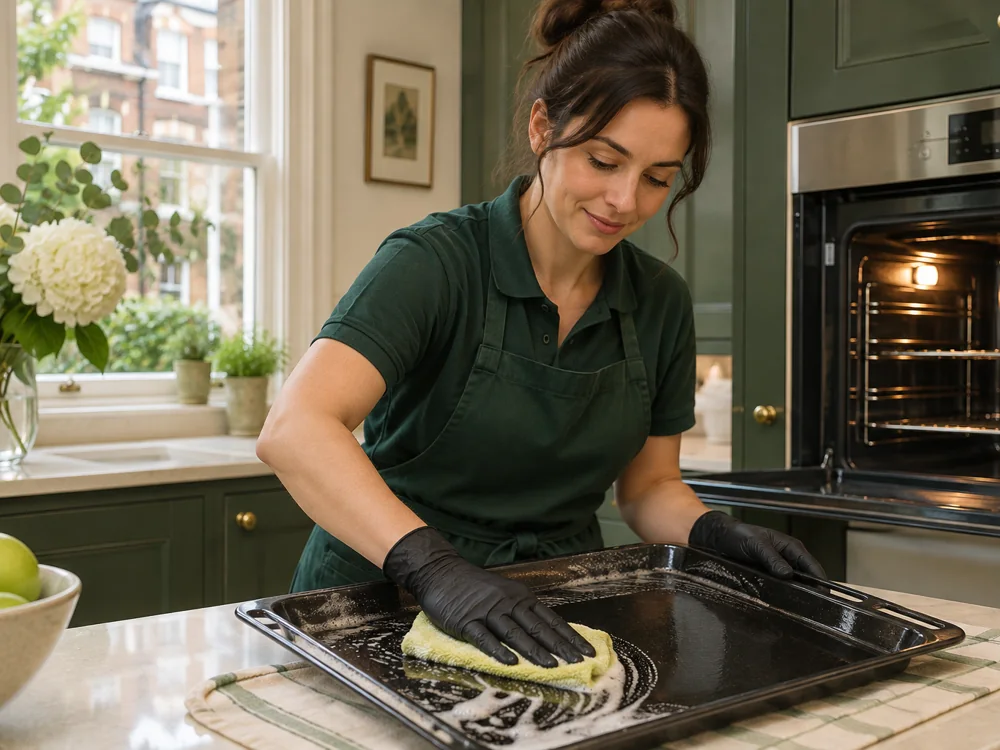
Can I ask for oven cleaning near Wimbledon Park?
Yes. Give the full postcode and actual entrance. Tell us about the approach from the agreed unloading point to the cooker.
Can the technician consider a single baked-on spill?
Yes. Show the spill and describe what was used afterwards, including any oven spray or self-cleaning cycle.
Describe the history of the mess you can see
Start with the cold oven and see where the grease or food residue is concentrated. If you can remember a dish bubbling over, include where it sat and whether anything reached under a shelf. A heavy-looking patch near the front can come from drips when a tray is taken out. Other marks may reflect several months of roasting or grilling. A short description of how you use the oven gives more context than the colour alone. The technician can then inspect those areas to discuss which parts can be addressed.
Make a note if the oven was heated again after the spill. A deposit can harden while the cooker is in continued use, and a darker surface can also be a change in the finish. Say what you have already used on it, including sprays and cycles, and show the spot in relation to the door and walls. Send one view from far enough back to identify the oven. A close-up without a shelf edge or door frame can make the location of a patch difficult to understand.
- Note which dishes are cooked at the affected shelf height.
- Show the area around the spill in one photograph.
- Mention recent sprays and self-cleaning programmes.
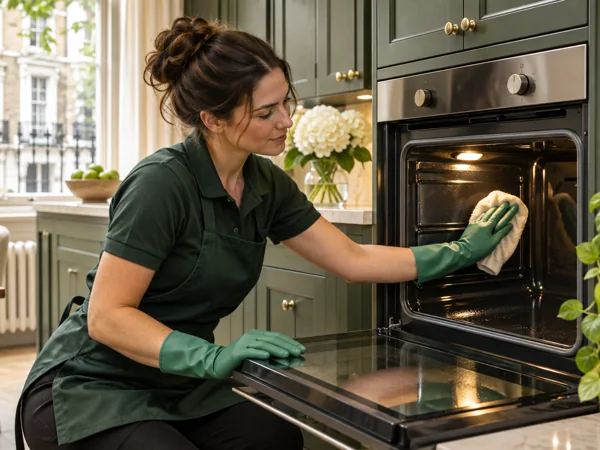
Identify the front of the cooker and the inside that matters
A kitchen can have a height-level oven and a separate grill below the worktop. A freestanding range may hold a pair of oven cavities and one grill alongside them. List the parts you want considered using their position and purpose. Include photographs of the entire front and the controls, so the difference between a warming drawer and a small oven is clear. Check your paperwork or a visible label near the opening for the make and model, leaving the appliance in its fitted position.
If the main oven works well but a smaller compartment is out of use, make that clear when enquiring. Tell us about a shelf support, grill handle or seal that has already been changed. Spares can have a different coating from the rest of the equipment. Describe known faults separately so they can be considered before anybody handles the appliance. For advice about operation, a qualified appliance specialist can address heating and door problems. Keep the list of cleaning priorities focused on the working surfaces you want inspected.
Explain the Wimbledon route the technician should take
Merton Council identifies separate entrances to Wimbledon Park on Home Park Road, Revelstoke Road and Wimbledon Park Road. If you use the park as a landmark when sharing directions, give the exact postcode and road for the property itself. The nearest pedestrian route may differ from the approved route for equipment. Say whether the kitchen can be reached from the front hall, through a side gate or from a lower-ground door. Give the bell label and the floor even when the main door is easy to see from the street.
If the approach from the road involves several steps or a tight turn at the side of the house, describe it in the enquiry. Confirm where unloading can be arranged on the day. For a flat, check who opens any shared gate and whether the lift and the stair beyond it lead to the same entrance. If one path to a rear garden crosses another household’s access, clear that route beforehand. Provide the name of the person meeting the technician if they will be outside or if the entrance has no private bell.
- Use the actual front door or agreed alternative.
- Check the approach from the place used for unloading.
- Specify the steps or lift arrangements before booking.
Explain the history of a cooked-on mark
| Observation | Useful information | What the technician can assess |
|---|---|---|
| Single hardened patch | Dish used and shelf position | Deposit and enamel around it |
| Several grease spots | How often the grill is used | Which surfaces are affected |
| Dark liner mark | Previous cleaning programme | Whether finish or residue is involved |
Group shelves and grill pans by condition
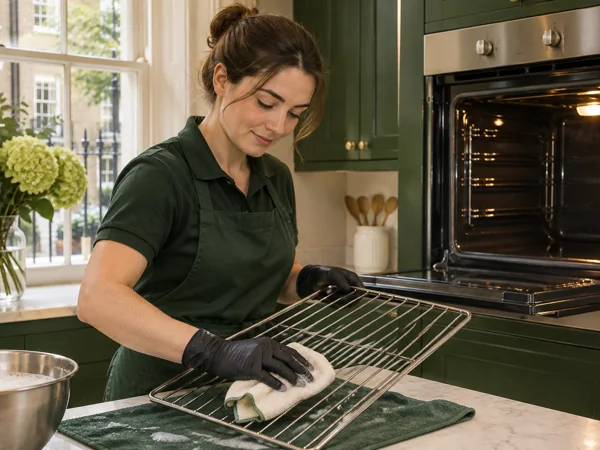
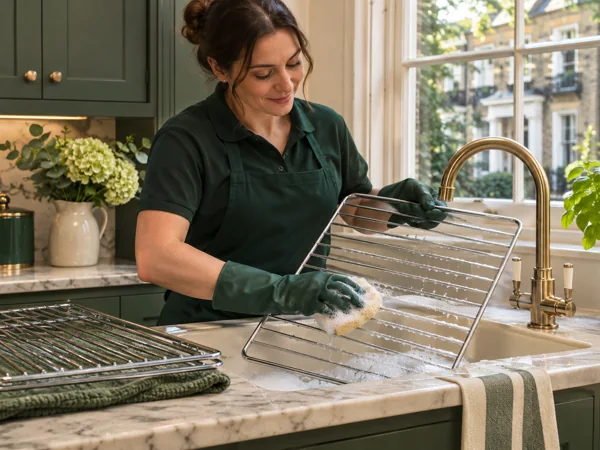
In a range used by several people, it is common for a loose tray to sit in the cavity where it was last used. Before the appointment, separate the pans that are ordinary kitchenware from accessories you want considered. Clearly identify replacement shelves, grill inserts and removable handles. Suitable removable parts may be cleaned separately and soaked in a dip tank if appropriate. The coating, construction and present condition of a part determine how it can be assessed. A piece that slides freely may fit differently from a fixed rail.
Leave the oven cool and remove loose food, baking dishes and foil. If there is a shelf that normally catches in its track, say which side catches and leave it in place if you are unsure how it works. Put requested trays and racks within reach for assessment. Mention peeling finishes or unusual materials, and keep each set of oven components separate when two cavities share the same width. A short note with the accessories often helps when a person other than the regular cook is present.
- Set out parts identified on the request.
- Explain any sticking runners or damaged coating.
- Keep accessories grouped by compartment.
Check whether the marks are on glass, enamel or liners
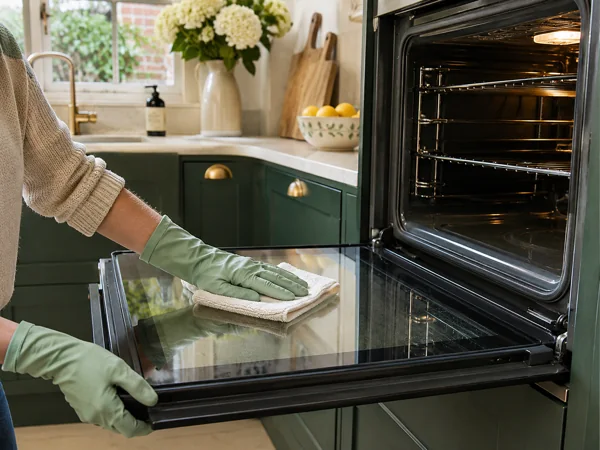
Point out whether the mark is visible when the door is closed, open, or both. An outer film can show up from across the room while a streak within the door may only appear at a shallow angle. Tell us about modifications to the glass and mention a loose handle, seal or surround. Once the technician has identified the model and looked at its condition, ask which panes can be reached. An appliance with an intact door of a different construction can allow a different method of access.
If the internal side walls have catalytic or other specialist liners, share any care directions from the appliance maker. The enamel covered base can have different cleaning requirements from a neighbouring liner. Let us know if you ran a self-clean cycle or used a product that left a visible film. A patch might involve residue, discolouration or damage, and expectations can be discussed after inspection. Explain any known problems with the hinges or controls before a rack or tray is moved through the door opening.
Identify each removable piece
| Piece | Description | Reason to ask |
|---|---|---|
| Plain wire shelf | Position and fit | Appropriate treatment for material |
| Coated insert | Any wear and original oven model | Condition and treatment options |
| Slide-out rail | Stiffness or visible catch | Whether removal is suitable |
Keep the hob and extractor visible in the quote if needed
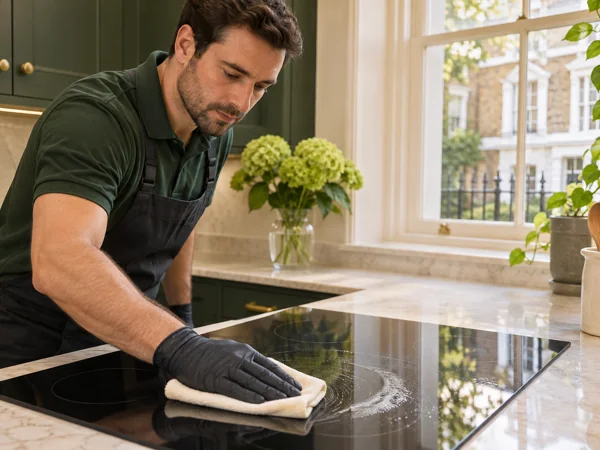
Put the hob on its own line if it also needs assessment. State whether it uses gas, induction or another surface and mention the relevant equipment. A gas hob may have several individual pan supports and caps, and a griddle may have a different finish. A flat surface can show deposits around a single zone or controls. Share a photo with the model where possible and point out existing damage or marks. If it uses the same panel as the oven, show how the controls are shared.
For an extractor, give the finish of the cover, approximate height and type of filter if known. If the hood sits partly inside a cabinet, show the whole unit and the approach below it. A removable metal filter differs from a disposable insert, so ask about the correct part. We can discuss the housing and the filter separately. If you need one appliance to remain accessible during the appointment, identify it and discuss whether the proposed work allows suitable room at the cooker.
- State the hob finish and the relevant removable pieces.
- Identify the extractor filter type and access height.
- Discuss additional items before confirming the visit.
Prepare a kitchen that gives the oven door room to open
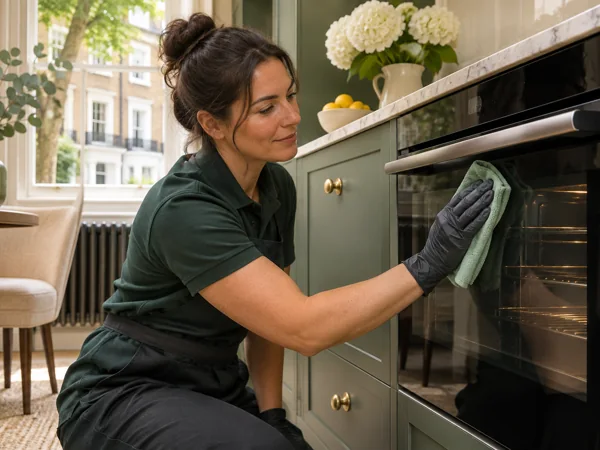
Move food, utensils and loose kitchenware away from the oven and nearby worktop before the technician arrives. The oven should be cool and out of use. Look at what gets in the way when the door is fully open, including a stand or chair. Keep children and pets out of the working space. If your kitchen is a walkway to the garden or the only approach to another room, mention it and tell the people who will be home about the arrangement. Confirm any water and power needs if something is out of use.
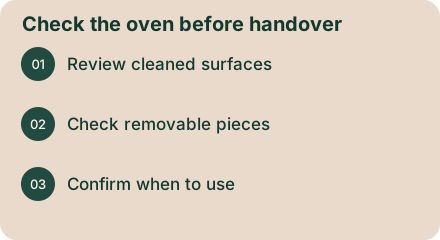
Tell us when the cooker needs to be available again. A meal with guests or something to bake later in the day can affect when you choose the appointment. If there are two ovens and one is expected to remain available, discuss that before starting. At handover, ask what was cleaned, when the oven can be used and which pieces were taken out. If somebody else cooks next, pass on any information about a specialist liner or component the technician considered.
- Leave room beside the open oven.
- Give the next time the kitchen is needed.
- Arrange for somebody to receive use advice at handover.
Send the request with photographs and priorities together
Use the postcode enquiry to list the exact oven or range, the cavity you want treated and what has built up where. Add the rest of the picture with the model, parts and known coating information, then explain how the technician will get from the street to the cooker. Put a spare tray on its own line rather than waiting to mention it at the door. If you want to discuss a hob or extractor as well, include those details next to their respective pictures.
Check the quote through the person making decisions for the property, and let us know if you find a second cavity or spot a damaged tray while clearing the area. If wider cleaning is taking place for a tenancy handover, arrange the oven visit with time to leave it cool and check who can take the keys. Give the occupation or meal times that matter. For a shared home, keep the agreed list where the person opening the door can find it along with the instructions for the handover.
Plan the approach to the kitchen
| Point | Detail needed | Confirm with |
|---|---|---|
| Property entrance | Full address and access instructions | Resident |
| Route from loading | Steps, gate and turning space | Person meeting technician |
| Kitchen schedule | When cooker returns to use | Person preparing the next meal |
Get an oven cleaning quote in Wimbledon
Request a quote with the oven type, number of cavities and any extra appliances.
Get a QuoteOther Cleaning Services in Wimbledon
Local references · Merton Council – Wimbledon Park entrances
Wimbledon oven cleaning questions
Can I ask for the main oven while the grill remains out of use?
Yes. Tell us about both compartments and mention why the grill is already out of use.
How can I show a spill without trying to lift it?
Take photos of the location with the appliance cold and explain where the dish sat.
Is dark enamel always burnt food?
It may be residue or a change in the finish. Ask the technician to inspect it and discuss reasonable treatment.
Should I put replacement trays back into the cooker?
Set out trays to be assessed and note which appliance they fit and any coating changes.
Can I book after a family meal?
Give a time that lets the oven cool before arrival and tell us when it is needed again.
Do you need the park entrance for directions?
Give the exact property entrance and postcode. The park can be a separate reference point.