 Housekeeper
Local housekeeping enquiries
Regular Housekeeping in Wimbledon
Choose a recurring visit that follows your usual Wimbledon household routine. We can discuss the practical order of the floors, bathrooms and kitchen, and how much time to set aside. Include your own postcode and the door you want the housekeeper to use.

What if I live near Wimbledon Village High Street?
Give the exact postcode and the residential entrance. Say which door to use if the downstairs frontage is a business.
Can some rooms stay on a less frequent list?
Yes. Explain which rooms you use daily and name the occasional ones you want included on selected visits.
Meet Housekeepers Covering Wimbledon
Tell us your postcode and preferred frequency so the office can check who covers your address.
Get a QuoteExplain your entrance if the postcode leads to a busy frontage
Merton Council identifies Wimbledon Village as a conservation area. Its shopfront guidance describes a section of the High Street near Lancaster Road with commercial space downstairs and homes above. If an address like that has a separate domestic approach, give the street and entrance for the upper floor. For a home farther from the Village, do the same with its own postcode and nearest turn. Do not rely on the phrase near Wimbledon station or on any other point representing the wider district. If your flat has a door number that differs from the unit shown on a map, add both.
Name the intercom, floor, steps and any change of direction after the building entrance. A household with a rear or garden approach can say whether it is authorised for visitors or only used by residents. Let us know if the housekeeper will use equipment kept at home and where it sits. If the front stair is narrow, tell us whether an alternative can be discussed. Agree privately who can give regular access if you are out. Leave an ordinary day-of-visit note with the relevant door and access contact so someone can resolve a delay.

Give an active family home a small set of permanent priorities
Take a normal weekday as a starting point. Which room needs to be ready when people come home? Where does food get prepared, and which bathroom gets most of the use? The housekeeper can work from a few fixed jobs while a longer list rotates. For a family, the floors from an entrance to the kitchen and the main bathroom might matter more than surfaces in a spare room. A different home may put a single living and dining area at the centre of the visit. Describe which jobs you can do yourselves between appointments, then discuss what still needs time with us.
At the first appointment, agree what can wait if the work takes longer. Approach it as a test of the practical order. You might find that an extra bathroom needs a bigger share or that the main stairs can be finished more easily from above. Let us know after the visit if a room was done too early or was inaccessible. Adjusting the list may make the normal time work. If more time is needed, discuss that before adding tasks to the regular request.

Decide how far the kitchen routine extends
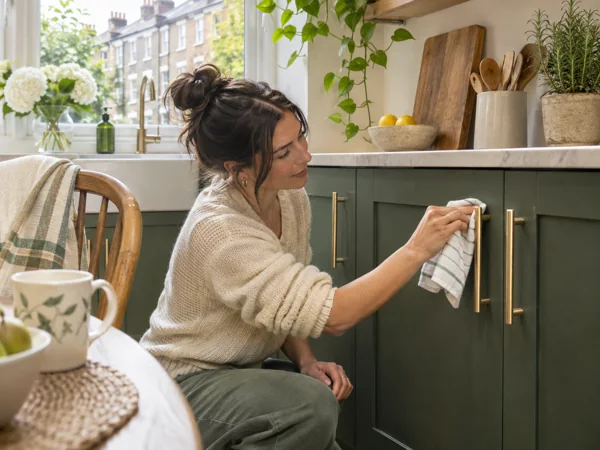
Agree a kitchen list that might include reachable food preparation surfaces, outside of appliances, accessible hob, splashback, sink and suitable floor. If the room opens onto dining or a family area, explain whether the list ends at the worktops or continues around a table and towards the garden door. Tell us when you are likely to be preparing meals or working at the table. Pick a room that can be done first if the kitchen needs to stay open for a fixed period. Give any instructions for a specialist stone or wood surface by pointing out the matching product.
If a standalone appliance has to be left in place, say which side and edges should be worked around. Make accessible what you can clear beforehand. Decide if an inside cupboard or oven chamber is part of a separate request. Name its size or fittings and say whether the shelves will already be empty. Discuss a way to handle it without losing the usual wipe of the kitchen and its floors. A good request identifies an ordinary room routine and when you need extra attention to one particular thing.
Coordinate the bathrooms instead of treating them as a count
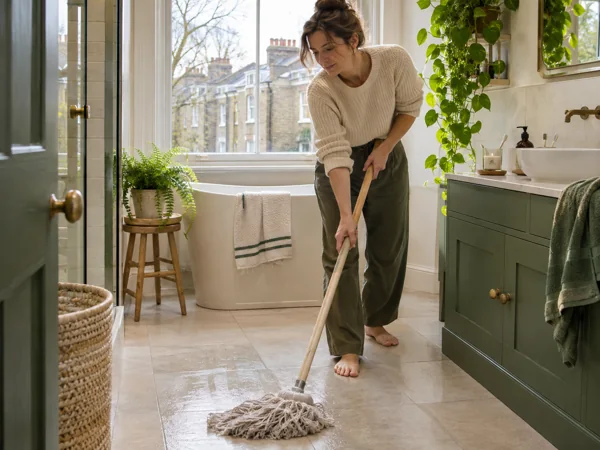
Give the room names and how people use them. The main bathroom might include the basin, taps, mirror, WC and accessible bath or shower and floor, while an additional shower room could alternate. A cloakroom can stay fixed despite its size if guests or children use it most. Let us know when someone needs a room for getting ready, and keep a free room at the start of the list. Tell us if a shower screen needs its own cloth or if fittings take a different product from the surrounding tile.
Make the work easier to identify by taking personal things off a shelf or naming the items that should remain. Ask whether towels or mats can be changed if a replacement is available. Agree where used items go. If you want heavier deposits or staining investigated, describe the affected area before deciding how it fits around the usual bathroom clean. A room with a family schedule and certain fixtures can still be handled in a useful order if each part is named. Some jobs can be deferred when an everyday space needs to be left ready by a certain time.
Residential entry around Wimbledon
| Address feature | Information to give | Confirm for repeated visits |
|---|---|---|
| Home above a shop | Location of separate door and bell | Who can admit a visitor |
| Garden or side path | Gate and turn towards the house | Which approach is authorised |
| Stair to private flat | Level and landing direction | Where cleaning equipment is kept |
Make linen and bedroom boundaries easy to follow
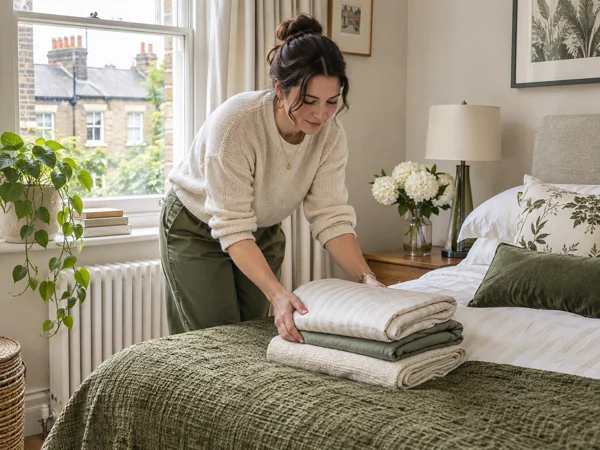
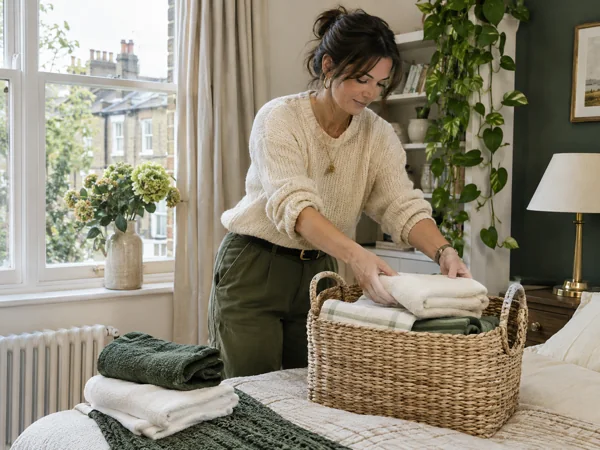
If you need accessible bedroom dusting, floor care or a linen change, make each one explicit. A full set for the intended bed can be placed in that room. Identify where used bedding should be left and whether a blanket or mattress cover stays as it is. Say if someone works from a bedroom or needs it quiet during the day. Bedrooms can use different regular lists if one is only occupied by guests. For a room that doubles as an office, write down the surfaces you want reached and the items that should remain where they are.
For sitting areas, tell us where floor traffic and debris collect and whether a loose rug can be moved. Identify accessible shelves rather than asking the housekeeper to choose between display objects. You can leave cables, artwork or family paperwork untouched while asking for ordinary floor care in the rest of the room. Put a sofa mark or a rug requiring treatment in a separate enquiry. Explain the affected material and exact side or corner, then discuss the work before assuming it fits into a regular appointment for the whole house.
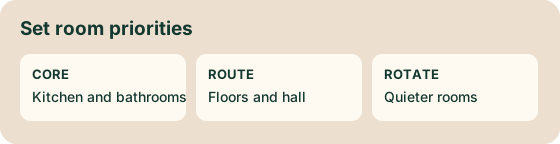
Connect the hall and stairs to the floors in use
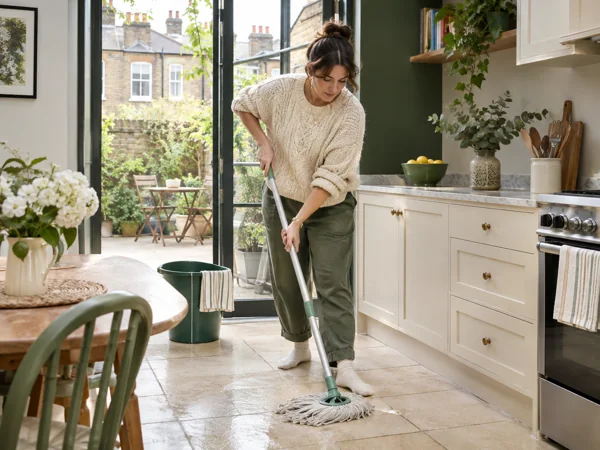
If people return home from outdoor activities and walk straight through to the kitchen, give the route so the full stretch is accounted for. Say if an entrance mat needs lifting or whether you want it left while the surface is vacuumed around it. Choose which stairs and landings are included, especially in a large home with more than one route upstairs. Mention which floors are carpeted, tiled or timber and what household products you want used where. If a strip is newly repaired, identify it before the cleaner gets there.
People may need to pass through while the floor is being worked on. Allow a quiet time for the hall if possible and leave a spot for shoes or bags while the floor dries. If you have an animal, agree where it should be and which outside door remains closed. Give a suitable place to leave bowls, bedding or toys if they can be moved. Put the tools near the starting room when they are carried between levels and keep the correct attachment close by. A few specific equipment notes can make a floor route easier to repeat.
Routine priorities for different Wimbledon households
| Household pattern | Usual priorities | Possible rotation |
|---|---|---|
| Family returning at the end of the day | Kitchen and bathroom before arrival | Quiet bedroom on alternate appointments |
| One person working at home | Rooms outside the call first | Study later if available |
| Regular visitors | Main living floor and cloakroom | Guest bedroom before a stay |
Choose a recurring frequency and allow room for real schedule changes
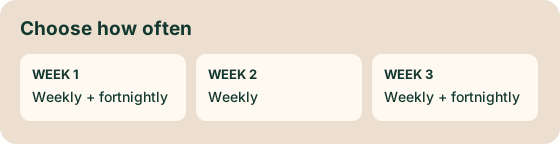
Weekly visits can keep heavily used rooms visible on the list. That may suit a family bathroom, entrance floor and kitchen that all need attention within several days. A fortnightly visit may be better if you maintain some daily upkeep yourself or live in a smaller space. Explain what goes undone between visits rather than selecting a frequency only because it sounds convenient. Choose which secondary room or surfaces can alternate, especially around school weeks, guests or changes to where people work. Ask what appointment length can fit the tasks you want done each time.
When requesting a time, give the office a preferred day and a fallback. Name the part of the day when the house can be opened, or explain which rooms are unavailable at particular times. If you plan to be away, let us know which dates change and who can arrange entry during that time. Ask about a familiar housekeeper when discussing what is available. When you want to resume the regular routine after a change, check the time, access method and list still match what everyone expects.
Keep the quote grounded in supplies and the exact work requested
Give the location of supplies and label any product with a specific finish in mind. If equipment is different upstairs and downstairs, list what is used where and tell us if the correct tool is absent. Keep the vacuum charger or bag within easy reach. Tell us if you want a particular cupboard left closed and where you would like everything returned. Where someone in the household needs a room left clear during the visit, give them a named area rather than adding the whole floor to the job list.
An extra job, such as appliance interior cleaning or a treatment on soft furnishings, needs details on the individual item. Note the oven cavities and fitting, or the fabric and affected panel. If a rug has a special fringe or a worn area, state what needs assessment and give measurements if you know them. Discuss how much change this might make to a recurring appointment and whether to arrange it separately. Confirm your postcode, access contact, preferred frequency and room order before proceeding so you know what was agreed.

Floor and mat details to agree
| Position | Work to discuss | Preparation |
|---|---|---|
| Entrance mat | Clean floor beneath if safe to move | Choose a place for the mat |
| Stair runner | Vacuum accessible surfaces and edges | Identify correct attachment |
| Wood and tile threshold | Clean each floor appropriately | Give separately labelled products |
Quotes for Wimbledon homes
From £23 per hour. Confirm the rate and visit length for your address when you request a quote.
Get a QuoteRelated cleaning services
- Spring cleaning · Ask about a one-off visit for rooms that need additional time.
- Oven cleaning · List the oven cavities and removable parts when requesting appliance cleaning.
- Carpet and upholstery cleaning · Tell us the material and which areas or pieces you want treated.
- End of tenancy cleaning in Wimbledon
Local references · Merton Council · Conservation areas · Merton Council · Shopfront and town centre guidance
Wimbledon housekeeping questions
Should I give Wimbledon Village as an address?
Use your home's own postcode and entrance. A village name or landmark can be added to orient the visitor.
Can a play area or desk be excluded while I still get the floor done?
Yes. Describe the floor that should be reached and any objects or furniture that should stay where they are.
Can we give the kitchen back to the household before other rooms are done?
Tell us when you need it. We can discuss putting the agreed kitchen jobs before the rest of the list.
What is the best way to add linen changes for a guest room?
Tell us the room and date. Leave a complete set on the bed and agree where used linen goes. Mention any recurring work you still want done.
Do I need to mention the finish of a floor between the hall and kitchen?
Yes. Identify the change of surface and the products or tools you want used. Point out any damage or section to avoid.
Can I keep more than one set of supplies in the house?
Yes. Show the housekeeper what each set is for and where to put the tools afterwards.