 Housekeeper
Plan around the family kitchen
Oven Cleaning in Swiss Cottage
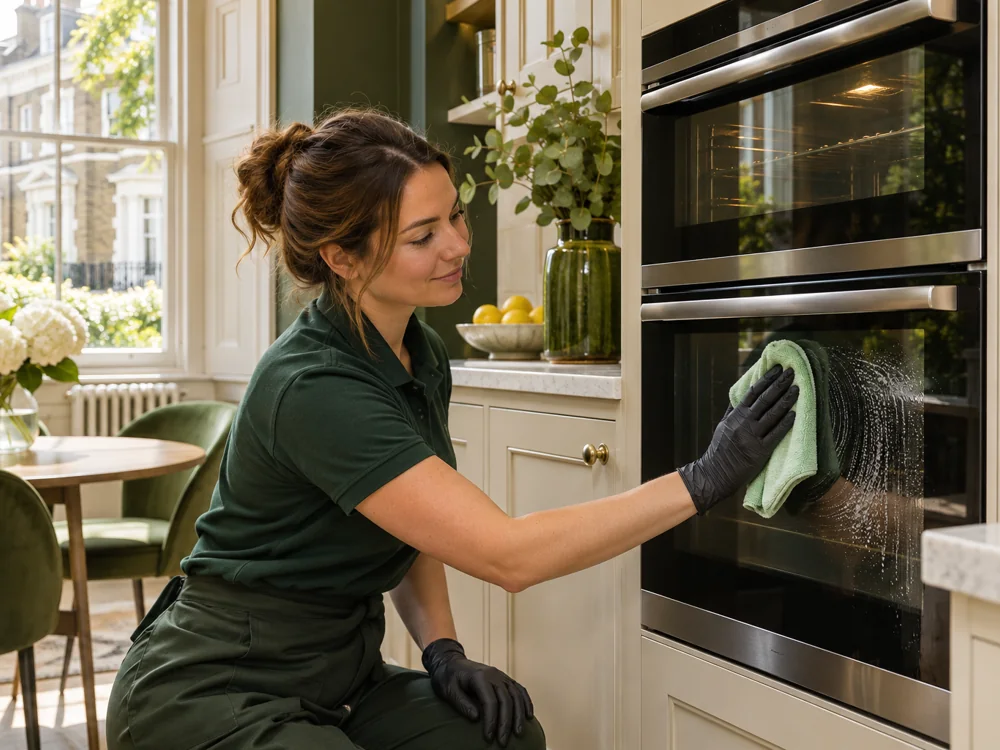
Share the cooker parts you use at home and the time when the oven can be left cool. In a Swiss Cottage flat or house, a built-in oven might be close to a dining area or share an aisle with other appliances. We can discuss which pieces to include, the working room and how to reach your kitchen.
What details help near Swiss Cottage station?
Send the full NW3 postcode and the exact residential entrance rather than the nearest station exit.
Can two people share the kitchen during the visit?
Explain how you use the room and when the area around the oven can stay clear.
Decide which kitchen activities can pause for the visit
An oven that serves several people may need to be free between jobs as well as between meals. Tell us when the last cooking will be finished and which appliance is needed next. If you have a separate grill used for weekday lunches, include its timing if you want it assessed. Keep the oven cool and empty before the visit. Make sure the person cooking that morning knows the plan. You can describe other kitchen uses that happen at the same time, such as meal preparation at the nearest worktop or a child passing through.
If the room is open to a sitting area, agree where children and pets can stay while the oven door is open and parts are inspected. A room used as an office may need a short adjustment around the time of the visit. Tell us who will be there to show the requested appliance and where the loose items are stored. If two people manage the access and the cooking differently, pass them the same details and explain when the kitchen will be needed again.
- Give the earliest time the oven will be cool.
- Identify another activity in the oven area during the visit.
- Agree a contact who can answer appliance questions.
Plan a clear cooking area
| Household task | What to decide | Who to tell |
|---|---|---|
| Final cooking | When the oven can cool | Person cooking first |
| During visit | How to keep aisle and counter clear | Residents at home |
| Next meal | When oven can go back into use | Person cooking afterwards |
Use a complete photograph to name the appliance
Show the door and controls of the oven you make meals in. If there is a rectangular panel above it with another function, include that in the picture and explain what it does. The model may appear on an accessible label or in the instructions. A separate grill and an upper oven can be easy to confuse at first, especially where both share one fascia. State which part you want considered and say what kind of trays or shelves go in it. Keep the appliance and cabinets in their fitted positions.
Where an oven is separate from the cooking top, identify both by their location as well as by model if you want to ask about them. A cupboard that holds a microwave or an unused tray may look similar to a second working cavity. Give the number of cooking spaces you actually have. For each requested cavity, describe how often you use it and what residue can be seen. If the handbook identifies a textured lining or special rack support, add that information before you discuss treatment.
Organise the door and stair approach from Finchley Road
Transport for London lists Swiss Cottage Underground station on Finchley Road in NW3. A station reference can place your home in the area, but give the complete postcode and exact entrance to find your kitchen. A building with more than one access point may have different signs facing different roads. If there is a block name, give the complete wording on the entrance you want used. Say who can meet the cleaner and whether they will wait at the first door, the ground floor lift or outside the flat.
If your kitchen is at the back of a house and has a side door, describe what can be seen from the pavement. Include any change in level or a route through a shared passage. For a flat above ground, tell us how to identify the right stair or where the lift stops. Other residents can be told when the cleaner will arrive so there is a clear way through. Share any building entry arrangements once they are agreed and make sure the person who will open the door has the same instructions.
- Give the postcode and exact entrance label.
- Say if the hall, stairs or lift are shared.
- Agree where the person opening up will wait.
Tell us which meal or cooking habit produced the residue
If the family uses a large tray for roasting, a spill can spread to the base beneath the lowest shelf. Regular grilling can leave grease higher up or on the inside of the door. Describe the main area you want assessed while the oven is cool. Name the cavity and its affected wall or edge. Include a view of the whole area if a photograph cannot otherwise show the location. You can explain that the cause is unknown and report what you see when the appliance is open.
Let us know about a spray or cleaning cycle already used on the affected place where possible. Tell us if it changed the colour or brought a worn area into view. A visible scratch, chip or damaged coating may need to be considered separately from grease. If a lining appears to have different materials across an edge, mention both and share the model. The technician can assess accessible areas and discuss the condition and materials before deciding on treatment for the surfaces you requested.
- Identify the mark by cavity and surface.
- Give any available information about prior treatment.
- Describe wear or a change in finish near the grease.
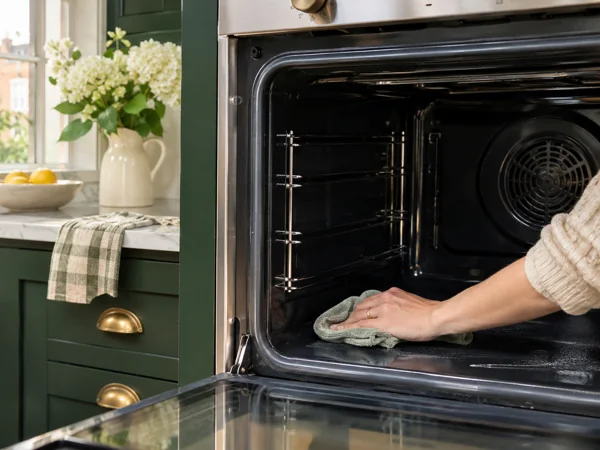
Identify items that are shared between cooks
| Part | Usual use | Useful description |
|---|---|---|
| Main rack | Regular baking or roasting | Cavity and number |
| Grill pan | Separate grill | Tray, insert and finish |
| Spare shelf | Used for several dishes | Where it is stored |
Count the oven accessories everyone uses
List the shelves and original trays you want considered. A spare rack may have been moved to the cupboard to allow an extra-tall roasting dish. A grill insert may be stored apart from the tray because only one person in the household uses it. Check where the pieces are kept and tell us which cavity they belong to. Move personal cookware out of the oven before the appointment. Label the pieces from another appliance if they might be mistaken for the ones you requested.
Suitable removable parts can be considered for dip-tank treatment after their construction and condition are checked. Tell us about a non-standard coating, worn edge or loose handle that you can see. If a shelf sits on a fitted guide you normally leave in place, describe the two items independently. Keep unfamiliar supports or a rack that sticks where they usually sit. A short count shared with the person meeting the cleaner helps with reviewing the agreed parts even if they were not involved in choosing them.

Describe each affected surface on the front
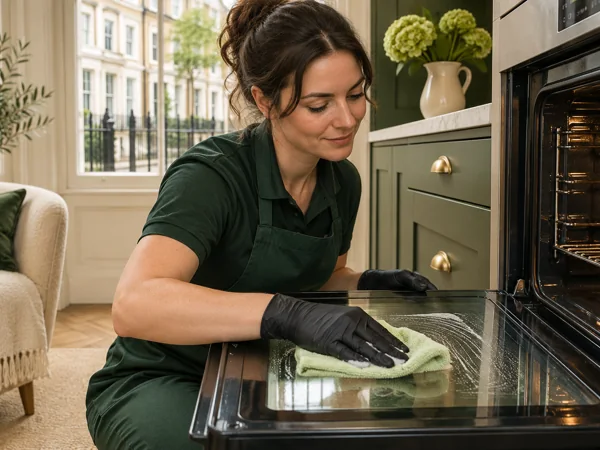
If the oven window looks greasy, identify which door and which face appears affected. A mark that seems to sit behind glass needs its own access discussion. Share the model because the design and condition of the door determine which faces can be reached. Let us know if there is a line close to the seal or a handle and give a photo of the entire front if both doors look alike. Keep all glass and fitted pieces in place when explaining the position.
Report marks around controls separately from the cavity. A worn symbol on a painted fascia may have a different appearance from residue around the nearest knob. Note scratches or changes to the finish that were already there. If a cupboard edge or handle sits near the control, show how the front is fitted. The accessible surfaces can then be discussed with that condition in mind. Ask which of the parts you named are covered before agreeing the work and keep the same names for the final review.
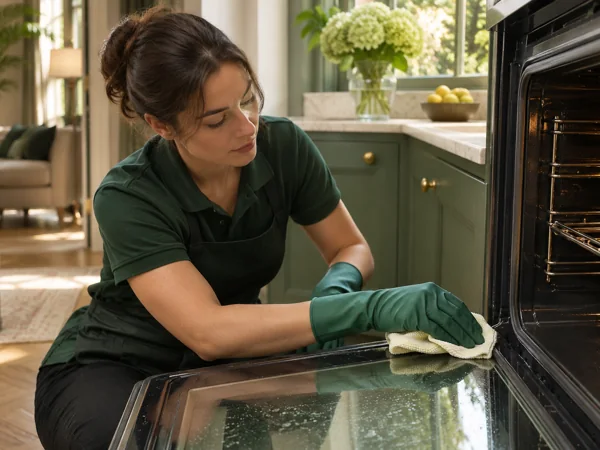
Explain entry to a Swiss Cottage home
| Arrival stage | Details to send | Person to confirm |
|---|---|---|
| Street | Postcode and exact door label | Person booking |
| First entrance | Shared or independent access | Resident or porter |
| Kitchen | Floor, steps and clear route | Person showing the oven |
Decide whether the hob and hood fit the same appointment
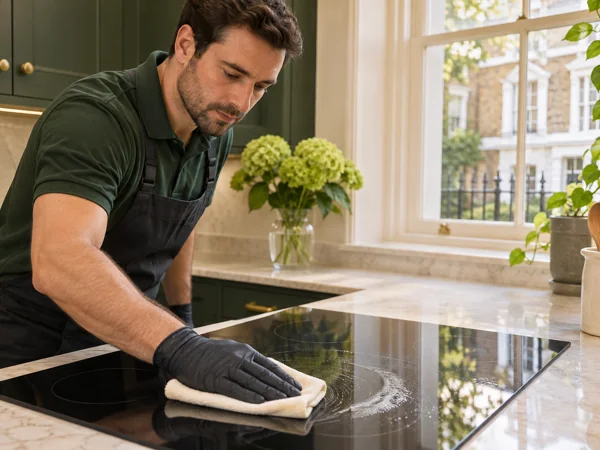
When another member of the household uses the hob for a different meal, tell us whether it should be included in the enquiry. Identify the hob as gas, ceramic or induction and describe the parts you would like discussed. Show where grease sits relative to the cooking zones or pan supports and mention the material around the edge. If the hob is part of a range, it can still be listed separately from the requested oven cavities so the person at home understands what each item covers.
For an extractor, give its position, height and finish and describe any filter details you can see or find in the manual. A hood may sit between cupboards or behind an outer panel. A picture from underneath can help without moving the filter. List the external surfaces and filters as distinct concerns, especially if only one is being considered. Check the quote and make clear which parts you want accepted before the visit. Share any agreed extras with the person who will show the cleaner the cooking area.
- Name each cooking surface separately.
- Describe the extractor position and any known filter details.
- Pass the accepted item list to the person at home.
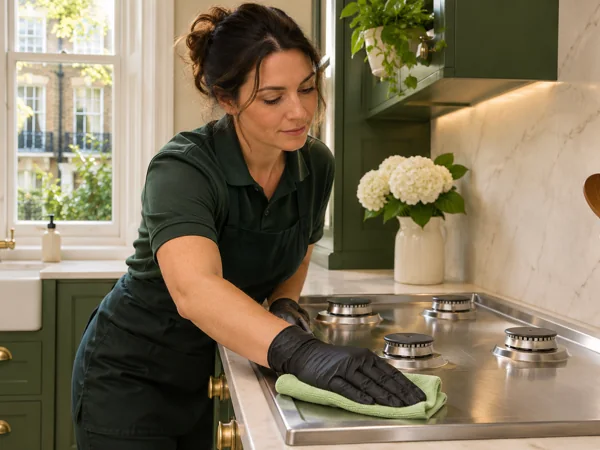
Give the next cook a clear account of the visit
When the work is done, review the oven you identified and the removable items included in the visit. Ask which pieces were taken out and which surfaces were accessible. Use the original position of a mark to find it again if you want clarification. If another person will use the kitchen next, tell them which items were covered and ask when the oven can be used again. In a shared household, leave a short message that gives the cavity and part names rather than just saying the kitchen work is finished.
When planning a move or changing who occupies the flat, arrange who will check before you hand over the keys. Give them the agreed accessories and show where a spare shelf normally goes. Keep the manufacturer’s information available so the next user can identify the oven and its care instructions. If a different cavity or hood was mentioned for a future quote, give it its own entry. That helps you come back to it without confusing it with the work already agreed and reviewed.

Get an oven cleaning quote in Swiss Cottage
Tell us the oven type, number of cavities and whether the hob or extractor also needs cleaning.
Get a QuoteOther Cleaning Services in Swiss Cottage
Local references · Transport for London, Swiss Cottage Underground station
Swiss Cottage oven cleaning questions
Can our kitchen be used for a different meal before you arrive?
Give the time of final use and allow the oven to cool. Let us know when the surrounding cooking area can be clear.
Can my partner point out a spare shelf while I am away?
Yes. Give them the accepted item list and show where the piece is stored and which oven it belongs to.
What if a separate compartment has the same type of control as the main one?
Show the complete appliance and describe which door and settings belong to each compartment.
Is Finchley Road useful as a landmark if my entrance is elsewhere?
It can help identify the area. Give the actual residential entrance and postcode first so the visit reaches the right door.
Should I identify a worn number beside the grill setting?
Yes. Give its position so it can be seen before any accessible area around the controls is considered.
Can I discuss grease on a pan support at the same time as the oven?
Yes. Identify the hob and the support to include. It can be discussed separately from the oven parts.