 Housekeeper
Detail-led care for your oven
Oven Cleaning in St John's Wood
Arrange oven cleaning in St John’s Wood for a fitted oven, grill or range. Identify the particular cavities, shelves and surfaces you want assessed and share any manufacturer guidance. Include the visitor route to the kitchen, especially where there is a lower-ground door or a shared entrance.
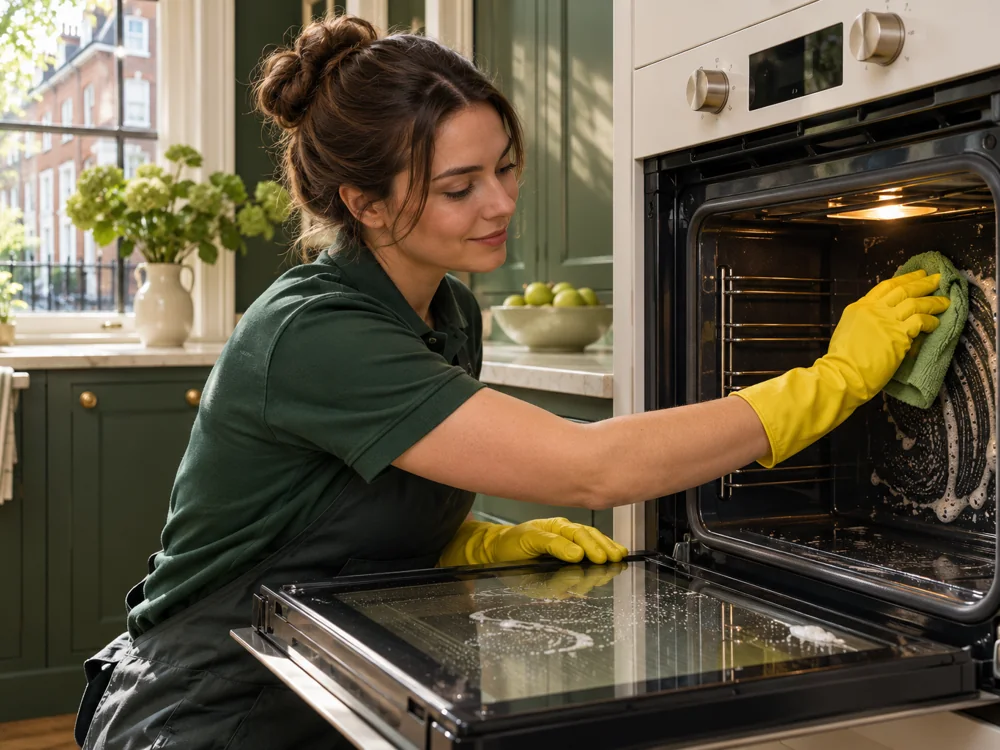
Can I enquire about a fitted oven in St John’s Wood?
Yes. Send the full postcode, actual entrance, model and number of cavities or grills you want assessed.
Can you assess a specialist liner beside an enamel floor?
Yes. Give the maker’s instructions if available and show where marks reach across the two surfaces.
Identify the appliance from a kitchen-wide view
Photograph the row of cabinets with the oven door shut, then show the affected compartment while it is cool. A range can have three matching handles and only two oven cavities. An eye-level bank may include an oven, compact grill and warming drawer with almost identical fronts. Identify the one to be discussed by position and purpose. Give the make and model from the paperwork or a visible label near the door. If the oven is fitted against a cabinet, leave it where it is so the picture shows the real working position.
An appliance that was replaced after the kitchen was installed may have a separate set of trays and shelf runners. Mention any differences you know about. A previous owner’s manual can belong to another oven even if the outside looks the same, so check for a current model reference before sharing instructions. Tell us which oven is used regularly and whether you want a separate grill or smaller cavity assessed as well. Describe the area that gets most use rather than basing the request entirely on the largest cavity.
- Photograph the controls and surrounding doors in one view.
- List the compartments to assess by position.
- Share the model and note any replacement components.
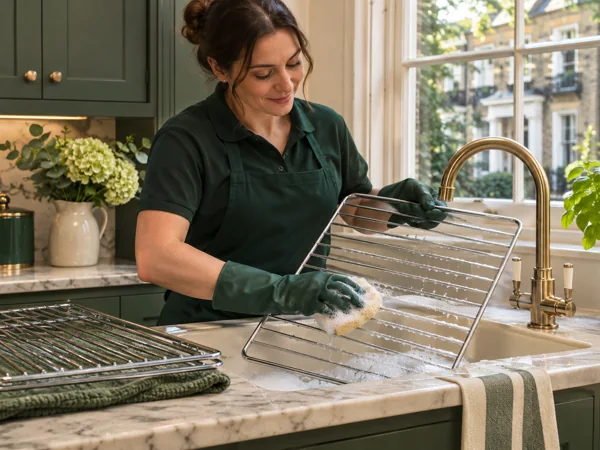
Describe a St John’s Wood entrance as a route rather than a landmark
Transport for London lists St John’s Wood Underground station on Wellington Road. If the station helps explain your location, send the full address and exact entrance as well. A property can have an entrance below the front steps even though the house number is displayed beside the main door. Explain which one serves the kitchen. If you are in a block with entrances to several sets of flats, give the visible name and number on the correct door. The closest approach on foot may be different from a route approved for equipment.
Ask the building contact which door and lift can be used. Explain the approach from your agreed unloading point, including remaining steps and narrow turns. If visitors need to report to a desk before the lift can be called, include that. For a house with a side gate into the kitchen, give the access contact and clarify whether the path is shared. If you plan to meet the technician outside, agree the exact spot and make sure somebody can open any doors on the way to the cooker.
- Use your full postcode and actual door.
- Explain any remaining steps after using a lift.
- Name the access contact and agreed approach.

Identify an appliance in a fitted bank
| Item | Detail to send | What to discuss |
|---|---|---|
| Eye-level oven | Door and control position | Priority cavity |
| Independent grill | Position and pan construction | Agreed accessories |
| Warming compartment | Use and model where known | Whether to include it |
Use the manufacturer’s information to discuss surfaces and existing marks
Find out which finish is affected. Standard enamel can meet a specialist side liner at a narrow edge, and the floor can have a different coating from the surface behind a shelf. If the manufacturer describes catalytic or self-cleaning panels, share the care advice. Tell us about a product applied recently and the parts it touched, or a programme that was run. An overall photograph lets the technician relate a patch to the nearby parts before discussing what can be treated. Colour alone can look different under an oven light.
Explain whether the area of concern came from a spill or has developed with regular use. Do this with the oven cold and avoid disturbing fixed parts to photograph a mark. A dark patch can be residue, discolouration or a changed finish. Note existing chips, lifting coatings, worn trim or loose controls and identify appliance faults before scheduling. For operation or repairs, use a qualified appliance specialist separately. The technician can assess the surfaces and parts that are appropriate to clean in their existing condition.
- Identify specialist liners using the model or paperwork.
- Send one close picture and one view of the surrounding surfaces.
- Report any known faults before the appointment.
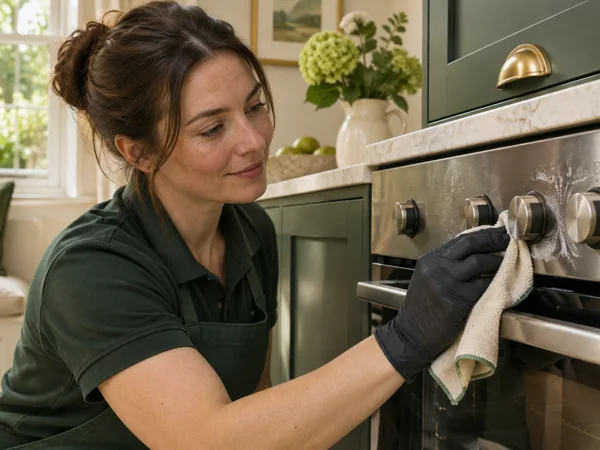
Set out compatible accessories beside the cavity they fit
Start with the trays, shelves and grill pans you know you want considered. A thin enamelled tray, wire rack and coated insert can each need its own assessment. The service can include taking out suitable removable parts for separate cleaning and soaking compatible pieces in a dip tank. The technician can check coating, construction and condition. If shelves in two ovens appear similar, label their usual cavity or put them in separate groups. Note which items are spares and which were bought to replace lost or worn components.
Leave an unfamiliar fitted runner or support in place if you cannot identify how it comes out. Tell the technician if it sticks with a tray at a particular point or the parts do not align. When the grill insert has a detachable handle, keep the original pan, insert and handle together. Remove food, everyday pans and loose foil with the cooker cold. Leave a part of the nearby worktop free for the technician to inspect the accessories you requested. Ask the person providing entry to show them.
- Separate matching shelf sets by cavity.
- Identify replacement trays and coated pieces.
- Flag stiff or awkward fittings for assessment.
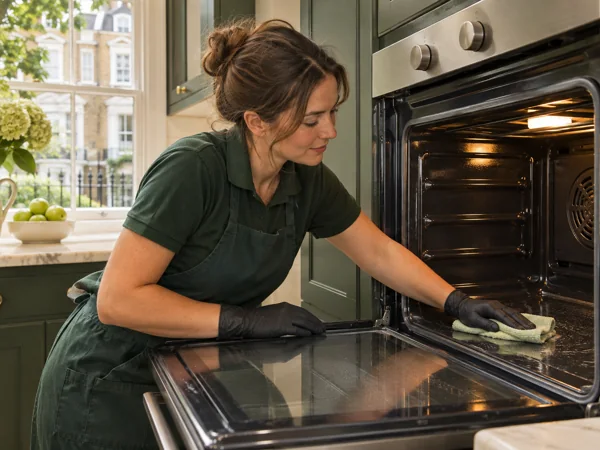
Point out the relevant oven finishes
| Surface | Existing issue | What to assess |
|---|---|---|
| Specialist side liner | A patch extending toward the base | Known guidance and appropriate treatment |
| Door pane | Cloudy film at one angle | Visible side and reachable glass |
| Enamel base | Chip beside an old spill | Condition and cooking residue |
Look at the door, control panel and nearby trim as individual surfaces
When a cloudy area appears on an oven door, check how it looks open and shut. Mention which angle shows it and whether it seems to sit behind a pane. Tell us about replacement glass or a loose strip on the surround. The technician can inspect the design and condition before explaining which areas of glass can be reached. Take a photo with the relevant corner and handle visible. A small patch at the bottom can be easier to identify if you describe which side you notice while entering the room.
If the mark is on the control panel, determine whether you can see grease or faded lettering there. Some settings have worn symbols from frequent use. Identify any painted cabinet edge the door passes close to and describe existing damage. Give an overall photo from the side if it helps show how the cooker opens. Ask about those surfaces separately from the inside glass when you discuss the work. A door that already shifts on its hinge or no longer closes correctly should be described before the technician begins an assessment.
Use separate descriptions for the hob and extractor
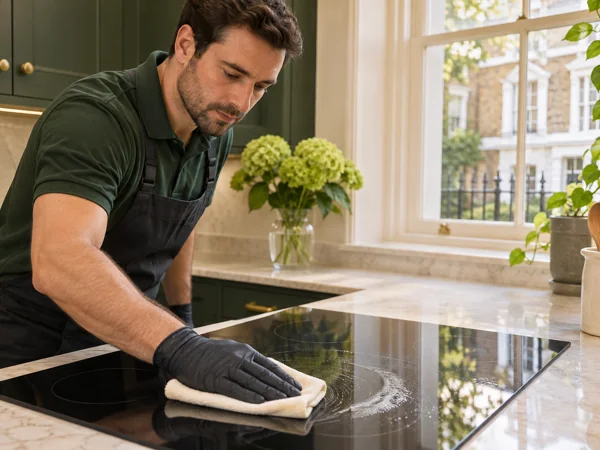
Gas hobs can have different numbers of removable caps and stands, while a glass plate can show residue concentrated around one zone. Give the type and photograph the area you want considered. A range may also have a griddle or hotplate whose finish needs separate assessment. Mention any wear and identify shared controls in the photo. If you only want the oven cavity addressed, the hob can stay off the list. Discuss access if somebody needs to reach a separately fitted cooking surface during the appointment.
Describe the extractor’s mounting position and approximate height. An enclosed cabinet can hide the filter and cover even when the edge is visible from the room. Tell us whether it uses a disposable insert or metal filter when known. Separately describe the external housing and grease on the underside. Give the model or a safe picture, particularly if fixed cabinetry or an island limits approach. Check the agreed entries on the quote and ensure the hood and hob are named individually if you want them assessed.
- Give the hob type and relevant removable pieces.
- Explain how the hood is fitted and reached.
- Check both the visible cover and filter description.
Schedule the appointment around the kitchen layout and meal times
Leave the cooker cool and clear food, pans and utensils from the nearby worktop. Look for a stool or trolley that could restrict access when the door opens and set it aside. A kitchen next to a breakfast room can be a busy passage even when the cooker is out of use. Explain any other routes people need and discuss water or power access in advance if there are restrictions. Keep children and pets away while the technician inspects and handles the agreed oven parts.
Give the time the cooker is next needed. If someone will prepare a meal later, make sure they can receive the information about returning the oven to use. At handover, ask which areas and accessories were treated and which pieces stayed in place. If the oven contains an unusual panel or liner, ask if there is any care guidance from the assessment you should pass on. Arrange for the person who will hear the handover to have enough time to speak with the technician.
Check the approach for a St John’s Wood property
| Point | Useful instruction | Who can confirm |
|---|---|---|
| Outer door | Postcode and correct entrance | Resident |
| Shared access | Approved lift or lower-ground stair | Building contact |
| Kitchen | Clear door swing and next oven use | Person receiving handover |
Match the quote to what is visible in the kitchen
Use the postcode enquiry to provide the full address, access route and priority oven. Attach model information and photos, with a separate line for each other appliance or removable accessory to discuss. Explain the kitchen arrangements and when you will next need the oven. If another person is receiving the quote, show them the same list so the relevant cavity can still be identified. Note any existing wear or known faults separately from spots of cooking residue. Ask for the agreed items before fixing a time.
For a property handover, compare the oven and its fittings with the inventory, and arrange access around any other work that needs the kitchen. Tell us who will be at the home to show the appliance and receive instructions. If a different entrance becomes the approved route, or you realise that a spare tray was omitted, ask to update the enquiry ahead of the visit. Give the person who is present a final copy of the item list and the planned time for return to use.

Get an oven cleaning quote in St John's Wood
Tell us the oven type, number of cavities and whether the hob or extractor also needs cleaning.
Get a QuoteOther Cleaning Services in St John's Wood
Local references · Transport for London – St John’s Wood Underground Station
St John's Wood oven cleaning questions
Can I add a second oven after describing the first?
Yes. Give the information for the additional oven, including its model and accessories, and ask to update the quote.
How do I tell you about a door that has already had work?
Mention any glass replacement, change to hinges or loose trim when you send the model and photos.
Do you need a close-up of each glass pane?
Send pictures showing the visible mark and its position. Leave the panes installed for assessment.
What if a shelf kit was bought separately?
Identify which oven it fits and describe its finish and condition alongside the original parts.
Can you use a kitchen gate instead of the building’s usual entrance?
Give the approved entrance for your property and confirm how it can be opened from the unloading point.
Can somebody else hear the advice on when to cook again?
Yes. Give them the agreed appliance list and ask them to relay the handover before anyone uses the oven.