 Housekeeper
Detail-led care for your oven
Oven Cleaning in Pimlico
Tell us what kind of oven you want to care for and which parts need attention. For an oven cleaning quote in Pimlico, it helps to send the appliance finish, photographs of the affected area and an entrance note with the property’s full postcode.
Can I request a quote for a flat in SW1V?
Yes. Include the exact address and residential door visitors should use.
Can I discuss a mark on a coated interior?
Send the oven model and the relevant care guide, and describe where it is visible.
Decide what the oven finish needs
Identify the practical concern before looking up a care method. It might be a dark mark at the edge of a lining, a cloudy door or a shelf that appears worn around a fixing. The material below the mark is just as important as the deposit itself. A maker’s handbook may name the interior finish and the cleaning procedures that apply to a specific model. Give us the model and the relevant care instructions, especially if the oven has a coated liner or its own cleaning programme.
Take a clear photograph from the opening of the cool appliance and include enough surrounding detail to identify the surface. Share which door and controls correspond to that cavity, especially if a separate grill or compact oven looks similar. If an adjacent surround came from the kitchen supplier, its care instructions may differ from those for the oven. Identify the border and add that work separately if you want it considered. An overview from a short distance can help show how those surfaces meet.
- Provide the exact manufacturer and model if available.
- Identify coated or textured finishes by name.
- Send a view showing the surfaces around the mark.
Use the right approach off Lupus Street or nearby
Westminster City Council lists Pimlico Library on Lupus Street in SW1V. If a nearby landmark helps explain the part of Pimlico you mean, use it alongside your complete postcode, building number and actual residential entrance. A house divided into flats can have two approaches from the street, and the kitchen may sit below the entrance nearest to the bell. Explain where to look and the correct route with equipment rather than just giving an instruction to come to the main door.
The home may be reached through a gate, side passage or shared lobby. Tell us how the visitor will be admitted and who can open any further door. If there are steps before the lift or after leaving it, say how many and which way to turn. Where a building has a reception desk or a permitted loading point, check the procedure before booking and give the expected arrival contact. An occupant who is leaving for work can provide the same directions to the person they have asked to meet the technician.
Make the model and finish clear
| Part | Detail to share | What to discuss |
|---|---|---|
| Textured lining | Care page and cavity | Appropriate treatment for the surface |
| Sliding shelf | Movable or fixed mechanism | Suitability for removal |
| Door glass | Viewpoint and condition | Reachable faces |
Give each compartment a separate role
Look at the front of the appliance and note what you normally do with each door. A warming drawer below the oven can look like a cooking cavity in a photograph, while a separate grill can be mistaken for a second conventional oven. Use the maker’s terms if you have them and match each door to its controls. For a taller unit, identify the smaller cavity by its position and explain if it has a combination function or a separate instruction sheet.
Give the quote only the units you actually want assessed. A second oven may be left outside the agreed work, even if you keep spare racks in it between meals. Count the racks, trays and any grill insert in the cavity of interest. A wide view of the appliance helps us understand which items to list and whether the oven door has room to open. If you need one part of the cooker available at a certain time, explain that when you first enquire and consider how the shared space will work.
- Show all the relevant controls and doors.
- Count the racks by the compartment they fit.
- Say which appliances and parts are included.
Describe the deposit and anything you did to it
A splash near a heating area can look darker than a spill on the floor. Tell us where it sits, what you remember cooking and whether the oven was used on several occasions after it appeared. A thin coating can blend into an area that has changed colour over time. The technician can inspect the visible material and consider which marks are cooking residue, wear or discolouration. Cleaning accessible deposits may leave existing changes to the finish visible, so ask about the mark you care about at the first check.
If a product was used, give the name and the areas where it was applied. Mention when a self-cleaning programme ran, including which cavity it applied to. Share any instructions warning against treatment of a particular panel or coated part. Tell the technician if a small dark mark became larger or lighter afterwards. That history can help them choose a suitable approach. Keep any previous photos alongside the current view if you want to discuss a change that happened before this visit.
Keep a usable access note
| Stage | What to confirm | Send before arrival |
|---|---|---|
| Street | Which door serves your level | Address and bell |
| Inside | Gate, lift and remaining steps | Access contact |
| Kitchen | Space beside the oven | Which counter is clear |
Confirm the parts that can be handled on the day
List original racks and trays and distinguish loose dishes you bought yourself. A shallow tray may rest in fixed supports, while a telescopic shelf runs in a frame that is designed differently. Mention if an accessory feels stuck or a part appears to have shifted. Keep it in position for the technician to assess. Suitable pieces that can safely be removed may be soaked in a dip tank. An accessory with a specialist coating or an attached mechanism may need its own care assessment.
Give the original instructions for each unusual accessory if you have them. Identify any item that was already removed and where it belongs. In an oven with several optional positions or multiple trays, a diagram of the original layout can help show which part you would like included. Clear food and personal cookware from the cool cavity before arrival. Ask for the written quote to include the agreed parts, and leave room beside the oven so the technician can inspect and handle them.
- List special trays independently of wire racks.
- Report uneven motion or an existing loose fitting.
- Identify any accessories stored outside the oven.
Locate the concern on the door before discussing access
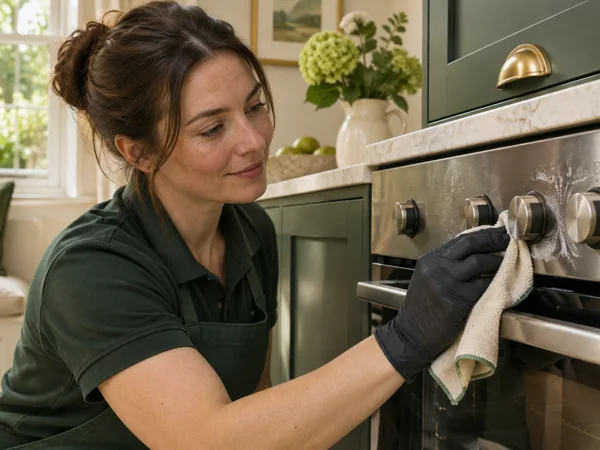
Look at the cool oven from both sides of the door and note which direction of light makes a streak visible. Mark the position on a picture if you can. A questionable line may sit on an accessible face or somewhere in the space between panes. Whether those surfaces can be reached depends on the model and the condition of the glass and fittings. If an edge already shows damage or the trim has moved, describe it when you ask about cleaning and point it out during inspection.
The door can include a patterned border, painted trim or glass with a different surface from another appliance above it. Let us know which door is affected and whether a mark follows the edge of the glass or stays in the centre. A user manual may show how the panes are fitted. Give the relevant page without handling any fitted glass yourself for a better view. Ask which accessible faces can be included before agreeing the quote if visibility through the door is your main reason for booking.
List a hob or extractor by its own finishes and parts
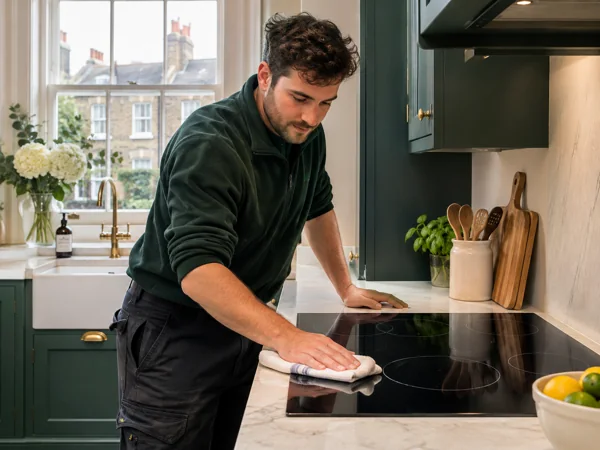
For a cooker top, start with the surface and heating type. A gas hob may have removable supports and exposed controls, while an induction hob may have a flat top and a separate surround. Ask about the specific sections where marks have collected. If residue extends to a splashback or nearby trim, identify its material and include it as an independent item. Ask whether the agreed work needs a clear surface in front of the hob or if it is in a different part of the kitchen from the oven.
An extractor has an exterior cover and may have a filter under or inside the canopy. Provide the height, design and filter type if known. A washable metal filter and a disposable one need different handling. If the manufacturer describes care for the cover or control panel, include those details. Confirm the hob and extractor work separately from the oven, specifying which accessible surfaces you expect to be assessed. Tell us if you will need another way to prepare food while those areas are being used.
- Identify the cooking surface and what it includes.
- Give the approximate extractor height.
- Ask for each optional surface or part in writing.
Agree which items belong on the quote
| Item | Exact description | Check afterwards |
|---|---|---|
| Oven | Compartment and finish | Which accessible areas were cleaned |
| Hob | Type and pan supports | Specific surfaces treated |
| Extractor | Height and cover or filter | Which components were handled |
Prepare the room and agree the handover
Start with the postcode form. Have the cooker model, separate item list and approved entrance details ready for the quote. Once the visit is agreed, allow the oven to cool. Keep a clear working counter next to it, leave room for the door to open and keep children and pets outside the area. Confirm any relevant access to water and power. If another person will admit the technician, tell them where to find the instructions and how to reach the person who can decide what goes ahead.
At the handover, ask what was cleaned and when you can cook again. Confirm where the original shelves and trays normally sit, particularly if the same items were used in another oven. Relay the advice to whoever will use the kitchen. Keep a short note identifying any area that could not be reached safely or needed separate care. If you contact us again after another spill, retain the model and compartment details alongside the technician’s earlier notes, then add the new observation so the two can be distinguished.
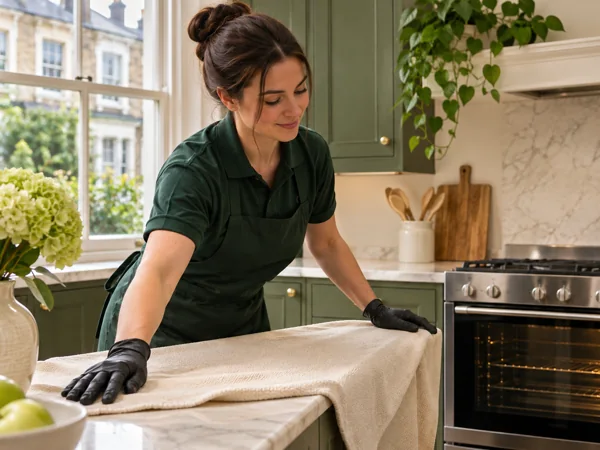
Get an oven cleaning quote in Pimlico
Request a quote with the oven type, number of cavities and any extra appliances.
Get a QuoteOther Cleaning Services in Pimlico
Local references · Westminster City Council, Pimlico Library
Pimlico oven cleaning questions
What if the trim was supplied by the kitchen installer?
Identify it separately from the oven and provide the installer’s care information if you want it considered.
Can I ask only about a compact grill with its own door?
Yes. Mark the relevant door in your photo and give the model or maker’s terms for the appliance.
What should I include about a previous cleaning programme?
Mention the setting, the cavity and when you ran it, plus what you saw afterwards.
Can access start from steps below pavement level?
Discuss the approved entrance, the number of steps and where to meet someone who can open the door.
Should I separate a non-original tray from the other racks?
Yes. Describe which oven it fits and any finish or coating you know about.
What should I tell the next cook after the work?
Pass on the technician’s return-to-use advice and confirm where the trays and shelves belong.