 Housekeeper
Plan around the family kitchen
Oven Cleaning in Maryland
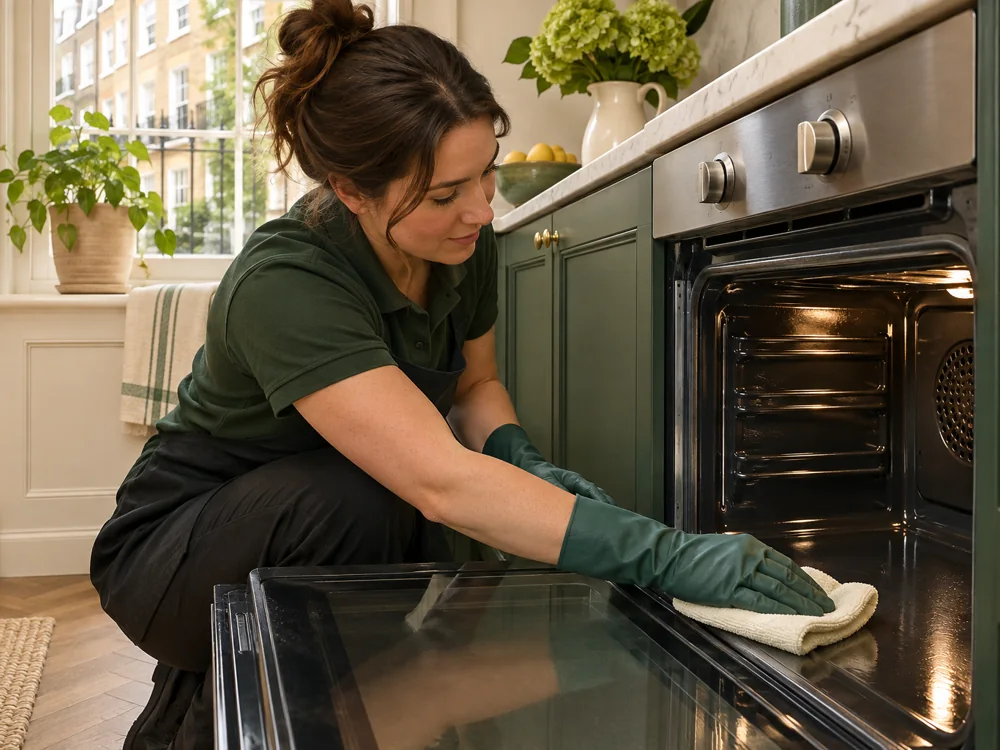
We clean Maryland ovens used by several cooks, focusing on the booked cavity and the parts that fit it. We assess everyday grease, recent spills and reachable glass, then clean suitable racks and trays separately so their working edges can be reached.
Can you focus on the compartment we use most often?
Yes. We agree the oven and matching accessories at the start and confirm whether a grill or second oven is also included.
Can I arrange the clean between meals?
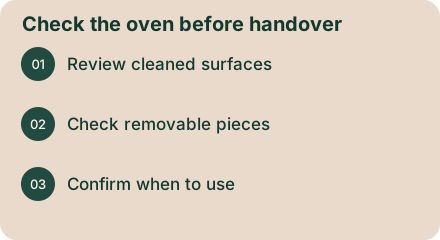
Leave enough time for the cooker to cool and tell us when it is next needed. Confirm use again at handover.
Start with the cooker the household uses most
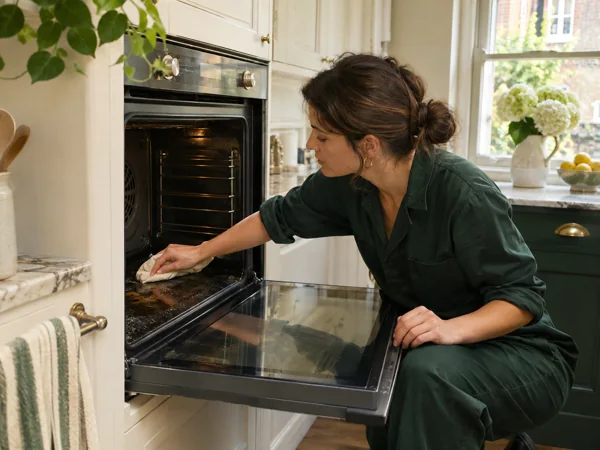
Regular tray cooking can leave residue behind the central shelves even when the oven floor looks clear. We check accessible surfaces at the shelf line and around the opening before deciding what treatment is suitable.
If two ovens share a cabinet, we keep the work on the booked opening and sort the corresponding trays and rails. A neighbouring unit can be included separately if it needs attention.
- List the parts in the order that matters to your household.
- Point to the correct door or cavity in the photo.
- Give model details when available.
Describe what the household cooks in each part
| Use | Common area to show | Useful detail |
|---|---|---|
| Roasting | Shelf, enamel and adjacent liner | Dish position and later cooking |
| Grilling | Pan, insert and nearby glass | Whether it has a separate door |
| Baking | Base below a tray | Single spill or repeated residue |
Set up room to remove trays without blocking the kitchen
The open door and the depth of the largest tray determine where compatible parts can be handled. We establish that space and keep nearby fitted kitchen surfaces outside the oven clean.
With the oven cold and free of cookware, we can check its racks and reach the areas usually hidden underneath. The accessories are kept together for return after treatment.
- Leave the oven cool and clear of loose cookware.
- Make space beside the open door.
- Tell us when the next cook needs the oven.
Plan where the clean can be carried out
National Rail lists Maryland station on Leytonstone Road at Maryland Point. If the station helps describe your neighbourhood, add your full property postcode and the door to use. A flat above a separate premises might be reached from the side while the postal address points to a street frontage. Give the bell label and floor. If a house has a side gate or rear access to the kitchen, confirm which door is usable and describe any steps. Make clear how the person will reach your home rather than relying on the nearest landmark.
At the property we check the available clearance and whether a fixed corner limits access around the cooker. We agree the practical setup with the appliance in its normal position.
- Use your own full postcode and visitor door.
- Describe the route from unloading, including steps.
- Confirm who can provide entry to the whole approach.
Assess grease from everyday use and from a single spill
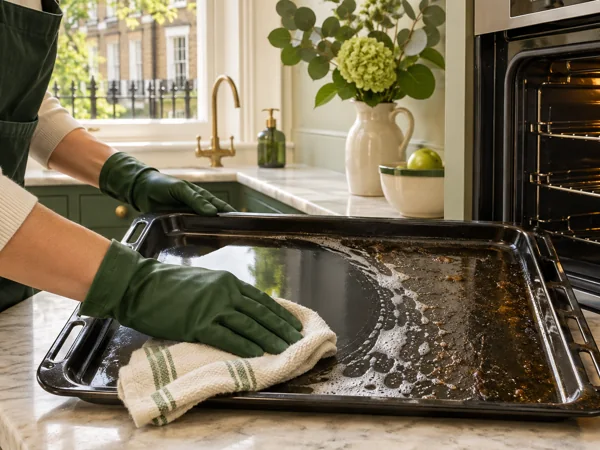
A thick spill usually has a concentrated edge near the shelf or floor; repeat cooking can leave an even film along a much wider area. We check the affected finishes and assess both types of deposit.
Where a liner has changed in colour or texture, we distinguish that from residue sitting on the surface. We show where older marks may remain after the clean.
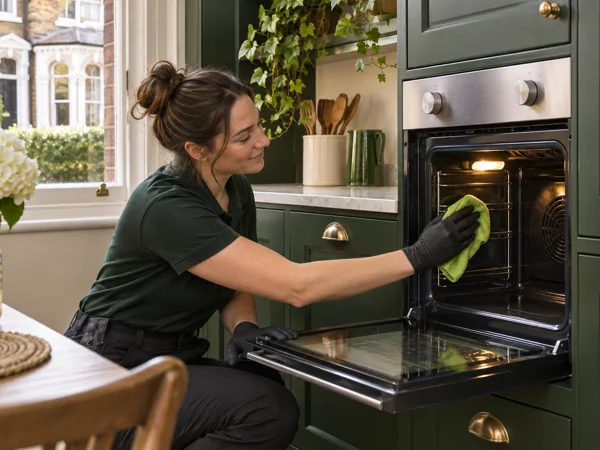
Identify the separate kitchen appliances
| Appliance | Information to provide | What to confirm |
|---|---|---|
| Double oven | Priority cavity and accessory set | Which compartments are included |
| Hob | Type, finish and removable supports | Separate item to assess |
| Extractor | Height, cover and filter | Which parts are reachable |
Handle each suitable rack and tray independently
We check compatible loose accessories for grease below the cooking face and inside corners. Where suitable they can be treated separately so we can also reach the cavity hidden underneath.
An unfamiliar rail or a fitted support with restricted movement stays in place. We clean the exposed areas and explain what was beyond reach at handover.
- Put the correct trays with each oven.
- Identify replacement parts and their finish.
- Leave stuck supports for assessment.
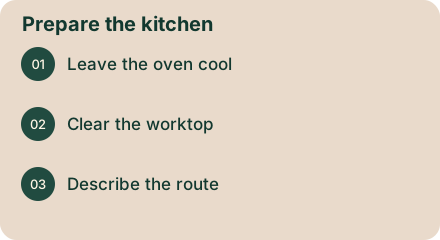
Review glass and surrounding finishes separately
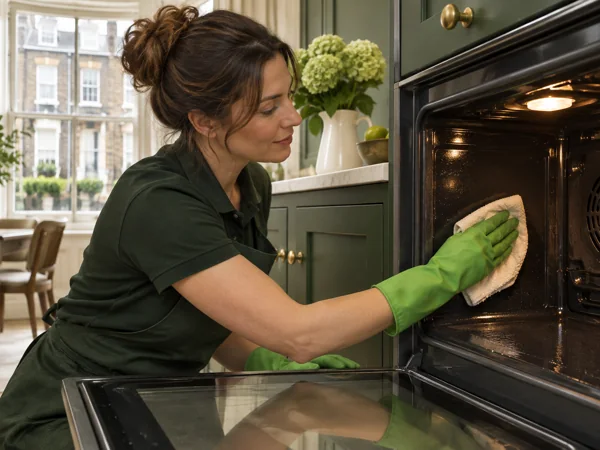
We inspect reachable oven glass and the door edge where a greasy film can collect. A mark inside a closed assembly is reviewed independently of the glass we can clean.
Near a painted cabinet or worn control panel, we keep the work within the sound surfaces assessed for the clean. Any loose or damaged fitting is pointed out before treatment.
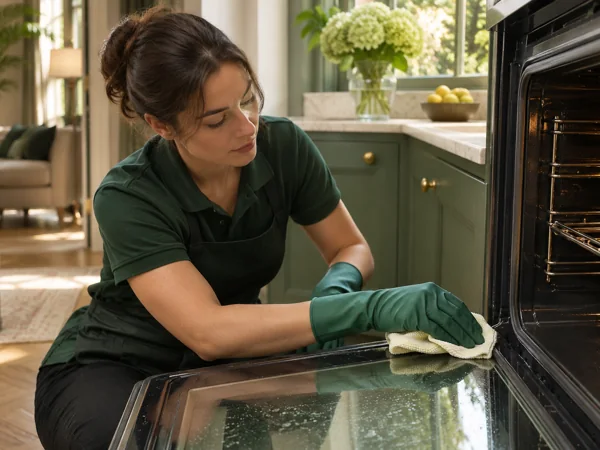
Prepare for a shared kitchen clean
| When | What to do | What to check |
|---|---|---|
| Before arrival | Leave cooker cool and clear a worktop | Actual entrance and available space |
| During assessment | Show the affected oven and loose parts | Which components are suitable for treatment |
| At handover | Ask how and when to use the cooker | Pass guidance to the next household cook |
Consider additional appliances on their own terms
If you also want a hob assessed, state the type and the exact parts or area. A gas hob can have removable burner caps and pan supports. A glass surface may have a mark around one cooking zone or the controls. If there is an additional griddle plate, note its finish. Show any controls shared with the oven and tell us about existing damage. Ask for a hob or griddle to be listed separately so whoever confirms the quote can check which cooking surface is covered.
For the extractor, give the height and visible finish. Explain whether it is mounted under a cabinet, on the wall or over an island. State if the filter is metal mesh or a disposable insert if you know. Grease on the outside cover is a separate area from the filter, so say which you want assessed. Check whether cupboards or shelves restrict access and include the wider kitchen in an image. Ask about each part before agreeing the external extractor work or adding a second appliance to the appointment.
- Describe the hob type and separate removable pieces.
- Give the extractor mounting position and filter.
- Confirm extra appliances on the item list.
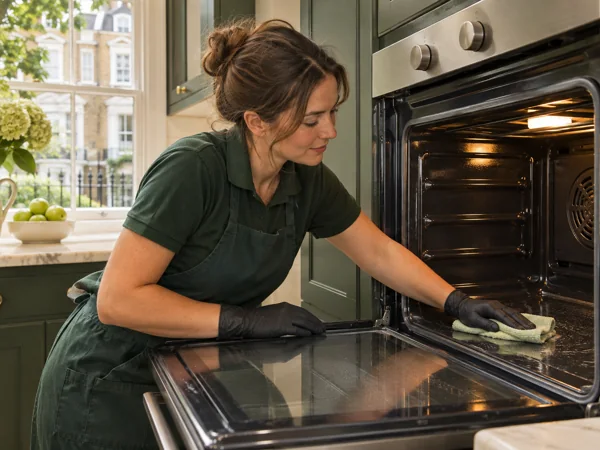
Check the item list and use instructions at handover
Use the postcode enquiry to send the actual entrance, model and cooker images. Include the oven parts you want assessed and details of additional appliances if any. Give the next planned time the oven is needed. Tell us who will open the property, who can provide details about the cooker and who will pass the advice on. If a different tray or cooking compartment is discovered, ask to update the quote. For a tenancy handover, compare the inventory to the actual cooker and confirm who holds the keys.
Ask which surfaces and accessories were treated and when the oven can be used. If a fitted part stayed in place or a panel needs special care, confirm the relevant details. Pass them to the next cook or incoming occupier with the correct shelves and trays. If the household cooking schedule changes, make sure the updated use plan reaches the person confirming the appointment. Give the person opening up a copy of the final item list so they can compare it with the physical kitchen and hear the handover.
Get an oven cleaning quote in Maryland
Tell us the oven type, number of cavities and whether the hob or extractor also needs cleaning.
Get a QuoteOther Cleaning Services in Maryland
Local references · National Rail – Maryland station
Maryland oven cleaning questions
Can I book the oven and keep my separate microwave available?
Describe where it sits and discuss working access before you confirm.
Do I need the postcode of the station?
Send your actual property postcode. Mention the station only as a nearby reference if useful.
Can you look at a pan from a different cooker?
Identify it separately and give its finish, fit and current condition.
Can a mark remain visible after a clean?
A mark may involve discolouration or a change in finish. The technician can inspect it and discuss treatment.
What if a section of the cooker is already out of use?
Identify the section and report any known fault before the appointment. Ask an appliance specialist about operation.
Who should receive the handover if our household uses different trays?
Give the technician a clear list and ask somebody to pass on the advice and which pieces belong in each cavity.