 Housekeeper
Care for built-up cooking residue
Oven Cleaning in Kilburn
Tell us where cooked-on grease has collected and what you have already tried on the affected surfaces. For a Kilburn oven cleaning quote, supply the exact appliance or cavity and the visitor route to the kitchen alongside the full property postcode.
Can I send an NW6 postcode for a quote?
Yes. Include the full postcode and the actual residential entrance to the kitchen.
Can a greasy grill insert be included?
Give the tray and insert details so the technician can assess those pieces separately.
Start with the point you can describe most clearly
An oven that looks dark all over can still have a point where the build-up is concentrated. Look once it is cool and describe the floor under the lowest rack, the ledge by the door and the area beneath the grill. Give the technician one or two observations tied to the actual cooker. A patch beside the door seal can be hard to describe without a wider photograph showing which cavity it is in and how the residue relates to an edge or fitting.
If you know what caused a concentrated spill, describe it. Oil running off a grill pan and sugar overflowing from a dish can reach different parts of the oven even if both look dark after repeated heating. Point out an older mark separately if it matters to you. The technician can consider what has accumulated and what may be wear or permanent discolouration in the underlying material. An inspection helps establish which surfaces can be safely reached and treated in the condition they are in.
- Identify the dirtiest cavity by door position.
- Pick a mark you can describe or show clearly.
- Mention unusual finish changes around the deposit.

Get the correct address and entrance near Shootup Hill
Transport for London gives Shootup Hill as the address for Kilburn Underground Station in NW6. You can use that area reference if it helps someone orient themselves, but give the complete postal address of the home and the exact entrance the technician should take. A residential bell may be beside commercial signage or around a corner from the house number. Give the label and describe where to stand before ringing, especially if there is more than one building entrance under the same address.
Tell us which way leads from the agreed entrance to the actual kitchen. There may be a private stair after the front door or another door at the back of a common hall. Mention an access route that goes below pavement level. If a building has a lift, check that it can be used with equipment and reaches the same floor as your door. Confirm any agreed unloading point, who can admit the technician and how they can be reached if reception or another occupant needs to help.
Give context about what has touched the finish
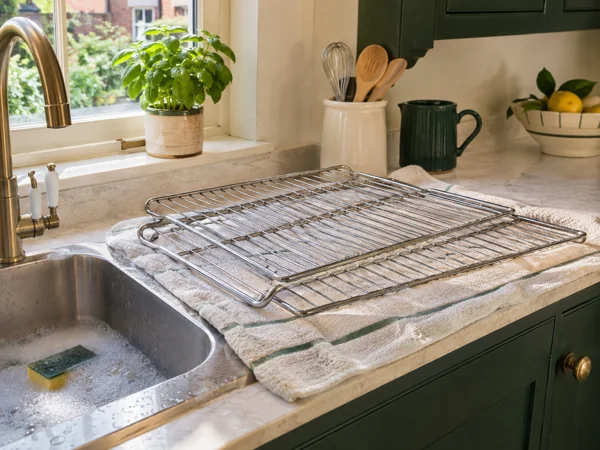
Note which cleaner, cleaning cycle or other action was used before the enquiry. If a product was applied to one corner but changed the appearance of the surrounding area, describe that in your own words. A short timeline is useful when you have cooked several times between treatments. Keep the label if available, along with any manufacturer’s care note. If an automatic cycle appears in the controls, include the information from the handbook rather than assuming the same guidance applies to each cavity.
A greasy patch on a textured side liner and another on an enamel base can need separate decisions. Let the technician know whether the lining was supplied with the oven and whether the maker describes a special process. Point out any colour change you noticed before the latest build-up. If the appliance has two finishes in the same area, a well-lit photo may show the line where they meet. Leave the working area in its current state for inspection rather than applying more product to see if a mark shifts.
- Name previous treatments and where they were used.
- Send the relevant page for the oven’s lining.
- Highlight worn areas as well as loose residue.

Describe where cooking deposits sit
| Surface | Useful detail | What can be assessed |
|---|---|---|
| Oven floor | Age and extent of spill | Residue and finish condition |
| Upper grill | Tray position | Accessible deposits near the grill |
| Door opening | Which part the grease reaches | Reachable edge or glass |
Use the front and controls to identify every cavity
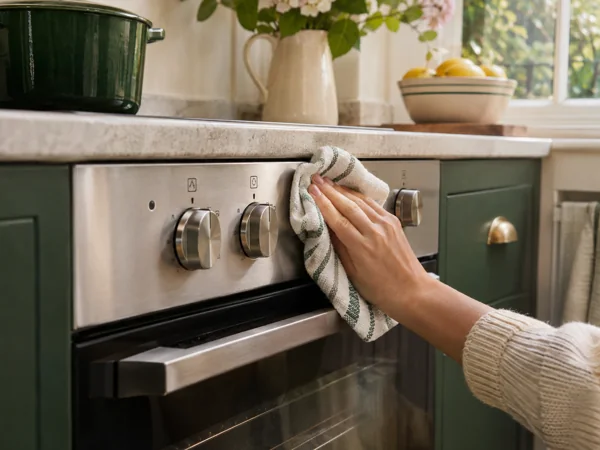
If one door sits beside a storage drawer or the upper oven is mainly used as a grill, send a view showing the whole appliance and its knobs or controls. Give the model from an accessible label or manual if you can see it. Use the name for each function from the controls and list the relevant cavity side by side with any accessories. If you only want one part of a double cooker cleaned, make it clear which door identifies that part.
Once we have the cavity list, we can discuss the areas you are concerned about. A spill under an enamel shelf or a sticky grill insert might occur in a compartment separate from the main oven. Tell us whether one oven has been out of regular use for some time and mention any earlier work on it if you know. Show the technician the most important concern at the initial check. For a smaller oven with a combination setting, provide the instructions that apply to that exact model before agreeing a treatment.
Discuss the racks, trays and supports separately
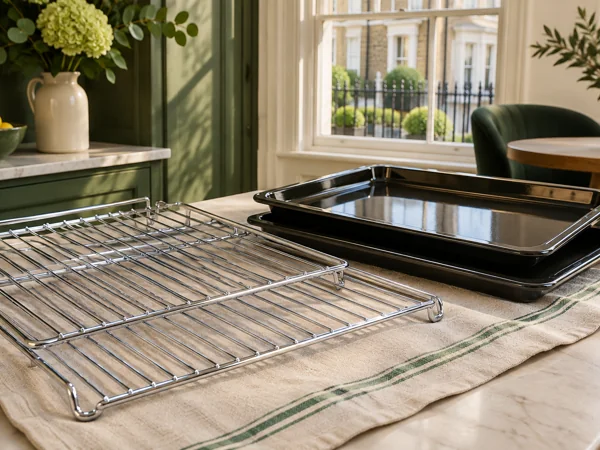
Gently report what you observe from normal use rather than attempting to loosen a sticking fitting. Count the wire racks and the trays you want considered, and mention if a rail extends on a mechanism or has a coating. The technician can inspect which parts can safely come away before handling them. Suitable pieces may be soaked in a dip tank. Give any separate directions for accessories, especially when a tray has a protective surface that differs from the finish inside the oven.
List any part that is already out of the cooker and tell us where it usually sits. If a previous occupant left several metal items, write down which of them are likely to belong to the model. Remove food and loose personal bakeware from the cold oven before arrival, then set aside the worktop nearest the appliance. If you want an extra piece considered, keep it separately marked. The technician can identify the agreed components without asking the person who opens the door to sort a stack of matching pans.
- Specify which compartment each item fits.
- Report loose, coated or sticking fittings.
- Put any optional bakeware on a separate line.
Identify pieces before handling
| Part | Information to send | Decision |
|---|---|---|
| Extending rail | Type and place it catches | Safe handling by model |
| Loose rack | Which cavity takes it | Whether it belongs on the list |
| Tray insert | Finish and matching tray | Which components can be treated |
Explain how the mark appears through the door
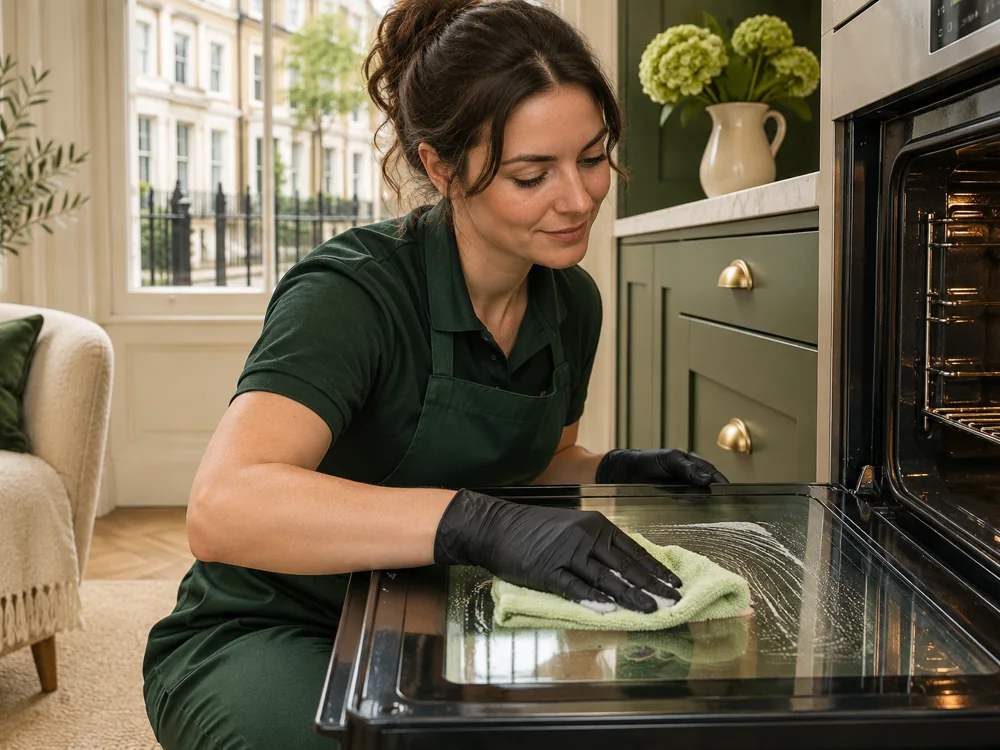
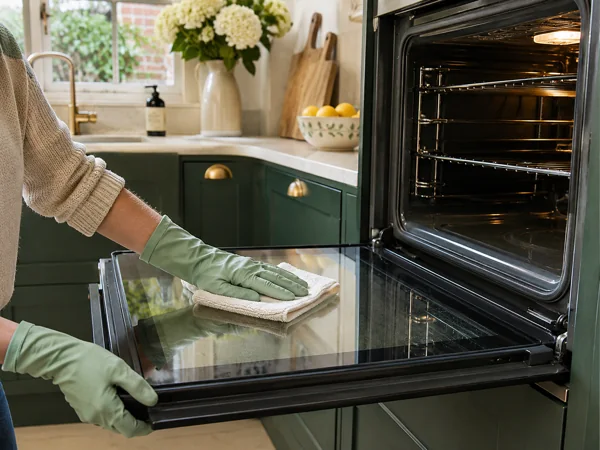
Describe a greasy streak by its distance from the handle and which part of the door it appears on. A picture from the front and another from the open oven can sometimes help locate a deposit. Look only when the cooker has cooled and leave the glass secured as it is. Safe access to the space between panes varies with door design and condition. Tell us if the outer trim has been disturbed or if there is a chip or a line you suspect may be damage.
If the light only catches the grease from near a room entrance, note that for the technician and give the angle during inspection. Discuss which faces can be reached before agreeing any additional parts of the door. If the mark is the main reason for booking, mention it at the time of the quote and indicate which compartment it belongs to. A visual check of the door can help determine which areas are suitable for treatment and which ones depend on access or the state of the assembly.
Follow the spread onto other parts of the kitchen only where agreed
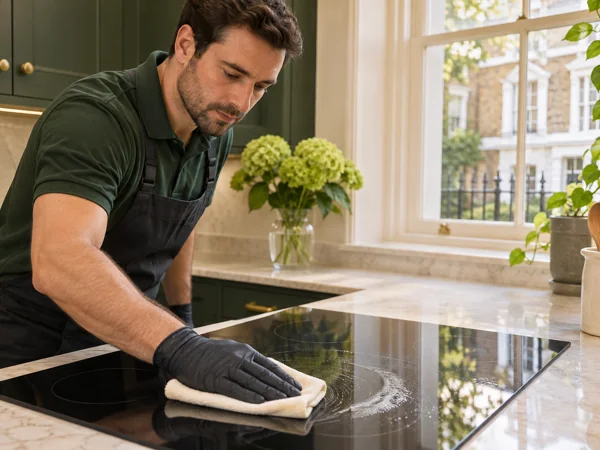
A grease line can continue onto the hob controls, the splashback or a trim surface that sits near the cooker. List each separately if you want to ask about it. Tell us the hob type, including whether it has removable pan supports or a flat surface. Give any specific care instructions for a painted or glass surround. A close-up of one dirty corner may hide the position of the nearest important component, so include a broader shot alongside it.
Describe the extractor separately in the same way. Its height, position and filter type can affect what can be accessed. Say if you can see grease on the exposed cover while the filter is set behind it. If you know it has a washable metal filter or a disposable one, identify it in writing. Ask for any agreed hob and extractor work to appear separately on the quote, with the actual surfaces listed. Confirm that there will be enough space for the technician to reach each agreed item.
- List the nearby surfaces where grease has spread.
- Note the filter’s approximate height and type.
- Check individual items on the quote.
Make the working area and the handover easy to understand
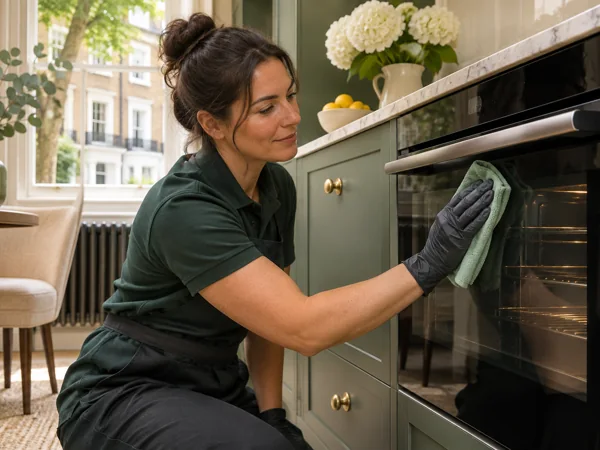
Put the full postcode into the enquiry form and keep your component notes and access directions nearby. Before the visit, leave the oven fully cool and clear enough space for the door to open. If the kitchen is the main route through the home, agree what other occupants need to reach and make a separate place for children and pets. Confirm where equipment can be placed and whether the technician needs a particular contact for access to the building or the agreed facilities.
When the work is complete, ask which parts and surfaces were treated and when the cooker can be used again. Put the advice where the next person cooking can see it, especially when there is a second cavity that was left outside the job. If a mark stayed visible because a finish changed or the part could not be reached, make a precise note of the location. That can help a future enquiry focus on a new spill or a different appliance instead of confusing it with an earlier observation.
Give a practical route to the property
| Stage | Confirm | Provide |
|---|---|---|
| Outside | Residential entrance rather than shop frontage | Bell, door number and postcode |
| Inside building | Equipment lift or stairs | Floor and next door |
| At oven | Space in front and beside it | Location for agreed pieces |
Get an oven cleaning quote in Kilburn
Tell us the oven type, number of cavities and whether the hob or extractor also needs cleaning.
Get a QuoteOther Cleaning Services in Kilburn
Local references · Transport for London, Kilburn Underground Station
Kilburn oven cleaning questions
Should I mention grease that appeared after cleaning the oven myself?
Yes. Give the product and when and where it was applied.
Can I tell the technician which dark patch concerns me most?
Yes. Identify the cavity and surface on arrival or with a photo from the cool oven’s opening.
How do I describe a second door that I rarely use?
Check the controls or manual to identify the compartment and say if it should be on the quote.
What if a hall serves two flats with similar numbers?
Give the street entrance and exactly where to turn or stop after you enter.
Can grease on an outer hob trim be considered?
Ask about the trim independently and provide the finish information if available.
Does a cloudy door image show which face is marked?
It can help identify the area. The technician can assess the actual face and access by model and condition.