 Housekeeper
Care for built-up cooking residue
Oven Cleaning in City of London
Request a deep oven clean in the City of London when everyday cooking has left grease or baked-on spills. Identify the affected cavity, shelf positions and accessories. Include how the technician can reach your kitchen, especially if a separate lobby, signing-in point or authorised lift is involved.
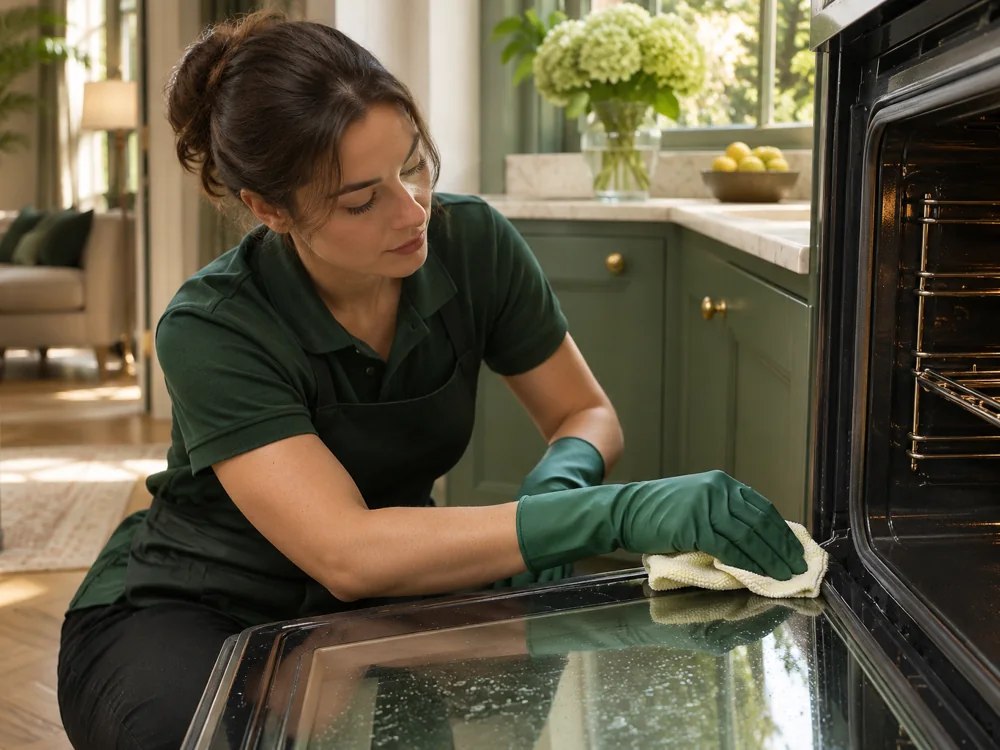
Can I request an oven clean in a City apartment that requires a visitor check-in?
Yes. Send the full postcode, visitor entrance and the name of the person who can confirm access.
Can I include one greasy grill tray with the oven?
List the tray separately, including its finish and any detachable handle or insert you want assessed.
Use grease distribution to point out the work that matters
Check the appliance while it is cool and look at the shelves, door and cavity floor together. Grease close to the grill may be concentrated around a tray or its rack. Spattering from roasting can leave the walls looking different from the base. A sharp outline under a dish is worth describing separately from an overall build-up. Say where the food was cooked, how often you use that cavity and which marks are most noticeable. Those details help the technician assess the priority areas before deciding how they can be treated.
Tell us if you used the oven after an overflow and mention a recent product or self-cleaning programme. A dark patch can be material left by cooking or a change to a finish. Include a close-up with a wider photo so the position is clear. If the mark reaches onto a panel with a different looking surface, show the join in the picture. Ask the technician about what can be addressed after an inspection rather than deciding how much should be removed based on a picture alone.
- Show the affected oven surface and surrounding parts.
- Explain the cooking that created the build-up.
- Mention products or programmes the oven has already had.
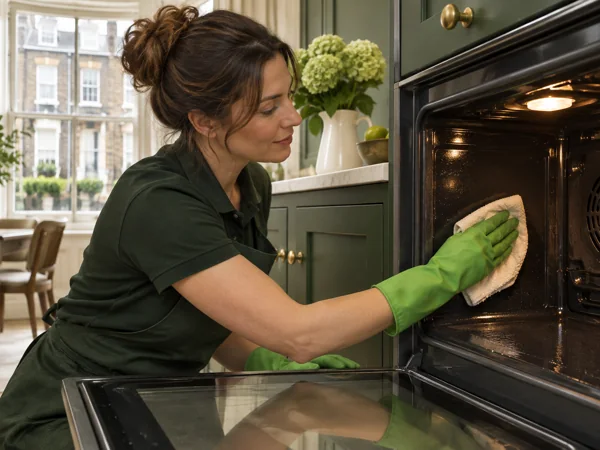
Give the route into the City property before the appointment
The City of London Corporation lists the Guildhall Great Hall on Gresham Street. If you use the Guildhall as a nearby reference, give your building’s complete address and where the residential entrance is. The street name on the postal address can differ from the side of the building visitors enter. For a home above another premises, identify the residential lobby and distinguish its intercom from any staffed reception. Give the flat number and level and tell us if a second lift or staircase is needed before reaching the kitchen.
Confirm the building's visitor process and loading route with someone who can approve both. A security desk can point deliveries in a different direction from the household’s usual route. Tell us whether the technician should check in with reception or meet somebody outside. If you will be leaving early, explain who can provide access to any lift or internal door later. A short note identifying lobbies or levels by their signs can be easier to follow than directions that rely on a particular door being propped open.
- Share the residential entrance and floor, rather than just the street.
- Confirm a route for equipment and where unloading is agreed.
- Name the contact who can provide access.
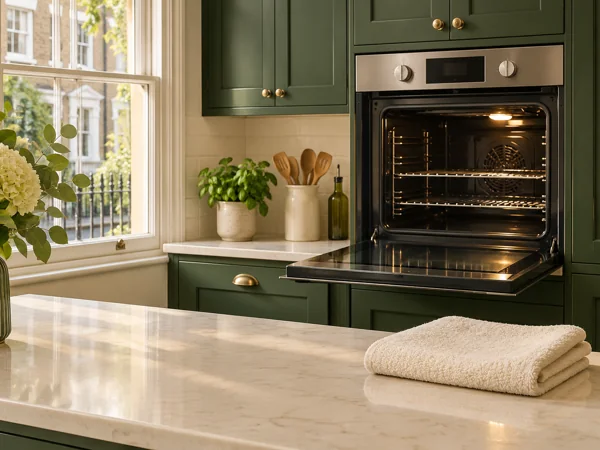
Describe the cooker in its working position
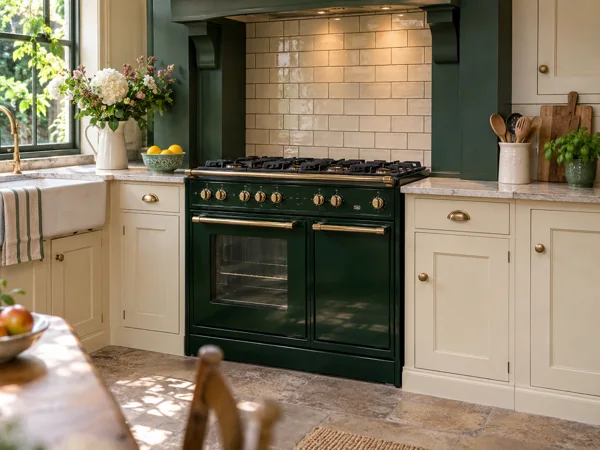
Photograph the front of the cooker and the cabinets around it. Point out the main cavity and any smaller oven or integrated grill you hope to discuss. A compact microwave or steam combination unit can look similar to the oven when the door is closed. Name the functions you normally use and identify the doors by position. On a range, report the separate cavities or warming sections. Find the model in the paperwork or on a label near the opening with the cold oven left in place.
If a mark sits in the upper oven, show which controls relate to that compartment and specify what you cook there. Mention any accessories that were bought as replacements. A loose pan can be just the right width without having the same coating as a piece that came with the cooker. Let us know if an appliance is out of service or already has a loose seal or door issue. A separate appliance specialist can advise about faults, while the technician can discuss cleaning based on the present condition.
Describe grease in terms of its location
| Part | What to show | What to discuss |
|---|---|---|
| Grill | Tray, rack and residue around the opening | Accessible parts and tray treatment |
| Main cavity | Patch below a roasting dish | Condition of the adjacent lining |
| Door | Streak around one pane | Location and access to the glass |
Separate accessible accessories and fitted pieces
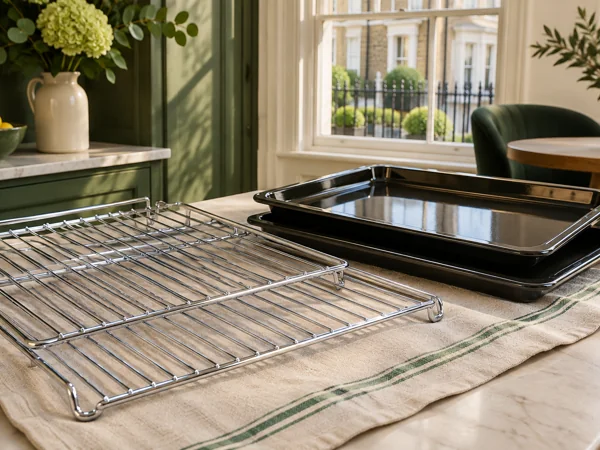
Clear the cooker of food, loose foil and everyday pans after it has cooled. Set aside the racks, grill insert or trays you want assessed and give each a short description. The technician can consider removing suitable parts for separate treatment, which can include soaking compatible items in a dip tank. A plain wire shelf, coated tray and glass oven dish may need different handling. Identify any missing handle or chipped corner and keep each set with the correct oven where there are two cavities.
If a metal side support moves with the shelf for a few centimetres and then stops, leave it in place when unsure how it is retained. Tell the technician where movement changes and what happens when the rack carries a dish. Give the working area enough space to look at removable components without blocking the door. If the kitchen has only a small worktop, let us know where else suitable pieces could be put. Make a copy of the accessory list for whoever meets the technician.
- Identify loose accessories before arrival.
- Keep trays and removable inserts together.
- Describe sticking fittings without forcing them.
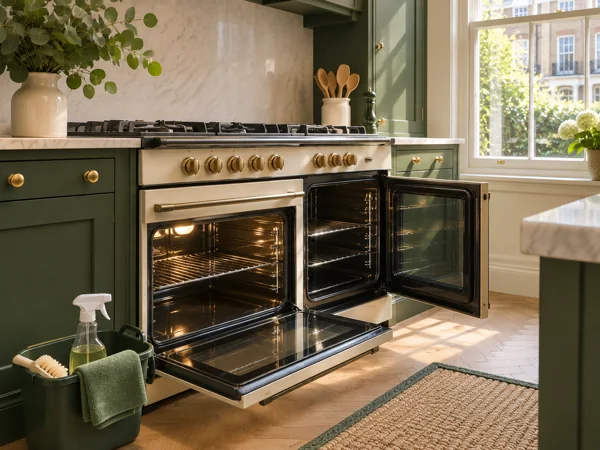
Expect an inspection around coated or glazed surfaces
Identify specialist liners by the manufacturer’s instructions if you have them. A side liner designed for a particular care routine may sit next to ordinary enamel. The technician can look at the surfaces before deciding what treatment to discuss. Point out peeling finish, chips or marks that appeared after a cleaning product. A deposit at one edge of a dark surface can be hard to distinguish from wear in a photograph. Explain when you first saw it and which part of the oven it came from.
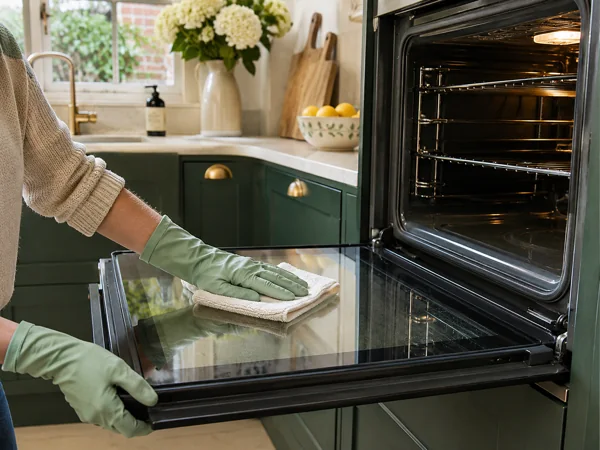
When grease appears on glass, report whether it is visible on the inner surface, the outer surface or through a gap between panes. A photo with the door open and one with it shut can help. Tell us about replacement glass, loose trim or a change in how the hinges feel. Access to individual panes varies with construction and condition. Show any faded controls or cabinet edges next to the oven if they are affected, and ask about treatment of each surface during inspection rather than generalising from the glass.
Give the access points for a City residence
| Entry point | Detail to share | Confirmation needed |
|---|---|---|
| Street door | Building name and visitor entrance | Correct side of building |
| Reception | Who will be expecting the call | Visitor checks and timings |
| Internal route | Lift core and any extra steps | Equipment access to kitchen |
Add other cooking surfaces with their own notes
If the hob is included in your request, say whether it is gas, induction, ceramic or another design. Give the finish and the parts you want considered. On gas, you may need to identify each pan stand or burner cap. On a glass surface, show the zone where a pan overflowed and mention any existing damage. If the cooker controls are shared, include them in the photo. Ask about a removable griddle on its own line if it belongs to a larger cooker.
With an extractor, give the rough height above the hob and the type of filter if known. Describe any greasy outside cover separately from the insert. A metal mesh can have a different construction from a disposable filter. Tell us if the hood is recessed or blocked by a cabinet or fixed shelf. Request the separate appliance and filter details before agreeing the quote. If your oven sits below a concealed extractor, send a whole-kitchen photo to show the approach rather than reaching in to remove an unfamiliar part.
- Name all additional cooking appliances separately.
- Describe extractor height and filter type.
- Mention any tight access or fixed furniture.
Coordinate the appointment with the people who use the kitchen
Keep the oven out of use until it is cool, and clear adjacent work surfaces so parts can be looked at. Tell us if someone needs another appliance at the same time. A kitchen island can affect how the oven door opens, so clear stools and move items that would restrict the working space. Make sure children and pets stay away from the active area. Discuss any restrictions on available water or power before the technician arrives. Give the time you will next need to use the oven when arranging the visit.
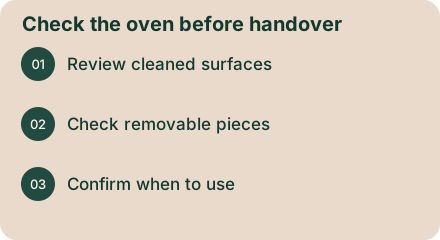
If a resident is at work and somebody else will wait in the property, tell them which areas are to be checked. At handover, ask when the oven may be used and where the treated trays or shelves now go. Give the technician a chance to explain any surfaces left untreated and any care instructions discussed about the model. Make sure the occupant who will cook next receives those details. If they will be back after the person handling entry has left, agree how the information will be passed on.
- Leave the cooker and its surroundings ready for an assessment.
- Tell the technician about kitchen timing.
- Ask about the return to use at handover.
Review a quote that uses your exact appliance descriptions
Use the postcode enquiry to send the cooker model, photos and an itemised list of the affected parts. Give the entrance and access process for your building, including who can accompany the technician if required. Explain which cavity matters, where the residue appears and which loose accessories should be inspected. If the cooker is being prepared for a new tenant, compare the inventory to the actual appliance and give the date the property needs to be handed back. Confirm the plan for wider cleaning separately.
Check that the quote names any agreed grill, cavity, hob and extractor that appeared on your request. Ask to update the quote if you discover a separate grill or find that the spare pan has a specialist coating. Tell us about changes to a loading point or who has the keys before arranging the day. Give the final list to whoever is meeting the technician, along with the next planned time the appliance is needed. That person can then confirm the priority parts and hear the handover advice.
Match cooking parts to material and condition
| Component | What you can tell us | What the technician can assess |
|---|---|---|
| Wire shelf | Fit and any bend | Whether it can be removed for separate treatment |
| Coated tray | Wear or lifted edge | Suitable method |
| Side liner | Known manufacturer care guidance | Finish and affected area |
Get an oven cleaning quote in City of London
Tell us the oven type, number of cavities and whether the hob or extractor also needs cleaning.
Get a QuoteOther Cleaning Services in City of London
Local references · City of London Corporation – Guildhall Great Hall
City of London oven cleaning questions
Does the same address cover the residential entrance and service door?
Give the complete property address and identify the separate route approved for the visit.
Can a security desk hold the list of parts?
Agree access with the desk, then give the appliance list to the person who can show the actual oven and its accessories.
Can you inspect grease around a specialist liner?
Yes. Share the model and any care instructions. The technician can review the surface and condition before discussing treatment.
Should I ask for a hood with the oven?
Only include it if you want it assessed. Give the cover finish, filter type and approximate height.
Do I need to pull out a stuck shelf?
Leave it where it is and show the point at which it catches during use.
Who can confirm when to use the oven after cleaning?
Ask the technician during handover and pass the instructions to whoever is using the kitchen next.