 Housekeeper
Plan around the family kitchen
Oven Cleaning in Holborn
Arrange a Holborn oven clean around the cooker your household uses most. Describe the main cavity, the grill and any shelves or trays that need attention. Give the visitor route to the kitchen and the next time you need to cook so we can discuss the appointment.
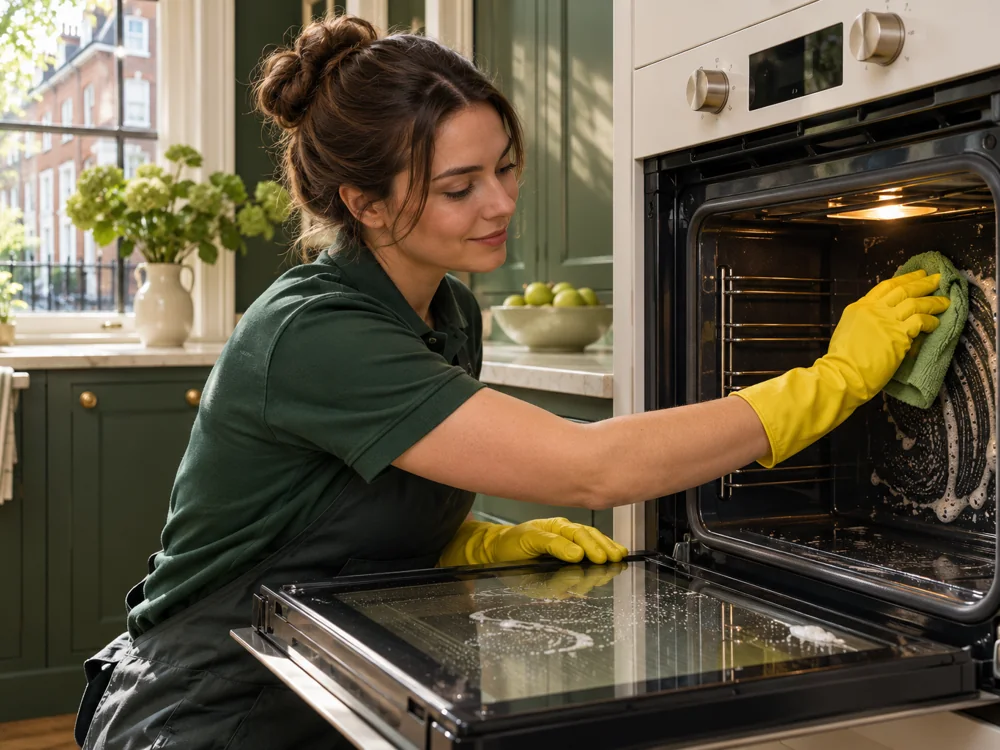
Can I request only the oven we use for family meals?
Yes. Give the position, model and accessories for that cavity, and describe any areas you want assessed first.
Can I use a separate entrance for a Holborn apartment?
Give the full postcode and tell us which visitor door, lobby or staircase actually leads to your kitchen.
Look at the oven the household needs for the next meal
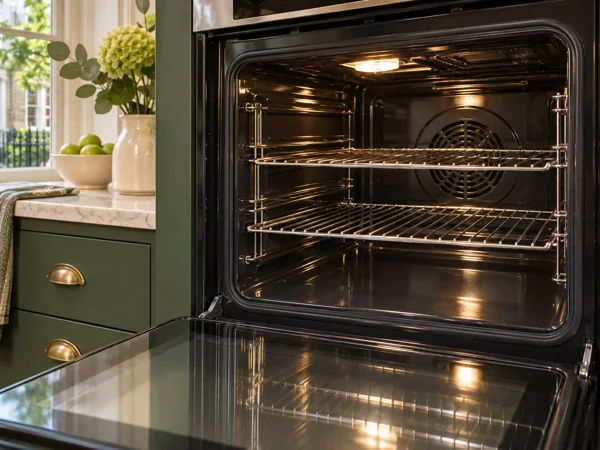
A kitchen may have one full oven and a smaller appliance you only use for quick meals. To plan an oven clean, point out the cavity that does most of the cooking. Explain what is normally roasted, grilled or baked there, and tell us where you see grease or old food residue. If the grill is behind another door, put it on its own line. A full picture of the cabinet and the cooker controls helps us see that two similar looking doors lead to separate appliances.
When you can see a make and model in paperwork or on a plate at the opening, share the details. Keep the appliance in its normal position and wait until it is cold before looking around the door. Mention if one compartment is out of use or if the grill tray has been replaced. If different people use different shelf heights, give the regular position of the rack and tray you want assessed. Ask another member of the household to check the list if you share the cooker.
- Identify the main oven and any grill separately.
- Show the whole cooker and controls.
- Note changed trays or missing information about the model.
List common cooking priorities
| Use | Affected area | What to tell us |
|---|---|---|
| Roasting | Affected shelf, tray and walls | How often and where you roast |
| Grilling | Greasy insert and front edge | Which grill and tray to assess |
| Baking | A dish overflow on the base | Location and any treatment already tried |
Get the building and approach right for Holborn
Transport for London lists Holborn Underground station on Kingsway. If you refer to the station as a nearby landmark, begin the booking with your own full postcode and residential entrance. A building can have more than one name, particularly where the ground floor is occupied separately. Give the visitor door label and explain what a person outside needs to press or whom to call. If a residence has a shared reception, confirm whether people arriving with equipment are expected to use a different door.
A building contact can confirm the route from an agreed unloading point, the correct lift and the floor. Say if there is a short flight after the lift or a narrow route near the kitchen. In a property above another premises, the residential stair may be alongside the building rather than inside the visible ground-floor lobby. Explain that before the visit. If the person opening the property is not the person booking, give them the current access arrangement and tell us where the technician can meet them.
- Send your full postcode and residential entrance.
- Confirm any route via a separate lift or stair.
- Give the name of the person opening the property.
Describe the oven residue in the context of everyday cooking
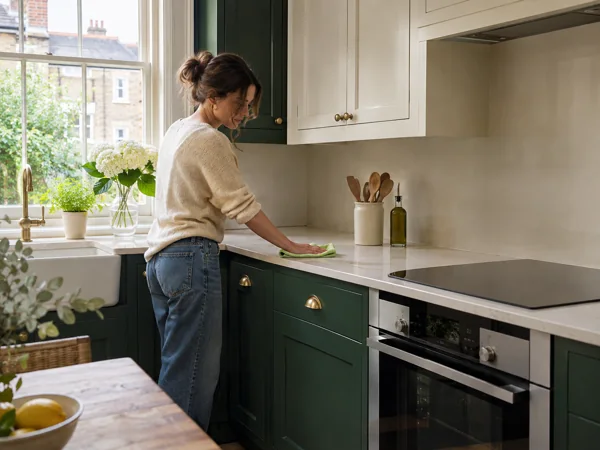
Look at the main cavity while it is cool. A recent spill could leave a concentrated mark where a dish sat, while ordinary grilling can leave grease along a tray and around the accessible area above it. Tell us if you remember what caused a particular mark and whether the appliance was used afterwards. Show the technician the affected location instead of relying on a close-up alone. A view of the whole cavity makes it easier to understand the shelf height and what liner or enamel is nearby.
Explain if you have tried an oven spray or run a self-cleaning programme. It helps to know where each treatment was used and how the surface appeared before it. Some discolouration can remain once residue is treated, and a patch can be a change to the finish. Check any manufacturer instructions for a catalytic or specialist liner so the surface can be identified before the clean. Report a problem with heating, a seal or a hinge while discussing the appointment, and ask an appliance specialist about known operating faults separately.
- Explain the cooking that led to the most visible mark.
- Mention previous treatments and liner care.
- Report known faults before a booking is agreed.
Keep the requested oven accessories in their own group
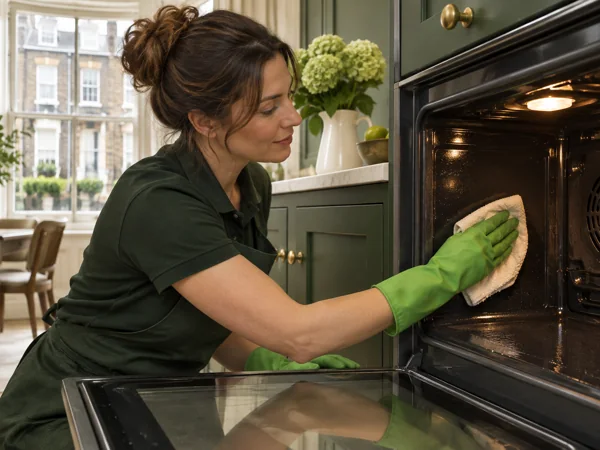
Remove loose food, foil and everyday dishes while the cooker is cold. Pick out the trays, shelves and grill items you actually want looked at. A plain rack can need a different approach from a coated pan. A technician can consider taking out suitable pieces for separate treatment, including soaking in a dip tank where appropriate. The piece’s material, condition and design help determine that decision. Put all accessories that fit the same cavity together instead of assuming that every tray in the kitchen belongs to the oven.
A runner and rack might travel together halfway before a catch holds the runner. If part of the fitting does not move freely, show the technician where it catches. Leave it installed until the person can assess it. If a pan has a detachable handle or a wire insert, keep the parts together during the appointment. Ask other cooks to leave the set on hand so it is clear where the accessories belong. Put aside spare pieces from another cooker and mention visible changes to the finish.
- Keep shelf sets with the right cavity.
- Identify a tray’s coating or replacement status.
- Leave sticking fitted parts in place for assessment.

Keep each part with the right cooker
| Part | Preparation | Assessment detail |
|---|---|---|
| Wire shelf | Set aside with the relevant cavity | Fit and condition |
| Grill insert | Keep with tray and detachable handle | Coating and finish |
| Fitted runner | Leave it installed | Show any sticking point |
Look at the door from more than one position
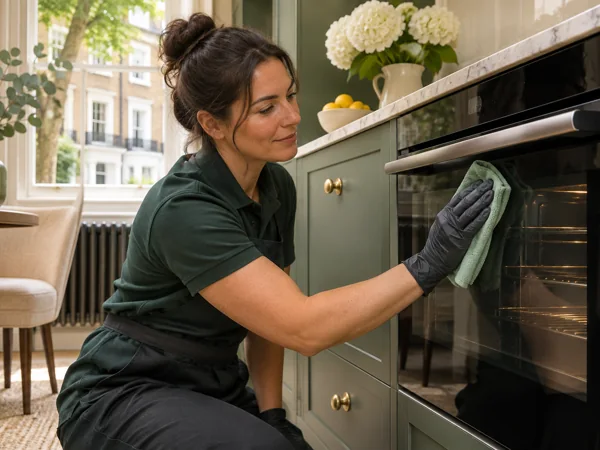
An oven light or a reflection from a window can reveal a greasy film that disappears when you look at the glass from the front. Describe whether it is visible with the door open, shut or in both positions. If you think a mark is between panes, state where it appears and mention any previous glass replacement. A loose seal or strip around the edge should be pointed out before work. The technician can explain which surfaces can be reached once the door design and condition are clear.
If a printed control panel or painted trim beside the door is among your concerns, identify it separately. Some older knobs show worn marks where a setting is handled most often. Take an overall photo to include surrounding cabinets and mention a panel that catches the door. These details can inform how the technician sets up the working area. Ask about the treatment of the glass and the finish around it separately rather than assuming all surfaces at the opening can be handled in the same way.
Specify anything beside or above the cooker that needs attention
If the hob needs its own assessment, give its type and mention known surface damage. On gas, describe the supports and caps you would like considered. For induction or a ceramic plate, note the area where residue remains or where a pan has left a mark. If the oven and the hob share controls, show them together in a wide photo. Put a removable griddle on its own line, especially if the range has more than one type of cooking surface. Tell us what you know about its finish.
Describe the extractor separately, including the cover, approximate height and filter type if known. A hood concealed beneath fitted cabinets may be hard to see from the ground. Take a photograph from a position you can reach comfortably rather than trying to move an unfamiliar piece. Ask about grease on the outside and a filter inside as distinct parts of the job. Confirm which pieces are in the quote before agreeing an appointment, particularly if the cooker itself is the only area that needs to be out of use.
Plan the route and timing
| Point | Detail to send | Who should know |
|---|---|---|
| At the street | Actual visitor door and postcode | Person providing access |
| In the building | Lift, stairs or landing | Building contact |
| At handover | Next oven use and treated pieces | Person using the kitchen next |
Choose a window that gives the cooker time to cool
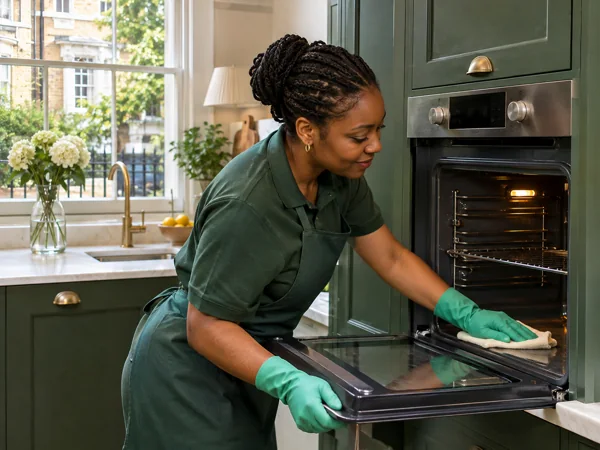
Finish using the oven early enough for it to be cold on arrival. Clear food and utensils from the worktop immediately beside it and move any stools or kitchen storage that affect the door swing. Tell others in the household which area they need to leave clear. In a flat where the kitchen is also used as a route to other rooms, discuss how people will use the space during the appointment. Keep children and pets away while removable parts are being handled.
Share the next time the oven is needed, particularly if someone needs to prepare a meal soon afterwards. Agree any water and power requirements before the visit and say if an appliance or section of the worktop needs to remain free. At the end, ask which parts were treated and when the cooker can be used again. If you usually cook at a different time from the person handling the visit, arrange for them to pass on the handover details and the order in which shelves and trays return.
- Leave the cooker cool and nearby worktops clear.
- Discuss the next meal time before confirming.
- Pass handover advice to the next person cooking.
Put the household’s priorities and entry instructions on one request
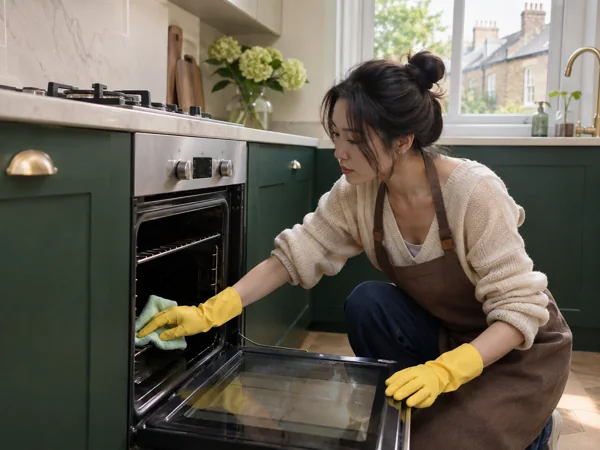
Send the postcode enquiry with an appliance list, photographs and the entrance arrangement. Put the most frequently used cavity first and the parts you want discussed next. List other appliances separately. If the cooker sits alongside a microwave, make sure the technician and person opening the property can identify the correct door from the list. Note any known faults and changes to accessories that might affect assessment. Add who will be at home and whether someone else can answer questions about a different finish or component.
Ask to review the quote if you discover another tray after clearing the cupboards or if the building asks you to change the entrance. For a tenancy handover, compare the inventory paperwork with the actual cooker and confirm when the kitchen and keys need to be available. Keep a copy of the agreed appliance list with the person who can meet the technician. That person can show the priority marks and confirm the next cooking time before passing on the advice received at handover.

Get an oven cleaning quote in Holborn
Request a quote with the oven type, number of cavities and any extra appliances.
Get a QuoteOther Cleaning Services in Holborn
Local references · Transport for London – Holborn Underground Station
Holborn oven cleaning questions
Can I include the upper grill but leave a microwave free?
Name both positions and discuss whether there is space to reach the microwave during the visit.
How can I explain a recurring spill?
Show where it occurs and say which dishes are cooked there and which areas you have already treated.
Can I enquire for just the inner glass?
Describe where the mark sits and give the model. The technician can discuss whether that glass can be reached.
Should I collect the latest building access information?
Yes. Confirm the current visitor door, lift and loading arrangements before giving access instructions.
Can I include coated racks bought after installation?
List them separately so the technician can assess the finish and condition.
Will I need a handover before making dinner?
Arrange to hear when the oven can return to use and pass that information to anybody else cooking.