 Housekeeper
Mould Removal in Chiswick
Ask us about mould around a bath, fitted kitchen or window in Chiswick. We use the property details to identify the visible surfaces, how to reach them and which other questions need resolving first. Once a suitable exposed area has been agreed, we prepare around it, remove visible mould and review the agreed work with you.
How should I identify my W4 property?
Give the full postcode and visitor door. On Chiswick High Road, a separate residential entrance can be useful to identify.
Can I include a bathroom ceiling and bath seal?
List both and give their visible condition. We discuss height, access and suitability for each surface separately.
Organise the bathroom around the fixtures you want assessed
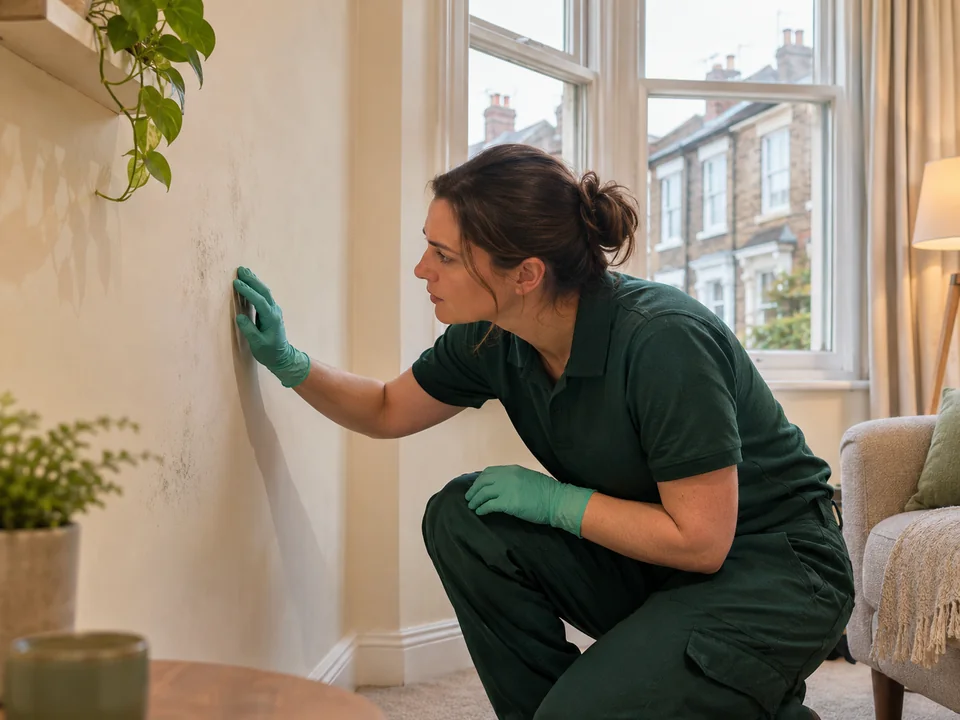
We ask you to identify the visible areas in the bathroom by fixture and height. A mark on the painted ceiling over a bath, a section of tile near the basin and an affected strip along a seal are three different parts of a room. Tell us which are visible without removing anything and give an approximate size for each. If you can safely take a wider photograph, include enough of the fixture to locate the area. This helps us discuss the boundaries and condition of the exposed surfaces before we consider what work can be agreed.
The use of the room also matters when planning. Tell us when people need access to the bathroom and whether the patch sits above a bath, enclosure or fixed unit that affects the approach. The surface and the way it is reached both need to be considered before an area can be cleaned. We may be able to discuss a lower exposed surface while a high or obstructed part needs another access arrangement. A description from the doorway or another safe place is enough to begin that conversation.
Let us know if the finish is cracked, lifting or visibly damaged. A mark at the corner of a tile can sit next to a worn joint or a different painted surface. We discuss those positions separately. If a seal, fitting or coating needs a separate repair decision, we identify that before considering it as part of the work. Tell us if the room has already been looked at and which areas were actually visible at the time. If you have an earlier photo, date it and explain any change to the fixture or finish since it was taken.
When there are two bathrooms, identify the exact one and explain which fixtures can be reached from the doorway. A guest bathroom that is rarely used may have a different history from the main family bathroom. We record the specific locations so the assessment follows the marks you reported. If a second person needs to confirm the condition or make the room available, give that arrangement before an appointment is agreed.
- Name the fixture nearest each visible area.
- Describe the approach to high places from floor level.
- Identify damage or suspected repair work separately.
| Bathroom area | What we consider | What needs to be agreed |
|---|---|---|
| Sound exposed tile | Accessible boundary and condition | Which part can be included in surface work |
| Paint above a fixture | Height, condition and usable approach | Any separate arrangements needed for access |
| Marks on a worn seal | Visible condition of the seal and surroundings | Any fixture or seal issue requiring separate attention |
How a fitted kitchen changes the preparation for visible mould removal
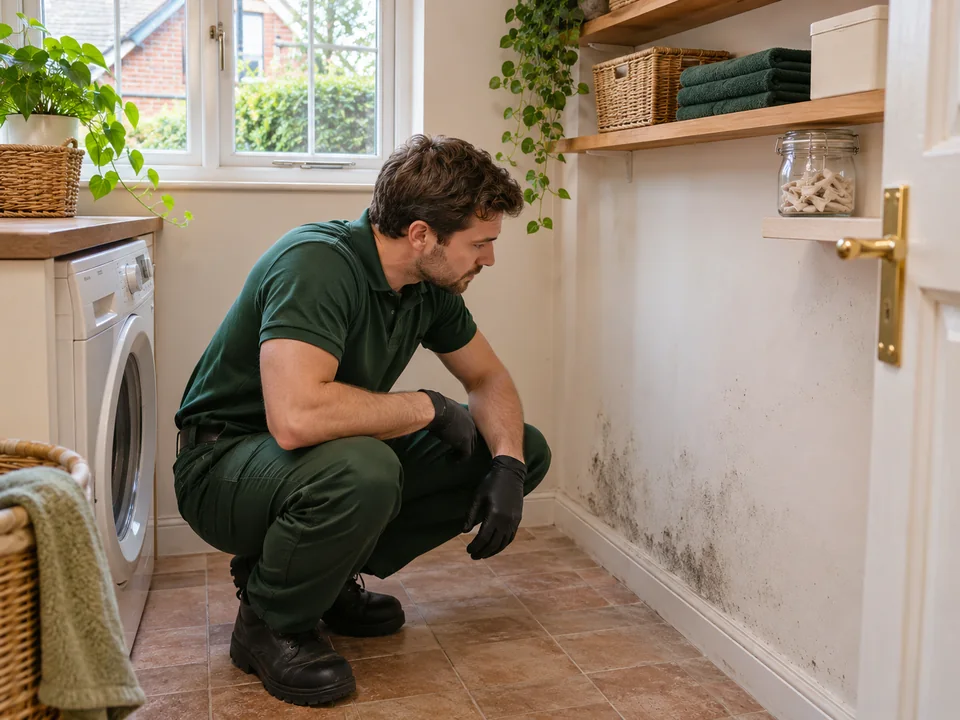
In a kitchen, give us a reference point for each area, such as the tile next to the sink or paint at the end of a fitted unit. We use these locations to assess the visible extent and the materials involved. A cabinet, plinth or pipe can conceal the boundary of an area. Explain how much you can see without moving a fixed item. If you are concerned about part of the space behind it, identify that as a separate issue and tell us who manages access. We can discuss what is available to assess now and what might need another visit.
Tell us about any reported overflow or leak, and give the relevant dates if known. If someone has checked an appliance or a pipe, say what they saw and which part of the kitchen they accessed. Keep the record of the repair where you can share relevant details. A repair in one place does not establish what is happening behind a different panel. We consider the visible finish and the information about its condition, and explain where a property professional should make the next assessment before cleaning is agreed.
We discuss the immediate working area with the person who uses the kitchen. Tell us which belongings can be cleared, what has to stay put and when the sink or preparation space needs to remain available. Fixed appliances and service panels should remain in position unless the responsible person has arranged access separately. If the proposed work involves two parts of a small kitchen, we can discuss the order and whether both can be prepared. If a visitor can only reach part of a wall safely, we confirm what is included before starting.
If the accessible kitchen surface is partly blocked by everyday items, agree where they can be put and which belongings must stay as they are. We use that information to plan the immediate area around the hard surface. If a cupboard has to remain closed or a fitted panel cannot be reviewed, tell us what can still be seen. This helps us identify the part of the room that can proceed to assessment without including areas that require other permission.
| Kitchen feature | Useful description | Decision before cleaning |
|---|---|---|
| Wall next to the sink | Position, width and condition of paint or tile | Which surface is accessible and suitable |
| Affected area beside a fixed unit | Exposed edge and part that is hidden | Whether further assessment or access is needed |
| Fixture beside the work area | What needs to remain connected or undisturbed | How to prepare the agreed area around it |
We support a clear assessment of window surrounds and adjoining finishes
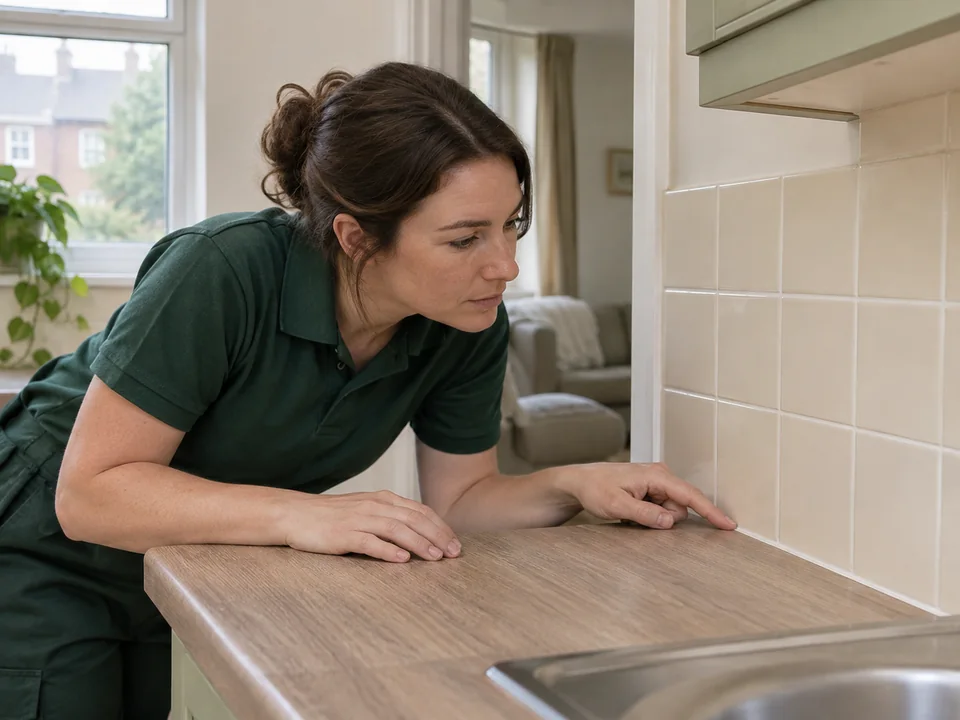
At a window, tell us if the marks are on the frame, a seal, the surrounding paint or a separate item. A wide photograph can show where the materials meet and how the window can be reached. We consider the accessible finish and discuss what can be included. If a blind or fitting is in the way, explain the obstruction without removing it. A window above a worktop or close to a stair has a different approach from a window that can be reached across an open room. We use that information when discussing preparation and whether the area can be safely viewed.
Describe what you see when the room is being used and when it is quiet. If there are droplets at particular times, say when and distinguish them from visible marks that remain after the area looks dry. If the window has been repaired or adjusted, give the date and what was reported about its condition. That information helps us discuss an assessment, while any cause of damp or moisture may need to be reviewed separately. We keep a question about glazing or the building outside the surface work unless the relevant review and arrangements have been made.
List any adjoining porous, fragile or damaged material separately. A curtain, papered corner or coating that has lifted can have a different decision from a sound hard trim. We consider the visible boundary and the condition of the exposed area before agreeing cleaning. If a section cannot be assessed without viewing the material behind a covering, we explain where the work can stop and what would need another review. When you contact the office, mention who knows the finish history and who can answer questions if they differ from the initial description.
Consider the room and window together when describing what is accessible. The sill might be clear while a section below the window cannot be approached without moving a large item. We discuss which material can be viewed and how the arrangement can be confirmed safely. If a window fitting has been changed since the marks were first seen, mention the date and show the current areas you want assessed. That tells us where the existing fitting or adjoining finish affects the proposed work.
- Identify the frame, seal and neighbouring finishes separately.
- Give any relevant window repair date and what changed afterwards.
- Keep concealed or damaged sections distinct in the enquiry.
Agree how we enter a W4 home and carry out the work
Hounslow's Chiswick High Road conservation appraisal describes the historical pattern of shops with homes above them in that area. At an individual property, give the complete postcode, flat number and the residential entrance that a visitor should use. If you use a side street or another doorway rather than the entrance associated with the postal street, describe the route clearly. Confirm who can admit the visitor and which stairs or other access leads to the flat. Tell us if a room itself has a limited approach or must remain available at a particular time.
When we agree a visit, we confirm which areas and surfaces are included, which nearby belongings need protection and how the person attending can reach the work area. We remove visible mould from the suitable accessible hard surfaces agreed. If a surface turns out to be damaged or a newly visible section is outside the agreed boundary, we discuss what that means before changing the work. Repairs, concealed areas and porous material may need separate decisions. At the end we review the surfaces covered and explain what remains for the property contact to consider.
Ask the office how the price is agreed and whether assessment is needed first. A quote depends on the specific areas, access and work agreed for your address. If another appointment, such as a fixture review, needs to happen separately, give its date and the rooms it covers. A visit record is useful when the person meeting us is different from the person who will arrange any follow-up. Explain who should receive that information and which matters you would like it to cover. A separate request for general cleaning can be discussed on its own list.
When checking the work at handover, we go through the rooms and the separate finishes included. A bathroom surface may have been covered while a seal or a kitchen panel still needs another person to review it. Keep the original location notes so each part of the outcome can be matched to the correct room. If signs return, let us know the date, exact position and whether any fixture or material has changed before discussing another visit.
- Give the full address and agreed visitor route.
- Confirm the hard surfaces and immediate preparation before work begins.
- Tell us who should receive the outcome and any additional questions.
| Visit point | What we confirm |
|---|---|
| Arrival | The authorised residential door, access times and floor |
| Preparation and cleaning | Work area, items to leave and suitable exposed hard surfaces included |
| Handover | Locations covered and matters still requiring another decision |
Questions about arranging mould removal
Can I describe marks inside and outside a bath enclosure in one enquiry?
Yes. Give the locations and materials separately, including the height and whether the enclosure affects how each place is reached.
A cupboard by the sink shows marks, but the back cannot be seen. What can you assess?
We can discuss the exposed area. Tell us who can address concealed parts and whether any leak or fixture issue is being considered separately.
May I show you photos of a window before a blind was fitted?
Yes. Give their dates and describe how the area can be reached now. We can use the earlier view to understand the location and discuss current access separately.
The street entrance has a shopfront, and our flat is around the side. Which door should I describe?
Give the postal address and identify the side entrance with its own directions. Include the floor and who can grant access.
Will you clean a bathroom surface before another trade repairs the fitting beside it?
Tell us the fitting, planned repair and location. We discuss the order of assessment and suitable surface work with those details in mind.
What happens if marks are found on the other side of a kitchen unit during assessment?
We identify what is visible and which parts would need another decision. We confirm any change to the proposed work before proceeding beyond the agreed area.