 Housekeeper
Care for built-up cooking residue
Oven Cleaning in Chiswick
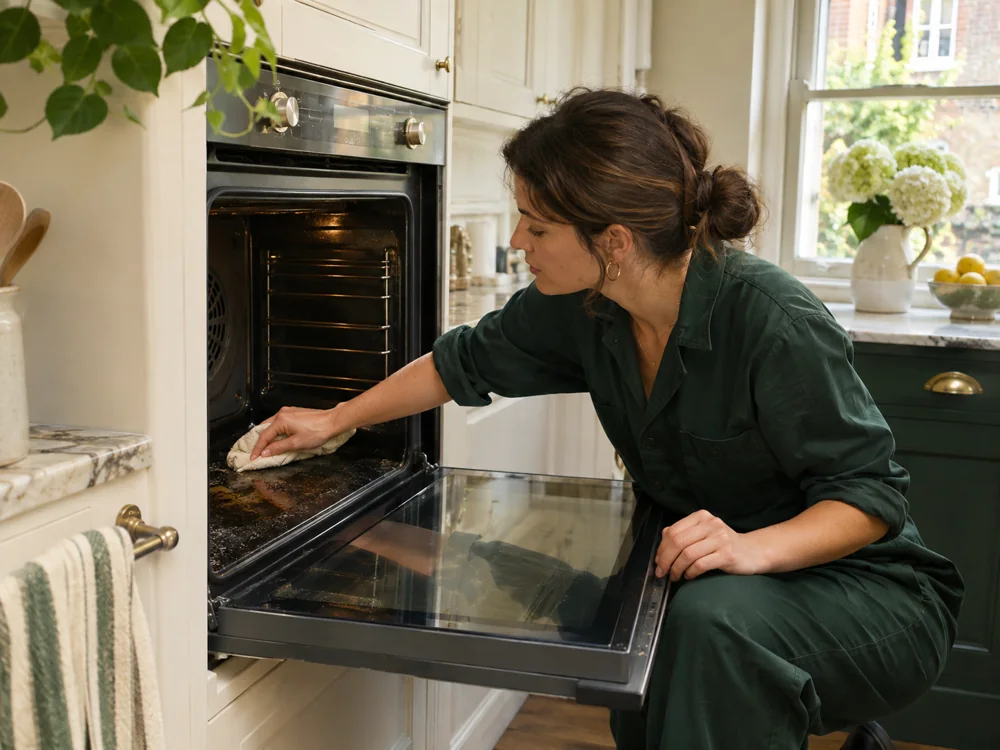
Request a deep oven clean in Chiswick for the residue left by regular roasting, grilling or repeated spills. Describe the cooker and the parts where grease has accumulated. We can discuss the work using the model, condition and access to your kitchen, including any shelves, grill pans or separate appliances you want considered.
Can I request a deep oven clean for a W4 address?
Yes. Send the full postcode, the cooker model, the affected cavity and directions to the kitchen. Tell us where grease is most visible.
Can I ask about the grill pan as well as the oven?
Yes. Say where the grill sits and describe the pan, insert and any removable handle.
Explain where grease collects when you cook
Tell us when you first noticed the problem and what the oven is used for most. Frequent roasting can leave deposits in a wider area than a single spill on the base. A grill often collects residue along the rack, on the tray below and behind its accessible front edge. If the cooker is used for batch meals, you might see a build-up at the highest shelf setting and a clean area where dishes shield the sides. Give us the usual shelf position and the parts you are most concerned about.
Start with what you can see safely while the oven is cold. A photo taken straight on with the door open helps show which cavity needs attention, while one of the front helps identify the layout. Include a close-up when a mark is the reason for the visit. Note any material stuck around the edge of a liner or near a heating element. Leave fitted pieces in place if you cannot tell how they are held, and tell the technician about the area when you go through the appliance together.
- Photograph the whole oven before close-ups.
- Identify the heavily used shelf position.
- Point out recent overflows or splashes.
Describe the oven, grill and any second cavity
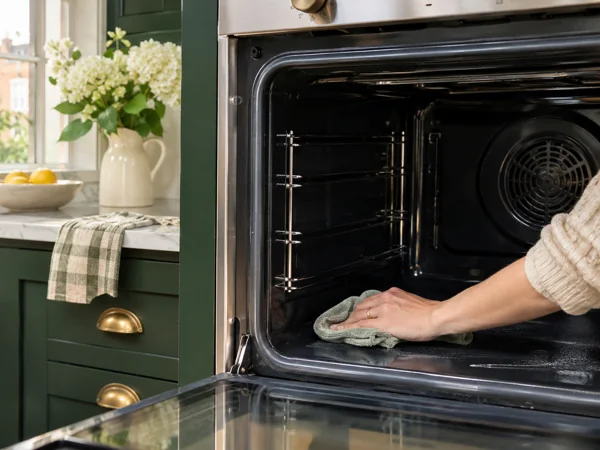
Some cooker fronts have two doors but only one is a full oven. The other may house a separate grill, a small combination compartment or storage. List what each door leads to and which parts you use for cooking. On a range, mention the number of usable cavities and give the hob type if you also want that priced. Tell us about a fitted warming drawer separately. A clean that includes one heavily used oven may need quite different preparation from one that includes several components on the same cooker.
Look for the model reference in the manufacturer's paperwork or on a label visible around the door when the oven is cool. There is no need to move a fitted appliance to find a number. Include the make and a picture of the control layout if the label is missing or unreadable. If you use one cavity only occasionally, describe its condition before assuming it needs the same treatment as the main oven. Include recent replacements to trays and racks if they differ from the original set.
Set out the racks and pans you want assessed
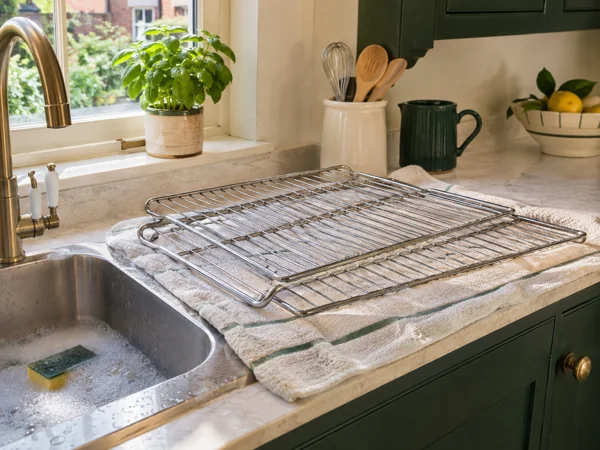
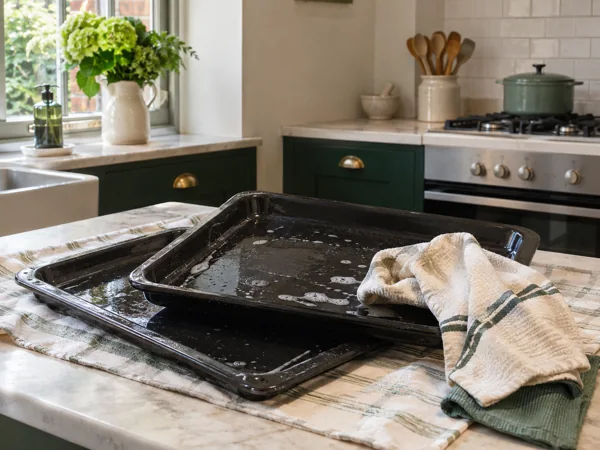
Loose shelves and suitable removable pieces can be taken out for separate cleaning, including soaking in a dip tank where their construction and condition allow it. A telescopic shelf support can need a different approach from a plain wire rack. An enamelled tray, an aftermarket non-stick sheet and a grill pan with detachable parts should each be considered on their own. Show the technician which pieces came with the oven, which were bought later and whether any items in the cupboard should be included in the discussion.
When the oven is cold, empty food and loose foil. Leave fitted parts alone if you are unsure how to remove them. Note shelves that drag heavily or stop midway, and mention a tray with loose coating or an edge that has bent. Make an accessible area available near the cooker for the technician to set out pieces and decide what can be treated. Keep items that belong to another appliance together so they do not accidentally get handed over with the oven accessories.
- List extra racks, trays and grill inserts.
- Flag shelf fittings that no longer move freely.
- Make room for the assessment of removable parts.
What to show when grease builds up
| Part | What to describe | What it helps clarify |
|---|---|---|
| Cavity base | A single overflow or several older patches | Where deposits first accumulated |
| Grill area | Grease on the tray, rack or accessible lining | Which grill components to assess |
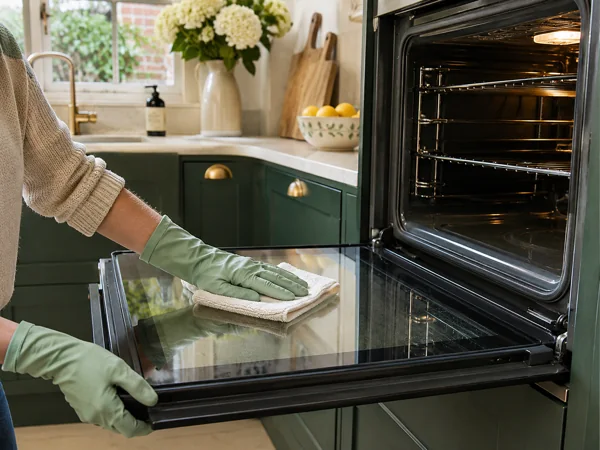
| Door glass | Film inside, outside or between the panes | Whether the affected area can be reached |
Distinguish baked-on deposits from a changed finish
Layered grease can go dark as it is heated repeatedly. A patch that looks similar can be a stain left in an otherwise clean surface or a change in the coating. Give some history when you can, including where a dish overflowed and whether the oven heated again before the residue was noticed. Tell us about products you have used recently, including which part they reached. If a self-clean programme ran after a spill, say so when describing the patch and the parts of the oven used that day.
Enamel, catalytic liners and parts around the heating elements can have different treatment instructions. The technician can inspect surfaces and discuss what can reasonably be addressed. Do the same with cloudy glass or grease in the corners of a door. Mark the location of the patch on a picture if you cannot be at the visit. An issue that affects how the appliance heats or how the door closes should be identified before the clean so we can discuss arrangements around the condition. Contact an appliance specialist separately for any advice on its operation.
Agree any hob and extractor work separately
Cooking vapour settles above the oven as well as inside it. If grease is visible on the underside of the extractor, describe the cover material and the filter type. A mesh insert may come out, while other units use disposable inserts. If you are unsure, send the model and explain what can be reached without moving cabinetry. Give the height and width where practical and mention if an island, splashback or overhead unit changes the approach to that side of the cooker.
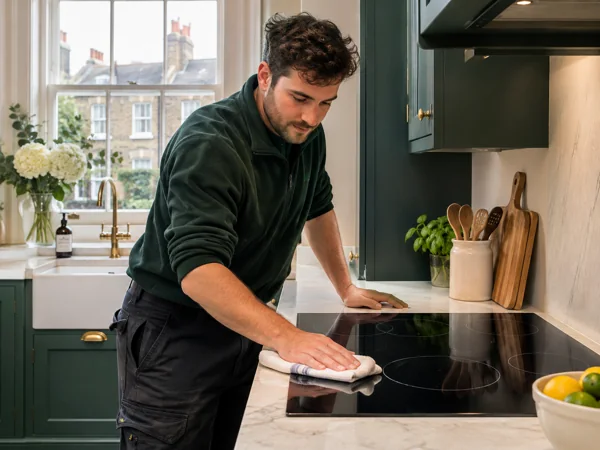
For the hob, say whether it is gas, induction or another type. Gas pan supports and burner caps need to be listed alongside the hob surface if they are important to the enquiry. On a flat plate, point out the rings in regular use and any wear around the controls. Mark hob, extractor and oven as three entries on your request and ask which pieces are covered by each. The grease on an external filter cover and the deposits inside the oven should each have a clear description.
- State the hob type and any removable components required.
- Describe external extractor grease and filter type separately.
- Ask for each agreed appliance to appear on the quote.
Which removable pieces to list
| Item | Useful observation | What we can discuss |
|---|---|---|
| Wire shelf | Extra shelves and their usual positions | Which racks to include |
| Telescopic support | Runner design and any stiffness | How it can be assessed in its existing condition |
| Coated tray | Finish, peeling or recent replacement | Suitability for the proposed treatment |
Give the route to the door people actually use
Hounslow Council identifies Turnham Green on Chiswick High Road. A nearby landmark can help orient someone, especially if you are on a side road, but the full address and entrance details identify where the technician needs to go. If the kitchen belongs to a flat reached behind a shop, explain whether the route is from the front, a passage or a numbered gate. For a house with a rear extension, say whether there is step-free access or a different door the household prefers visitors to use.
Ask your building contact where loading is agreed and which shared doors can be used. Give the length of the route in practical terms, including stairs, tight turns and any lift that stops a half-floor away. If callers use a bell marked with a company name instead of the flat number, give that label. For a communal passage, ask about keeping doors shut during the visit and agree a contact who can resolve access on the day. Tell us about restrictions before arranging a time.
Plan around a cool oven and a clear work area
Choose a time when you can leave the cooker cool and out of use. Move roasting dishes and chopping boards away from the immediate area, especially if you do most preparation next to the oven door. Remove utensils hanging on a nearby handle and keep children and pets clear while the work is in progress. Set aside any cookware you plan to use elsewhere on the day. If the appliance is in a shared kitchen, let other people know which areas and controls they need to keep free during the appointment.
Before agreeing the booking, mention any time by which you need the cooker or kitchen again. If you are preparing an evening meal, allow for handover and ask about use of the appliance after the work. Agree any water or power requirements and explain if the usual kitchen tap is unavailable. Once the work is complete, check which parts were treated and where the shelves and grill pan are now. Pass on the guidance to the next person who plans to use the cooker.
- Clear cookware from the oven and its immediate surroundings.
- Keep the cooker cool and tell others when it will be available again.
- Check use and accessory positions at handover.
Build the quote from the priority parts
Enter your postcode and begin the request with the oven or cooker type, the number of cavities and the problem you already know about. Explain which parts are important, including glass you would like inspected, the racks and pans you want considered and any extra hob or extractor request. A brief mention of how long the grease has been visible is more helpful when it identifies the part you use often. Include both a whole-appliance image and a close-up if the location of residual grease is hard to explain.
If someone else is letting the technician in, send them the same list and show them where the accessories are kept. For an oven being cleaned during a move, check the inventory wording against the appliance and confirm the timing of the broader property clean separately. Ask for an updated quote if the list changes, particularly when somebody identifies a second oven or an extra set of racks. Keep the note about existing faults with the photographs so it can be discussed before treatment.
Plan the Chiswick appointment
| Before the visit | Information to share | Who can confirm it |
|---|---|---|
| Access from the road | Correct entrance and loading point | Resident or building contact |
| Kitchen preparation | Clear work surface and cool cooker | The person using the kitchen that day |
| Handover | When the oven needs to return to use | The person arranging the clean |
Get an oven cleaning quote in Chiswick
Request a quote with the oven type, number of cavities and any extra appliances.
Get a QuoteOther Cleaning Services in Chiswick
Local references · London Borough of Hounslow – Turnham Green
Chiswick oven cleaning questions
Can you quote for a range that has one very greasy cavity?
Yes. Identify that cavity, describe the deposits and specify any other compartments or parts you want considered.
Should I take the shelves out before you arrive?
Take out your loose cookware and food. Leave shelves or fittings in place if they are difficult to move, and tell the technician about them.
What if the mark appeared after a self-cleaning cycle?
Explain when you ran the cycle and show where the mark sits. The technician can inspect the area and discuss treatment based on its condition.
Do I have to include the cooker hood?
You can request the oven by itself. If you would like the cooker hood assessed, describe the cover and filter as separate items.
How should I describe a shopfront with a flat behind it?
Include the visitor gate or side door, the bell label and the route to the kitchen. Mention steps and agreed loading arrangements.
Can I use the remaining oven cavity during the clean?
Tell us why you need it and when. Ask what can remain in use once the technician has assessed the cooker and working area.