 Housekeeper
Mould Removal in Canning Town
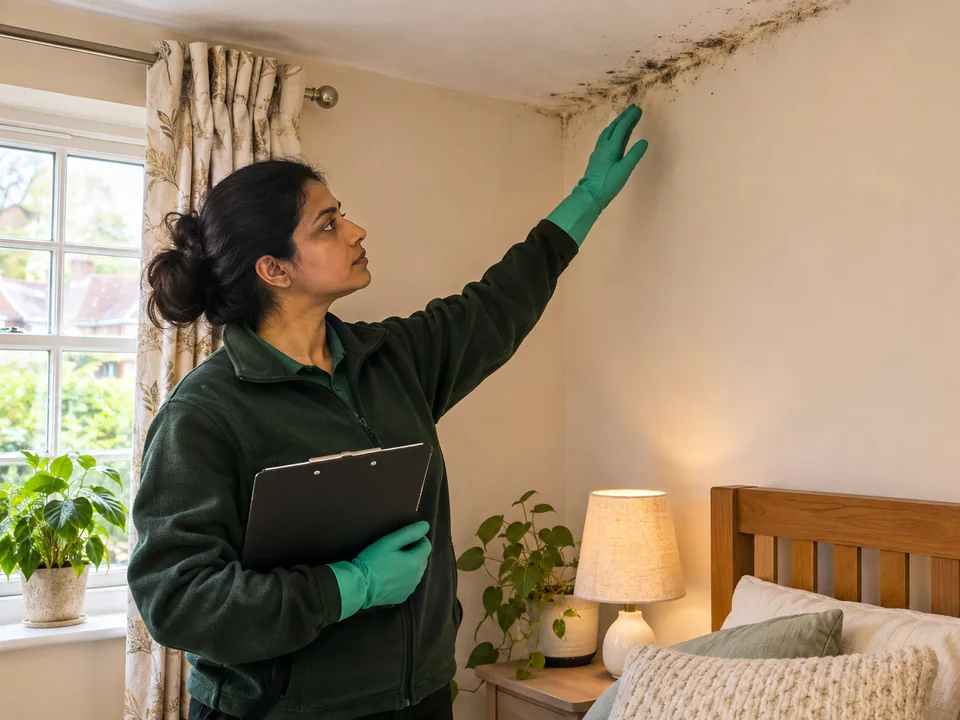
We start a Canning Town mould removal visit by assessing what is visible and where we can work. We agree and prepare the area, physically remove visible mould from suitable accessible hard surfaces and explain the result to the resident or their property contact.
Plan your enquiry
Can I enquire about a flat near Rathbone Market?
Yes. Give the full E16 postcode and the entrance used by residents.
Can you check the internal frame of a balcony door?
We can assess the visible hard section and discuss the available working reach.
Check the exposed material within the affected room
Newham's characterisation study describes newer mixed-use development in Canning Town, including residential accommodation around Barking Road and the Rathbone Market area. If you live above or next to another use, give the address as it appears at the residential entrance. Tell us about any different street entrance for visitors. A postcode and building name identify the property while a door name, level and meeting point identify the route we will actually take. We need the latter details to get to the room with the visible mark.
If a resident will meet us at the entrance, tell us who they are and whether they can remain for the assessment. If a property contact is arranging entry from elsewhere, agree who will take us to the correct room and show us the surface. Ask that person to tell us about any temporary access restriction. A reception desk might let us through to a lobby while access to the individual flat still depends on the tenant's arrival.
We assess how the visible growth sits next to a fitted door, cabinet or utility recess. The open door can expose a hard strip while the rest of the patch continues into a gap beside a connected or fixed item. We check the conditions on both parts we can see and define normal working reach. Where the compatible face can be treated independently, we agree preparation and clean the included area. At the review we point out which area was cleaned and identify any concealed section that remains outside the work, even if it is visible from a different angle.
If the description concerns more than one patch, tell us which one worried you first and which was found later. We use that order to check the list with the resident, then decide how to review the visible positions within the flat. Proximity within a room does not show that the affected surfaces are the same. The areas might need separate decisions if one is clear at floor level and the other lies beside a recessed or fixed piece.
- Give the residential entrance and level.
- Describe each mark in relation to a fixture.
- Confirm who will show us the room.
| Access | What to tell us |
|---|---|
| Residential entry | Door name, postcode and meeting point. |
| Inside the flat | Room and nearest fixed feature. |
| Contact | Who can show us the surface and agree work. |
Check the visible finish and how it meets neighbouring pieces
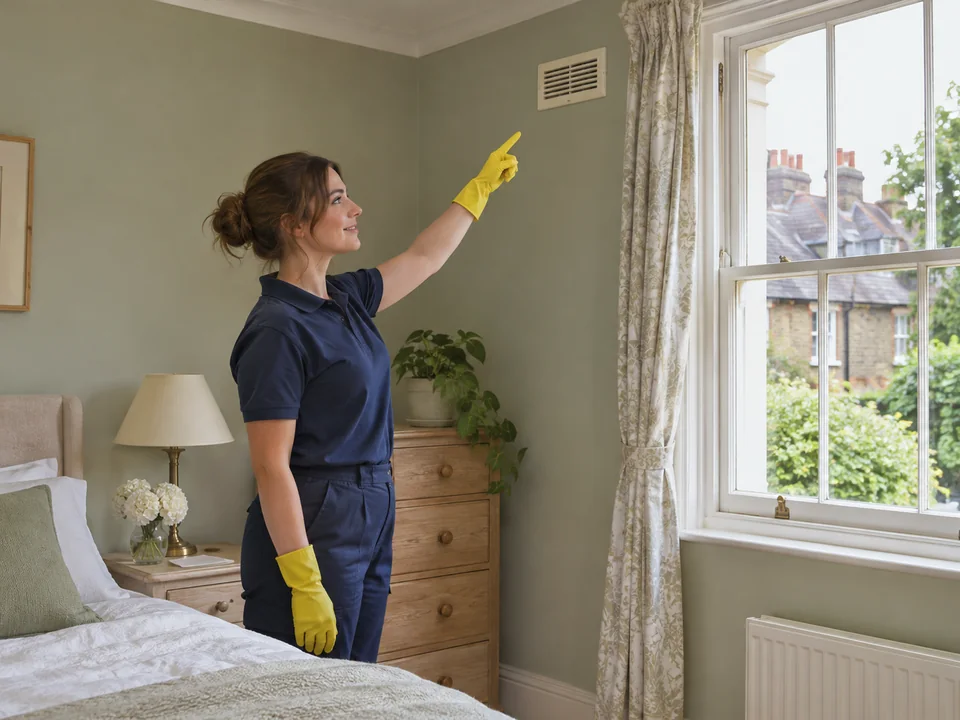
We use an assessment to work out whether the requested area is suitable for surface cleaning and can be reached. At the bottom of glazing there might be a rigid frame, a recessed track and a wall finish next to it. We check each visible part where the material or working position changes. If a section looks loose, deteriorated or hidden behind an adjoining fixture, we discuss that separately when agreeing the accessible hard surfaces we can clean.
We check a utility door or cabinet in its ordinary open position before agreeing the clean. A narrow strip can come into view without leaving enough space to work on it. We assess that strip and the nearest exposed hard face separately. Preparation stays around the compatible surfaces that can be reached without shifting fixed pieces. After physically removing visible mould from those areas, we show where the clean ended relative to the door, fitting or surrounding finish so the property contact can recognise the boundary.
We examine each readily visible part of a service or utility recess on its own. A hard cupboard side may be available while the wall behind fixed pipework or an appliance is not. Let us know whether the fitting is part of the building and whether someone has requested an investigation behind it. We can describe the exposed area and agree what can be cleaned there. An inaccessible position cannot be judged from the appearance of the adjoining strip.
If the visible area has changed since booking, point out the current boundary even if the first photograph still looks clear. We can discuss whether the change calls for a different working position or reveals a second finish. This matters particularly when the contact at the property did not make the original enquiry. We confirm what we are looking at before discussing which part we can agree to clean.
| Visible material | What we check |
|---|---|
| Rigid frame edge | Whether it joins a distinct finish. |
| Track or narrow recess | If it is exposed and within working reach. |
| Cupboard side | Where fixed pieces limit access. |
Prepare a clear place to work without blocking shared use
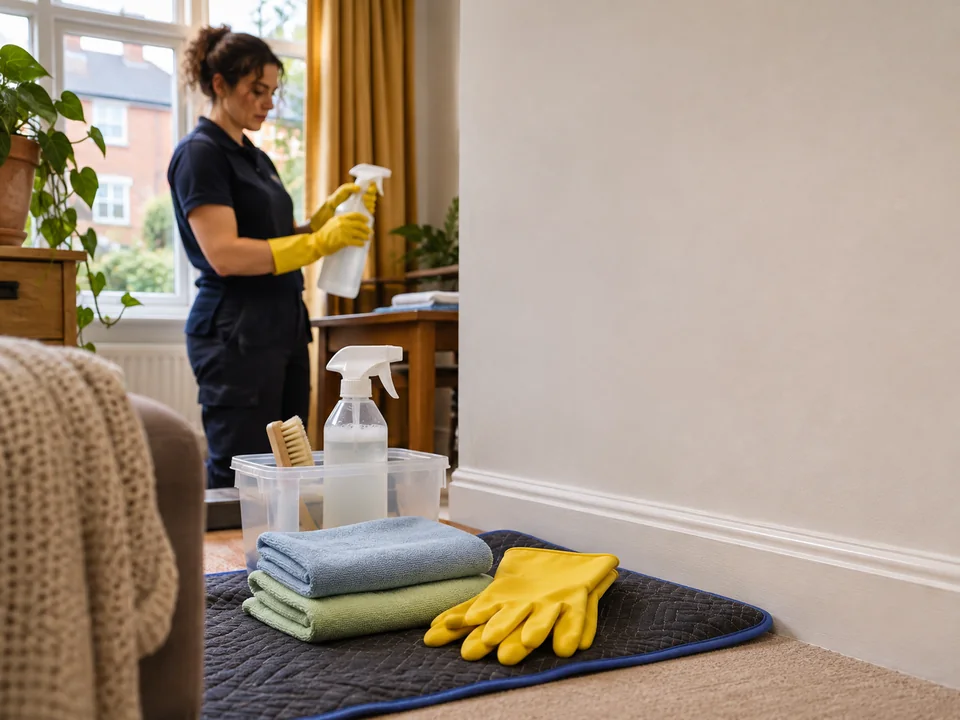
After the assessment we confirm the areas to include and discuss keeping them clear. In an open-plan room, the part of the floor next to a window may also be the route to the kitchen. Tell us how that space needs to be used during the visit and whether another route is available. We agree the approach and the working position in the actual room rather than assuming the layout from a photograph.
A resident can tell us which belongings to clear and where the cleared items can go. Some pieces, such as a fitted blind or cabinet, may need to stay exactly as they are. Point out anything that affects access before we start. If removing personal items reveals a previously obscured edge, we look at its condition and reach before discussing whether it can form part of the work. The agreement follows the surfaces we can assess in person.
When there are two areas, confirm who can make the second one available if they cannot both be prepared at once. It may be possible to begin beside a clear window while the resident finishes using the other room. We discuss which surface we can work on first and who will show us the rest. We also confirm whether entry to the property or service area is available throughout the agreed part of the visit.
- Keep the agreed approach clear.
- Explain which fitted items must stay in place.
- Discuss when an additional room can be made available.
Carry out the agreed cleaning and review the visible boundary
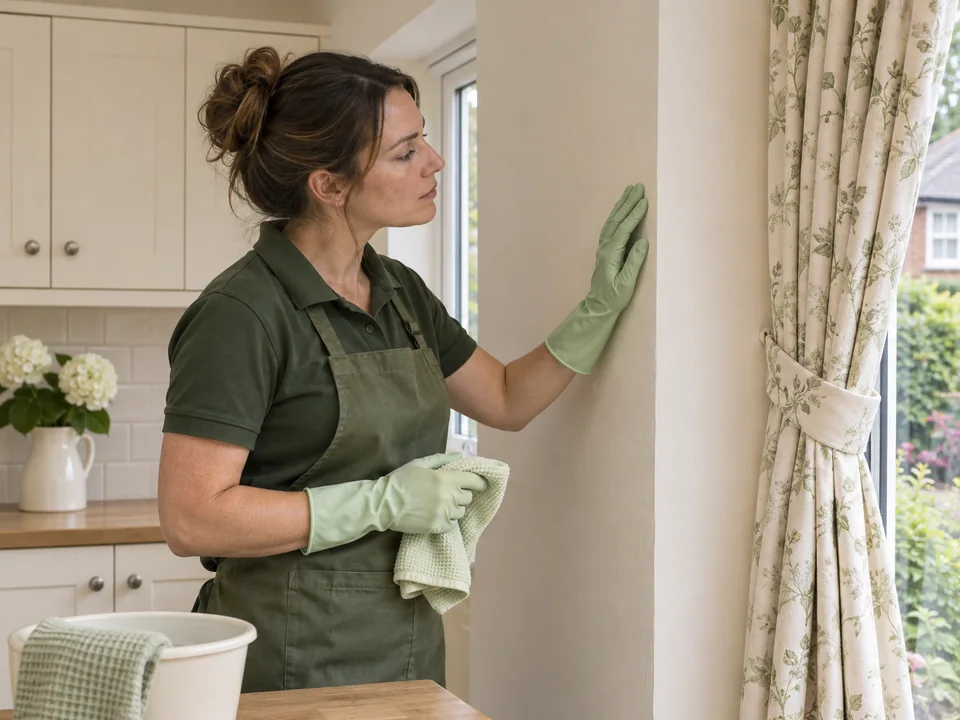
We physically remove visible mould from the suitable accessible hard surfaces we have agreed with you. Where a hard frame and a separate trim meet, we continue only across positions that have been assessed and agreed. If during the work we can see a material change that was not obvious before, we identify that position and explain its relation to the work. That gives you a clear account of what happened at the exact surface.
If an affected area runs towards a fixed cabinet or a fitting, we describe where we could reach and where it ends. A resident might recognise the cleaned position by a seam, the hinge side of a panel or an inside corner. Reusing that description during the final review makes it easier to distinguish what was cleaned from a different visible section. For a contact who is away, the same reference helps them find it independently later.
When cleaning is complete, we check the area under the visible conditions available to us. We identify the position where work took place and mention any remaining visible deterioration or inaccessible edge. If a nearby fitting appears to need attention, we flag where it is so the property contact can consider it separately. The review covers the exposed surface and work carried out, which gives the contact a starting point for any further building enquiry.
| Final review | What we describe |
|---|---|
| Surface cleaned | The identifiable section where work took place. |
| End of the work | The edge of the accessible hard surface. |
| Other visible feature | Any differing condition to raise with the property contact. |
Pass the result to the resident or property contact
Before the appointment ends, we walk through the result with the person agreed for handover. If the tenant showed us two areas but the person responsible for the property joined for only one, we use the original room names to explain both. We pinpoint the surface cleaned and where the work stopped. That avoids an ambiguous handover such as mentioning a window without specifying the frame or position.
Tell us if there is already a pending report to the building manager. We can explain where our visible work took place and identify any different finish or concealed position that remains. If the issue involves recurring moisture, possible water entry or work on a fixed item, the responsible property contact can arrange the relevant investigation. Our account of the visit gives them a location they can use alongside their own inspection.
At handover we describe the result in terms of the fitting and the exposed area treated. If the growth continues behind a service panel or into another part of the building, we identify that separately. Where the property contact carries out a later review, this gives them a visible reference for an area that remains inaccessible or needs a separate decision.
To enquire, give your full Canning Town postcode, building entrance and the room you want us to see. Describe the hard surface and where the mark lies, and tell us about anything that makes it difficult to approach. If you also need a wider clean of the flat, give that work its own list and timings. We can discuss how each visit would relate to the rooms available and what still needs agreement.
Ask the resident to mention any door or panel that must be closed again after they review the work. If the person arranging access has already left, agree who will check the room before the keys are returned. That gives the resident a chance to see the exact position we described before the appointment is closed.
- Name the person receiving the result.
- Explain any existing property report.
- Confirm where and when to hand back keys.
Questions about arranging mould removal
What if the residential entrance is on a different street to the building name?
Give the exact street and door name from which you want us to enter, along with the property's postcode.
Can you assess the patch with a balcony door open?
Tell us what position makes it visible. We check access and the finish once we see the door and the room.
Do you include the area behind a utility appliance?
We discuss the exposed part that can be seen and reached. Show us where the fixed or blocked section begins.
How do I identify two similar windows?
Use a permanent feature, such as a door or room corner, to show the position of each window.
Can reception take the keys after somebody else reviews the room?
Tell us who will review the room and which reception contact should receive the keys.
What if the agent has photographs that the resident has never seen?
Share the room reference and the date of the images. We confirm the current visible positions with the person who is there.
Other Cleaning Services in Canning Town
Enquire with your Canning Town postcode, Discuss regular housekeeping separately
Discuss your mould removal enquiry
Mould Removal Prices in Canning Town
Tell us which rooms are affected, the approximate size of the visible patch and what surface it is on.
Get a Quote