 Housekeeper
Weekly and fortnightly visits
Regular Housekeeping in Kentish Town
Tell us what needs regular attention after an ordinary week in your Kentish Town home. We can discuss a plan that starts where you need it, keeps rooms available when they are used and gives occasional jobs their own place.

Which Kentish Town station should I use as a reference?
Name the station if it helps, then add the full home postcode, side street and residential entrance.
Can the housekeeper do a hallway while the kitchen is occupied?
Yes. Tell us which part of the hall is included and when the kitchen will be free.
Take the NW5 approach all the way to the domestic door
Transport for London places Kentish Town Underground station on Kentish Town Road and lists Kentish Town West as a separate stop on its local map. Name a station precisely if you use it to explain your street. A visitor needs the complete home postcode and entrance before they travel to the address, even if everybody who lives there normally starts from a familiar landmark. A flat over a shop may have a door on one side and a bell on a side street. A conversion may have a street entrance for upstairs homes and lower steps for another door. Give the one that matches your booking.
Once through a shared gate, say which stairs, floor or internal entrance to take. Let us know who can answer when you will be away. A person handing over a key or arranging a door should have the correct date and address. Arrange any private access instructions directly rather than putting them in the public part of an enquiry. Tell us whether equipment comes from a storage area inside the home or needs to go up several flights. If the relevant cupboard is kept shut, agree a simpler place to leave the tools and supplies when you are not there.
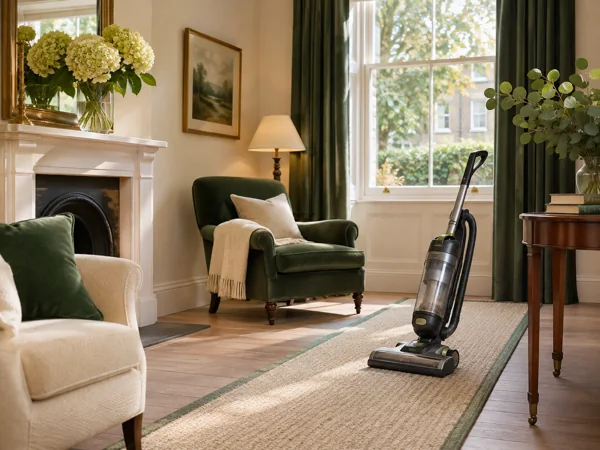
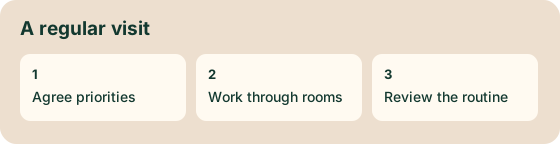
Place a Kentish Town household on the correct route
| Landmark name | Then supply | Check at the property |
|---|---|---|
| Kentish Town Underground | Postcode and domestic street | Exact door after the main road |
| Kentish Town West | Turn or courtyard leading to the home | Which bell reaches your floor |
| Shared stair | Private level and door label | Where the equipment can be reached |
Start the first appointment from a clear result rather than a long checklist
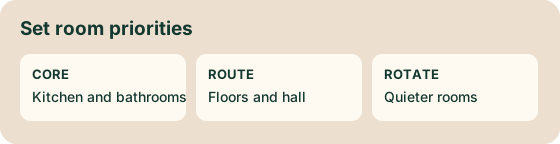
Tell us what matters most when the visit ends. A small home might need an open kitchen and bathroom to be usable again, while a household with a steep staircase may want accessible hall and stair work before a quieter room. Describe the rooms, their order and which person can change priorities if needed. Give a fallback if one room is occupied. Working through a short, ordered list lets us see what fits without squeezing extra work into gaps that have not yet been checked. A downstairs door or a home office can affect where the cleaner starts.
Set aside a clear room or route to use from the beginning. Show your usual supplies, or leave a short written note explaining where the equipment goes back. After the visit, tell us what you would keep for next time. If a task that normally takes only a short period needs longer, give a less-used room a rotation rather than reducing time on every priority. Discuss a longer slot if the home regularly needs more work than the ordinary room order allows. On later visits, update the office when availability of a room or access contact changes.

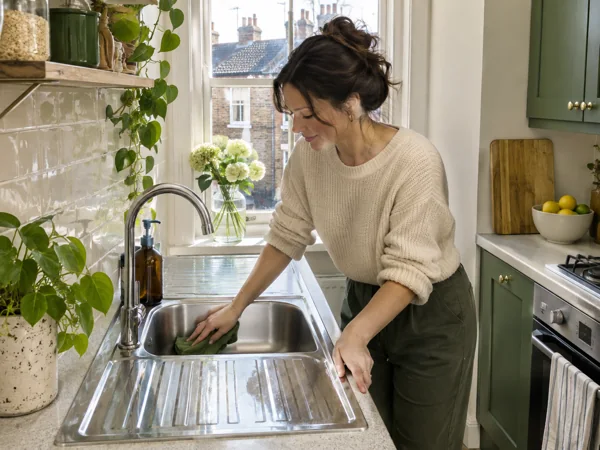
Agree which parts of the kitchen stay active during a visit
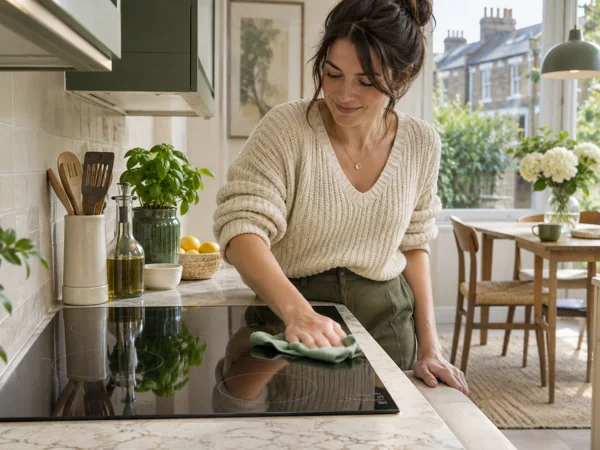
The regular work can include accessible food preparation areas, hob exterior, sink and taps, splashback, suitable floor and reachable appliance fronts. If the kitchen doubles as a workstation, identify the section you can clear and the time any remaining part becomes available. Decide if the floor continues into a dining space, under movable chairs or alongside a rear door. For a surface with a particular finish, give a product and identify the exact spot. A kitchen may have two surfaces that look similar but need different treatment. Leave a label or note to make the choice easy.
Tell us what should stay plugged in and what you will move in advance. A busy kitchen can remain useful if the housekeeper starts elsewhere and comes back when food preparation has finished. Talk through cleaning inside an appliance or along a cupboard interior separately from the usual worktops. Name which cavity or shelf is involved and what you will remove. Ask about additional time or a separate visit if the work needs it. Confirm what you want kept on the recurring kitchen list before changing the order to handle a one-off request.
Name each washroom and when it is available
Give separate details for a bath, regular shower or small WC. An ordinary arrangement can include reachable wash surfaces, basin and tap, mirror, toilet and floor. Choose a clear time to do the busiest room and a fallback job before it becomes free. Give the location, such as after the first landing turn, rather than assuming somebody will find the correct bathroom based on size. Say if you want a cloakroom done every visit even though the main bathroom is sometimes the higher priority. Leave the labelled product for any fitting that has special care instructions.
If small items remain on the ledge, say which part can be cleaned. Move things to a safe place yourself if you want the surface underneath reached. Tell us about a bath mat or towel only if you would like something done with it and have agreed where to leave it. Distinguish marks that need extra work from everyday splashes near a shower screen. Describe the area if the usual products have not been enough and ask how to discuss the work. Keep the ordinary washroom priorities on the list while you consider a separate job.
Protect private items while making bedrooms and the lounge usable
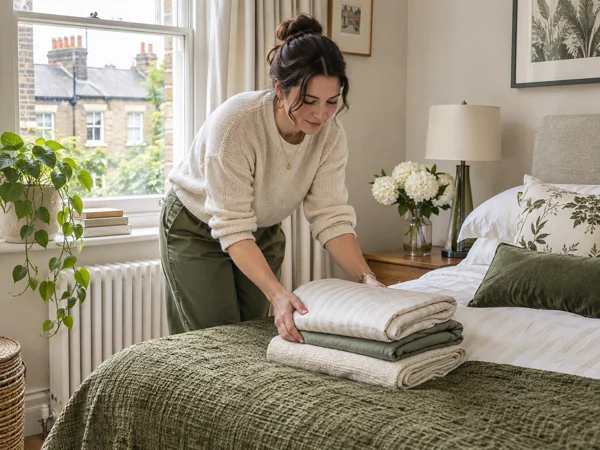
Tell us how to identify each bedroom included in the visit. Agree accessible floor and surface work without guessing what should move. A study may share a bedroom and still have paperwork that should stay exactly where it is. If you ask for a bed change, leave a complete bundle for that bed and a named place for used pieces. If a room will stay closed during the appointment, put it outside the list or give an agreed time to reach it later. Keep the room's own instructions adjacent to its name.
Set a boundary around a media unit, desk or display if it is in the sitting room. Tell us which shelves or tables can be wiped and how far a vacuum can reach around furniture without moving it. Explain if a light chair or rug can be moved and where it should go back. Put delicate personal objects away yourself where possible. A separate fabric request should identify the actual item, fibre if known and the position of a mark. That allows ordinary dusting and vacuuming to remain independent of any work under discussion for a particular textile.
Set the work in a shared kitchen
| Situation | Keep on the list | Can move to later |
|---|---|---|
| Table in use | Clear worktop and sink | Floor under the occupied end |
| Appliance stays plugged in | Reachable outer surfaces | Separately agreed work behind or inside |
| Dinner starts soon | Agree return of usable preparation surface | Lesser-used shelving |
Meet Housekeepers Covering Kentish Town
Tell us your postcode and preferred frequency so the office can check who covers your address.
Get a QuotePlan the stair and floor routine within the private space
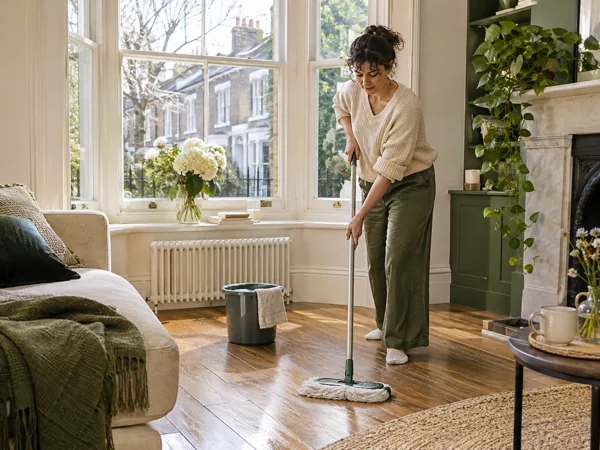
Show where your floor work starts at the doorstep and which hall, internal stair and landing it includes. For stairs with a runner, name the exposed strip and give the right vacuum tool. Mention any older fit or damaged edge that should stay as it is. A threshold from hard floor to carpet can need a separate approach. Identify the product and equipment for each finish and tell the housekeeper where they are kept. If a narrow entry needs to be cleared, give somewhere a mat or shoe rack can go while the floor is attended to.
If pets use the same route, agree when it will be clear and which door or gate needs to remain shut. Let us know what to do with bowls, toys and bedding and if something should stay on the floor. A floor that has been mopped may need room to dry before people come in. Describe the time it can be kept free. Give the storage place for equipment after the visit. If the property uses different equipment on separate levels, a clear instruction may avoid unnecessary trips along a stair you need to keep available.
Use a weekly or fortnightly interval to match recurring demands
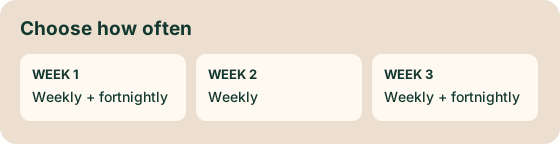
A weekly appointment is worth discussing when rooms remain in heavy use and the same jobs are necessary within a few days. Fortnightly housekeeping can fit where households keep up with ordinary work between visits and prefer help with more sustained floor, surface or washroom time. Tell us which work should be repeated regardless of other use. An alternating list can fit a guest room or a more occasional group of surfaces. Ask how much time you can set aside after giving the important jobs and discussing which rooms should actually rotate.
Give the office a preferred day and a day you can make available if needed. A particular work call, appointment or resident condition might affect just one room. Tell us how that changes the order before deciding to move the whole visit. Ask about a preferred housekeeper when discussing recurring availability. If there is a change for a particular date, confirm access and timing with the person who will meet the housekeeper. Tell us when the usual date should start again after a holiday or temporary change in who uses the rooms.

Give separate information for equipment and extra work
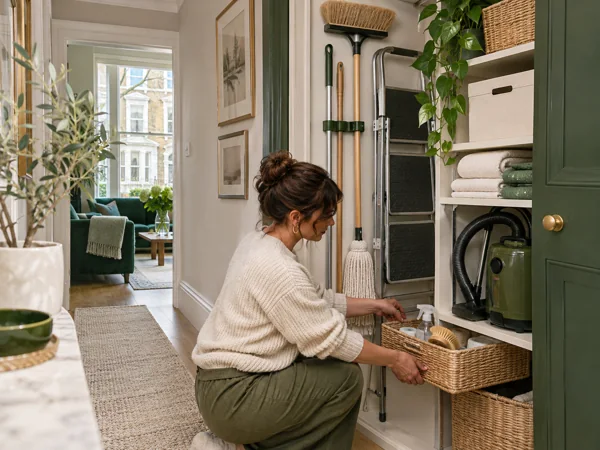
Show where the household supplies and appropriate attachments stay. Label products by room or surface and distinguish the cloths kept for kitchen and bathroom use. If something suitable is not available, mention it before the visit is booked. A private cupboard does not need to be opened just to reach a vacuum if you can leave it at an agreed place. Tell us how to return the equipment or which floor it is meant to stay on. Put any unusual instructions for the home near the tools so they can be seen without interrupting a resident.
For a larger job, identify the actual item you would like discussed. An oven interior can have one or multiple cavities, with fittings that should be named. For a rug or armchair, provide the material and affected panel or corner as far as you can. Give any date you need the work considered. Ask about fitting the separate task with the usual visit rather than listing everything as regular. Review the preferred frequency, postcode, entrance, room order and person arranging access before you confirm.
Point out physical boundaries
| Part of the home | Identify | Use for planning |
|---|---|---|
| Entrance threshold | Private floor begins here | End of the communal landing |
| Runner | Carpeted middle and bare edges | Different tool or attachment |
| Study in a bedroom | Floor outside desk cables | Which belongings stay in place |
Quotes for Kentish Town homes
From £23 per hour. Confirm the rate and visit length for your address when you request a quote.
Get a QuoteRelated cleaning services
- Spring cleaning · Ask about a one-off visit for rooms that need additional time.
- Oven cleaning · List the oven cavities and removable parts when requesting appliance cleaning.
- Carpet and upholstery cleaning · Tell us the material and which areas or pieces you want treated.
- End of tenancy cleaning in Kentish Town
Local references · Transport for London · Kentish Town Underground station · Transport for London · Kentish Town area map
Kentish Town housekeeping questions
Can I just give Kentish Town station and my number?
Include the real street, postcode and door. Name which station only as a reference for getting there.
Could the kitchen come after our hallway and a WC?
Yes. Give the agreed first jobs and a time when the kitchen will be reachable.
Can a home office desk be left untouched within the bedroom?
Yes. Identify the area to avoid and agree the reachable floor and other surfaces in that room.
What should I do about a different finish on my stair edge?
Identify where it changes, give the right tool and explain if any strip or repair should be left alone.
Can we close the door to the spare room for some visits?
Yes. Say which visits it can be entered and what you want done there. Keep your main tasks clearly identified.
How should I ask about a separate cupboard clean?
Give the shelf or cupboard and what will be removed. Discuss the extra work separately from ordinary kitchen surfaces.