 Housekeeper
Mould Removal in Notting Hill
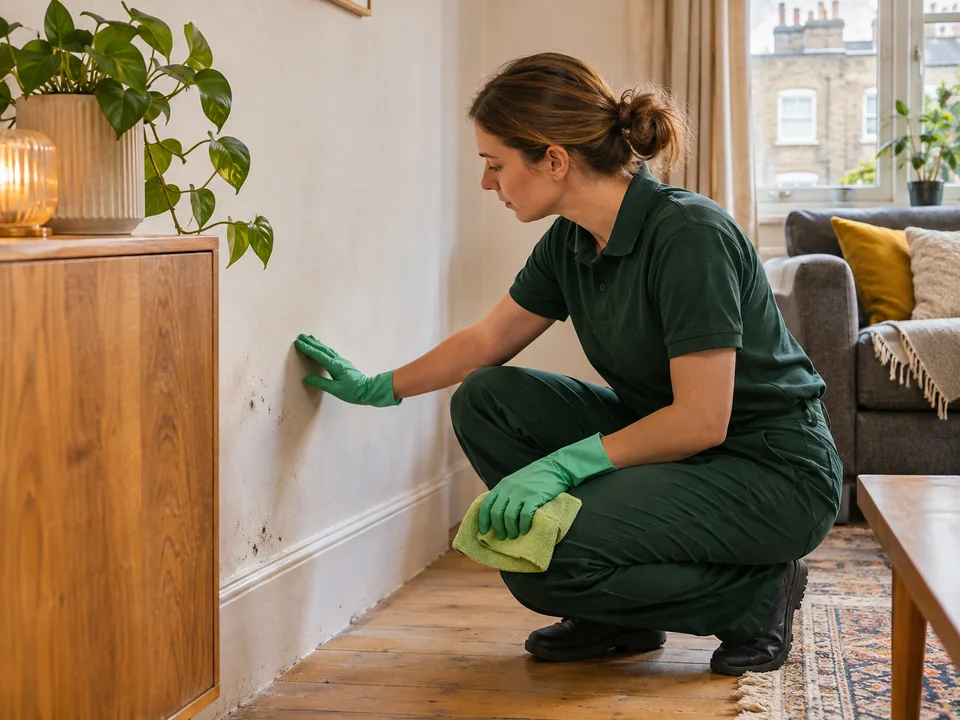
We provide mould removal in Notting Hill for agreed, accessible surfaces. If you see growth around a shutter, window reveal or painted sill, show us where it sits and tell us which parts of the fitting can be reached. We use those details to discuss preparation, review the finish and explain what was cleaned at handover.
What should I send for an Elgin Crescent enquiry?
Give the full postcode and show the whole opening plus the marked edge if you can.
Can you clean inside the shutter pocket?
Show us where the visible marks end. We assess the reachable surfaces with the shutter in its normal positions.
Find the mark with the shutter in its usual position
A tall window can contain several different finishes within the width of a hand. The bottom rail may be painted wood, the sill may be stone, and the edge of the opening may be plaster. When you enquire about a Notting Hill visit, tell us which of these pieces you can actually see and whether it is on the left, right or at the bottom. A description based on the view from inside the room gives us a fixed reference even if a resident and a cleaner use different names for the parts.
Send one view from far enough back to show the opening and one from close enough to see where the marks stop, if you can do so without moving a fitting. A lit photo can help us distinguish an exposed sill from the narrow return behind a shutter, but the picture is only a starting point. Let us know whether the shutter normally stands open or closed and whether the affected strip is in view during normal use. We can then discuss which surfaces would be available during a visit.
If the first report came from someone returning to a room after it was closed for a while, ask them what they noticed before opening the curtains. This can be more useful than a description after the room has been rearranged. You can tell us that the dots were visible on the lower left return when the shutters were folded back, and separately report moisture on the glass. We record those as separate observations so that the proposed cleaning has a clear location.
- Identify the room and the opening from inside the property.
- Say how the shutter normally sits and who can operate it.
- Share an overall photograph and a close view where practical.
Check the finish from one edge to the next
The Royal Borough’s Ladbroke appraisal describes the varied materials and exterior finishes of local terraces, including examples around Elgin Crescent and Kensington Park Road. That gives context for why one address may contain several finishes. For the work indoors, our decision comes from what we can see at the affected spot and what the resident knows about it. Even when a frame and the adjoining surround look the same at a distance, the coating and material beneath can be different.
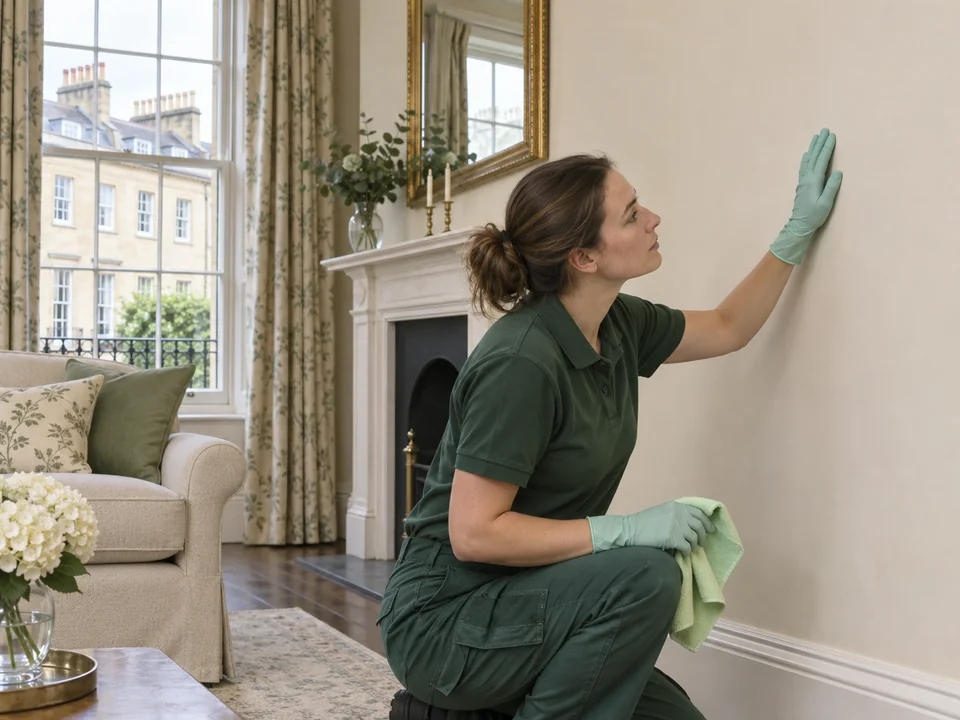
We review the visible boundary before handling the surface. Where an intact, accessible finish is suitable for cleaning, we agree the area to work on. If a coating is powdery, lifted or already cracking, we flag that part separately. The same applies if the visible marks disappear into a closed pocket or under a trim strip. A handover that identifies each part by name means the householder can pass a clear description to the person responsible for the window or decorative finish.
In a flat with secondary glazing, describe which side of the assembly the marks face. A sill on the room side and a patch apparently between two layers raise different questions about access. We can review the sill as a surface in its own right. If reaching the other patch requires separating glazing or taking off a panel, we identify it as a separate matter. That helps you seek the right follow-up without booking a cleaning visit on the assumption that every layer can be reached.
| What you can see | What we check at the visit |
|---|---|
| Marks on a painted sill | Whether the visible finish is firm and suitable to clean. |
| Marks beside shutter hinges | Whether the exposed strip can be reached with the fitting in its normal position. |
| Marks inside a glazing assembly | Where the visible patch sits and whether the resident can reach it normally. |
Agree how we will prepare the room
Tell us which furniture can be relocated by the household before we arrive and which pieces should stay in place. A bench directly below a window may be freestanding, fitted or used to cover pipework. That distinction changes the working space. We confirm the practical preparation with you before cleaning, including where nearby fabrics and small objects should go and which surface boundaries the resident wants respected. The aim is a clear path to the agreed area and enough room to work without leaning over belongings.
At a property with more than one dwelling behind a front door, give the flat number and the entrance used by visitors. If one person handles the shared door and another person lives in the affected flat, explain who will be available at the appointment. When a bay is in a room somebody needs to use, tell us the times they can free it. We can discuss the sequence in advance so the right person is present to show the fitting and confirm the room is ready.
Some homes have curtains that touch the sill and blinds that sit within the opening. Tell us which coverings can be tied back or raised by the resident and which need to stay in place. If you notice marks on a curtain lining, report that as an additional item. It helps us agree a practical boundary around the hard surface and avoid assuming a fabric can be handled in the same way. Show us any curtain track or shutter movement that restricts the area at the start.
- Set aside a clear floor area beside the window.
- Tell us which coverings the household can move.
- Arrange access with the resident who knows the fittings.
Remove visible growth from the agreed accessible surface
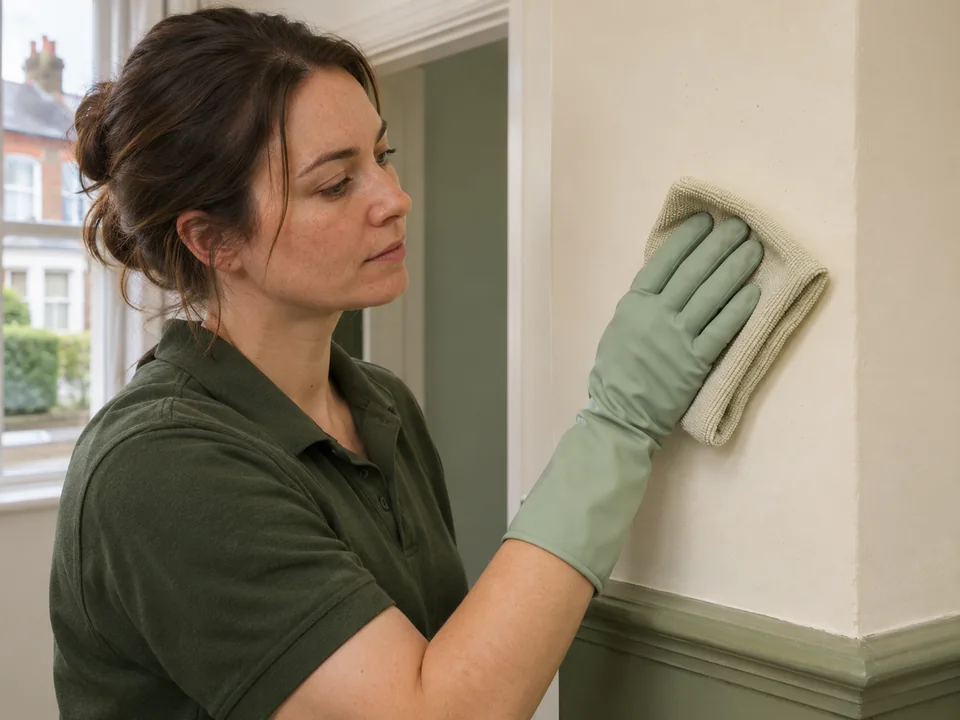
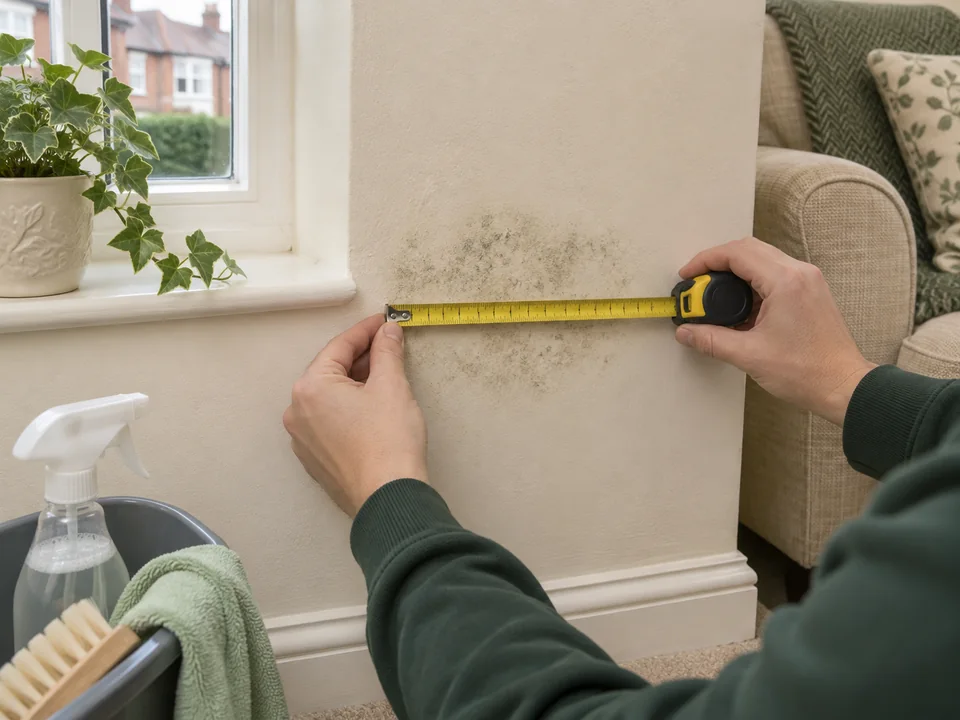
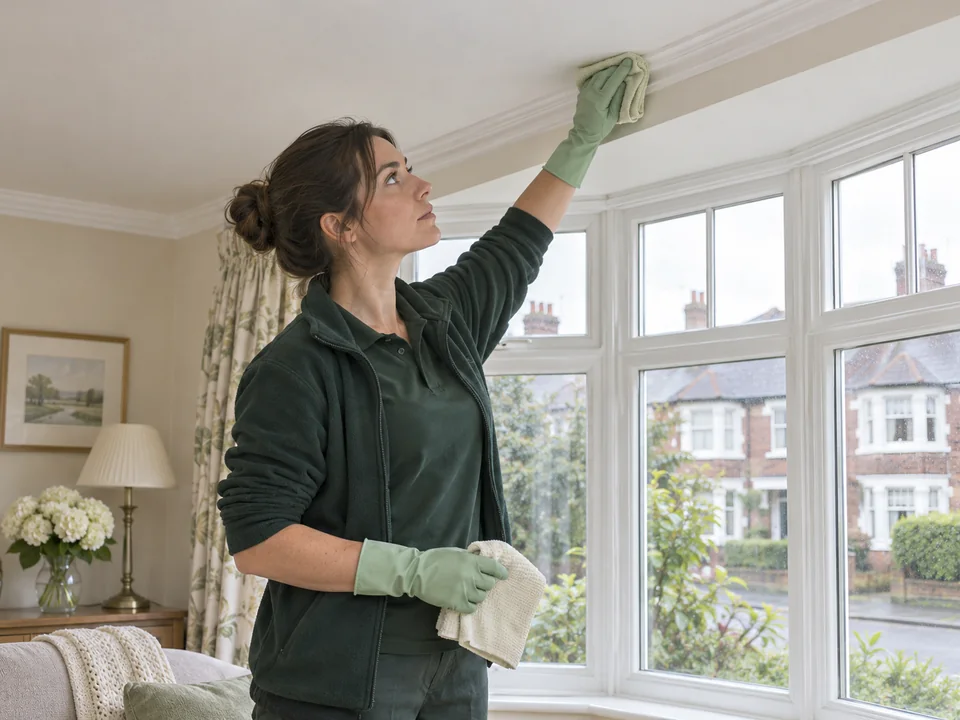
On arrival we ask the person who reported the patch to show us the affected edge. We compare it with the description discussed before the visit and review whether the preparation we agreed works in the room. We then confirm which visible parts are accessible and suitable to clean. If the area is wider than shown, the finish feels different or the available access has changed, we explain that before continuing. The resident can follow which parts of the opening we are proposing to work on.
During the visit we remove visible mould from the agreed suitable hard surfaces, working up to the edges we can reach without dismantling the fitting. We match our approach to the finish in front of us and review the adjoining surfaces as separate items. Under a painted sill the boundary might be where a solid coating meets an older plaster edge. At laminated trim it might be the exposed face rather than the seam behind it. We describe those boundaries so you know where the cleaning took place.
While we work, a change in texture or an unexpected edge can make a patch less straightforward than it appeared at first. If an area needs separate consideration, we explain what we found and leave that area for discussion while completing the agreed work where suitable. For a householder or agent managing more than one room, this makes the outcome specific enough to record. You can note an accessible window ledge as cleaned and keep a second entry for an area that still needs attention.
| At the window | How we handle it |
|---|---|
| Surface matches the agreed preparation | Clean the accessible suitable finish within the agreed boundary. |
| A fragile coating becomes visible | Pause at that edge and explain which piece needs a separate decision. |
| A mark runs under a fixed fitting | Record where the exposed cleaning ends for the handover. |
Review the room from the same viewpoint
At handover we show you the area we have cleaned and point out any nearby items left for separate attention. View it with the shutter or blind in the position you used to report the marks, if it can be operated normally. Comparing the same section of wall or sill avoids confusion when a folding panel hides part of the opening. If an older mark remains visible, we identify its position and discuss what could be observed at the appointment so you have a clear record.
If the person responsible for the property cannot attend, agree who will receive the outcome before the visit. Calling a room the garden bedroom or the first room off the landing can be more useful to an agent than referring to an east-facing window. Use the same wording for any photos you pass on. A room name, the precise edge treated and a separate note about a fixed fitting give the decision maker a specific item to follow up if further work is needed.
Tell us if the patch had appeared in the same place before, or if you have seen moisture after the window has been shut for a period. That history helps frame what we discuss at handover. It can also help the person responsible understand why the householder is monitoring one corner rather than an entire room. The visit deals with the agreed accessible surfaces. Observations about repeated moisture, movement in a coating or an assembly inaccessible from the room can be passed on as separate property issues.
| Item to record | Useful detail |
|---|---|
| Cleaning completed | Room, fitting and the exposed area worked on. |
| Area left for review | Exact edge or section the visit could not address. |
| Follow-up contact | Named person who can review it and arrange access. |
Arrange the next contact for the affected room
For a Notting Hill enquiry, start with your full postcode and describe the room, first signs and any prior visit in your own words. If you know a finish was recently painted or that a window has had previous attention, mention it as part of the history. Tell us who can clear the work area and operate the shutters on the appointment day. We then have enough detail to discuss the practical visit, including whether other visible surfaces can be considered while we are there.
If you are arranging a separate housekeeping visit, identify any sill where access or handling has been agreed with the property manager. A written note referring to one specific window can save confusion between rooms with similar fittings. If another patch is found later, send a fresh description of the actual surface so we can discuss it on its own merits. Keeping those details with the property contact avoids relying on a previous agreement for an opening with a different finish or different access.
- Use the full address and postcode for the enquiry.
- Share known work or damage at the affected window.
- Name the person who can show the surface on arrival.
Questions about arranging mould removal
Can you start with the sill in our front bay?
Yes, show us that sill first and tell us whether the window coverings can be moved. We review the surrounding edges before agreeing the area to clean.
How should I label photos of two matching windows?
Use the room name and the side as seen while facing out from indoors. Include a wider shot that shows the two openings together.
What if the paint along the reveal has already lifted?
Point it out at the start and explain whether it has changed recently. We assess the intact areas separately and flag fragile sections at handover.
Will you take out secondary glazing to reach a patch?
We agree work on suitable accessible surfaces. If the patch is inside an assembly that requires dismantling, we identify its location for separate attention.
Who should meet you when the flat has an entryphone?
Give the name shown on the bell and arrange for somebody who can show the room and its fittings to be available.
Can our managing agent receive the outcome?
Agree the recipient when arranging access. Use an identifiable room name and the exact fitting so the agent knows which part was cleaned or still needs review.
Other Cleaning Services in Notting Hill
Discuss your mould removal enquiry
Mould Removal Prices in Notting Hill
Tell us which rooms are affected, the approximate size of the visible patch and what surface it is on.
Get a Quote