 Housekeeper
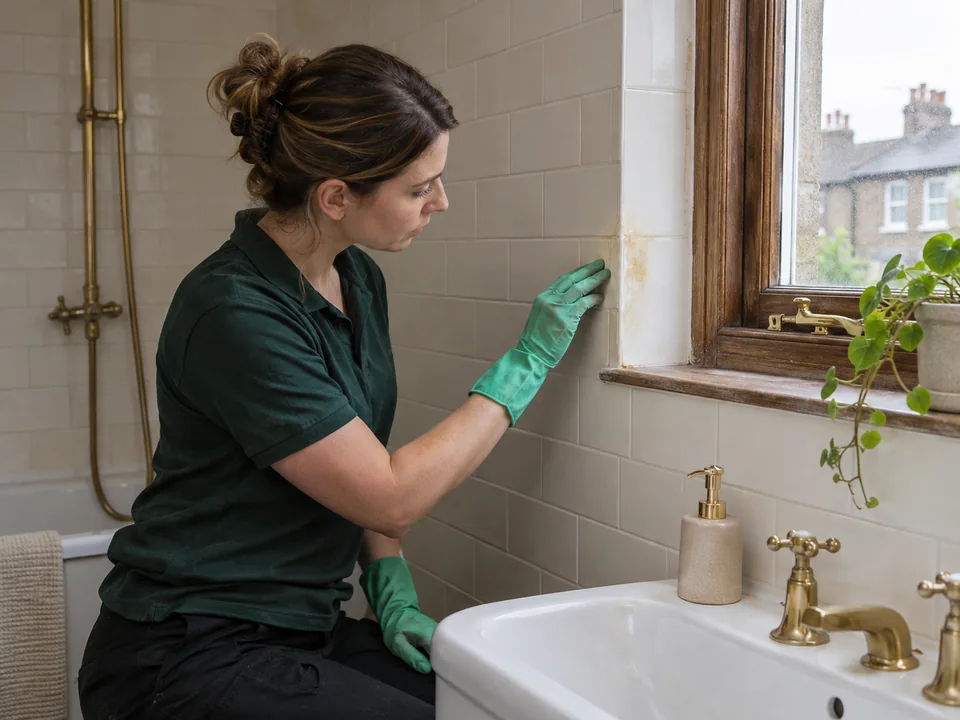
Mould Removal in Marble Arch
We look at the actual material around a visible mould mark in your Marble Arch property. For stone, tile or another finished surface, tell us what you know about its care and which edges are accessible.
Can I enquire about W1H or W2?
Send the full address and describe the room and finish that has visible marks.
What if visitors sign in at a separate entrance?
Tell us where to sign in and who can take us to the dwelling.
Follow the mark across each change in material
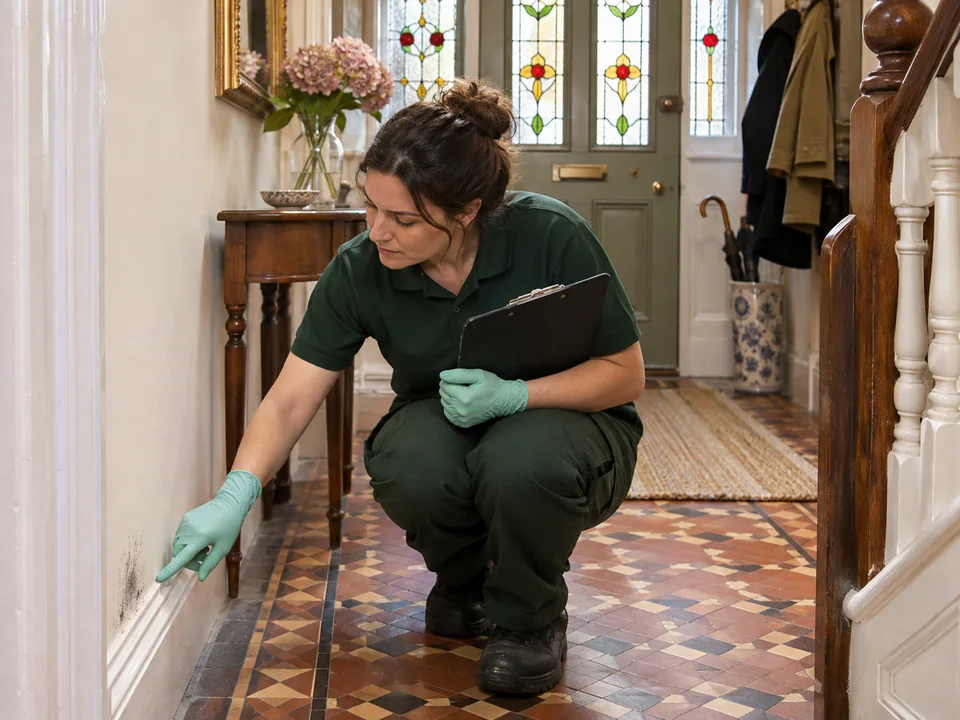
The narrow ledge behind a basin can look like one continuous surface. We follow the visible mark along the face, then look where it crosses a seam into the wall or meets the cabinet below. Each material gets its own assessment. If the ledge is firm, accessible and suitable, we can prepare that strip for cleaning. Any affected section that disappears behind the cabinet is outside that pass. We use those same edges when we show you the finished work, so you can tell exactly what the visit covered.
Westminster City Council describes Marble Arch at the junction of Oxford Street, Park Lane and Edgware Road. It is a useful reference for the area, while the postcode, the name of a building and its residential entrance identify the dwelling. If guests use a front reception but residents enter by a separate route, explain how a cleaner is expected to sign in. Give us the floor and the person who can open the affected room after we reach the correct address.
Around a polished surface we pay particular attention to the junction with grout or trim. A line may continue across two joins and end on a third material that needs a different decision. We make enough space to reach the face in front of the fitting. We then remove visible mould on the suitable hard surfaces agreed for the visit. If a section proves inaccessible when we get close, we stop at the last reachable edge and explain it at handover.
If there are marks in several rooms, name the rooms and give each surface a separate description. For example, a polished backing in the main bathroom may have a different finish from a hard tiled face in the shower room. Tell us which ones you want considered for cleaning. If an occupier needs to open a bedroom to reach an en-suite, arrange that access and tell us which room will be available first.
| Enquiry detail | What helps us prepare |
|---|---|
| Finish | Known material and any supplier care instructions |
| Affected edge | Where the mark sits relative to the fixture |
| Entry | Residential or visitor entrance, floor and contact |
Prepare the approach without moving fitted items
We discuss which loose objects can be set aside and where we can approach the affected surface. In a bathroom, put away toiletries and other loose belongings on the side nearest the mark. A deep counter or a bowl set into a worktop can still limit reach at the back. If a fixed shelf, mirror or cabinet overhangs the area, describe how much of the surface remains visible while it stays installed. We use the actual space to discuss the cleaning.
Tell us if some of the surfaces were recently installed, polished or resealed. A household may have different care requirements for a matt finish and a reflective one, even where both are described as stone. If you have instructions for either finish, show us the part of the room they apply to. If a worktop is being repaired or has an area that should remain covered, tell us before we assess what can be cleaned nearby.
A bathroom ledge can have a reachable front edge and a section hidden behind the taps. We check both sides from the position where the work can actually be done. Once we have identified the suitable face, we prepare the working area and clean the agreed surface. Before we leave we look back along the ledge with you, distinguishing the area cleaned from any mark that continues behind the fitting. This gives you the exact position to point out if the remaining section needs another assessment.
- Set aside small items at the agreed edge.
- Share care directions for the affected and adjoining finish.
- Arrange both building entry and access to the room.

Assess the exposed surface, including its gloss and condition
We look at the surface and distinguish marks on the face from changes in the finish itself. An area of worn coating or etching can catch light differently from an intact hard material. We look at the mark from the accessible side, check where it meets the joint and discuss which part is suitable to clean. If you know a surface is polished or has received a special coating, point it out even when it looks like another material next to it.
Where a line sits along a ledge behind a basin, we check how the ledge meets the wall. A solid backing can be suitable while the adjoining bead or finish is already damaged. A mark on a stable hard face may continue into an open or darkened joint. We describe those features separately and tell you where we can reach. For a recessed fitting, the affected area may only be visible from above while part of it remains behind a fixed section.
If there has been an issue with moisture in the same place, explain what is known before we start. An earlier seal repair or visit by a property professional can change the surface you now see. We can assess the exposed material and compare it with your description. Checks within a wall, underneath a fitted counter or below the floor should be arranged separately with the person who maintains that part of the property.
A decorative hard face can be made from small pieces with different types of edge. Tell us if a panel is a mosaic, if it has a polished rim or if two apparently similar materials meet at the corner. We identify visible signs of damage before agreeing ordinary surface cleaning on suitable parts. Where uncertainty about a finish cannot be resolved at the appointment, we can explain why it needs to be left and point out the position for the property contact.
| Visible condition | What we establish |
|---|---|
| Stable exposed hard face | Whether it is suitable and can be approached |
| Worn coating or darkened joint | The visible difference and limits of cleaning |
| Finish behind a fitting | Which section we can assess with it in place |
Work on the suitable hard faces identified with you
We remove visible mould from suitable accessible hard surfaces agreed after assessment. Where a bathroom contains several finishes, that may mean a defined area of glazed wall and a separate exposed hard face beside the basin. We identify the boundaries where those faces meet another material or fitting. That way you can tell which area was included even if a neighbouring join remains visible afterwards.
If there is a further mark once a loose object has been put away, we discuss its position and condition before doing any additional work. A newly visible part may have a completely different finish from the one beside it. If the person meeting us has only arranged to open the room, agree how we can reach the person responsible for deciding whether to include another surface. We can show the visible area and explain what the available access allows.
During the work, we keep track of any limit set by a fitted piece or the condition of the adjoining surface. A rigid face may be exposed until it meets a metal rail or retaining fitting. We clean the agreed part and review how it meets the edge when we finish. Ask us to distinguish any discolouration within a material from the result on a suitable exposed face.
If the surface is made from several cut pieces, we can use the grout line or a visible corner to mark the extent agreed. Around a hard splashback, a full panel can meet a small return at the end of the counter. We examine both from the position available instead of assuming the narrower section is equally accessible. That can also reveal that the return uses a different finish despite looking similar. We can explain the difference when checking the work, especially if the booking contact will view the room under different lighting afterwards.
- Confirm the exact faces before cleaning starts.
- Tell us who can approve work on another material.
- Ask where a fitting or installed edge restricts reach.
Review the exact surfaces and any remaining concern
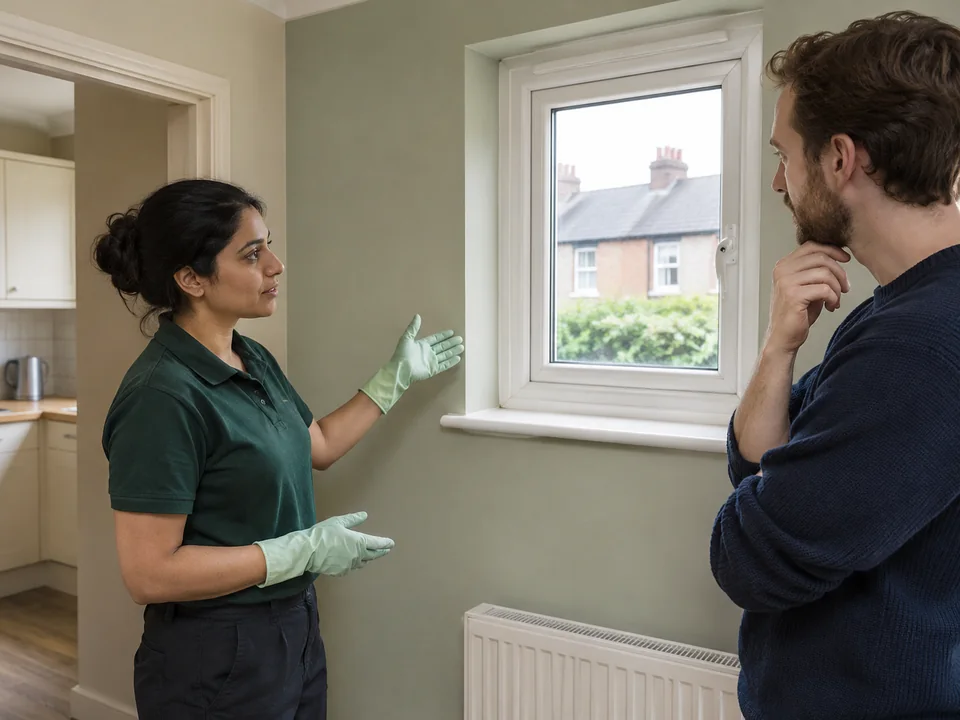
At handover, we show you what we cleaned and describe any affected area left outside the work. In a room with several different finishes, we use the nearest fixed feature to identify each one. We may distinguish a hard exposed face from the dark edge beside it where the material changes. If the property contact is elsewhere, agree beforehand who can look at the work with us and who should receive the resulting details.
Should the area become marked again, explain its precise position and when it appeared to whoever manages the room or building. A description by fixture, floor and material is useful when the property contact has to find a small edge among several similar ones. We can confirm what we observed and the finish that was included in the cleaning. Any separate investigation into moisture or the condition of the fitting is for the appropriate property contact.
To request a quote, give the postcode, the affected faces and enough information about the working space around them. An open tiled surround offers a different approach from a low join behind a fitted bowl. Explain if the person controlling the entrance also needs to approve the work. With the appointment and access details, we can discuss how much time and preparation the agreed visible cleaning may involve.
- Ask us to show the boundary between distinct finishes.
- Agree who should receive the result if you are away.
- Keep the exact fixture location for any follow-up.
| Handover item | What we identify |
|---|---|
| Cleaning result | The agreed hard faces and position |
| Remaining visible area | The join, finish or obstruction that limited the work |
| Contact | Who is receiving the details for the property |
Questions about arranging mould removal
Can you decide whether a stone-look hard face is suitable?
Show us its condition and share any care instructions you have. We discuss suitability before agreeing to work on it.
Should I take a mirror or fitted shelf down?
Leave it in place and explain which face is affected and what you can see near its edge.
Can the concierge be the first contact?
Tell us the arrival process and arrange separately for whoever can open the dwelling and show the affected surface.
What if a polished area already has dull patches?
Tell us where they are. We assess the visible condition and discuss what can reasonably be cleaned on the exposed face.
Can you assess a glazed face beside an older stone counter?
Yes, describe both. We consider each material and the accessible join before agreeing the work.
Can the handover identify which edge remained visible?
Yes. We go through the accessible surfaces and explain where the work stopped at a joint, different finish or fixed fitting.
Other Cleaning Services in Marble Arch
Regular housekeeping near Marble Arch, End of tenancy cleaning near Marble Arch
Discuss your mould removal enquiry
Mould Removal Prices in Marble Arch
Tell us which rooms are affected, the approximate size of the visible patch and what surface it is on.
Get a Quote