 Housekeeper
Mould Removal in Chingford
When you see mould in a Chingford bathroom, bedroom or utility room, describe the exposed surface and how we can reach it. We assess the area with you, clean the suitable hard surfaces agreed and review the work before we leave.
Plan your enquiry
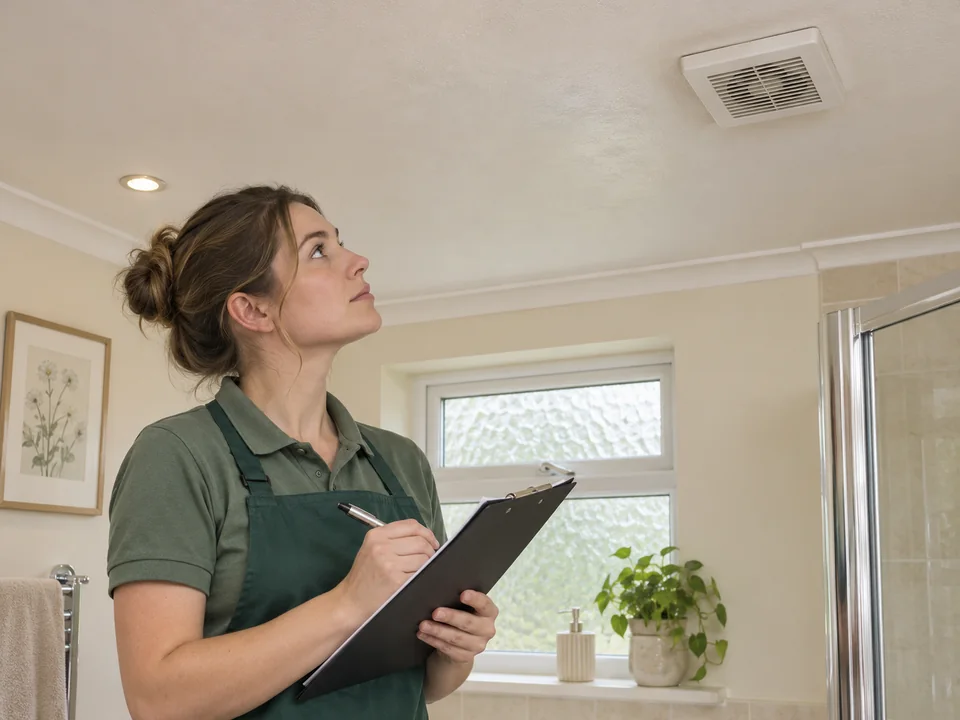
Can I enquire about an E4 address?
Send the complete postcode, dwelling number and affected room so we can discuss the specific address.
What if the utility room opens from the garden?
Describe the entrance and tell us who can open it on the day.
Inspect the exposed patch along the room edge
We locate the visible growth and follow its edge to any change in finish or access. A patch along an outside wall can continue towards a window, door frame or hard surface beside a utility sink, where materials are different despite the line appearing continuous. We check each exposed area and confirm what can be cleaned with fittings in place. Where part is unsuitable or out of reach, we explain the boundary before setting up. The agreed compatible hard face can then be prepared and treated, with the result reviewed against the same edge or fitting.
Waltham Forest’s Chingford Station Road conservation area appraisal describes distinct parts of Station Road and separate areas around Forest Avenue, Crescent Road and Forest Side. If your home is in a larger property, on a slope or reached through a separate passage, give us the full postal address together with the entrance that leads to the affected room. A side gate may open to the garden outside the utility room while the front door serves the principal dwelling. Tell us which path is agreed and who can open it.
We assess the affected rooms separately because ordinary reach and the condition of their finishes may differ. Near a bedroom window, the available face might be the sill alone. Beside a utility sink, the growth can extend from glazed tile onto a painted return or to a concealed join. We confirm the appropriate preparation in each area and remove visible mould from the suitable surfaces included. At handover we show which faces were treated and explain any part of the room that remained inaccessible, fragile or otherwise beyond the agreed area.
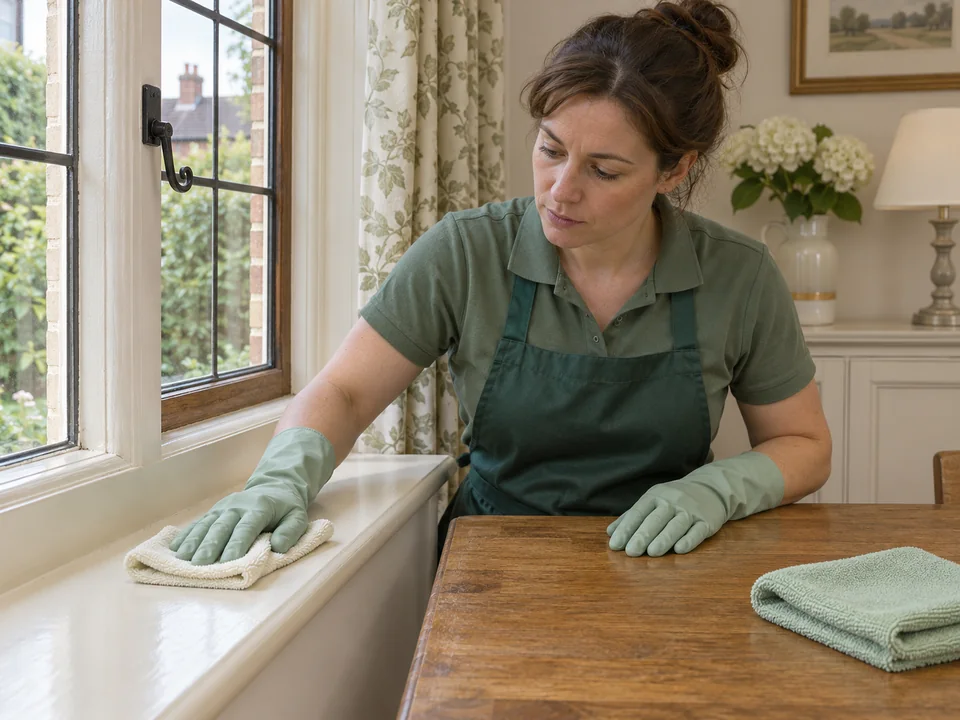
Tell us if a room was changed after the mark appeared. The account of a stain on the inside of an old utility window may still be relevant, but the window may now have a different trim or an altered approach. We look at the room and the materials in their current condition. Give the address and the most recent description so the person organising the visit can match the reference to the right room and surface.
| Detail | Useful information |
|---|---|
| Entrance | Side gate or signed door to the room |
| Affected position | The edge of the window, utility door or shower |
| Finish | Tile, hard trim, painted face or another material you can see |
Prepare a useful gap around the surface
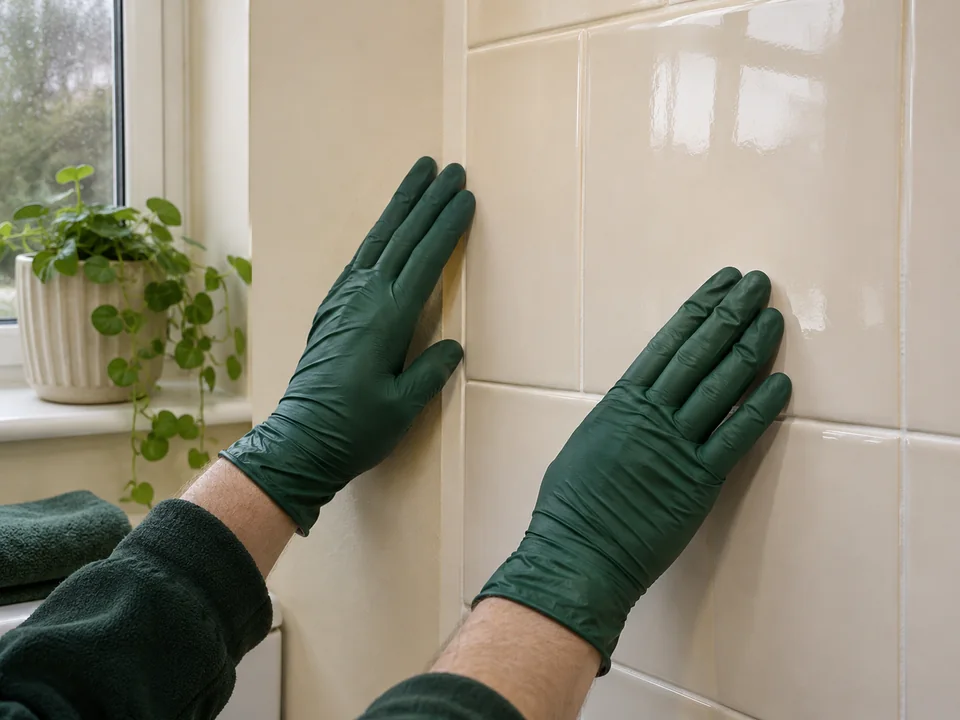
We discuss what should be moved out of the work area and what will stay in place. In a utility room, a basket or cleaning caddy may be simple to set aside while a connected appliance stays where it is. In a bedroom, put away the loose items you normally store on a sill and tell us how close furniture stands to the affected edge. If a window opens onto a narrow ledge, say whether the inside face is still within easy reach with the window in its usual position.
We check the position of fittings and nearby everyday items before preparing a surface. A patch by a door or wall edge can extend into a part of the room still in use or behind fixed trim. We agree which exposed area can be approached normally, keeping adjacent fittings in place. Where a suitable hard face can be cleaned independently we prepare and treat that area, then show the resident where the work ended and which part needs different access or another assessment.
Agree what other people need to do in the room during the visit. A utility area can also serve as a door to the garden or a route to a freezer. A tiled shower room might need to be free before a particular time. We can discuss whether to begin there or move to another agreed room while the household prepares it. If a side passage narrows at a doorway, name any part of the approach that residents need to keep clear.
- Clear only the loose objects you can put away safely.
- Show the key holder the exact surface to be assessed.
- Agree when the room and its access route are available.
Separate suitable hard faces from adjoining damage
We assess the exposed finish and the condition of each part before cleaning. An intact hard sill may be suitable where the face is open, while a painted joint below the sill can show cracking or a different kind of wear. We tell you what can be reached and which material we are looking at. If a mark appears to continue under a fixed piece, we explain that its visible part and the hidden part need to be considered separately.
In a bathroom or utility room, a line behind a sink can run from tile to sealant and up a nearby painted face. During the assessment, we look at which sections are stable and accessible from the space available. Tell us if you have noticed spreading, softening or fresh moisture at the edge of the material. If a leak has been looked at, share which part was checked and whether the affected area has changed since. We use that history when discussing what our visible cleaning work can address.
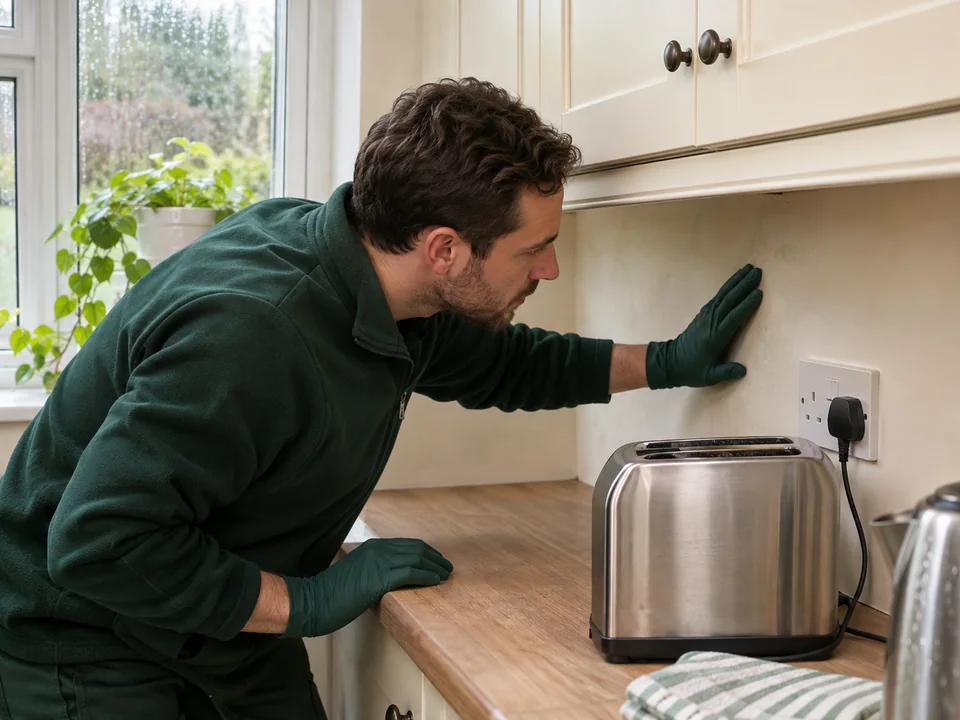
Some marks sit between the top edge of a fitting and the wall. From across the room, a patch at the edge can look like it lies on the main surface. We look from a position where we can safely reach the area and decide which of the exposed faces we can include. If material is deteriorating or the mark continues into an enclosed space, the property contact can arrange further inspection after we explain what we can see.
When we assess a door surround, we look at the difference between the faces that are visible with the door open and the parts that remain behind a fixed threshold or trim. Tell us if the door has to stay shut for a pet or for any other household reason. We can consider the position from which the surface can be approached during the agreed visit and explain how that affects the work. If a face can only be seen from the garden, let us know whether that side is included in the access you can offer.
| Visible detail | How we discuss it |
|---|---|
| Firm exposed face | Whether it is suitable and reachable |
| Cracked or softened material | Which parts should be left for further attention |
| Mark behind a fixed item | How far the accessible surface extends |
Our cleaning work stays on the hard faces we agreed
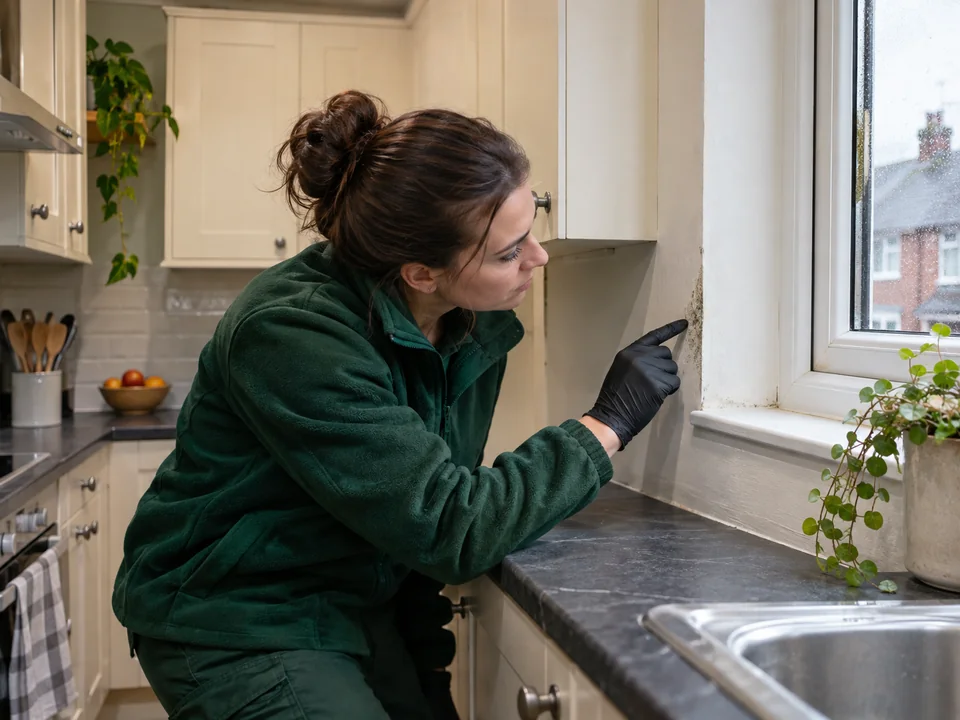
We remove visible mould on suitable accessible hard surfaces identified during assessment. If you asked about a utility wall behind an appliance, the agreed work might cover an exposed tile and the visible facing beside it. In a shower, it could cover a certain section of wall or a hard surround that can be approached from the room. We use the material and its position to mark the boundary in the agreement before going ahead.
If a face becomes easier to see after the room is prepared, we check it before making any change. For instance, once loose storage is put away, there may be a continuation of the visible mark at another side of a hard ledge. We can explain what we have found and ask whoever is authorised to confirm whether it should be included. If they are not at the address, agree how we should contact them during the appointment.
When we work up to a fixed fitting, we keep track of the point where the affected face disappears from view. We do the same at an adjoining damaged or unsuitable finish. This allows us to return to exactly the same edge during the final review. If the mark lies across two rooms and access limits the second one, we explain that separately instead of describing the result as if both rooms had the same finish and approach.
- Agree which faces to clean after assessment.
- Name the contact who can approve changes on the day.
- Ask us to identify an edge where the mark continues behind a fitting.
Confirm the result and what the property contact needs to know
At the end, we review what was cleaned and show you any areas that remained outside the work, such as a damaged painted edge or a strip concealed by a fixed unit. Use the same descriptions from your enquiry to review the result. A photo or your original note may help identify which side of the room we discussed. If you need to be elsewhere, tell us who can receive the handover and check the areas with us.
If the patch appears again, share its position with the person who can arrange a property inspection. Give the room, nearest fitting and the particular face or join where you noticed the mark. We can explain where the visible cleaning ended and which condition remained when we reviewed the area. Finding out what is happening behind a lining or fitting involves a separate assessment arranged through the property contact.
For an individual quote, send the postcode, affected finish and information about the working space. A hard surround in an open room is different from an edge behind a washing machine or a section above a fitted seat. If you have recently reported a leak or arranged a separate visit by a tradesperson, tell us how that affects when and how the room will be available. We can discuss the proposed cleaning work around the actual property and the access you can give.
- Choose a person who can look at the rooms with us.
- Name the nearest fitting when reporting a repeated mark.
- Confirm who can open the agreed entrance and room.
| Review point | What we can identify |
|---|---|
| Accessible part | Agreed surfaces that were cleaned |
| Affected edge | The condition or obstruction that limited work |
| Contact | Who will receive details for possible follow-up |
Questions about arranging mould removal
Should I move a plumbed appliance to show you the mark?
Leave it where it is. Tell us which part of the surface remains visible and how much space there is to approach it.
Can I enquire about marks in both the utility room and a bedroom?
Yes. Give each room its own description, including which hard face is affected and what may restrict access.
Do I need a different entrance description for a garden room?
Yes, where the main door does not reach it directly. Give the address and the agreed route from the gate or main entrance.
Can you look at the exposed edge of a kitchen door frame?
Tell us what the accessible face is made of and whether the finish is damaged. We can discuss its condition in person.
What if a repair is due before the cleaning visit?
Tell us the timing and which materials will be exposed afterwards. The cleaning assessment needs to reflect the condition on the day.
Can you explain the work to someone who did not book it?
Arrange that contact when you book. We can explain which visible surfaces were worked on and which areas stayed outside the cleaning.
Other Cleaning Services in Chingford
Regular housekeeping in Chingford, End of tenancy cleaning in Chingford
Discuss your mould removal enquiry
Mould Removal Prices in Chingford
Tell us which rooms are affected, the approximate size of the visible patch and what surface it is on.
Get a Quote