 Housekeeper
Signature care for well-used ovens
Oven Cleaning in Chingford
For oven cleaning in Chingford, identify each door or surface you want us to discuss. Include model information for a cooker with several cavities or specialist linings, and tell us where the technician should enter and unload equipment.
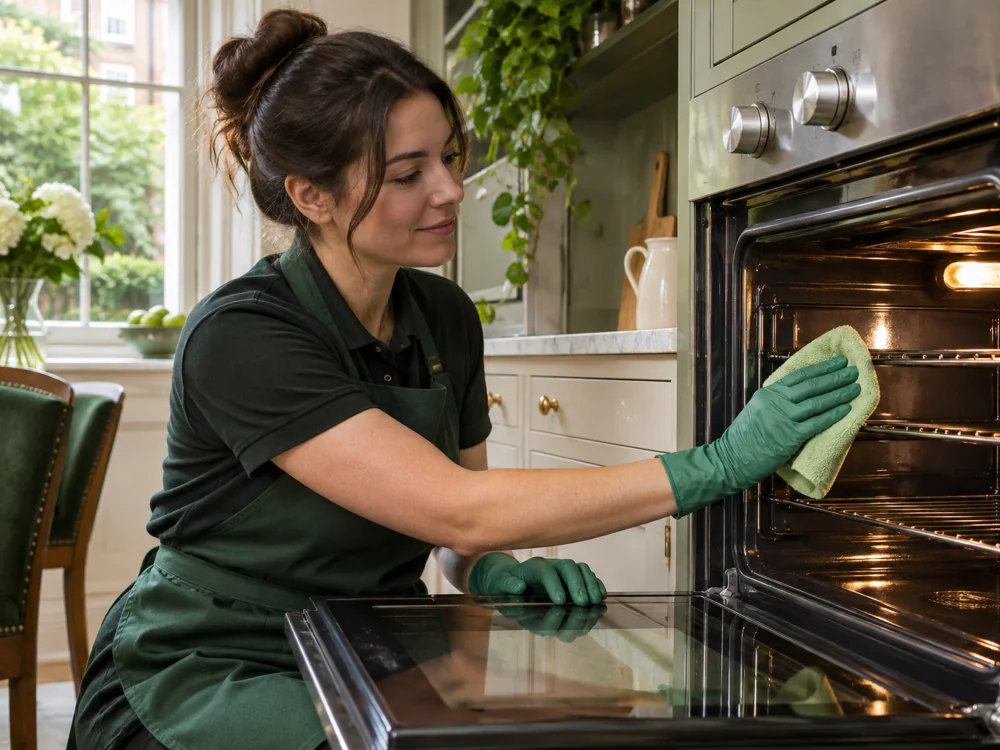
Can I send my E4 postcode for a quote?
Send the complete address and the entrance that leads to the kitchen.
Can I ask about the side oven in my range?
Yes. Give the door position, purpose and the parts you want assessed.
Use the appliance layout to define the visit
A cooker built into a cupboard tower and a range with several doors both need a clear list. Take a photo of the oven as it sits in the kitchen and include every control used for the compartments that interest you. A warming drawer, compact grill and combination unit can all look like ovens from the front. Give the maker’s terminology if possible. If you want only one cavity assessed, mark it in the photograph. Leave the cooker where it is and use a visible label or manual for a model number.
Consider which parts you want discussed when the technician can see it. Write down the main oven, separate grill or side compartment by its position. Name adjustable shelves and a grill tray if they are relevant. If a part no longer sits in the place shown in the manual, describe its usual position now. The technician can inspect the installation and discuss how to handle what is available. A short list helps a second household member understand exactly what to confirm when the visitor arrives.
- Photograph every relevant door and control.
- Give the same cavity names in the enquiry and on arrival.
- Describe any movable items separately.

Check the handbook for interior finishes
Do a quick check of the maker’s guidance for special liners, panels or a dedicated cleaning programme. The oven base and a lightly textured side can have different instructions. If grease sits across both surfaces, describe the boundary and whether the layer has built up over time. Use a photograph from outside the cooled appliance to show the affected section and any nearby assembly. The technician can assess the finish underneath and discuss whether the visible mark is residue or a change in the material.
Give the date of an earlier oven cleaning attempt and the name of the product or built-in setting. Say if it was used on the whole cavity or just on the mark you noticed. If the appearance changed after another meal was cooked, mention that too. Permanent wear or discolouration can still be visible after accessible deposits are removed, so make the distinction part of the initial conversation. If care instructions exist for an unusual shelf coating, share those separately from instructions for the inside of the oven.

Tell us how to reach the kitchen from the street in Chingford
National Rail lists Chingford station on Station Road in E4. If you use Station Road as a reference for the area, give the complete postcode and the door agreed for visitors. A property number may be easier to spot from one road while the kitchen is reached via a side gate or an entrance on another side. Explain whether to ring at the main door or wait at the gate. Add any house name, porch number or bell label that a visitor would see when they arrive.
Ask which entrance makes sense for carrying equipment. Confirm any unloading arrangements and describe steps, gates or narrow turns along the path. A private drive may fit a car but have restricted working space around a second vehicle. Give the agreed location and say who can make space or open a gate if needed. For a flat, include the correct building entrance, lift and any stairs after it. Share the access note with the adult who will be home rather than passing details through several people after arrival.
- Use the full property address and the working entrance.
- Name steps, turns and a gate before the kitchen.
- Confirm who deals with access at the time of the visit.
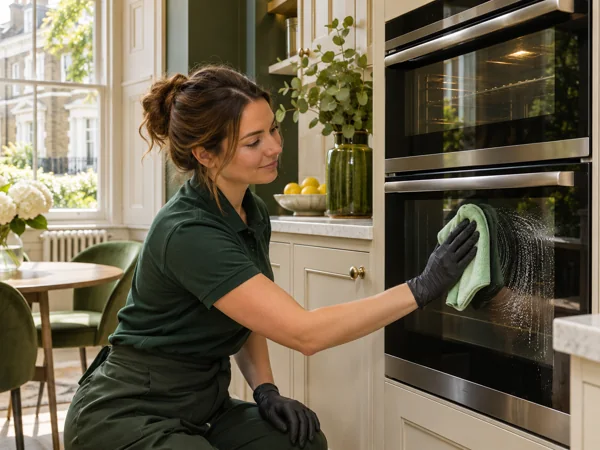
Confirm each oven and its finishes
| Part | Useful evidence | Assessment |
|---|---|---|
| Range side oven | Door position and mode | Cavity and accessories |
| Lining | Exact care page | Suitable approach by material |
| Glass | Affected face and visible condition | Access by model |
Describe the racks and parts you use regularly
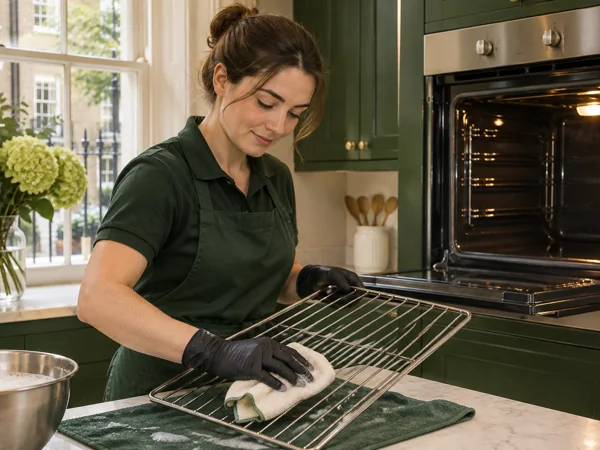
List standard wire shelves, original trays, side rails and separate inserts. Notice, during ordinary use, if anything extends or stops at an unexpected point. Tell us about a part that was already removed and leave anything fitted where it is for the inspection. The technician checks which components can safely come out and may soak suitable pieces in a dip tank. Include relevant finish guidance where an accessory is coated or uses a specific release. A tray on an attached runner can need different handling from a loose dish.
If a baking pan or rack was bought later, give it a separate line with the finish and usual oven. A spare tray may fit more than one cavity but have a different depth or width from the supplied piece. Empty loose food, personal cookware and foil once the oven is cool. Clear a place beside the door so the technician can handle agreed components. Confirm which items are included on the quote and keep optional items organised so they can be identified at the initial check.
Ask about visible glass marks and the surrounding trim
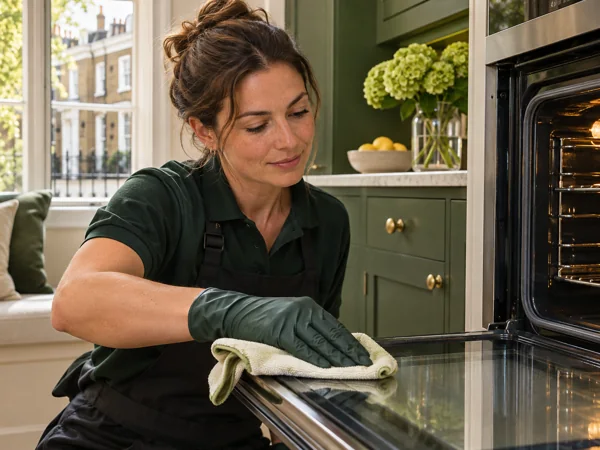
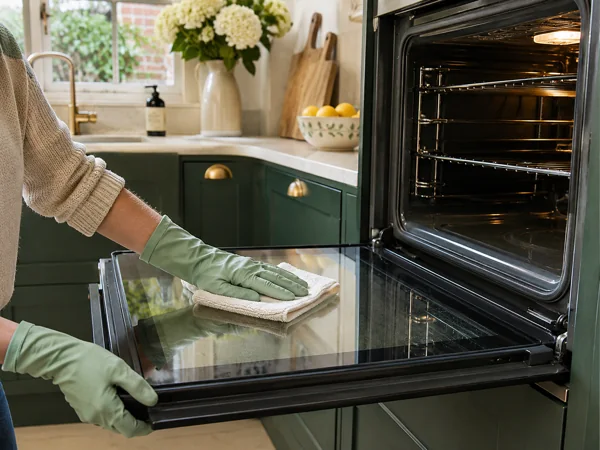
After the oven cools, look at the mark from inside and from the closed position. Note if reflected light or the angle from the sink makes it appear. A streak may be on an accessible face or in the space between panes. Access to that area depends on the design and condition. Tell us if a pane has a chip, the trim moves or any earlier work changed the way the door opens. Keep the glass fitted and give the technician any relevant page from the manufacturer’s manual.
Send an image of the whole door and another that shows the best view of the mark. If the main oven and narrower grill both have dark fronts, identify each photograph with its door position. Point out any coating or decorative section at the edge if the deposit appears to cross it. During inspection, ask which glass faces can be reached and whether an appropriate treatment can be agreed for that area. The answer can help clarify the work before you commit to the particular glass option.
- Describe where you stand to see the mark.
- Identify the specific door and edge condition.
- Keep the fittings assembled until the technician checks them.
Decide whether the cooking top or extractor should be included
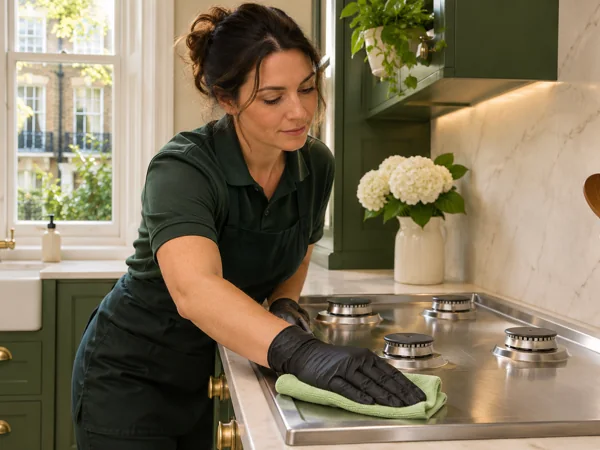
A freestanding range may hold several burners or a griddle on top. A separate hob above a fitted oven might instead be glass or ceramic. Tell us the actual cooking material and which removable bits or controls need consideration. If grease reaches a splashback or trim piece, ask about that independently and supply its finish. An image of the whole area helps show what can be reached and whether there is a second working surface to clear. Tell us if the hob must be available for cooking at a particular time.
For the extractor, give the approximate height and explain where the filter is located. A canopy cover and a filter in a separate holder are distinct items to discuss. Where possible, identify whether a filter is metal or disposable. If the type cannot be seen from below, send a manual instead of trying to take it out. Ask for optional items to appear separately on the quote. Confirm which surfaces may need clearing when the oven, hob and hood are in different parts of the kitchen.
Check the equipment route
| Location | What to provide | Who can check |
|---|---|---|
| Street | Full postcode and confirmed unloading | Occupant |
| Door | Gate position, bell and steps | Person meeting the technician |
| Kitchen | Door clearance and counter | Person attending appointment |
Make space for handling and inspection
Leave the cooker cool before the technician arrives. Take loose pans and food out and clear a stable counter close to the oven. If a trolley or chair sits in front of a side oven, move it first so the door opens completely. Keep children and pets out of the area. If the kitchen is also the path to another room, work out how to avoid the oven while parts are being handled. Confirm relevant water or power access and mention any requirement to leave a route free.
Tell us if the home is still occupied during the work or if someone will leave after opening up. Agree who can stay to answer questions about the appliance and who can give instructions about where equipment is placed. If some care information is kept in a drawer, set it out before the work begins. Confirm the right area for removable parts so they do not rest against cupboards or surfaces you want kept clear. If you are expecting someone else to cook, let them know which worktop must remain free.
- Leave enough space at all booked oven doors.
- Keep a clear counter for parts and tools.
- Agree how others will use nearby rooms.
Keep the return-to-use advice with the cooker details
Use the postcode form to start your request. Include the model, care directions and entrance note so the quote can reflect the actual home. If a second person handles access, share the agreed list and a way to reach whoever can answer questions. Confirm which area is important to inspect before work starts, especially if the condition of one fitting could change which items can be included. If someone is leaving home during the appointment, agree the handover time and any gate arrangement for the technician to leave.
At the end, ask the technician when and how to use the oven again. Confirm where each rack and tray belongs and record any instructions about a coated part that was addressed or left alone. Pass the information to the person preparing the next meal. If a visible change to the finish remains, keep an exact description of the cavity and surface for a future discussion. File it beside the model number so you can distinguish the same concern from a mark in another compartment.
Keep the return-to-use details clear
| What was requested | Before | After |
|---|---|---|
| Oven cavity | Identify by door and controls | Ask when it can be used |
| Shelf set | Count and check fitting | Confirm where each rack goes |
| Optional hob or extractor | Give finish, type and position | Check which parts were included |
Get an oven cleaning quote in Chingford
Request a quote with the oven type, number of cavities and any extra appliances.
Get a QuoteOther Cleaning Services in Chingford
Local references · National Rail, Chingford station
Chingford oven cleaning questions
What if one range door covers a narrow oven?
Describe its function and send the controls and front view along with the model if visible.
Does a textured shelf need its own manufacturer instructions?
Share any accessory care information you have. The technician can check the finish and condition before handling it.
Can I leave the glass mark for inspection before deciding what to include?
Yes. Tell us which part you are concerned about and ask which faces can be safely reached.
Which entrance should I describe if the kitchen has a door to the drive?
Give the full address and identify the entrance and equipment route you have agreed.
Can we move a meal outside the kitchen while the oven is cleaned?
Yes. Plan the alternative space ahead and ask the technician when the oven can return to use.
How should I mention a high hood over a range?
Give the approximate height and filter type, and identify the cover or filter you want considered.