 Housekeeper
Detail-led care for your oven
Oven Cleaning in Limehouse
Identify the oven and particular surfaces you want to look after in your Limehouse home. Send the model, removable accessories and door details, and confirm the approved route if the technician needs to use a shared entrance or lift.
Can I enquire for a home in E14?
Yes. Send the full postcode and correct door for equipment.
Can I discuss an oven with several finishes?
Yes. Describe the affected parts and share care instructions for the exact appliance model.
Work out which surfaces you want assessed
Look at the oven and its surrounding fittings together. A slim panel can be part of the cabinet, the door assembly or a separate appliance, and those surfaces may have different care instructions. Show the whole front and mark the area you want cleaned. Tell us whether the stain is on glass, a metal handle, an accessible interior panel or somewhere else. Give the appliance model from a visible label or handbook. Leave it in place if the label is not easy to see. Add installer’s directions where a separate trim needs attention.
Inside the oven, a textured liner and a smooth floor can also have different finishes. Tell us if the manual specifies an automatic programme or particular care for each part. If the stain runs across two materials, show the boundary in a photo from the cool oven’s opening. The technician can assess the condition and discuss a suitable approach. Mention any concern with how the finish looks before agreeing treatment for a particular surface. Accessible residue and permanent wear can appear next to each other.
- Send the whole installation with the affected area marked.
- Give matching model and care details.
- Keep separate trim or cabinet work distinguishable.
Confirm how a visitor reaches the Limehouse flat or house
National Rail lists Limehouse station on Commercial Road in E14. Use that reference if it helps explain the vicinity, then give the complete postal address and approved residential entrance. If a block has one door facing a main street and another by a courtyard, describe the one that visitors with equipment should use. Include the name or numbers on the outside sign and bell. A caretaker can confirm where unloading is permitted and which gate a visitor should approach, where the property has its own arrangements.
Work inward from the door to the lift or stairs and give the level of the actual flat. If a service entrance operates at a limited time, share the booking conditions and say who can direct the technician if reception is delayed. A lift may open at a different level from the flat or have a second locked door along the corridor. Describe any remaining steps, the way to the kitchen and what a person should do if the main entry changes on the day. Give a reachable building or household contact.
Match the concern to its finish
| Part | Evidence to supply | Assessment |
|---|---|---|
| Lining | Name and care instructions | What can be treated |
| Glass | Viewpoint and condition | Accessible face |
| Outer trim | Position and supplier | Separate surface or part |
Name each cooking or warming compartment by position
A taller unit can include a combination oven and a separate grill that look alike. A warming compartment may look like another conventional oven. Take a photo of all relevant doors and controls. Put the manufacturer’s name and each compartment’s normal function beside its location. Confirm which ones you want included and give the model information for the separate appliances if available. A fitted appliance might have a service guide or operating booklet for an older oven, so check which instructions match the actual controls and visible parts.
If one smaller cavity is only used at weekends, describe it by its actual cooking mode rather than by how often it is used. Give the accessories that normally sit in each cavity. A tray held in a drawer can still belong to the grill. Ask to see the agreed items listed before you book. If someone else will provide access, send them your annotated photo and the relevant parts list. That makes it easier to show the exact cavity and explain which appliances are outside the agreed work.
- Show all relevant doors and controls together.
- Label each cavity or drawer by purpose.
- List the requested parts by oven position.
Add the deposit and its recent history to the same description
Once the oven is cool, look at the position of a spill or grease film relative to the racks and door. A fall from a large tray can mark the base, while repeated grilling can cause a film nearer an upper panel. Describe what you remember and when it became visible. If the appearance changed after another cooking session, give that detail. Point out whether you already saw a pale area or flaw nearby so a recent deposit can be distinguished from older changes once the technician looks at the surface.
If you tried a household cleaner or used a programme built into the appliance, provide its name, when it was used and which surface it touched. For a special lining, send the corresponding care page. The technician can assess accessible residue and the condition of the finish before choosing suitable treatment. Some discolouration or wear may remain after deposits are cleaned. Tell us which mark is most important, especially if it lies near the edge of a fitted panel or another surface with different instructions.
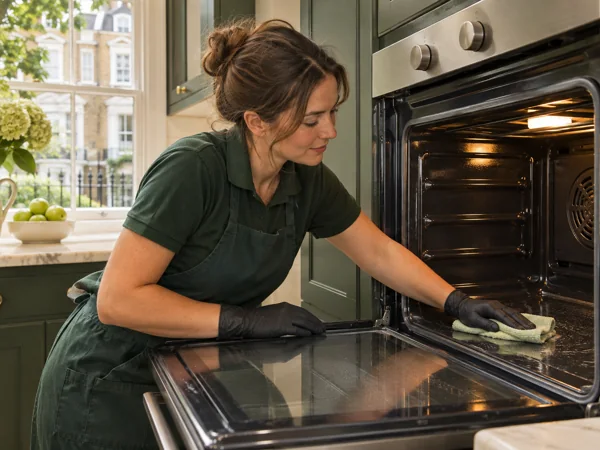
Locate the appliance in a fitted kitchen
| Item | Describe | Confirm |
|---|---|---|
| Main oven | Position and model | Cavity and racks |
| Compact unit | Its cooking modes | If it is part of the work |
| Extractor | Height and filter arrangement | Accessible parts |
Count the removable items and share any unusual conditions
List standard shelves and any grill tray, insert or extending rail you want assessed. Tell us if a fitted part moves unevenly, was removed before the visit or has a protective coating. Keep sticking fittings in place for the initial assessment. The technician can inspect the construction and condition, then remove and potentially soak suitable pieces in a dip tank. A telescopic shelf assembly or coated tray may need its own care approach. Share manufacturer’s instructions if they refer to handling that accessory or to its finish.
Clear the cold oven of food and loose personal pans, and set aside a counter near the appliance. If you want to include a tray you bought separately, tell us its material and which cavity it fits. Keep it identifiable next to its relevant parts rather than mixing it with unrelated bakeware. Check that the agreed components are listed on the quote, then show the person letting the technician into the kitchen which pieces to leave available. If the work is for a rented home, keep the oven’s original accessories distinct from a tenant’s property.
- Identify original and optional pieces separately.
- Report any sticking, coating or prior removal.
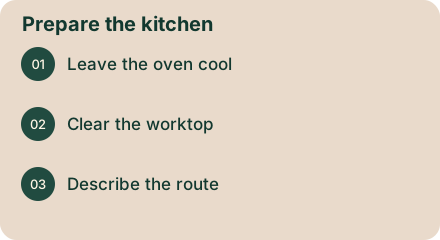
- Clear the nearest worktop before the visit.
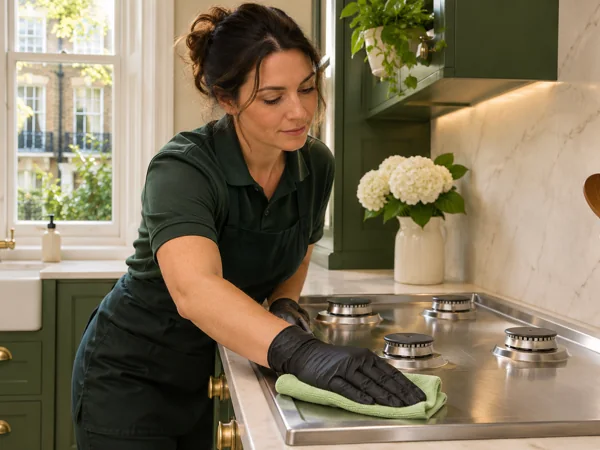
Discuss what can be reached on glass and trim
With the appliance cool, look at the door when shut and from the open position. Tell us where you can see the mark and whether a reflection makes it more obvious. If it appears to sit between panes, safe access depends on door design and condition. Let us know about any damaged edge, loose trim or earlier work before the door is handled. Send a wider photo of the appliance along with your view of the specific mark, especially if several matching glass fronts sit beside each other.
Leave the glazing assembled and ask during the assessment which faces can be reached. A line close to a patterned or coated border may need a different choice from a smear in the clear centre. If the handbook includes a section on that door, give it to the technician. Show how the mark looks in the light you use when cooking. Tell us if the glass is your main concern rather than one item among several. That gives the technician a reason to inspect the affected area before judging other work.
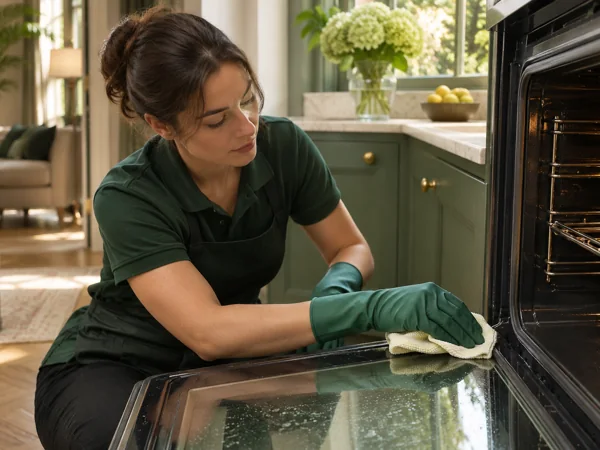
Quote the hob or extractor as individual items
A hob set in an island can be a different model from an oven fitted elsewhere. Give the cooking surface and any removable supports you want discussed. Point out separate trim or splashback material only if you want it considered. Confirm the position and relevant care directions for any coated part. When a grease mark reaches the surround, tell us which surface it crosses and share a photo showing the boundary. Set out any optional item independently so the agreed work can be checked against its actual finish and position.
With an extractor, describe whether it is wall-mounted, built into a cabinet or above an island. Give the approximate filter height and whether it is metal or disposable if known. An exposed cover and a recessed filter have their own access considerations. Confirm which parts can be included and leave space at the appropriate spot. If there is another cooker or route through the kitchen that must be kept available, describe it when deciding what options to add. Ask for separate written lines for the hob and extractor.
- Give the hob type and surrounding finish.
- Describe the cover, filter and approximate height.
- Confirm agreed optional parts in writing.
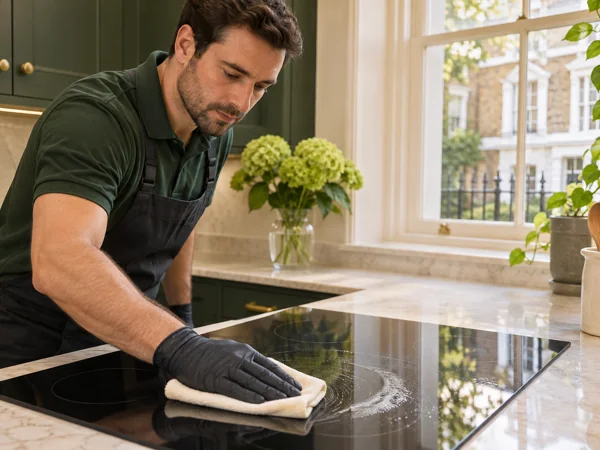
Confirm the approved route
| Stage | What to give | Check first |
|---|---|---|
| Street | Address and door | Unloading point |
| Lobby | Lift and visitor pass | Access times |
| Kitchen | Working counter and clearance | Space to handle parts |
Prepare for the visit and return to use
Start the enquiry from the full postcode and keep the approved door, model and care notes ready. Clear room beside the oven and leave it fully cool. Keep children and pets away while equipment and accessories are being handled. Mention any facilities needed or a route that occupants must keep using. If another person handles access, give them the appliance list and a number to call if the first inspection raises a question. Check any pass or key can be returned at the end of the appointment.
At handover, ask which parts were cleaned and when the oven can be used again. Confirm where racks or inserts sit and tell whoever cooks next which instructions apply to their cavity. If access or a permanent finish change left part of the concern visible, make a note of the surface and position. Keep that note beside the model. It can help identify a new issue with the same oven or another appliance without confusing parts that look alike. Return the building pass or key according to the agreed route.
Get an oven cleaning quote in Limehouse
Request a quote with the oven type, number of cavities and any extra appliances.
Get a QuoteOther Cleaning Services in Limehouse
Local references · National Rail, Limehouse station
Limehouse oven cleaning questions
Can I send a floor number with the postcode if the lift uses different labels?
Yes. Give both the residential floor and the label a visitor should use, plus any steps after it.
How should I describe two similar-looking fitted ovens?
Send the whole row of appliances and mark the relevant door, controls and cavity.
Can a permanent mark remain on a coated lining?
Yes. Share the care guide and point out any past changes to the finish during inspection.
Should I remove a tray that slides on its own rail?
Leave it in position if unsure and tell us how the assembly normally moves.
Can I discuss a high extractor separately from the oven?
Yes. Give its position, approximate height and filter type if possible.
When can I cook after the visit?
Ask the technician when and how you can use the specific oven again and pass those details to anyone else using it.