 Housekeeper
Care for built-up cooking residue
Oven Cleaning in Forest Gate
Give us the history you have and the condition you can see when your Forest Gate oven is cool. If food has baked onto the base or grease has collected by a liner, tell us the position and send the model. We can discuss accessible surfaces and suitable removable pieces along with the route into the kitchen.
What access details help near Romford Road in Forest Gate?
Give the complete E7 postcode and identify the door or side passage you actually use.
Can I ask about baked-on residue I found after moving in?
Describe the location, oven model if known and any products already used.
Identify the mark by its position in the cooking compartment
A dark patch in an oven can be easier to describe by the position of the shelf above it. If it sits near a lining, show the seam or guide that fixes its place. For a spill at the front, include the door edge and the cavity floor in the same photo if possible. When there is both a main oven and a separate grill, give each compartment its own description. You do not have to know what caused the buildup. Tell us what you can see when the oven is cool and keep fitted parts in place.
Explain whether a patch remains after a previous cleaning attempt. Name the product or appliance cycle where you know what was used. Note a change in colour or finish that occurred afterwards. A property condition record might help locate a worn or scratched spot if the appliance came with the home. The technician can assess accessible grease and baked-on residue alongside the materials underneath. Mention the area you want looked at first and distinguish an old mark near the deposit without guessing its cause.
- Locate the mark using a guide, cavity edge or door.
- Mention prior products or oven cycles if known.
- Name old damage or changes to the finish separately.
Use the model to understand what is inside the door
Look for an accessible model label or a booklet in the kitchen. A single oven can have several cooking settings in one cavity, and an upper door could be a separate grill or a second oven. Tell us which working spaces you want considered. Give a photo of the whole appliance in its current position. If the model is unclear, a view of the functions on the controls supports a discussion about which parts of the cooker you mean. Avoid sliding a cooker away from the wall to find a label.
For a model with specialist liners, use the wording in the manual if you have it. A coated side piece or panel can sit against a different material in the cavity. Record which one the residue reaches. Keep fitted pieces where they are and mention if a corner appears loose. If another person will meet the cleaner, send them the same door and cavity descriptions. Knowing which oven is requested can help when the front looks similar to a separate appliance sitting above or beside it.
Check the individual tray, insert and shelf pieces
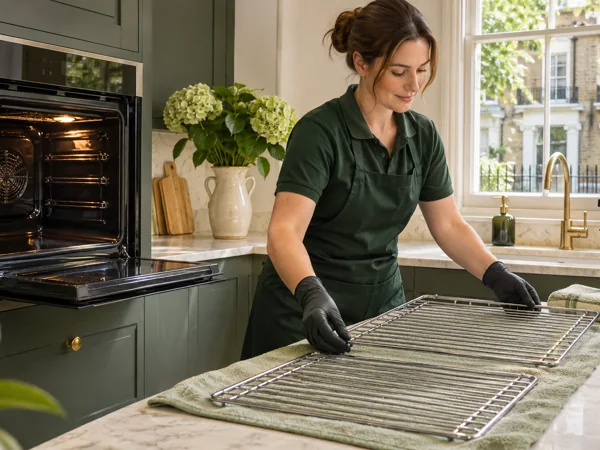
Look through the places where you keep the original oven accessories. A spare shelf may live in a drawer while the main racks stay inside. A grill pan might have an insert and a handle kept separately. Name the pieces you want to discuss and give their usual positions. If two ovens share similar parts, tell us which one each rack belongs to. Leave fixed rails and unfamiliar fitted parts as they are. Report any piece that does not move the way it normally does.
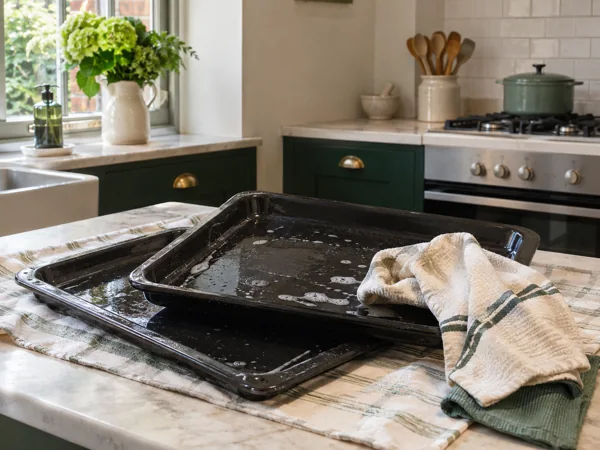
Suitable removable pieces can be considered for dip-tank treatment once their construction and condition are checked. Give details of coatings or existing wear where visible. A loose handle or damaged edge is worth pointing out first. Keep personal roasting pans out of the oven before the appointment and away from the original accessories. If there is little room to set out shelves, tell us what counter space can be discussed. A list by cavity helps match the pieces after the visit.
- Count racks and trays by oven or grill.
- Mention coatings, existing damage and fixed supports.
- Keep original pieces identifiable beside personal cookware.
Describe the deposit before you request a quote
| Position | Visible feature | Helpful information |
|---|---|---|
| Cavity base | Patch by lower rack | Spill or treatment history |
| Side wall | Residue near lining seam | Model and lining detail |
| Upper grill | Film above pan | Separate compartment and condition |
Describe the Forest Gate entrance and access to the room
Newham Council lists both the Romford Road and Woodgrange Estate conservation areas within Forest Gate, E7. If you use one of those areas as a reference, accompany it with the precise address and the entrance to the home. A terrace can have steps directly from the street or a separate route down a side path. In a divided house, the door into a lower-level property may differ from the one a visitor first sees. Use the full postcode and the name or number on the actual entrance.
Explain how the kitchen is reached once inside. Give the floor and any turn on a shared stair or route through the hall. If a side gate is easier to use, describe its opening and the step into the kitchen. Ask who will meet the cleaner if the bell does not reach the right flat. If an agent or key-holder is opening up, make sure they have the address and the agreed arrival route. Keep details needed to unlock the building in a direct exchange.
- Give the first door, postcode and flat number where applicable.
- Mention the indoor or outdoor route after the entrance.
- Agree who can show the way to the kitchen.
Give the glass and neighbouring control surfaces separate attention
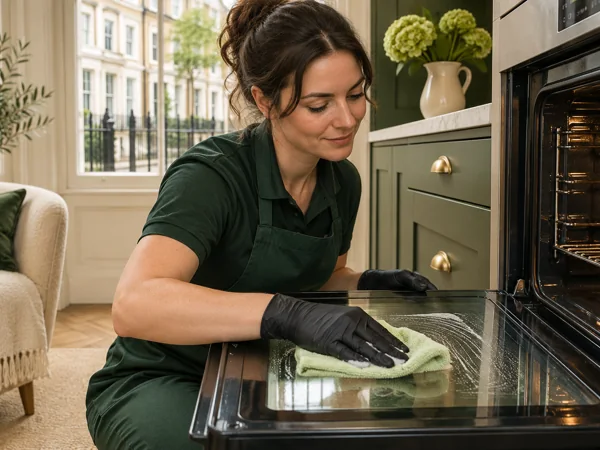
A mark on glass can look different when the cool oven door is open. Describe which face seems to be affected and the position of the mark. If it appears further inside the glazing, send the model and ask about access. Outline whether it sits by the handle or near a seal and leave the fittings where they are. In a double oven, give the exact door position so the right glass can be considered. A picture of the whole door helps show the extent of the affected area.
Report marks around the controls from the setting or trim beside them. If a printed number has faded or a fascia finish was scratched, identify it before the work. The front may be made from several materials and there can be a small change in finish where the controls meet the door. The technician can inspect accessible areas in light of the condition and design. Keep the window, handles and controls named individually when you ask which parts are on the quote.
Identify loose items for assessment
| Piece | Usual position | Check before the visit |
|---|---|---|
| Wire shelf | Inside main cavity or storage | Count and finish |
| Grill pan | In the grill | Handle and insert |
| Fitted support | On the oven side | Ordinary movement and condition |
Set the working area up before the oven is opened
Allow time for the appliance to cool and remove food and cookware from the cavities you want assessed. Clear loose items from the floor and the nearby worktop where this is practical. If a fixed table or cabinet limits the open door, show it in a wide photograph. Tell us where somebody can stand to see inside the oven and where pieces can be laid out for a review. If the floor is uneven or the kitchen counter has a particular finish, mention it ahead of the visit.
Decide when the route to the oven can stay free of household movement. If a cooktop or sink beside the oven is usually busy, explain when other people can use them without crossing the working area. Ask children and pets to stay away while the parts are being handled. Tell the person who opens up what time the oven can be expected to cool and when the room will next be needed. That makes the enquiry about the actual kitchen and available time as well as the quoted parts.
Mention whether grease has reached the hob or hood
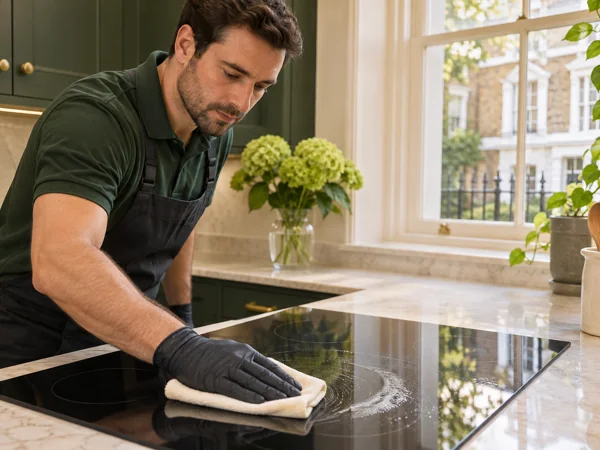
If the hob shows residue around a burner, support or glass zone, describe the hob type and location of the mark. Give details of any trim or worktop surface that your request also reaches. If it is a separate unit, name its model or position independently from the oven. A full photograph of the top makes it easier to tell which area is the hob and which part is a separate surface. State if you want a pan support or other loose item discussed.
For a hood, name the outer finish, mounting position and any filter type from the handbook. A mark on an exposed canopy and build-up on an insert can be recorded separately. Leave the filter in place if it is unfamiliar or difficult to reach. We can discuss the accessible areas and quote the additional appliance separately. Keep a clear list if more than one person is using the kitchen so the resident who opens up can identify which extras you intend to include.
- Report hob residue by position and type of surface.
- Identify the hood and visible filter details.
- Give other appliances their own lines in the enquiry.
Return to the original deposit during the final check
Review the named cavity and each piece in the accepted list when the appointment is complete. Ask what the technician could access and which loose items were removed. If an existing stain was by a guide or seam, return to the position you gave before the visit. Ask about any patch you want clarified in the context of the finish underneath. Make sure the person who will use the oven next knows when it can go back into service. Match trays and racks to their cavities using the original list.
If the property is being checked by someone else, record the appliance model and agreed parts before returning the keys. Keep the relevant manual and loose pieces available for the next resident. A separate hood or different oven that was discussed for another date can have its own entry. You can then ask about that appliance without relying on the descriptions used for the deposit you have just reviewed. Leave enough time to look at the cooker before the property contact has to close the kitchen.
Give the way into a Forest Gate kitchen
| Approach | What to provide | Who can check |
|---|---|---|
| Residential street | Complete postcode and entrance | Resident |
| Gate or shared hallway | Door label, steps and route | Person who opens up |
| Working area | Oven position and clear space | Person meeting cleaner |
Get an oven cleaning quote in Forest Gate
Request a quote with the oven type, number of cavities and any extra appliances.
Get a QuoteOther Cleaning Services in Forest Gate
Local references · Newham Council, Conservation areas in Newham
Forest Gate oven cleaning questions
Should I report an old mark left by a previous tenant?
Yes. Give the cavity and location and describe how the surrounding surface looks now.
Can I use a handbook to identify the lining under a deposit?
Yes. Quote the lining or model name and show which edge or wall it covers in the affected cavity.
What if a grill tray is missing its removable handle?
Mention the missing part and describe the tray and insert you still have, including any visible coating.
Does a side gate count as the main entrance for this visit?
It can be discussed if it leads to the kitchen and you can arrange for it to open. Give the main property address as well.
Can I show an exterior mark without opening a door that sticks?
Yes. Send a picture of the front in place and tell us how the door normally moves and what has changed.
How do I explain a dirty hob whose edge meets a different material?
Give the hob type and photograph the affected edge and adjoining finish, with the cooking zone visible if possible.