 Housekeeper
Detail-led care for your oven
Oven Cleaning in East Ham
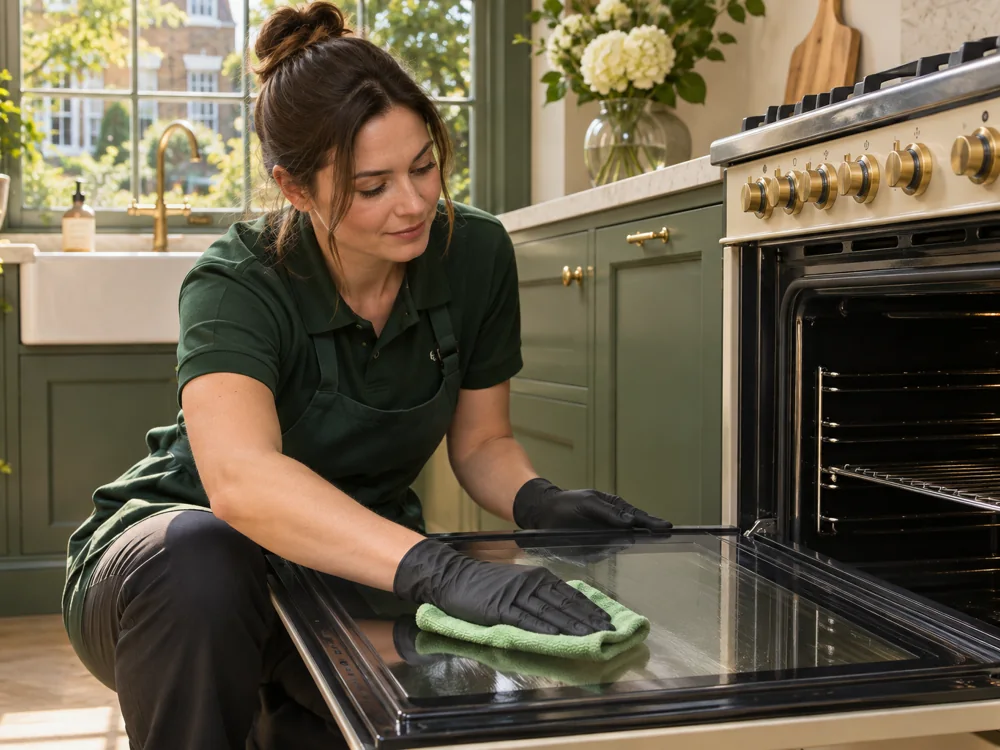
We clean fitted ovens and ranges in East Ham, including suitable accessible cavity surfaces, exposed door glass and agreed removable accessories. We establish which cooking spaces you want cleaned and assess the finish beneath residue before treating it.
Can I enquire for an E6 address?
Give the full postcode and actual residential entrance so we can check your property.
Can I ask about a single cavity in a range?
Yes. Identify that door, the relevant finish and any racks or trays you want considered.
Identify the surfaces affected by cooking residue
We inspect where grease and drips have collected in the booked cavity. A patch can reach the enamel floor, a side lining or an accessible trim edge, so we assess each finish under the residue separately.
A previous clean cycle can alter how an area of lining looks. We check whether a patch is a surface deposit or a change in the material and explain what can remain after cleaning.
- Identify the oven lining and finish where possible.
- Give the name and timing of any built-in programme.
- Share a photo of the mark and any nearby change of material.
Identify the booked range compartments
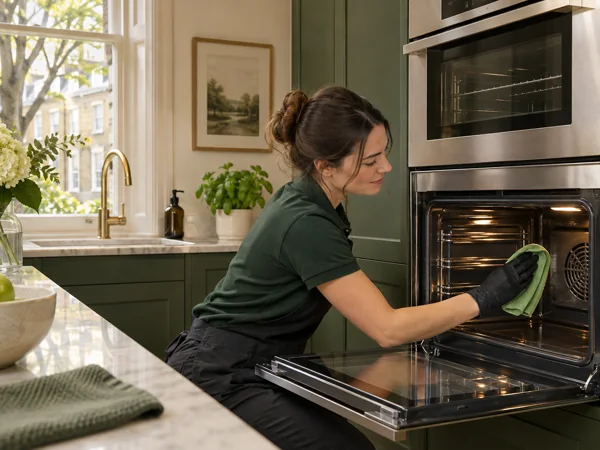
We distinguish the main roasting oven from a tall side oven or separate grill by their fittings and inserts. The parts belonging to each booked cavity are assessed before any suitable accessory is cleaned.
A grill setting in the main oven can leave residue high inside the same cavity. When there is a separate grill door, we agree its reachable surfaces and pan as additional work.
Identify each appliance or part
| Component | Send | Decision |
|---|---|---|
| Main cavity | Exact model and finish | Appropriate treatment |
| Side oven | Door and purpose | Which cavity and parts to assess |
| Sliding shelf | Fitting and movement | Safety of removal |
Check the condition of the lining before working on deposits
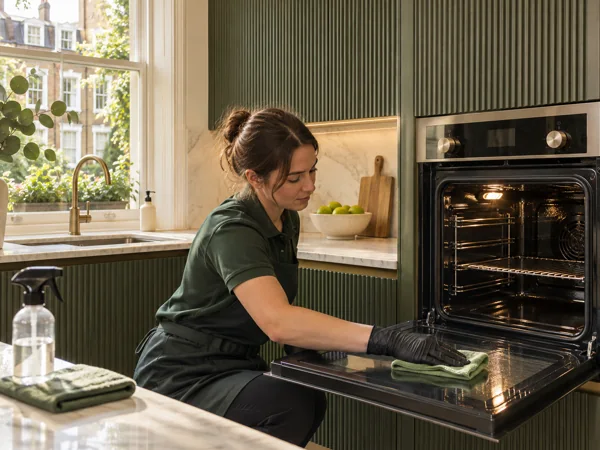
We check the cool oven’s accessible floor, walls and shelf positions for where a spill has baked on. Once the finish has been identified, we focus treatment on reachable deposits rather than fixed parts around them.
We inspect any previous treatment marks separately. If the coating is visibly worn, we explain the limit of the clean before working on adjacent suitable surfaces.
- Separate the age of the deposit from the age of the finish.
- Report any product by name and affected area.
- Point out the first mark you want reviewed.
Treat the agreed racks, trays and inserts individually
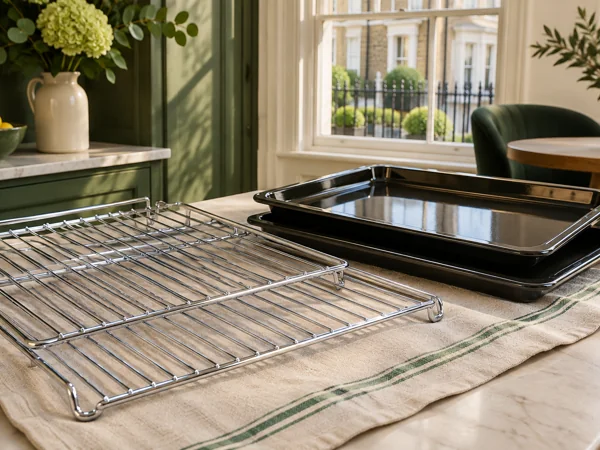
We check the accessories included with each booked cavity and look for buildup on bars, rims and other grease-prone points. Suitable removable pieces are cleaned separately from fixed liners and supports.
A spare pan can have a different coating from the original one. If included in the job, we check its condition and how to handle it independently before cleaning.
Separate the mark from the finish
| What you see | What to provide | Check |
|---|---|---|
| Hard dark patch | Spill history and product names | Accessible deposit |
| Glazed edge with streaks | Door position and light angle | Safe access |
| Liner has changed colour | Earlier appearance and care guide | Permanent finish change |
Oven cleaning in East Ham homes near High Street North
Transport for London lists East Ham Underground Station on High Street North in E6. If that helps describe where you live, use it in addition to your full street address and postcode. A residential door can sit beside a shop or be reached through a separate gate, even when a house number appears on the main road. Tell us which door should be used with equipment and what name or number is on the bell. Name the meeting point if an occupant needs to guide the technician inside.
Once at the cooker, we check the opening and agree where any loose parts can be handled. This keeps the clean focused near the oven, with the fitted units left in place.
- Supply the full address and entrance label.
- Include the correct stair, lift or gate.
- Confirm who can give access and where to unload.
Inspect reachable door glass separately from the cavity
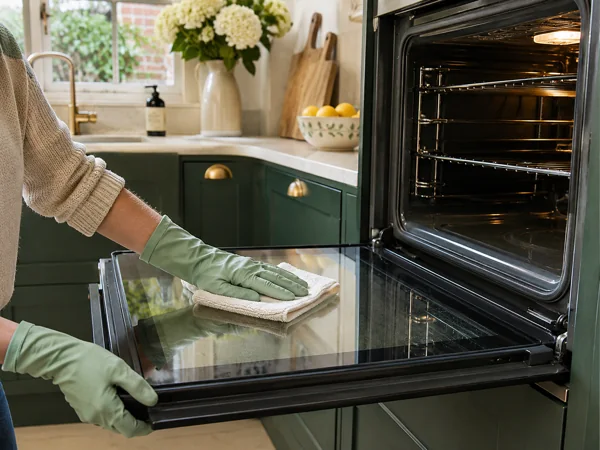
We check both exposed sides of the cold oven glass before working on the one covered in grease. If a mark sits deeper inside a sealed door section, we explain which surfaces can be reached.
If you have an affected area on a patterned border or another cavity with matching glass, point to the right door and describe the angle that shows the mark clearly. A photograph of the whole front helps relate the detail to the appliance. Ask which surfaces can be safely reached and confirm what you expect the quote to include. If the mark itself is a permanent change to the finish, the technician can discuss what may stay visible. Confirm whether glass treatment can go ahead after the assessment.
Quote optional hob or extractor cleaning as separate items
When you enquire about a gas hob, identify the top and any removable pan supports. For a ceramic or glass surface, give the affected cooking zone and material. A rim, splashback or adjacent surround may be made from something different. Describe that part separately if you want it considered. Ask about the work before assuming it is included with the oven. A photo of the full cooking area can also show where the appliances are positioned in relation to each other and where the technician can stand.
For an extractor, note its approximate height and where you can see the filter. Describe the external cover separately and include whether the filter is washable metal or disposable if known. An extractor set inside a cupboard may have different access from a hood fixed over a kitchen island. Agree which parts can be reached before confirming optional work. Keep an independent description of each appliance on the quote, then leave the confirmed area clear so the technician can reach the surfaces without unnecessary disruption.
- Give the hob type, material and individual parts.
- State the filter type and extractor height.
- Confirm optional work separately from each oven cavity.
Check working room before cleaning begins
| Location | Details | Confirm |
|---|---|---|
| Street | Full address and visitor door | Relevant entrance |
| Inside the building | Lift or stairs and contact | Equipment route |
| Kitchen | Counter and space for door | Working area |
Review the booked oven and confirm the next use
The quote reflects which oven and how many compartments are booked, plus any agreed extra appliance. At handover we review the cleaned areas and explain what remained beyond reach.
At the end, find out when to put the oven back into use. Confirm which shelves, inserts and trays were cleaned and where they normally go. If finish wear or access left a visible mark outside the work, make a note of the surface and cavity. Keep the note with the appliance’s care instructions and pass any return-to-use advice to the next person who plans to cook. Where more than one oven is fitted, be specific about which unit those instructions apply to.
Get an oven cleaning quote in East Ham
Tell us the oven type, number of cavities and whether the hob or extractor also needs cleaning.
Get a QuoteOther Cleaning Services in East Ham
Local references · Transport for London, East Ham Underground Station
East Ham oven cleaning questions
Can the oven and a specialist tray be considered separately?
Yes. Give the model and tray coating or finish, and make clear which parts you want included.
Which photo is useful for a mark that crosses a liner?
Send the cool cavity from the opening and include the boundary where the finishes meet.
What if the other door is only for storage?
Say so when you describe the arrangement, and ask about it separately only if it needs attention.
Can I give High Street North as an approach reference?
Yes, alongside the full postal address and actual entrance for visitors.
Should I move cookware from the hot oven?
Wait until the appliance has cooled, then take food and loose personal items away from the working area.
Does the quote need to include the whole extractor?
Agree the accessible cover and filter individually according to what you want cleaned.