 Housekeeper
Plan around the family kitchen
Oven Cleaning in Covent Garden
Choose a workable gap between meals when you enquire about oven cleaning in Covent Garden. Tell us which oven your household wants to clean, which accessories it uses and where the working space and residential entrance are. We can discuss those points together before you plan around the visit.
Can I send a WC2 postcode for an oven quote?
Yes. Add the full address and the residential door or bell.
Can I keep cooking in the other cavity?
Discuss the layout and the time you need to use it before booking.
Put the household’s timetable on the quote request
Children’s meals, visitors and late working hours can turn a simple oven appointment into a question of timing. Choose a gap when no one needs to turn on the appliance and the kitchen can be kept clear, including time for it to cool after the last use. If someone regularly uses a second cavity for small meals, tell us if that cavity has to stay available during the visit. Leave the area around both doors clear and agree the plan before relying on another part of the cooker.
Let us know if the appointment is near a planned celebration or meal. If a relative or friend is staying and will arrive while we work, make sure they know where the equipment will go and have another way to reach the rooms they use. For an evening meal, ask when the oven can be used again rather than assuming. Keep the same guidance available to the whole household so nobody starts preheating while someone else is still waiting for the work to finish.
- Decide which meal creates a useful gap.
- Allow the appliance to cool after its last use.
- Confirm when another person will need the kitchen.
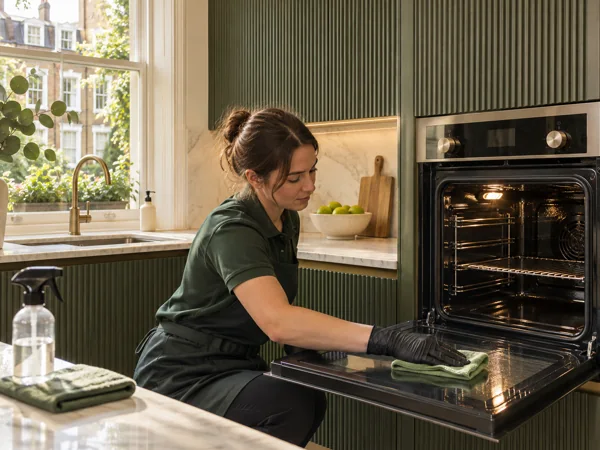
Plan for a household using the kitchen
| When | Agree | What to clear |
|---|---|---|
| Last meal before visit | Time to stop using the oven | Move food from the cooling appliance |
| During the appointment | Who needs to use an adjoining room | Leave a route away from the oven |
| First meal afterwards | When the appliance can be used | Put the cleaned trays in the correct place |
Use the routes around Long Acre to describe the correct door
Transport for London lists Covent Garden Underground Station on Long Acre in WC2E. If you use the road or station to orient your directions, also give the full postal address and the actual residential entrance. A door beside a shop or in a passage marked for residents can look different from the building number on the main street. Identify the street, visible bell label and doorway for the flat. An arrival note should lead all the way from the street to the person who will let the technician in.
Check the permitted equipment approach with reception or a building contact where appropriate. Give any confirmed loading point and tell us whether an entrance is available only during certain hours. If the technician needs to use an access lift, say which floor it reaches and include any steps that come after it. Where the route depends on a separate person opening a gate or opening time at a lobby, include the timing when booking. Give a contact who can answer if access changes on the day.
Check which parts of the oven belong to each cooking routine
In a kitchen with two appliances, one person may grill in the compact unit while another roasts in the larger oven. Take a picture showing both fronts, write the appliance position next to the relevant cooking modes and give the maker or model number if visible. Identify which cavities you want cleaned and which are outside the enquiry. A drawer used for baking sheets may look as though it is another cooking space, so describe its use if it is in the photograph.
A single oven can have a grill above the normal cooking position and use different accessories for each mode. Indicate which racks, trays or inserts you usually take out and whether you share them between appliances. Ask the technician to check a fitting that is hard to move. Give the product handbook where it describes an interior finish or a removable part. Keeping instructions and pictures together lets us speak to a single layout rather than guessing from what people call the large or small oven.
- Mark the cavity that needs attention most.
- Name the racks and trays that go with each part.
- Send the manufacturer’s care page where available.
Describe the residue from family cooking
A baking tray can overflow near one corner, and splashes from grilling may sit across a higher part of the cavity. Rather than asking everyone to describe dirt from memory, check once the oven is cool and record the areas you can see safely. Show which shelf normally holds the tray and where the drip reached the base or side. If you notice colour changes where there is little residue, point out that surface as well. It can help the technician assess marks and the finish underneath them.
Share earlier actions for each area, such as using an oven product on the floor or running a built-in cleaning cycle. If a different household member cleaned the glass before you took a photo, ask what they used and include the details. Residue may be removable, while wear or discolouration can remain visible. Ask about the most important marks at the first inspection. If the oven contains a specialist liner, the maker’s directions and the current condition help determine which accessible surfaces can be treated.
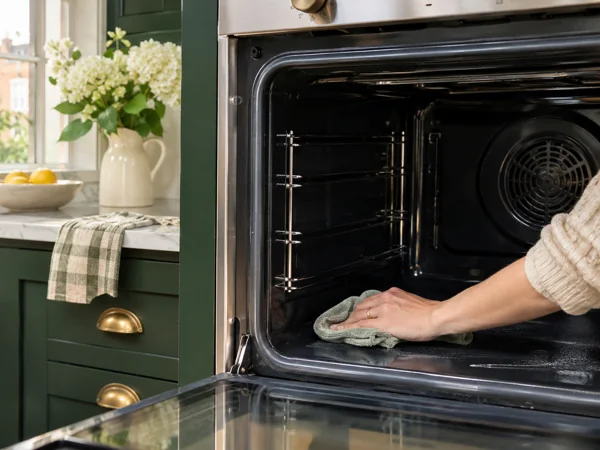
Match the concern to a cavity
| Mark or part | Detail to give | What to assess |
|---|---|---|
| Grease under grill | Name of mode and tray position | Accessible surfaces |
| Track on side | Shelf height and liner type | Whether the finish has changed |
| Streak on door | Viewpoint and trim condition | What face can be reached |
Keep children and everyday items clear of removable parts
A technician can check the shelves, rails and trays before deciding which can safely come out. Suitable pieces may be soaked in a dip tank. Count the original wire racks and list optional pieces such as a grill insert separately. A narrow rail that extends and a plain rack can look similar when you first open the door. Report anything that catches or has changed position and leave it in place. If it has a coating or care restriction, have that information ready.
Take food and loose cookware out of the cold oven and clear a place close to it. Keep bags and school items away from the working area, and arrange for anyone eating or doing homework to use another table or room. Keep children and pets away while the equipment and oven parts are being handled. In a compact space, decide where to put spare baking dishes early so you do not have to take them out of the technician’s way midway through the visit.
- Count the original parts before moving loose items.
- Leave sticking components in position.
- Give the technician a stable surface away from family activity.
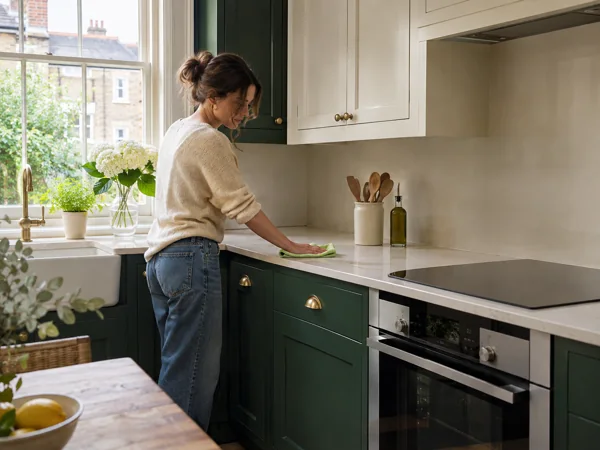
Look at the door glass from where you normally cook
Check the mark with the door shut and from the open oven once the appliance is cool. If a cloudy line is clear only when you switch on a ceiling light, describe which angle brings it out. A streak can be on an accessible face or between panes. Safe access depends on how the door is built and its condition, so tell us about a chipped edge, loose trim or any previous intervention you know about. Leave fitted parts in position for the first check.
Ask about the exact face if visibility through the door is important to you. A photo can identify the area, but sometimes a description of the reflection is more useful. If two people have noticed different marks, ask which door each one saw and label the images accordingly. Mention any guidance for coated or patterned glass. The technician can discuss which surfaces can be cleaned and whether additional examination of the assembly is appropriate. Confirm that part of the work before it is included in the visit.
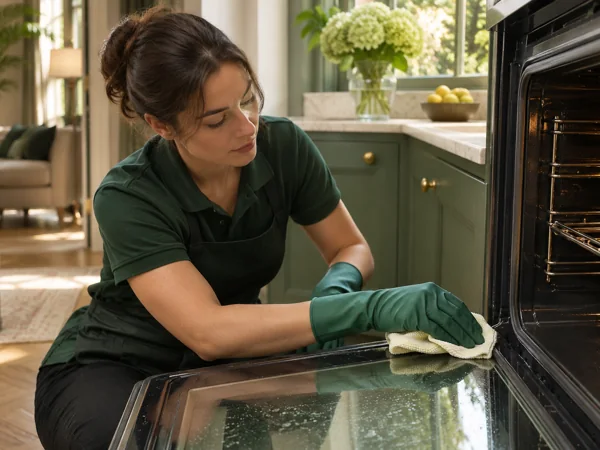
Check building access before confirming a time
| Location | Give the technician | Check first |
|---|---|---|
| Residential entrance | Address and bell name | Whether it can be used for equipment |
| Reception or gate | Opening hours and contact | Any booking or pass arrangement |
| Kitchen | Floor and route from lift | Space in front of the cooker |
Decide what to do about the hob and extractor separately
If the cooktop also needs attention, describe what it is made of and where the cooking residue sits. A gas hob with pan supports needs a different check from a flat glass hob or an appliance fitted into a peninsula. Include a separate description for any splashback that needs consideration. If you rely on the hob to feed someone while the oven is out of use, agree whether the work can be arranged without interrupting that meal. The quote can show each optional item clearly.
For an extractor, give the approximate height, the filter type if known and whether the problem is mainly on the outer cover. If the hood is hidden inside a unit, include how it is positioned and the relevant page of the manual. A metal filter, replaceable insert and the exterior surface can need different handling. Ask which items can be included and where the technician needs to stand to access them. Make room in the kitchen for those items if they are part of the confirmed work.
- Identify the hob surface and positions you want assessed.
- Give the height of the hood and its filter type.
- Confirm the specific extras in writing.
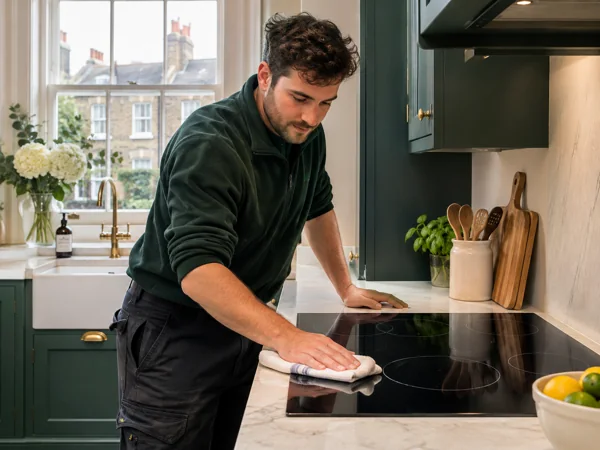
Tell the next cook what happened
Start the enquiry with the postcode form. Keep the details of the oven and confirmed route handy so the appointment can be discussed with everyone needed. If the person who meets the technician does not choose the work, give them the agreed item list. Set a way to reach the person who can decide if the initial check shows different conditions from the photos. Agree who will let the technician out or return any visitor pass before the end of the appointment.
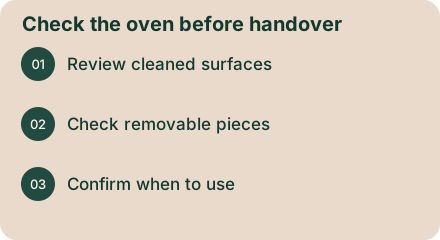
At the handover, ask which removable pieces were cleaned, where they fit and when you can use the appliance again. Pass on the advice, including any surface the technician has left alone. If one person usually makes the first meal after an appointment, make sure they hear the instructions and know which oven is ready. If you plan to enquire about another cavity later, keep its exact model and usual accessories on a separate note so it stays distinct from the work completed that day.
Get an oven cleaning quote in Covent Garden
Tell us the oven type, number of cavities and whether the hob or extractor also needs cleaning.
Get a QuoteOther Cleaning Services in Covent Garden
Local references · Transport for London, Covent Garden Underground Station
Covent Garden oven cleaning questions
How do I arrange the appointment around a visitor who will cook later?
Tell us their expected cooking time and pass on the technician’s return-to-use advice at the end.
Do I need to describe all the controls if I only want the main oven looked at?
A clear photo helps. Mark the relevant door and any controls used for that particular cavity.
Can I ask about the marks left by an overflowing baking dish?
Yes. Explain where it spilled and identify any previous product used on the area.
What if the tray belongs to a second oven?
Say which oven it normally fits and list the accessory separately for consideration.
Can an evening visitor use the same entrance during the clean?
Confirm the practical access arrangement with the building and tell us when the visitor is expected.
Do I need to include the hob when it sits directly above the oven?
No. Name it separately only if you want its surfaces or parts assessed.