 Housekeeper
Care for built-up cooking residue
Oven Cleaning in Belgravia
When grease has collected across more than one part of the oven, a useful enquiry identifies the individual surfaces and the work you want considered. Tell us which Belgravia property the oven is in, where the build-up sits and who can confirm the agreed items at the first inspection.
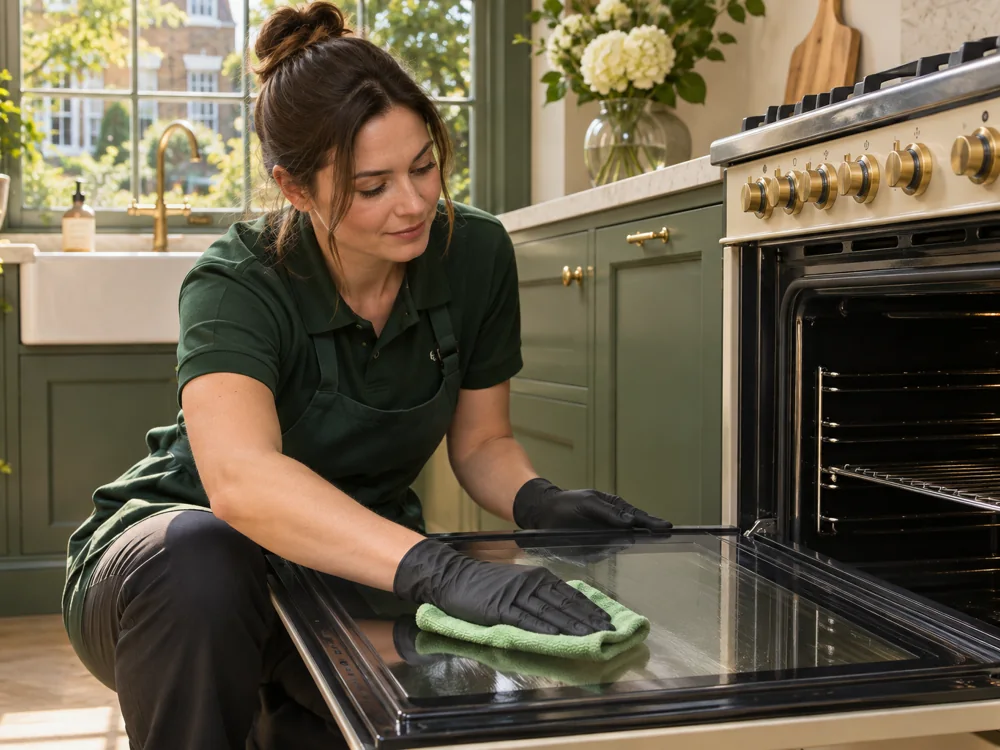
Can I enquire from a lower-ground flat in SW1W or SW1X?
Yes. Send the full postcode and describe the approved route to your door.
Can I prioritise the cooker’s main cavity?
Yes. Identify the door and list any trays, glass or shelves you want assessed.
Locate the heaviest build-up by cavity
When there is more than one oven in a kitchen, start with the one that creates the most concern. Take an overview of the front and say which door gives access to the affected cavity. Describe whether the residue has built up around the grill, beneath a rack or along the lower inside edge of the door. A deposit that looks uniform from the front may sit on more than one material. Point out if a line runs across a removable liner and onto enamel or a different coating.
When you describe the build-up, include when you noticed it and whether the same compartment has been heated since. A hardened spill after a roasting dish overflowed is a different observation from grease in the upper part of an oven after regular grilling. The technician can assess both and explain which accessible surfaces can be cleaned. Mention any prior knowledge about the underlying finish so discolouration and worn areas can be discussed alongside the cooking residue already visible.
- Record the position of the affected cavity.
- Tell us how the build-up first appeared.
- Show where a mark crosses different surfaces.
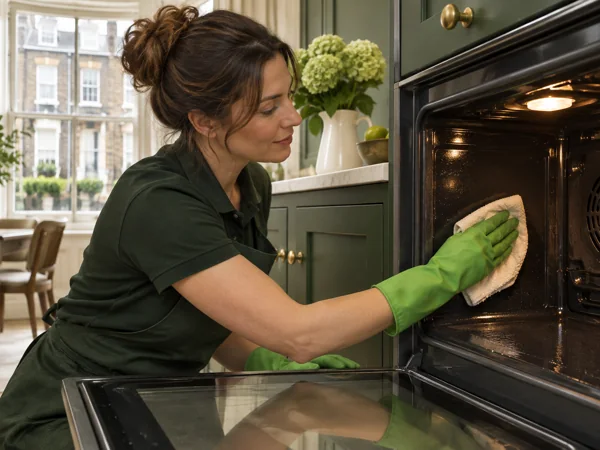
Give the route that serves the kitchen near Eaton Square
The Westminster City Council mini guide lists Eaton Square and Belgrave Square among the historic garden squares of Belgravia. If the square is a useful reference for your home, give the house or building number and entire postcode beside it. Check which entrance the person carrying equipment is expected to use. A front door looking onto a square may serve a different level from an entrance round the side or a separate lower-ground flat. Include the actual bell label and the approach from the residential door to the kitchen.
Discuss any steps and gates that differ between the main route and the one you have agreed to use. If the property has a building attendant, confirm the name to give at reception, the unloading location and any time limit. Where visitor access is by an internal lift, check if it serves the complete route or leaves a short set of stairs between the landing and the kitchen. Arrange for someone to answer the telephone if there are multiple doors with similar signs or numbers.
Describe the finish beneath the grease
Look for the manufacturer’s description of the linings before the appointment. An interior panel can have a different surface from the low point where food collects. Give the model and note which cavity is affected if the range has several doors. If the handbook describes an automatic cycle for one part only, say which mode you normally use and when it last ran. Let the technician assess the deposits in place. A stable mark may be wear or permanent discolouration and can remain visible after cleaning.
Share the name and timing of any other product you already used. If the oven spray was applied to the floor but a separate cloth was used on the door, describe both treatments by surface. Any rubbing or scraping that took place beforehand can also be relevant when the technician looks at the finish. Tell us whether the grease appears to sit on a part that the maker gives dedicated care instructions for. An example is a side liner that has a texture unlike that of the base.
- Share the maker’s specific advice when available.
- Name recent products and their application areas.
- Point out surface wear before any treatment.
Describe the grease across different surfaces
| Area | Detail to give | Assessment |
|---|---|---|
| Enamel floor | Location and age of spill | Whether residue or a finish change is visible |
| Textured lining | Care page and visible grease | Compatible approach |
| Glass | Affected door and viewpoint | Which faces can be reached |
List the metal parts by their design and role
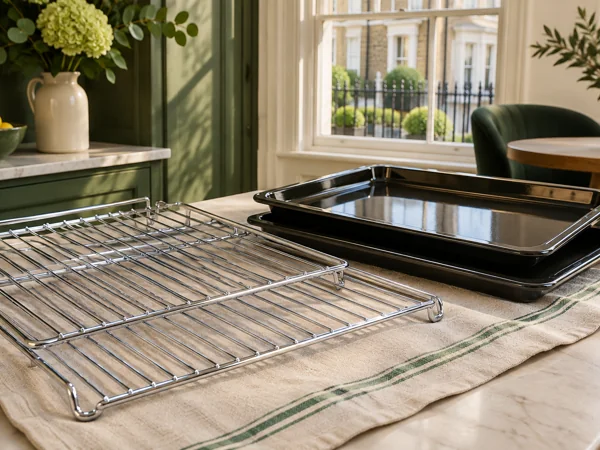
Make a short count of the pieces that serve each compartment. A wide main rack, extending rail and shallow grill tray can look like one group of accessories when laid out together, but their finish and construction can differ. Explain if a part catches at a particular position or if it was removed before the visit. The technician can inspect which components can safely come out. Suitable removable pieces may be soaked in a dip tank once their condition and material have been considered.
Leave fitted components where they are and set loose personal cookware away from the working area. If you want a particular grill insert or drip tray included, say whether it was supplied with the oven and identify its cavity. A thin baking sheet that fits between the same runners may need separate consideration. If you have a note from the maker about the tray surfaces, provide it so care can be considered. At the end of the visit, ask which of the items were cleaned and how they should go back.
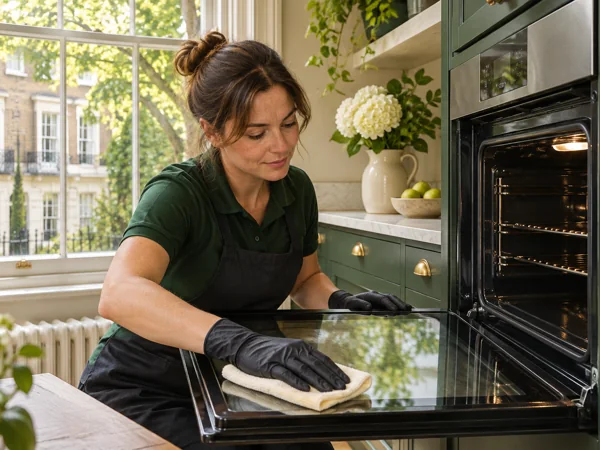
Decide whether the door itself is a priority
If you see a greasy outline on the glass, check whether you can locate it with the cold oven open. Marks on the accessible inside face can look similar to marks between panes when seen from across the room. Say which part of the door you are concerned about. If the oven has two doors with similar marks, label any photos with the correct cavity and the direction from which they were taken. The technician can assess the accessible faces before discussing any work.
Access to the inside of a door assembly varies with how it is made and its condition. Give the model and describe any damage or movement around the edge of the glass. If someone previously moved a panel, share the relevant details rather than taking it apart again to recreate what happened. Ask about the feasibility of any additional glass work during the assessment. When a hard-to-locate mark was the main concern, establish whether the affected face can be reached before treating it as part of the agreed clean.
- Photograph the visible mark from a practical angle.
- Report movement at the edge of the door.
- Confirm which reachable faces are included.
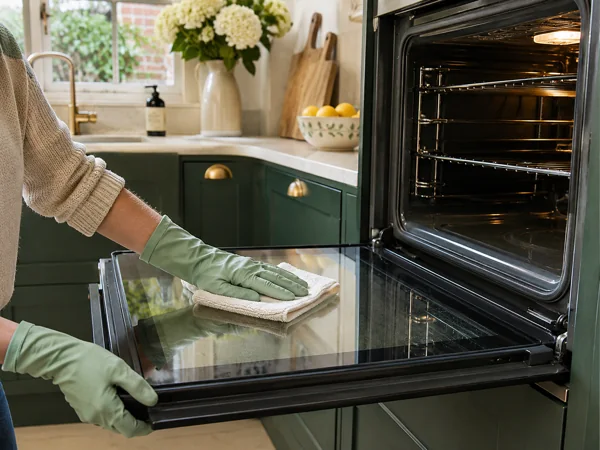
Identify the parts to handle separately
| Part | Information to supply | Question for the visit |
|---|---|---|
| Wire shelf | Cavity and count | Which pieces can be removed? |
| Grill insert | Relevant tray and coating | Can both pieces be treated? |
| Extractor filter | Height and material | What can the technician reach? |
Separate grease on the cooker top from other finishes
If you want the hob included, describe its cooking surface and any surrounds that have picked up deposits. A gas hob can have several pan supports and fixed burner parts, while a flat glass cooking zone may need attention only around one ring. List the specific components and mention any care instructions that apply. Cooker trim, a glass splashback and adjacent stone or metal panels are separate surfaces. If you see grease across several of them, make it clear which ones you want to ask about.
Use the same detail for an extractor. The exposed cover or collar may have a metal finish, with a filter set higher or deeper in the assembly. Tell us roughly how high it sits and what type of filter the manual gives. We can discuss the parts that can be reached, the method and any optional work separately from the cavity. Ask for each agreed item to show on the quote. Where the hob and extractor were installed independently, provide individual details so any restrictions can be matched correctly.
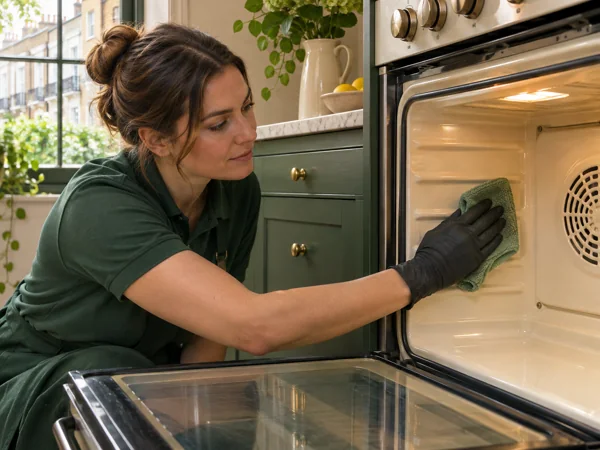
Clear a working space even when the kitchen is quiet
Turn off the oven ahead of the appointment and leave it fully cool. Clear nearby cutlery, ingredients and decorative items away from the work area. If the only suitable surface sits across the doorway, move portable items and check that a path stays open. In a kitchen reached by a lower-ground stair, consider both the working area and the approach from the door. Agree access to any facilities the technician needs before the visit. Keep children and pets clear while oven parts and equipment are being handled.
Tell us if another person will be working in the room, arriving with a delivery or using the same entrance during the clean. A housekeeper or resident who knows the kitchen can point out the agreed counter and relevant care notes. Make sure anyone answering the door has the agreed list, including the door position of each oven. If removing loose pans makes it hard to identify a fitting, leave a note of where the part belongs instead of returning personal cookware to the cavity.
- Clear the counter nearest the oven.
- Allow room for a door or doors to open.
- Coordinate deliveries and other use of the kitchen.
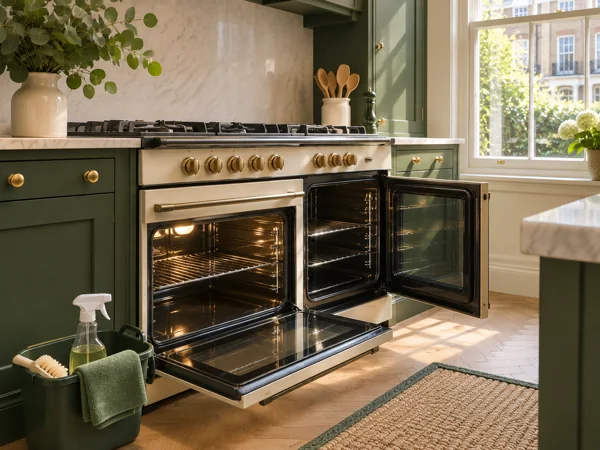
Confirm what can be cleaned and when you can cook again
Begin the enquiry with the full postcode and keep the appliance details ready. After inspection, discuss any surfaces for which safe access or appropriate treatment still needs clarification. If another person is making the decisions for the property, agree a way to reach them and identify the exact model and cavity in the note. Keep timing requests realistic by explaining when the kitchen needs to be used again. Ask the technician during the handover when and how you can put the appliance back into use.
Before closing the appointment, confirm which parts have been cleaned and which areas remain outside the work. Let the person using the oven next know if a shelf belongs in a particular compartment and what advice applies. If a mark remains due to a permanent change in the finish, identify it in a short written note to avoid mistaking it for new grease. For an agent or homeowner arranging a later visit, keep the component list alongside any manufacturer instructions and building access information.
List the stages from street to kitchen
| Location | Confirm in advance | Reason to note it |
|---|---|---|
| Street entrance | Actual address and bell label | Directs equipment to the right door |
| Lower floor route | Gate, stairs or lift | Shows how to reach the kitchen level |
| Kitchen | Space beside the cooker | Supports safe work on removable parts |
Get an oven cleaning quote in Belgravia
Tell us the oven type, number of cavities and whether the hob or extractor also needs cleaning.
Get a QuoteOther Cleaning Services in Belgravia
Local references · Westminster City Council, Belgravia mini guide
Belgravia oven cleaning questions
What if the cooker opening has grease on two different finishes?
Give a photo showing where the surfaces meet and share the maker’s instructions for each finish you know.
Can I use Eaton Square as my arrival instruction?
Use it for orientation if relevant, and also provide the whole address and the specific visitor door.
How do I list a part removed by the previous occupant?
Describe the part, say where it is stored and identify the cavity you believe it fits.
Can we ask about only the reachable glass surface?
Yes. Describe the affected glass and ask which face the technician can assess on arrival.
Do both oven doors need to be clear of furniture?
Leave space for the technician to open whichever doors you want assessed and to stand in front during the check.
Can cleaning near the hob be an independent item?
Yes. Explain which surround or cooking surface has grease on it and check how it is listed.