 Housekeeper
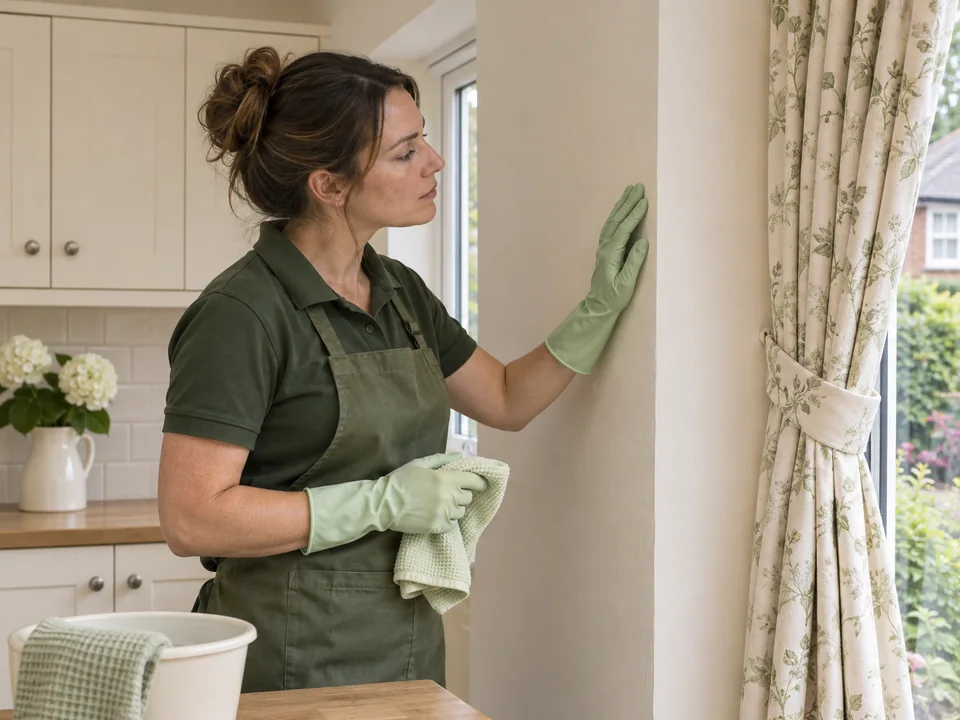
Mould Removal in Belgravia
If you notice visible mould on a decorative hard surface in Belgravia, tell us what the finish is and where it meets the surrounding materials. We inspect accessible faces before deciding which areas can be cleaned. Once you agree the work, we physically remove visible mould from the suitable exposed hard surfaces.
Can I arrange a visit near Eaton Square?
Yes. Give the full Belgravia postcode, entrance and floor so we can discuss access.
Can you look at a bespoke cabinet surround?
Yes. Tell us the exposed material and about any existing damage or special finish.
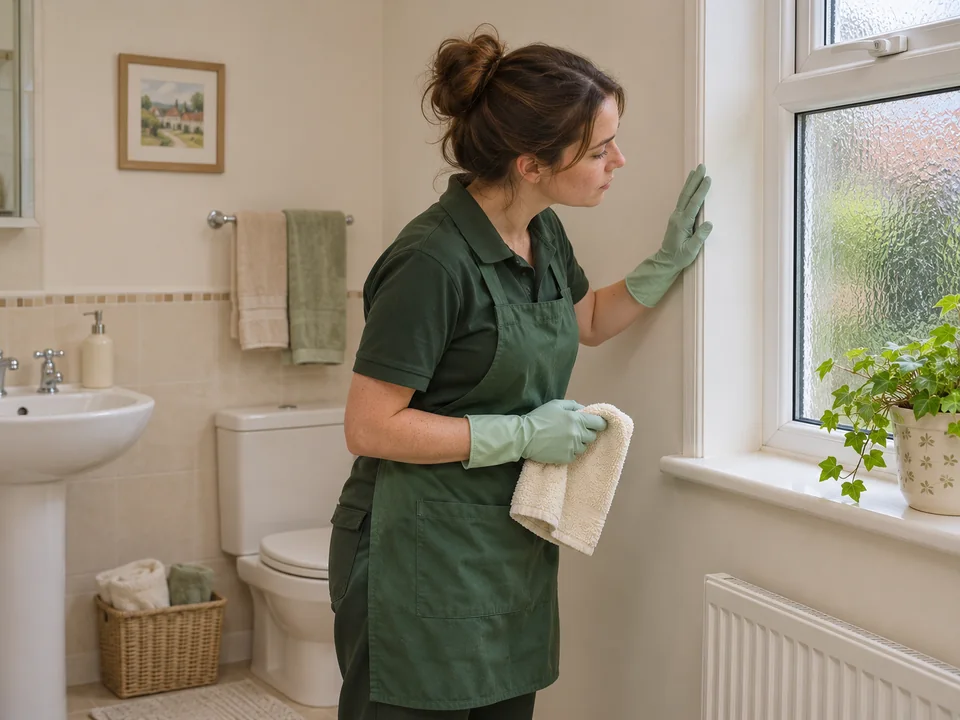
Bring the surface details into the first enquiry
A decorative panel may have a glossy outer face, a small recessed bead and a different material showing at the return. Tell us which part is affected. If you have finish information from the installer, include the relevant detail rather than the whole specification. We can use it when discussing the visit and assess the exposed surface in person. A clear photograph of the face meeting the nearest join provides a useful reference. Let us know if there are less visible points on either side that need separate inspection.
Westminster City Council publishes a Belgravia conservation area audit covering the district around locations including Eaton Square. That local context is useful when describing which part of Belgravia you are in, but we need the actual postal address and entrance to the residence. If you use a mews door or a side route for appointments, include the instructions when you enquire. Let us know if another person controls the lift, floor access or approach to a lower room.
When a surface is described as marble, timber or enamel, mention whether the affected part is the main face or a coating, edge piece or other insert. The type of material provides a starting point. A visible difference in the surface or a damaged corner can change our decision about agreeing work. Show where any protective film, metal strip or decorative detail begins. We can identify the specific finish on either side by looking at it directly before cleaning.
If the relevant furniture or finish has been listed in a separate property instruction, tell us the name the managing contact uses for it. They might refer to the room and a particular cupboard rather than the tradesperson's description. Give both names if someone else will carry out the handover. A short note linking the nearest handle or edge to the photographed face can help us all identify the correct point.
If the finish has a distinct pattern, describe the patch by its position relative to that pattern. An inlaid band, bevel or junction can make a useful reference without marking the surface. Let us know whether the opposite end has a similar design that could be confused with the position you mean. Take the photograph square to the main face when possible. If reflections make the mark less clear, give another view showing the nearest fixed frame and the line of the edge. These descriptions help us assess the point accurately without having to handle nearby decorative parts.
- Name the exact hard face and any finish you know.
- Show where it meets trim or another material.
- Mention a repair or coating before we agree the visit.
| Decorative surface | Detail to flag |
|---|---|
| Coated timber panel | Nearest join and evidence of lifting |
| Hard stone face with narrow trim | Point where the materials change |
| Bespoke cabinet surround | Whether the marking is within normal reach |
Arrange entry with someone who knows the property instructions
A representative may be able to open the front door without knowing whether a fitted surface can be approached. Let us know who can point out the faces and who can confirm any change after assessment. If the intended contact is travelling or working elsewhere at that time, arrange for another authorised person to see the work position. We use a direct walk-through to agree the exposed hard areas. Written preferences can be helpful where a particular fitting must stay untouched or an entrance is only open for part of the day.
Give the route from the normal entrance to the room, including any staircase turn or secondary threshold. For a property with a lower-level work area, tell us which side of the house normally provides access. A suitable route into the home does not always mean the specific face is accessible. If a decorative chest, cabinet or other significant object stands in front of it, please explain how it is set up. Leave attached or unstable items as they are and let us discuss the available working position.
Think about what can be safely made clear in advance. Give us a view showing the ordinary standing area and mention if any furniture has to stay in place. If the affected patch is next to a light fitting or a protected surface, include that in the description. We can examine the finish and talk through which positions are usable while respecting the practical instructions about the room. If another visitor has a task on the same level, tell us when that area is expected to be free.
We can discuss how to keep an agreed access route usable without anyone needing to step close to the work. If residents will pass through, choose a point when we can inspect and prepare the immediate area. Where a property contact will meet us later, tell both people which room we are inspecting and what will happen first.
- Confirm the visitor route and room access separately.
- Tell us which fittings and objects must stay in place.
- Nominate a contact who can agree the surface boundary.
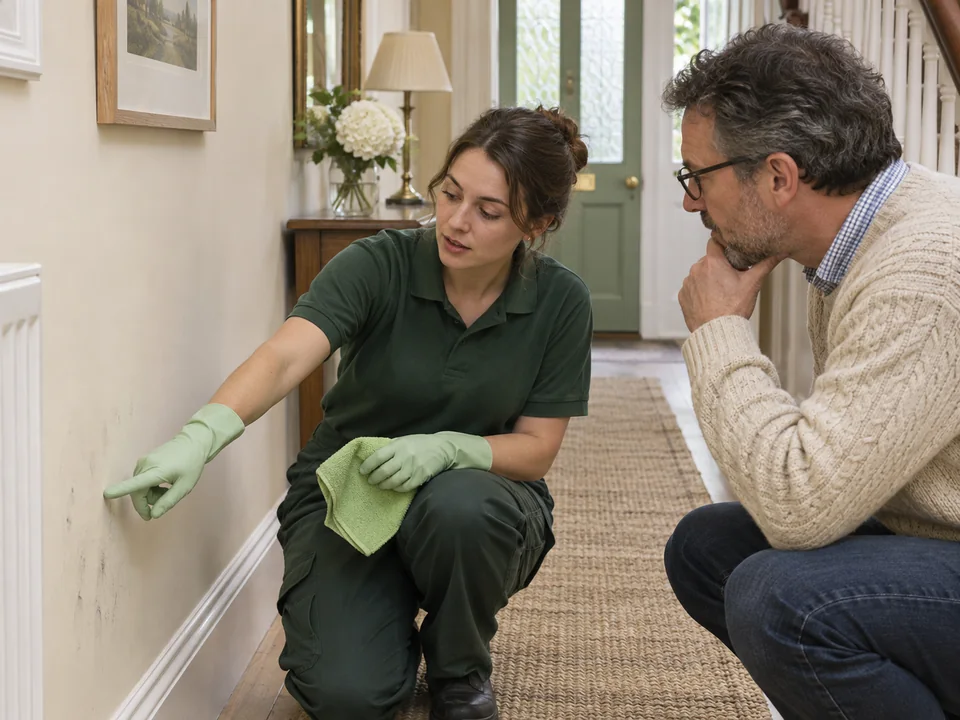
| Access arrangement | Point to confirm |
|---|---|
| Property manager meets downstairs | Who has detailed instructions for the room |
| Mews or lower level approach | Door and usable path to the area |
| Furniture opposite visible patch | Space for ordinary assessment and cleaning |
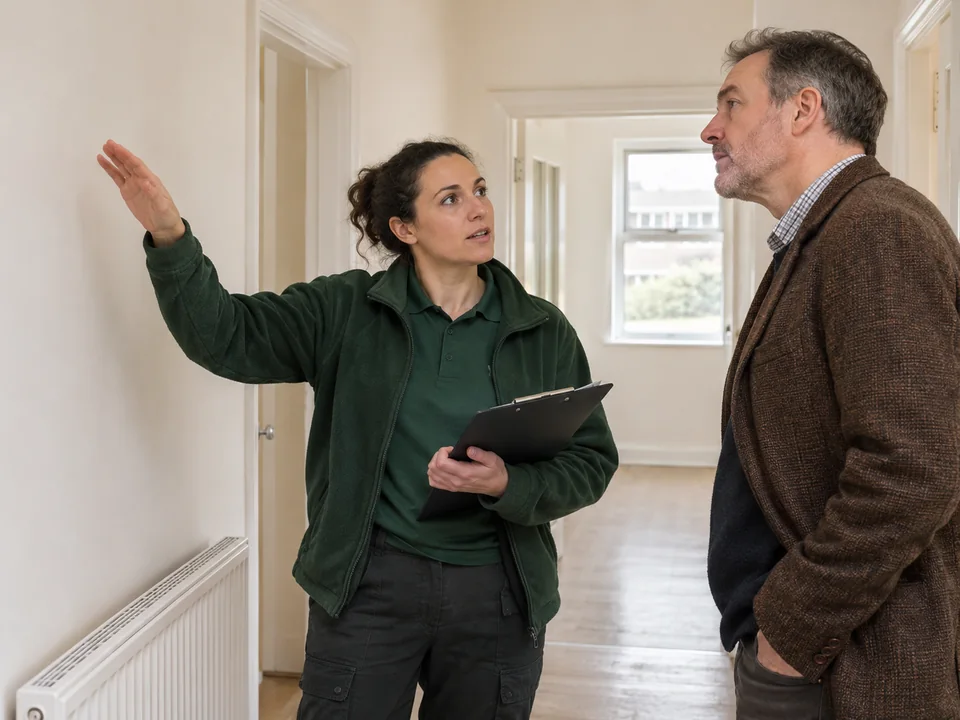
Work to the boundaries set by the finish and the available reach
We inspect the actual state of the face and the nearby trim before agreeing it for work. A polished or coated surface may have a sound central area and imperfections near a screw, join or older repair. We consider where the visible mould appears and which hard section is suitable. If we can clean one material while leaving an adjoining loose edge, we explain the distinction and confirm it with you while we can both see the surface. You can then decide whether that portion is the immediate priority.
Once the suitable hard faces and working boundaries are clear, we prepare the immediate area as discussed. We physically remove visible mould from the exposed hard faces agreed with you. A patch can seem to run into moulding or a covered join as we get closer. We pause when we reach a different finish or a surface with a condition we could not confirm at the start. We discuss where the original agreement still applies and identify what may need separate attention.
If one finish continues throughout a room, the affected area may still need separate assessment at each point. An opening near the door may offer good reach, while a similar area behind a fixture farther along can only be seen from the side. We mark those limits by a visible reference, such as a corner or nearest joint. There is no need to include the full run before we can agree a suitable exposed section.
Tell us if an adjoining face has a different care instruction or has recently been protected by another contractor. We can go over the limit with you before setting up so the cleaning agreement stays specific to the exposed hard face we have inspected. If the protective material covers the true edge, show us the part that is still visible and tell us whose permission would be needed for a later visit once that area has been exposed. We can carry out suitable agreed work where ordinary access allows and describe the rest for that discussion.
- Review how the finish changes near the marking.
- Agree which area takes priority if reach is restricted.
- Show us any existing damage before we begin.
Give the person responsible a precise account of the result
We check the work with you using the exact references agreed earlier. We explain where visible mould was addressed and point out remaining discolouration, surface damage or limits where something was fixed in place. A person who manages the home may need to report those distinctions to a resident, owner or tradesperson. They can use the room, shared fixture name and position of the affected face. If the original instructions were based on an image taken from another angle, we can help match that image to the face we saw on the day.
Record the date and where you see any fresh change after the appointment. Give the details to the person responsible for the building or the relevant finish. A later image of the surrounding face and trim can help them identify the right area, particularly if the broader surface looks similar to one elsewhere on the same floor. We can consider a separate assessment if a relevant surface has been exposed or its condition changes. Please describe the difference when you contact us again.
Keep information about any excluded face with the handover if another person will take care of the room. They may need to know that an outer edge was in view, but another part behind a fixed piece could not be reached. A photograph from the doorway can help them find the correct cabinet or panel before they compare smaller details.
If we have left a decorative join for separate attention, record whether it is beside the original hard face or on a different part of the same fitting. Use that reference with the property contact.
| Item to describe | Useful reference |
|---|---|
| Finished hard surface cleaned | Room, face and nearest edge |
| Adjacent fragile or damaged area | Exact point that needed separate attention |
| New visible change | Date and current state of the exposed surface |
Questions about arranging mould removal
Do I need to know the name of a bespoke finish?
Share any details you have and show the marked exposed face. We assess its condition directly before agreeing work.
Can a house manager make the initial enquiry?
Yes. Provide the location of the mark and identify who can admit us and confirm the visit decisions.
What if the area is only visible from beside an object that cannot move?
We check practical reach with the object in place and explain where the agreed area can end.
Can you look at the face of a stone surround with metal trim?
Tell us which part is affected. We look at the exposed stone and the adjoining trim individually.
Can we ask to leave a particular face untouched?
Yes. Point it out at the assessment so we can agree a clear working boundary.
Can you explain the result to the property manager after the owner leaves?
Yes. Agree who will attend the handover and give us the same room and fixture descriptions.
Other Cleaning Services in Belgravia
Mould removal details and preparation, Regular housekeeping enquiries
Discuss your mould removal enquiry
Mould Removal Prices in Belgravia
Tell us which rooms are affected, the approximate size of the visible patch and what surface it is on.
Get a Quote