 Housekeeper
Signature care for well-used ovens
Oven Cleaning in Barnet
A range with two regularly used ovens calls for a different enquiry from a compact built-in appliance that sees most of its use on Sundays. Tell us which cooker is fitted in your Barnet home, which parts need attention and what information you have about the finishes. We can then discuss an oven cleaning quote based on the appliance and address.
What do I send for an EN5 oven enquiry?
Start with your full postcode, a clear appliance photo and your preferred entrance.
Can I request only the main range oven?
Yes. Identify which door opens to that oven and specify any racks or trays you want considered.
Make an inventory of a multi-door cooker
Stand back far enough to take a photograph of the complete cooker. Note the doors you want us to open from left to right, with each cavity’s usual purpose. A low drawer might contain baking sheets and a narrower door might open to a second oven with a different set of controls. If there is a plate-warming space, list it separately. The full arrangement helps us understand whether the enquiry covers a single area of the range or several distinct cooking compartments.
The manual may show that two doors that look alike open to cavities with different interior finishes. Gather the pages for both and write down the make and model from any accessible label. A free-standing range may also have a lid, top plate or side trim that you would like discussed. Keep all of those requests as separate entries. When the time comes to check the quote, it should be possible to identify every requested item without relying on a generic description of the whole cooker.
- Show all doors and controls in one photo.
- Identify compartments by position and use.
- List cooker-top or trim work separately.
Look out for finishes with specific care
If the instruction book refers to a self-cleaning finish or panels that stay in place, make that known alongside the model information. Some owners find the label first and then locate an electronic copy of the manual. The details matter when a greasy patch sits directly on a specialist lining. Gather the instructions for accessories as well. A rack with a smooth metal surface, for example, could have a separate set of fittings or a finish that needs closer assessment before it is handled.
Record any area that has already changed colour and mention how long you have noticed it. A mark following the shape of a pan can be residue, discolouration or an alteration to the original coating. The technician needs to look at the surface before agreeing a treatment. If something was covered by a sheet of foil and the surface beneath looks different, explain that history. Tell us when you last used a household product or built-in cleaning programme, particularly if the door or shelf supports were treated in the same session.
Show the parts of the oven you want to keep using
Put the racks, original roasting trays and grill pan on your list. Include the shelf position for any component that is hard to slide and describe whether the difficulty happens near the front or inside the oven. Leave attached items in place for the technician to assess. Sound components designed for removal may be taken out, and suitable pieces can be soaked in a dip tank. The way a part is constructed and its current condition both influence which approach is available.
If you share equipment between two ovens, explain where each of the pieces normally fits. A grill insert may sit securely in only one of the trays even when the pair looks similar. An instruction drawing or a photo of every item in its usual position can help the person who will put the kitchen back in use. Empty storage compartments and clear personal pans away from the immediate area. Mention if you want extra accessories considered so we can discuss them alongside original parts.
- Show where sliding shelves catch.
- List the oven the part normally belongs to.
- Discuss loose accessories before booking.
Specify each range door
| What you use | Send with the enquiry | Decision for the quote |
|---|---|---|
| Main roasting oven | Door position and shelf count | Main cavity and accessories |
| Narrow side cavity | Model details and cooking modes | Which surfaces need assessment |
| Warming or pan compartment | Actual purpose of the space | Whether to list it separately |
Explain what you see through the door
Glass can look clear when you open the oven but appear cloudy once the kitchen light is behind it. Describe the position of the clouding and whether it is most obvious from inside or outside. Ask about the affected face while outlining the job. Depending on the oven model and the door’s condition, the technician may be able to access different areas. Tell us about a scratch, small chip or loose trim before the visit so it can be considered when discussing the condition of the assembly.
A patterned glass panel can hide grease until you view it from the side. When taking photos, use indirect light and keep the camera outside the appliance. The pictures can help the technician understand the area of concern, but they cannot establish whether a door is suitable for access between panes. If your manual describes how the panel is held, share that page without attempting to move any parts yourself. Show the mark first when the technician checks the appliance so you can discuss what can be done.
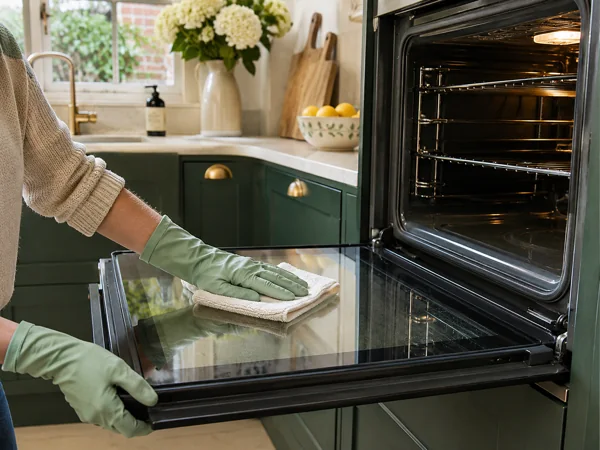
Prepare the surface beside the cooker
Before cooking finishes for the day, decide where you will leave loose utensils and pans. A range with several doors may occupy more of the aisle when open than the smaller oven directly across the room. Move a portable trolley or dining chair well clear so the technician can inspect the edges with space to stand. If the kitchen is used as an entrance from a back door, work out another route or agree when you need to pass through it.
The cooker should be cool at arrival. Allow enough time after using a grill or auxiliary oven, even when you have not cooked in the largest cavity. Keep children and pets away from the working area. If the oven requires a model-specific shutdown arrangement, have the relevant instructions available and raise it when making the enquiry. Tell us where basic facilities can be accessed and warn us about a tight corner or change of floor level near the appliance. These details give the technician a clearer starting point.
- Leave a nearby counter free.
- Allow each used cavity to cool.
- Keep the route for moving parts clear.
Name the Barnet entrance that reaches the cooker
Transport for London lists High Barnet Underground Station on Barnet Hill in EN5. If you use a landmark to orient visitors in this part of Barnet, pair it with the full postcode and your house number or building name. Explain which corner or gate the visitor should look for. Where the house number stands on a front garden wall and the agreed equipment route starts at a side door, give directions from the number to that entrance and confirm who will open it.
A drive with a sharp incline, a gate that only opens at a particular time or stone steps immediately beside the kitchen can all affect the approach. Describe these details when you book, including any checked unloading arrangement. In a block with shared access, say which door serves your flat and if the lift reaches the same level. You can keep the arrival note brief if it works from outside the property inwards. Give a number to call if the person opening up is elsewhere in the building.
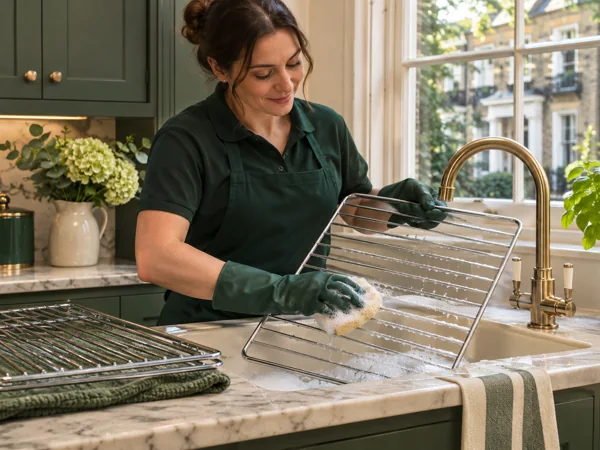
Give finish information in advance
| Part | Helpful clue | Reason to share it |
|---|---|---|
| Side lining | Name or symbol in the manual | Use the correct care instructions |
| Door glass | Description of haze from both sides | Identify the accessible surfaces |
| Sliding support | Photo of the position it sticks in | Assess handling before removal |
Choose the top of the cooker and extractor separately
With a free-standing range, the top may contain burners, a griddle or a hinged cover. Give the type of hob and tell us where you actually see residue. Include any separate splashback only if you want to ask about it. A bright stainless panel, painted trim and flat ceramic cooking surface may sit within a few centimetres of each other. The relevant cleaning choice depends on each finish. If a cooker-top accessory can be lifted away, say which component it is when requesting the quote.
Make a separate note about the extractor, especially if the canopy is set quite high above the cooker. Measure approximately from the floor if that is straightforward and describe where the filter sits. An accessible cover can be discussed even if you are unsure what the filter is made from. Include a photograph of the underside from a safe position if it shows the arrangement. Ask us to identify every agreed hob or extractor item individually so you know how the visit will be organised.
- Specify the cooking surface and any removable cover.
- Send a view of the extractor from below where practical.
- Ask for each agreed item on the quote.
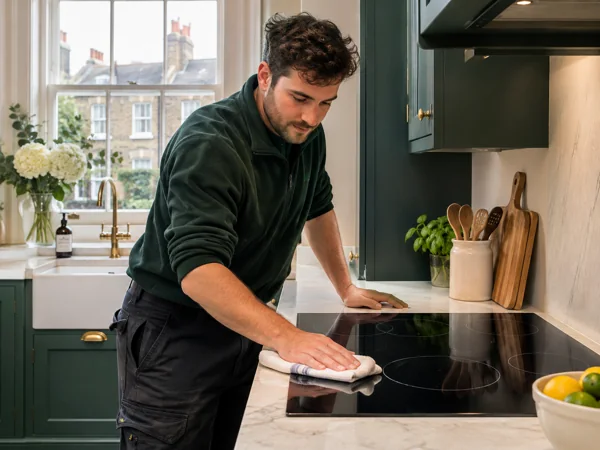
Agree the next cook before the visitor leaves
Send your postcode enquiry, along with an appliance list and room access details. Confirm which pieces need assessment before the rest of the work can be agreed, especially if you are concerned about a lining or door. If you are asking another occupant to meet the technician, share the quote beforehand and highlight your most important compartment. Keep a second contact available if the person at home can only give access. Decide where to move meals or drinks while the kitchen is being used.
At the end of the visit, ask which components were cleaned and when the agreed appliances can go back into use. Check that the person who will prepare the next meal has the same information, including anything the technician identified as unsuitable for handling. If two cavities have different shelf layouts, confirm where the trays and racks belong. You can keep this note with the product manual and refer to it if you need to ask about cleaning the other part of the range later on.
Match access to the property
| Route | Detail needed | What it helps confirm |
|---|---|---|
| Side gate | Which entrance it connects to | Correct route into the kitchen |
| Shared stairs | Flight count and landing position | How equipment can reach the flat |
| Sloping drive | Agreed point to stop and unload | Practical approach from the street |
Get an oven cleaning quote in Barnet
Request a quote with the oven type, number of cavities and any extra appliances.
Get a QuoteOther Cleaning Services in Barnet
Local references · Transport for London, High Barnet Underground Station
Barnet oven cleaning questions
Does a cooker with four doors count as four ovens?
Send the front photo and describe what lies behind each door. We can discuss the individual cavities and other compartments you want included.
Can I ask about a griddle at the same time?
Yes. Include the hob type, griddle finish and whether the part lifts out.
What if two racks look identical but fit different cavities?
Describe where each one normally sits or supply a photo of the original layout.
Can you discuss marks on a cooker with a specialist lining?
Send the model and relevant care instructions. The technician can assess the finish and discuss what treatment is suitable.
Should I move my range to make more room?
Leave the appliance in place. Clear loose items and furniture around the front and side where accessible.
Can I arrange the visit while another occupant is at home?
Yes. Share the agreed entrance and appliance list with them, and make sure one of you can respond to any question during the inspection.