 Housekeeper
Care for built-up cooking residue
Oven Cleaning in Walworth
Request deep oven cleaning in Walworth for baked spills, grease and affected removable parts. Describe where the deposits are and whether a grill, oven cavity or tray is your priority. Include the actual visitor entrance and the next time the kitchen is needed.
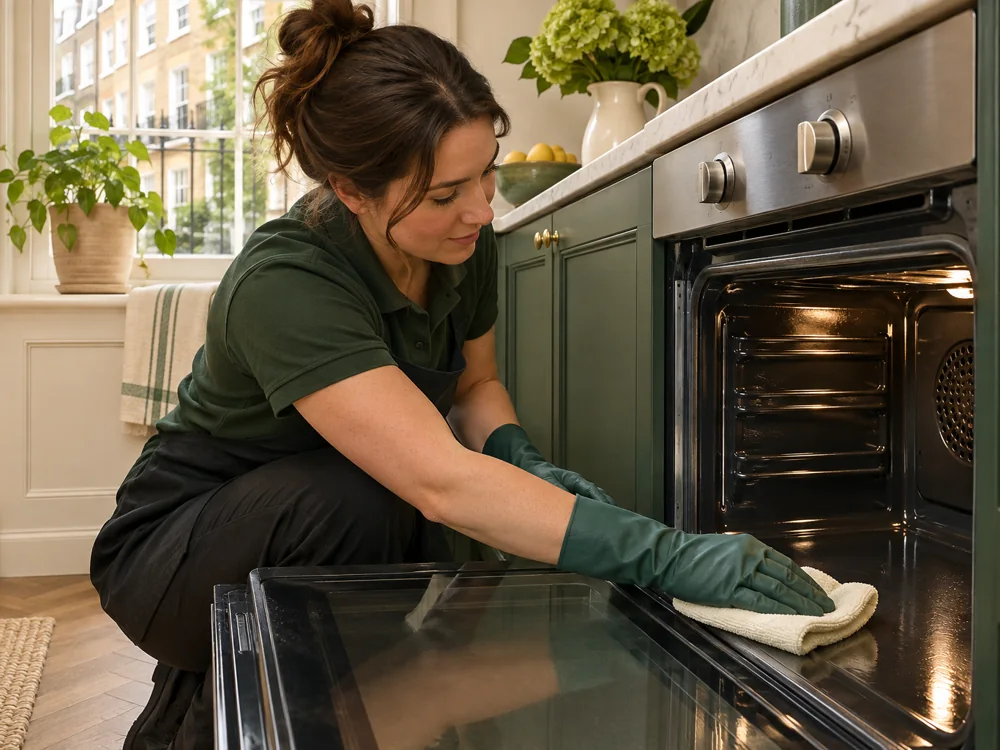
Can I ask about cleaning an oven near Burgess Park?
Yes. Use your own postcode and give the exact door, floor and access route so we can find the kitchen.
Can you assess a greasy tray and cavity separately?
Yes. Identify the tray, its finish and the position of the affected cavity.
Compare the patch to how you normally cook
With the oven cold, look for the part of the cavity where grease built up first. A roast can leave marks on both side walls, while a dish that ran over might leave a sharper patch near the front of the base. If the grill is used more than the oven, the removable pan and its opening may be the most affected parts. Explain the usual dish position and how often that area gets used. This gives the technician more context than a photograph of uneven colour alone.
Take a picture that shows a shelf edge, the light or the oven door, so an affected patch can be placed. Tell us if a food spill was heated again or was treated with a spray. A dark area may involve residue or a change to the surface. The technician can inspect it before proposing treatment. Check any care instructions for catalytic or specialist liners and include those with the model. Where two finishes meet, show the transition as well as the centre of the mark.
- Send the mark and the whole oven in separate photos.
- Identify the dish or part that collects grease.
- Tell us about products or cycles already used.
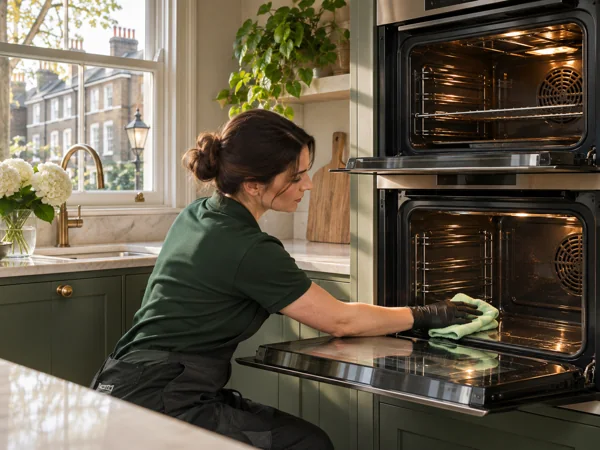
Find out which heating compartment and loose pieces belong together
Take a photo of the controls and all closed doors, then identify the one where you saw the residue. A small oven in a double appliance might also serve as a grill. A matching drawer on a range may be used only to warm plates instead of cooking. Give the model if you can read it on paperwork or on a visible label near the opening without moving the cooker. If there is a spare tray from another model, describe that as a separate accessory.
Count the cavities you want to have checked and note any known faults or components already out of use. A seal, hinge or heating issue can affect the assessment and should be raised before choosing a time. Refer operating faults to an appliance specialist separately. Tell us whether the priority is the cavity itself or a tray, shelf or fitted support. If a resident does not know the model but has the photos, leave the instructions with them so they can point out where the grease is.
Give Walworth directions for the actual property rather than the nearest park
Southwark Council says Burgess Park stretches from Camberwell and Walworth towards Peckham and the Old Kent Road, and lists Albany Road for the park location. A direction such as by Burgess Park can therefore cover several roads. Supply the full address and identify the entrance alongside that rough location. A home in a terrace might have a second entrance below pavement level, while a newer development can have visitor and service doors at different ends. Give the sign above the actual entrance and the floor of the kitchen.
Check unloading and visits with the person who can approve access if the property uses a communal drive, lobby or lift. Describe which core to use, how far the route goes after it and any steps between the lift and your door. If the entrance does not have the same label as the address, tell us what is visible. Give the person who can meet the technician a copy of the agreed route. Tell them about any shared gate or doorway they need to unlock before reaching the cooker.
- Start with the actual full postcode.
- Confirm the intercom and entrance from the street.
- Explain unloading, lift or shared stair arrangements.
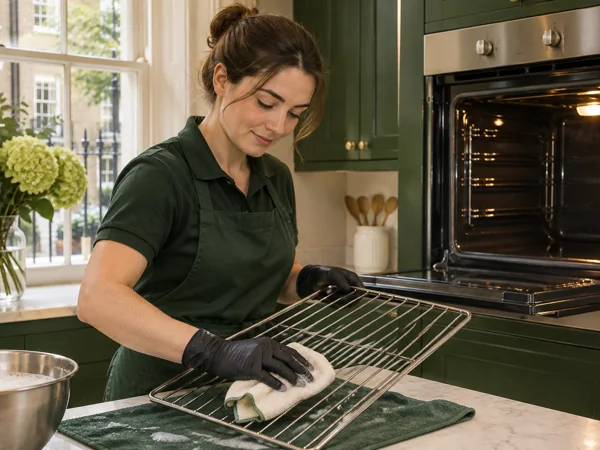
Describe the pattern of grease in the oven
| Location | What to show | Question to discuss |
|---|---|---|
| Cavity base | Where the dish overflowed | How the finish and residue can be assessed |
| Grill opening | Grease around pan and wire insert | Which parts can be treated separately |
| Glass pane | Film visible at a shallow angle | Which surface is affected and reachable |
Arrange separate treatment for removable accessories where appropriate
Remove food, loose foil and ordinary cookware while the oven is cool. Set out the griddle, shelves or tray you want considered. A loose wire shelf and a non-stick pan can have different care requirements. Suitable removable items can be cleaned away from the oven and may be soaked in a dip tank depending on their finish, construction and condition. Tell us what belongs to each cavity. For a separate grill, keep the tray with its insert and handle rather than mixing pieces with the main oven shelves.
Leave fitted supports in place if a release is unfamiliar or if a rack catches at the back. Explain where movement stops. A rail that travels with the shelf may be attached to a side panel. Tell the technician about a bent piece or lifting coating before they decide whether it can be treated. Clear a work surface near the oven and identify the loose pieces you want assessed so the person does not have to sort through cookware. Mention any tray bought after the oven was installed.
- Set removable pieces out by cavity or task.
- Flag unfamiliar fixings and sticking runners.
- Describe which trays are coated or replaced.
Explain whether the glass concern is visible from the room or inside the oven
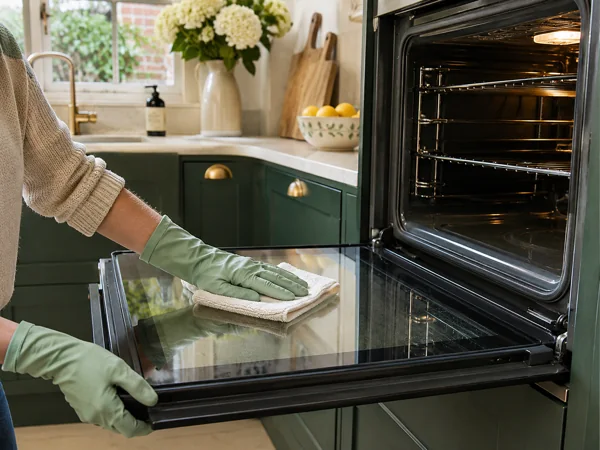
Clear glass can show a film when illuminated from the front, especially around the edge of the door. Look at the oven from more than one angle and say whether the mark appears when open, closed or both. Tell us if the door has been worked on previously and mention any loose trim or seal. Access to the panes depends on their construction and condition. Let the technician examine the position before deciding which areas can be reached. Send a photo if the concern is limited to a small patch.
If residue appears on the control panel or outside edge, describe those as separate finishes. Worn printing can be visible on settings you use more often. Tell us about an area where the surrounding cabinet catches the door or has an existing mark. If the technician is assessing a specialist liner as well, give the care information for both surfaces before work starts. A programme used recently can affect how a panel looks. Note which cavity ran the programme and any changes you can see afterwards.
Plan the access route in Walworth
| Stage | Information to send | What to confirm |
|---|---|---|
| Street | Full postcode and entrance label | Which door leads to the residence |
| Shared access | Lift, steps or gate | Who can provide entry |
| Inside home | Oven position and clearance | Clear working area |
Decide what else beside or above the cooker should be assessed
If you also want the hob considered, describe the type and any affected parts. A gas unit can have separate burner caps and supports, while a flat ceramic or induction surface may have residue concentrated around one cooking zone. Show where the controls are and mention wear or scratches. For a range with a removable griddle, describe the material and where the plate fits. Put each part you want assessed with the correct appliance rather than describing the whole workstation as the oven.
Give the type of the extractor, if known, and the approximate height above the cooking surface. A filter within a cabinet hood can be metal mesh or a disposable insert. Grease on an outer cover should be described separately from that inside the filter area. Give the visible finish and show fixed cabinets or shelves that affect approach. Ask for the relevant hob or hood work to be listed separately on the quote. If one appliance needs to remain accessible, mention that when you describe how the kitchen is used.
- State the hob finish and attachments you want considered.
- Describe the hood location, cover and filter separately.
- Check extra appliances on the quote.
Leave room around the cooker and agree a time to resume use
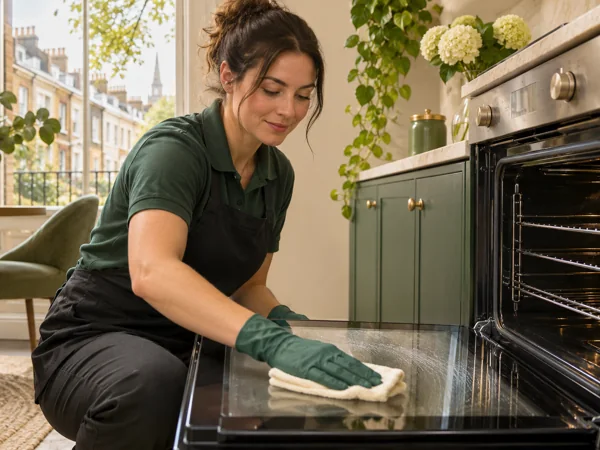
Before arrival, leave the oven cool and clear the nearest worktop. If a kitchen bin or fold-down table restricts the door swing, move it out of the working area. Tell the rest of the household when they need to leave the cooker free. Agree access to water and electricity in advance if something is restricted. Keep pets and children clear while the technician handles oven parts. Tell us if other people normally reach the hall or back door through the same area so they can plan around the visit.
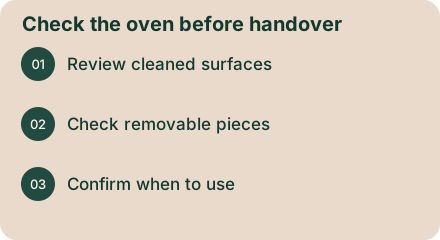
Explain when you need the appliance again. Leave time to check which parts were treated and to ask when the oven can return to use. If someone else will be cooking, tell them what was left in the cavity and how the accessories can be put back according to the instructions received. If an item was assessed and left untreated because of its condition, mention that during handover. A brief note can help when two people use a shared cooker at different times.
- Leave the appliance cold and the closest area clear.
- Give the time of the next meal or use.
- Make sure handover reaches the next cook.
Make the quote specific enough for someone else to review
Use the postcode form to send the full property address, model and photographs. List the cavities and named removable parts you want assessed. Include how the grease built up and whether it is on a specialist lining. Put in the agreed door and person who will meet the technician. Give the time the oven is needed, even if somebody else is booking for you. Ask to check an updated quote if the list changes after you discover spare shelves or another part of the cooker.
If you are moving from the property, match the appliances and accessories with the inventory and give the time the kitchen and keys need to be available. A different person may hold the keys from the person who knows the oven. Share the agreed list and photos with both. Confirm that somebody can remain long enough to hear how and when the cooker can return to use. Tell us about changes to access or appliance condition before the appointment so the plan can be reviewed.
Compare loose and fixed parts
| Part | Condition to mention | What the technician can check |
|---|---|---|
| Wire shelf | Any bend or added rail | Fit and suitability |
| Coated tray | Previous treatment or peeling | Material and finish |
| Fitted runner | Movement that stops early | Assessment before removal |
Get an oven cleaning quote in Walworth
Request a quote with the oven type, number of cavities and any extra appliances.
Get a QuoteOther Cleaning Services in Walworth
Local references · Southwark Council – Burgess Park
Walworth oven cleaning questions
Can I give you the entrance nearest the park?
Give the actual entrance to your home plus the postcode, even if the park helps someone find the street.
Is a spill on a specialist liner treated the same way as enamel?
Share the maker’s instructions and show the affected area. The technician can assess the surface before discussing treatment.
Can I include the grill pan if the oven has its own tray?
Identify both pieces and say which cavity each one fits.
What if the oven will not reach the right temperature?
Report the condition before booking and seek guidance about operation from an appliance specialist.
Should I clear the cooker before the visit?
Leave it cool and take out food, loose cookware and foil. Set aside relevant removable accessories.
When should I ask whether the oven can be used again?
Tell us your next planned use when booking and check the return to use at handover.