 Housekeeper
Detail-led care for your oven
Oven Cleaning in Victoria
A clean can be planned around the precise oven in your Victoria home and the people who can open the property. Show the appliance in place and tell us about adjoining surfaces, the compartments that matter to you and any loose pieces to assess. A separate building entrance or scheduled key release is useful information to give at the same time.
What address helps near Victoria Street?
Give the full postcode and name the residential entrance, including a staffed lobby or separate door if applicable.
Can I request a clean before an agent collects keys?
Tell us when the kitchen is free and who can review the oven before the handover.
Identify the residential entrance to the Victoria property
National Rail locates Victoria station on Victoria Street in SW1V. If it is your closest landmark, give the full postcode for your home and the doorway you want used. For a building that also contains businesses, explain where the residential entrance sits and give the name shown over it. If the flat overlooks a main road but opens from a side street, include the side street alongside the postal address. Name the person who can guide the cleaner from the first door if the approach or signage is unclear.
For a staffed building, check which desk visitors need to speak to and whether they need a separate lift or entry arrangement. State whether the person opening up will meet the cleaner at street level, at a reception desk or by the flat. Give a route that works while the building is open on the proposed day. If you can organise a loading point or timed access, raise that when you discuss the visit. Keep private codes and key instructions in a direct exchange.
- Give the postal address and the entrance you want used.
- Identify the building desk and floor if applicable.
- Arrange who can meet and review the visit.
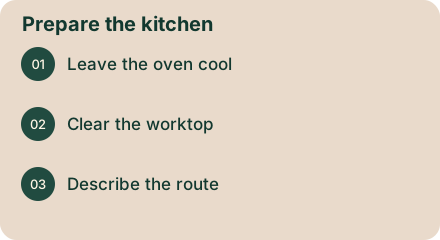
Identify each built-in oven by function and position
Matching oven fronts can hide differences in function such as conventional cooking, steam or grilling. Tell us which appliance you use and where it sits in the cabinet. A model number from an accessible label or paperwork is helpful. Give a wide picture of the front if appliances share similar handles or control panels. If only one cooking space is to be considered, make clear which door serves it. For two ovens, describe the condition of each rather than giving just one overall account.
Give additional details such as a shelf position, fitted liner or smaller tray if you want it discussed. A storage drawer that matches the oven face can be described separately from the working cavities. In a range, an upper space might be a grill or warming compartment. Identify what it does and indicate if it should be on the quote. Keep fixed parts and panels in their fitted positions and photograph the appliance as it stands. We can use the individual model details when discussing accessible pieces and surfaces.
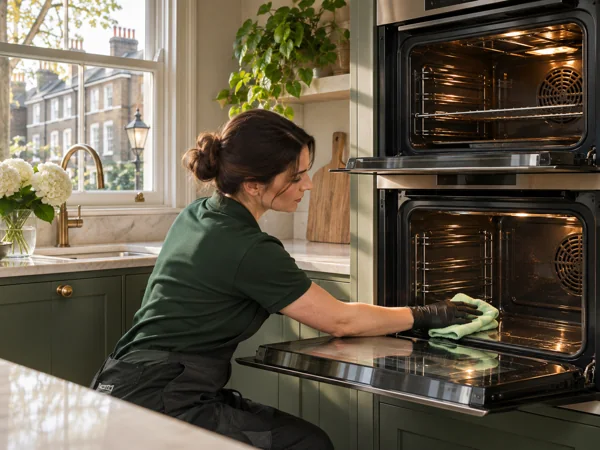
Prepare access around Victoria Street
| Step | Information to give | What to check |
|---|---|---|
| Street | Full postcode and building entrance | Correct door for visitors |
| Lobby | Reception name and permitted route | Key release or lift arrangement |
| Apartment | Floor and kitchen route | Who shows the oven |
Show close clearance and delicate surfaces around the oven
A kitchen with polished worktops or flush cabinetry might leave only a narrow gap near the oven handle. Take a photo that shows where the door opens and what it passes on the way. If the adjoining surface has its own finish or maintenance instructions, tell us what you know. A lacquered panel, oiled timber and metal trim may all look similar in a dark photograph. Mention a scuff or chipped edge already present. Describe the available room near the appliance without moving any fixed trim.
Think about where spare trays or shelves can be laid out when the oven is being inspected. If a deep island is opposite the oven, say how much floor it leaves with the door down. If the oven is at eye level, show the worktop or unit below it. Move loose items out of the working area where practical, and leave heavier pieces in place with a note. The cleaner can then assess the oven alongside the neighbouring finishes and discuss what access is available.
- Show which part of the oven is closest to the adjoining finish.
- Describe available standing room with the door open.
- Mention existing chips, painted areas or a specialist coating.
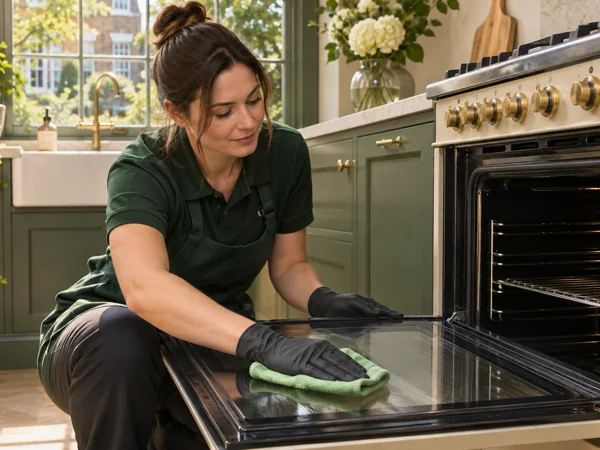
Describe internal marks in relation to the material beneath
When the oven is cool, locate grease or baked-on food by the nearest shelf slot, edge or fitted panel. A patch on the enamel beneath a rack may run into a part of the cavity with a different surface. Include both materials in your picture or description if you can. Give the manufacturer’s description of a liner if it appears in the manual. Tell us whether it sits on a side, above a grill or along the oven back. Leave all parts in place for the first assessment.
If a previous resident used a cleaning product or ran a cycle, give the information only where you have it. Describe any change the surface now shows, such as loss of gloss or a scratch next to the deposit. On arrival, the technician can inspect accessible grease and baked-on material and review the condition of the underlying finish. If you identify a particular mark in the request, keep track of its location so it can be checked during the final appliance review.
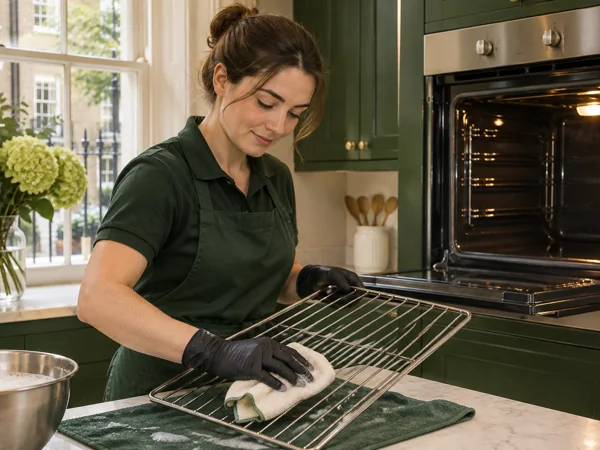
Distinguish oven faces and adjacent finishes
| Location | What to send | Condition to note |
|---|---|---|
| Fascia | Control name and finish | Worn or faded markings |
| Window | Door position and glass face | Marks behind the visible surface |
| Cabinet edge | Material and door clearance | Existing chips or scratches |
Account for trays and other original pieces separately
Put the number of loose shelves and trays on your list for the right appliance. In a kitchen with a steam model and a larger oven, two accessories can look similar while fitting different guides. A shallow tray used with a raised insert should be recorded as two pieces if you want both considered. Mention if a spare shelf is kept in separate storage. If the oven came with the flat, use the inventory or handbook only as far as it reflects the parts you find.
Suitable removable items can be considered for dip-tank treatment after review of their finish and condition. Report treated surfaces, loose handles or damaged edges when you ask. Leave fixed guides and any rack that does not come out normally where they are. Keep personal cookware separate from the quoted pieces and leave the oven cool and empty. If the person opening the property is there only to grant access, tell them which pieces were requested and where the cleaner will find them.
- List loose items by model or cavity.
- Identify existing wear and coatings.
- Pass the accessory count to the person with access.
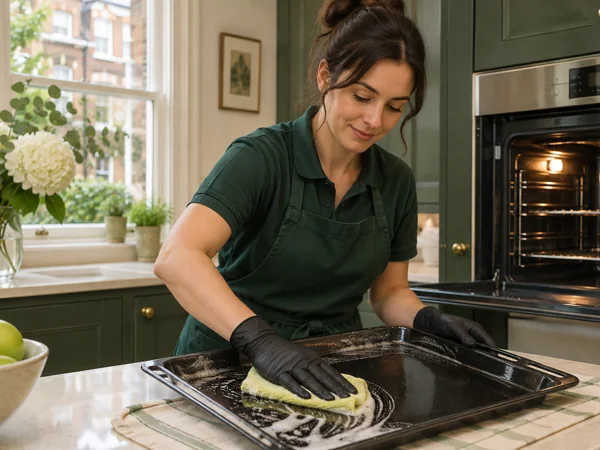
Set distinct priorities for glass, fascia and trim
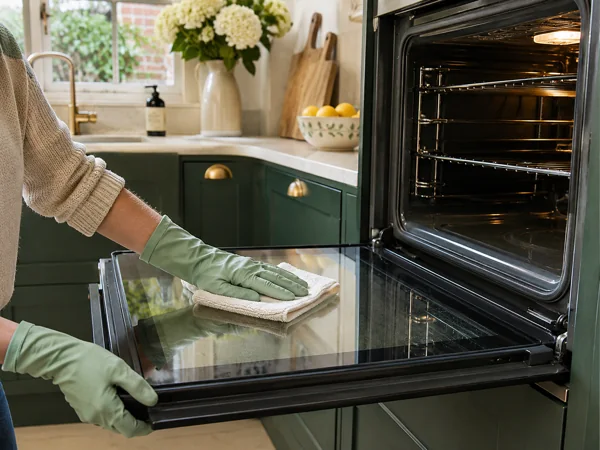
The window, handle and controls can collect residue in different places. Give the exact window and the face you think is affected, especially when matching doors are installed together. If the position appears between panes, mention the model and leave the door intact. Discuss which sides can be accessed once the appliance construction and condition are known. Include a photo of the full door so a mark by the lower edge can be distinguished from one on the frame or seal.
For a fascia, give the finish and identify the control or strip that needs attention. Mention worn printed settings or trim that was already scratched. If the handle is close to another cabinet finish, describe those separately. If there is a seal that appears loose or displaced, note the location and avoid moving it. We can assess the reachable surfaces with the original condition in mind and discuss which pieces or faces belong in the clean. A named list gives you something to review at the appliance afterwards.
- Name the window and the affected face if known.
- Point out wear around the controls before work.
- Describe any seal concern without moving the part.
Give an adjoining hob and canopy their own descriptions
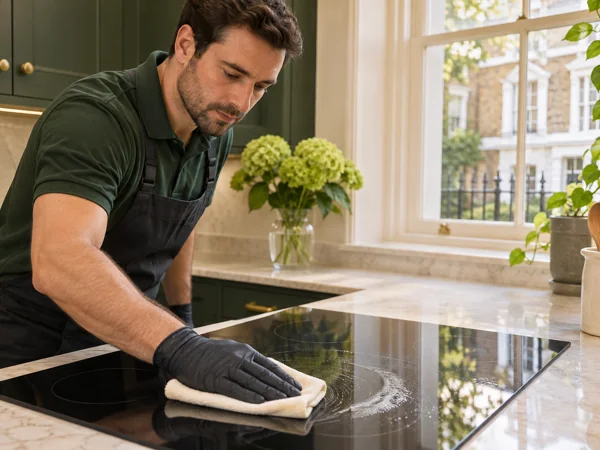
If you want a hob considered, give its type and the area that needs attention. On an induction or ceramic top, identify the cooking zone and the edge nearest the residue. For a gas top, name the affected ring or support. Mention the nearby surface if a mark sits where the top meets a worktop or splashback. If the hob belongs to a range, list it independently of the oven cavities. A whole view of the top can show the finishes and how each part is fitted.
For a hood, show the mounting position and give an approximate height or describe the space below. State whether you are asking about the canopy, filter or both. Include a filter material or model detail if it appears in the handbook. If the requested surface sits behind a decorative panel, explain where it is without removing the cover. We can discuss which areas are accessible and quote each additional item separately from the main oven. Tell the property contact which of those items you accept.
Complete an oven inventory before handover
| Item | What to include | Who checks |
|---|---|---|
| Cavity | Model or height in the cabinet | Person showing the appliance |
| Accessories | Count and usual positions | Person reviewing the items |
| Extras | Separate hob or hood | Property contact |
Allow the property contact time to review the appliance
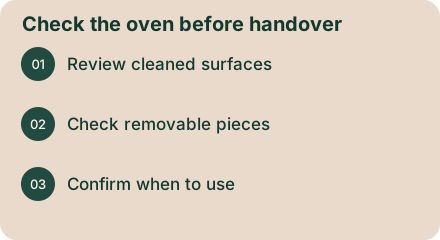
Give a copy of the agreed list to the person who will see the kitchen before the keys go back. Use the oven’s position, model and accessories to distinguish it from any matching appliance. If there was an existing mark or worn finish, point out where to look when reviewing the work. Ask the cleaner which parts were removed or treated separately. On a timed handover, allow the reviewer time at the oven itself before going back to the building desk or meeting the agent.
Ask when the oven can be used again and pass that information to the next resident. Keep the manufacturer’s handbook or model details with the appliance list and note any part raised for a separate visit. In a multi-appliance cabinet, distinguish the oven that was included from a different cavity that might need a future quote. When you plan the next appointment, use updated details about the condition and the available entrance. That allows the review to be tied to a particular oven without relying on identical fronts.
Get an oven cleaning quote in Victoria
Request a quote with the oven type, number of cavities and any extra appliances.
Get a QuoteOther Cleaning Services in Victoria
Local references · National Rail, London Victoria station
Victoria oven cleaning questions
Which entrance details should I give if my flat opens from a street near Victoria station?
Use your actual residential postcode and the door where the cleaner should arrive. Add the station only as a landmark.
Can I book a visit through a building desk instead of meeting in person?
Ask what access the desk can arrange and identify someone who can show or confirm which oven parts were agreed.
How do I show an existing chip beside a cabinet-mounted oven?
Identify the finish and photograph the oven and cabinet edge together so the position can be recognised.
Can I include the original pan even if its finish is unfamiliar?
Give the part, model and visible condition. It can be assessed separately before any treatment is agreed.
What if the oven closest to eye level is a combination appliance?
Name its function and model and say whether it is the appliance you want considered. Give a separate description for other ovens.
Can I send an oven checklist to a new resident after the keys go back?
Share the agreed items, where the original accessories belong and the guidance on using the oven after the visit.