 Housekeeper
Signature care for well-used ovens
Oven Cleaning in Stamford Hill
If different people use different ovens in your Stamford Hill kitchen, the first useful detail is which door leads to which appliance. We plan the visit around the cavities and removable items you actually want cleaned. Send the postcode, model details and a realistic window when everyone can leave the cooker switched off.
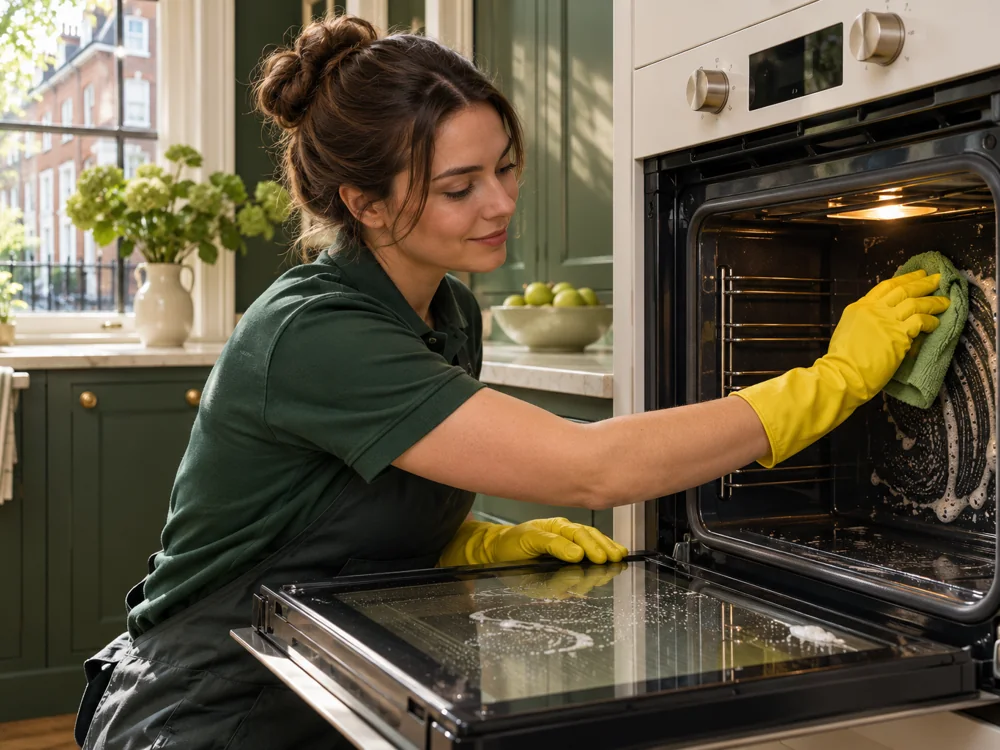
Can I enquire from a flat near Amhurst Park?
Yes. Give the full postcode, flat number and the entrance the cleaner should use.
Can I request just one side of a range?
Yes. Tell us which cavity and racks you use so we can quote for the relevant work.
Draw a quick map of the cooker doors
On a range or a stacked installation, a cupboard, warming drawer or small grill can be mistaken for another oven in a photograph. For the quote, start at the top or left and name each compartment in order. Give the make and model if it is visible, and explain which of those compartments need attention. A picture taken slightly back from the appliance helps us see the arrangement. Add a closer picture of a label only if you can reach it with the appliance cool and without moving anything.
One side might be used for large roasting dishes, the other for bread or light baking. That difference matters because the deposit, fittings and priorities can vary even when the doors appear identical. If the lower compartment has barely been used, say so. If a grill pan moves between cavities, tell us where it normally lives and ask for that specific piece if you want it cleaned. We can discuss the practical work for each compartment from those details.
- Number the doors in your photographs.
- Identify any cavity that should be left alone.
- List a shared grill pan separately.
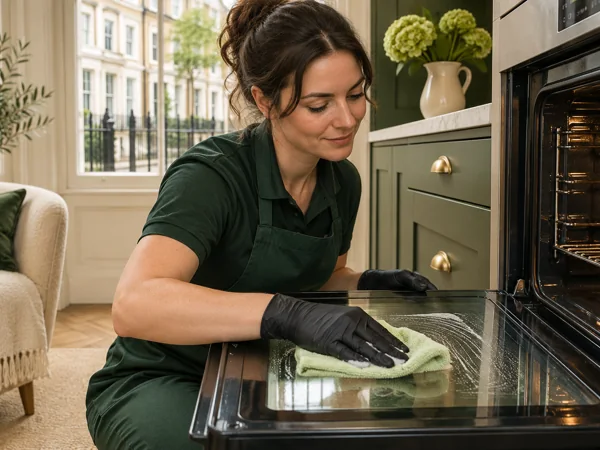
Set a realistic kitchen access window near Amhurst Park
National Rail gives Amhurst Park as the address for Stamford Hill station. If that is the closest landmark you use to describe where you live, add your own door number and full postcode so the visit is directed to the property. In a divided house, specify whether the cleaner should ring the main bell, go to the lower entrance or wait for someone to meet them. Mention a locked gate or an internal stair where the cleaner will need help finding the correct door.
Agree the handover with the person who will actually be home. A brief instruction about the path to the kitchen is more useful than a building description with several possible entrances. If you share the cooker with another household member, tell them which part of the day you have set aside. They can move baking or reheating to a different time so the cleaner arrives to a cool appliance and can work without someone needing to open the oven mid-visit.
- Name one point of contact for entry.
- Explain any steps between the door and kitchen.
- Agree when the household will last use the cooker.

Look again at the band above the top shelf
A cooker used for grilling can develop darker deposits high in the cavity while the base looks fairly clear. From the doorway, tell us which upper surfaces you can see and whether there is a removable grill pan below the element. At the visit we look at where the material has collected and identify the accessible surfaces. A mark close to an element or on a lining needs assessment before the technician chooses how to work on it. Leave the fittings in position until that conversation.
The cleaner accounts for the finish under the deposit as well as the residue itself. A glossy panel, a textured liner and the area around an exposed fitting can call for different handling within one appliance. Share the manual if you have it, particularly if it describes special liners or a self-cleaning feature. If you have already used a product, say what it was and where it went. That gives the technician information about the condition they will actually encounter.
Which part of the cooker are you booking?
| Compartment | What to send | What we confirm |
|---|---|---|
| Upper grill | Position and removable pan | Accessible areas and included pan |
| Main cavity | Model and areas of residue | Finish and appropriate cleaning approach |
| Auxiliary oven | Which side and how often it is used | Separate cavity and shelf requirements |
Match the loose shelves to their original compartments
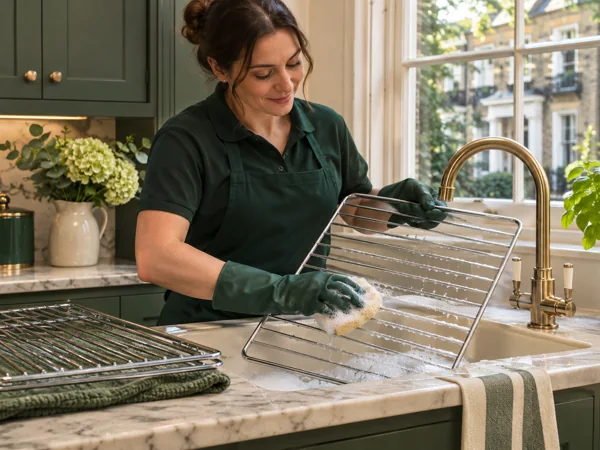
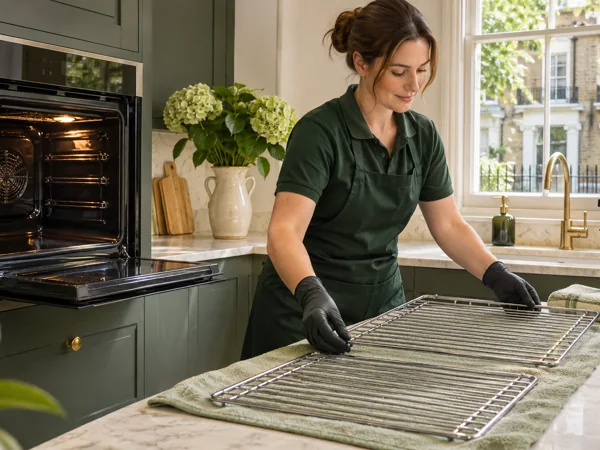
If several wire shelves look alike, they still may have different widths, stops or shaped ends. Tell us if one has been borrowed from a little-used cavity, or if you already have loose accessories next to the cooker. You can set those on a clear worktop and describe which opening each belongs to. During the visit we assess the racks and other pieces for safe removal and suitable cleaning. Some suitable metal parts can be treated apart from the oven while the accessible cavity is cleaned.
Show the technician any telescopic or unfamiliar supports before they start. A rack that pulls forward at a different angle or a tray that fits tightly can need a different decision from an ordinary shelf. Leave parts fixed in place if you are unsure how they are released. Ask to see where the loose shelves and trays have been returned at handover, especially if the household has a usual arrangement for two cavities or prefers to store a large pan elsewhere.
- Show us accessories already out of the cooker.
- Mention any tight-fitting or sliding shelves.
- Identify where you want clean loose trays left.
Describe the glass from the side you can reach
You may be able to wipe the room-facing surface yourself and still see a cloudy patch when the door shuts. Explain whether you can touch that patch when the door is open, or whether it appears deeper in the assembly. A photo looking across the cool glass at an angle can make that distinction easier to describe. We confirm what is accessible on the particular model before setting expectations for the door. Tell us if you have noticed chips or movement in the glass or seal.
Cooker controls and the strip around the door can collect fingerprints and cooking residue, but printed labels and decorative trim deserve care. Point out any area where the markings have already faded or a coating has changed. We assess accessible external surfaces alongside the agreed internal work. If a mark remains after the applicable cleaning, ask the technician to show you its location while you can still compare the result with what you reported at booking.
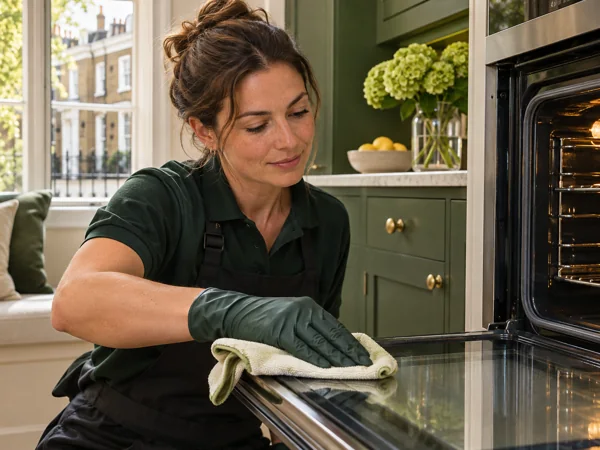
Allow for the way the door changes the available floor space
A drop-down door extends into the room at the same level as the cleaner’s work. In a kitchen with a table opposite the cooker, the important measurement is the space that remains when the door is open. Describe the arrangement in advance and say if there is room to move a chair or if a fixed island restricts the approach. A narrow kitchen can still be straightforward to assess when we know where the technician can stand and set down suitable items.
Choose a nearby surface you can empty for the duration of the visit. You may have a clear area by the sink but need space elsewhere for other household tasks. Let us know which worktop is available and if its finish needs particular protection. Bring up access to the sink and any agreed kitchen rules at arrival. This lets us plan where the removable parts go while work is in progress and keeps the doorway available for people passing through.
- Check the route with the cooled door fully open.
- Clear a surface the cleaner is allowed to use.
- Keep the cooker area free for the agreed visit.
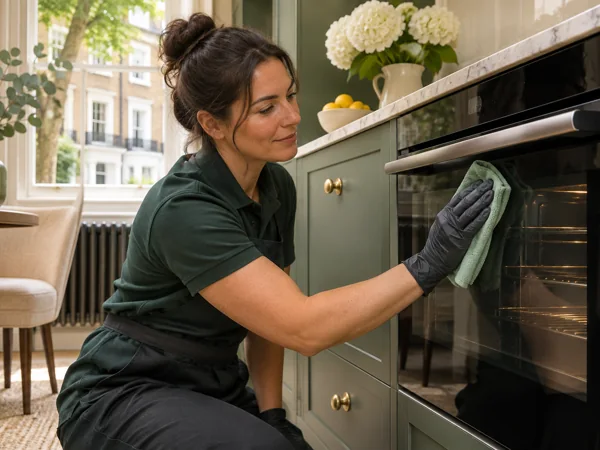
Doors, shelves and working space
| Kitchen detail | Useful information |
|---|---|
| Door swings down | Space between the open door and furniture |
| Shelves look alike | Original cavity for each loose piece |
| Clear surface is limited | Which available worktop can be protected |
Give the hob and extractor their own line on the request
A wide glass top, individual gas burners and a large extractor canopy can each add a different job to the visit. List them by name and describe what you want assessed. If the extractor is above an unusually deep worktop or has an awkwardly positioned filter, mention how it is reached. A photo from the front is helpful for identifying the layout. The office can discuss appliance-specific details and price the work alongside the oven enquiry.
You might only want the cavity attended to this time because the hob is still in daily use. Tell us which equipment can be left switched off and which parts you want to discuss for a later visit. If an extractor is marked with a finish that scratches easily, or if a hob has prominent printed symbols around the controls, point that out. A specific request gives us a much clearer list to confirm than asking for all cooker-related surfaces together.
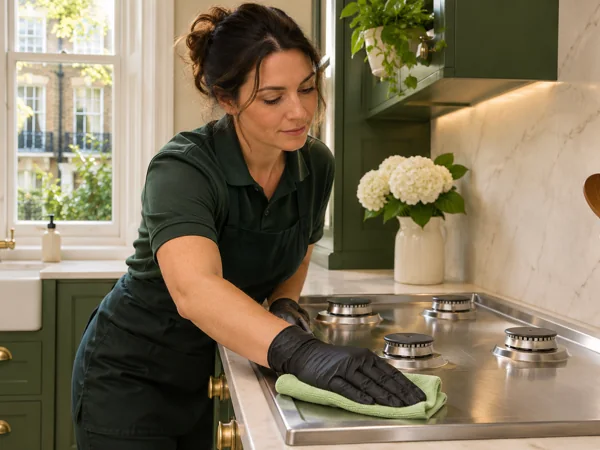
Use the handover to compare the result with your booking
Arrange for the person who chose the work to be there at the end, or leave an agreed list with the person giving access. It can name each cavity, the approximate location of a stubborn area and the accessories that were set aside. Compare those items at the end of the visit. The technician can explain what was cleaned, what was left in position and what limits applied to individual surfaces or components. This is the point to check where movable pieces have been returned.
If the cooker will be needed soon afterwards, raise that when you enquire and confirm the instructions for the appliance at handover. Keep the next user informed if they are arriving later. For a repeat enquiry you can use the written list as a record of the appliance layout and update it for any changed accessories or priorities. Send the postcode again if the cooker has moved to another property, since the access and preparation arrangements may now be different. If the visit is part of a wider kitchen clean, agree which surfaces belong to each booking and which person will be there to check them. A single list shared by both people avoids an overlooked tray or a last-minute request when the cleaner is packing away.
- Keep your original appliance list for the visit.
- Review the accessible glass and the agreed loose pieces.
- Ask when the appliance can be used again.

Points to go through at handover
| Item | What to check |
|---|---|
| Agreed internal areas | Compare each booked cavity with the written list |
| Loose pieces | Confirm their positions and which pieces were left out |
| Next cooking session | Confirm when to use the cooker again |
Get an oven cleaning quote in Stamford Hill
Tell us the oven type, number of cavities and whether the hob or extractor also needs cleaning.
Get a QuoteOther Cleaning Services in Stamford Hill
Local references · National Rail · Stamford Hill station
Stamford Hill oven cleaning questions
What if my Stamford Hill address has a shared front door?
Give the full address, flat label and the person meeting us. Include the route to the kitchen if the entry floor is different.
Can I send photos of a top grill and main oven separately?
Yes. Say which photo shows each opening and include a wider view so we can see how both fit into the cooker.
What happens if a slide-out support does not move freely?
Leave it where it is and tell us what you noticed. The technician can assess access and explain what can be cleaned around it.
Can the quote cover shelves that are already on my counter?
Tell us how many there are, their material if known and which cavity they belong to. We can discuss them with the oven work.
How do I show whether a cloudy patch is between the panes?
Send an angled photo and describe whether the mark can be touched from an accessible side on a cool door. The cleaner can assess the model on arrival.
Can I add the gas hob after discussing the range?
Yes. Describe the hob and the parts to assess so we can confirm the cleaning and price separately.