 Housekeeper
Plan your kitchen visit
Oven Cleaning in Soho
For a Soho oven cleaning quote, identify the appliance and tell us which door to use for the flat. Include the cavities and parts you want assessed, plus the arrangement for reaching your kitchen, so the person admitting the technician has the same details as the person who booked.
Can I enquire for a home in W1D or W1F?
Send the complete postcode and actual residential entrance.
Can the occupant show you the oven on my behalf?
Yes. Give them the agreed appliance list and keep a contact available for questions.
Start with the residential entrance and who can open it
Westminster City Council places Soho Square Gardens behind Oxford Street in central Soho. A nearby street or square can help orient a visitor, but use the full postcode and the door for your own home. For a flat above or beside commercial space, say what number or name appears on the residential bell. Explain whether the building can be entered after ringing or whether an occupant needs to come downstairs. A clear note is particularly helpful when deliveries and residents use different doors.
If access depends on a porter or building contact, check their hours and provide an approved unloading point. Identify the route through the building and the lift or stairs available to visitors with equipment. If the lift stops on a half-landing, give the number of steps left and which flat door to use. Clarify how the technician will leave once the work finishes. If the same person cannot open up and handle departure, share each contact’s role and number privately when arranging the visit.
- Give the exact entrance, bell and postcode.
- Confirm the lift or stairs that are available.
- Tell us who can admit the technician.
Photograph the complete cooker
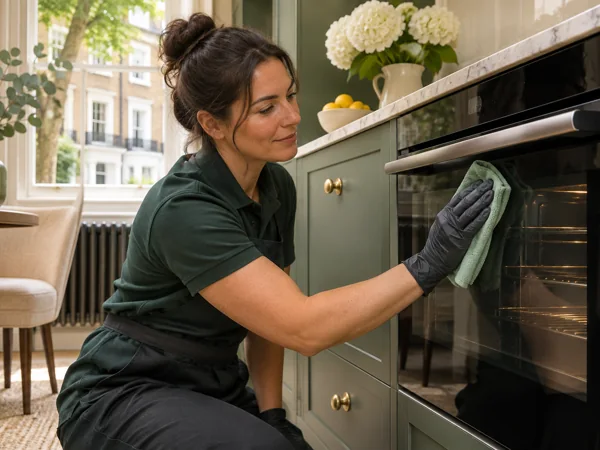
An apartment kitchen can have a short combination oven directly above the main oven and another door for storage. Include the full front so the controls and doors can be distinguished. Match the cavity you want cleaned to its location. A ceramic or glass panel on a hob may match the oven trim even when the two are different appliances. Send the manufacturer and model for what you would like assessed, using a visible label or the correct handbook. Leave the installed unit in position.
When a kitchen is shared, check what different occupants call each appliance. A small oven can be referred to as a grill by one person and a microwave by someone else. The instruction book may show combination modes or a separate cavity. Name each agreed item in plain language and pass the written list to the person meeting the technician. If a lower drawer stores pans, mention its purpose so it does not get counted as an extra oven. Identify any other unit you want kept outside the enquiry.
Check the equipment route
| Point | Information to give | Confirm before booking |
|---|---|---|
| Street | Full postcode and bell | Approved residential door |
| Lobby or gate | Contact and floor | Access and exit rules |
| Kitchen | Counter and door clearance | Where equipment can be placed |
Describe the residue from the actual cooking position
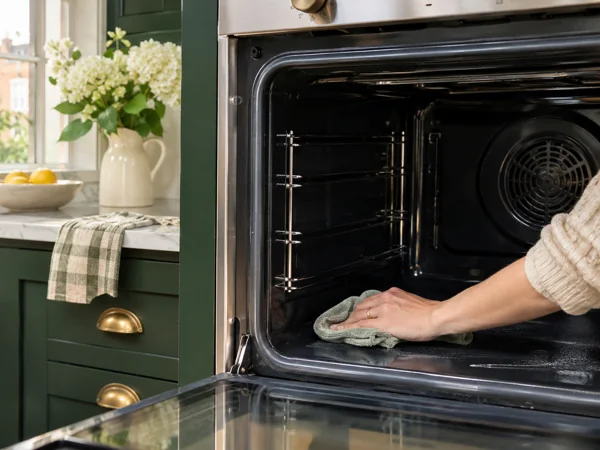
An old spill can be obvious while a film at the rear or upper surface may be visible only with the door open. Wait until the oven is cool, then describe which shelf was in use and where the residue collected. Say if the area has been heated since and if nearby surfaces have also changed. Take a photo from the opening without pressing on the lining. If a mark on the base and one on the door came from different incidents, give them separate labels.
Mention any product you already tried and whether a built-in cleaning programme has run recently. Give the area the product was used on and the approximate time. If the manual says the oven has a special finish or liner, include the specific page. The technician can look at the deposit and the underlying surface together. A permanently changed or worn finish can still show after accessible residue has been cleaned. Mention if appearance through the door or an uneven patch in the oven is the primary reason for the appointment.
- Tell us what was cooked before you saw the mark.
- Name previous products and the surfaces they touched.
- Flag any finish that needs manufacturer-specific care.
List the accessories separately from personal cookware
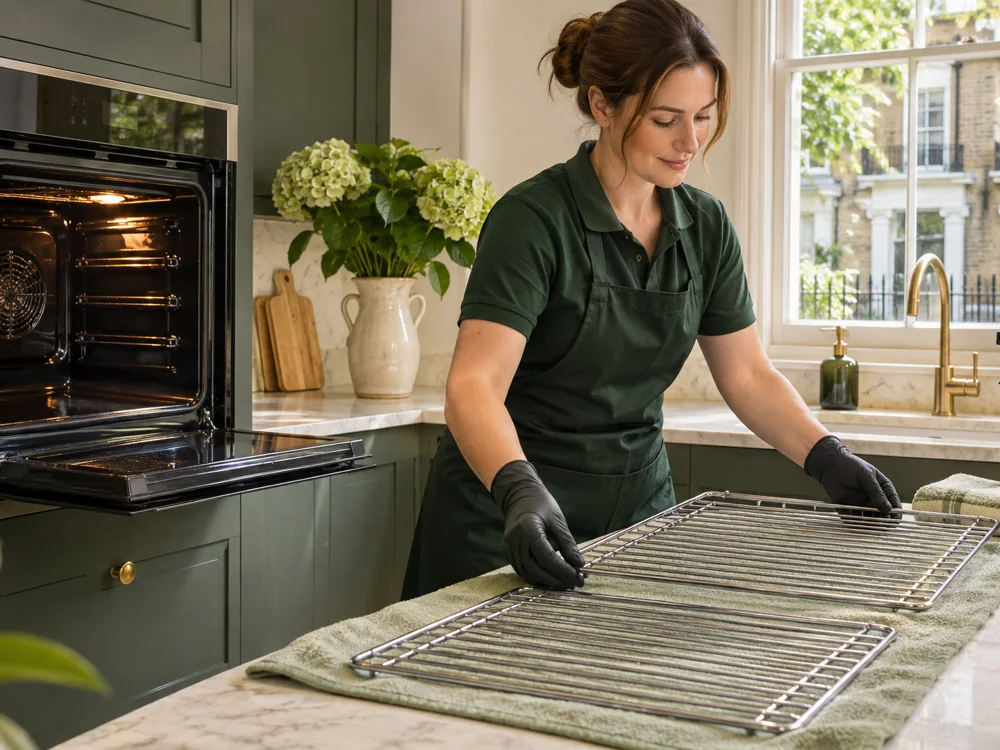
Identify the racks and grill tray you intend to include, and say if the grill insert lifts away. A sliding shelf system that extends out of the cavity may be constructed differently from a lift-out wire rack. Tell us if it has been hard to move or if you have already set a part aside. The technician can inspect fitted parts and safely remove suitable pieces, which may be soaked in a dip tank if their material and condition allow this approach. Give any care notes for trays with a distinct coating.
Take food and loose personal dishes out of the cool oven before arrival. If a loose tray is yours and should be left alone, store it somewhere away from the working counter. If you want a non-original item considered, describe it on its own line. Keep racks with their assigned appliance when there is more than one. For a tenancy or shared kitchen, let anyone at home know which items are on the appointment so a flatmate does not remove a tray you agreed would be assessed.
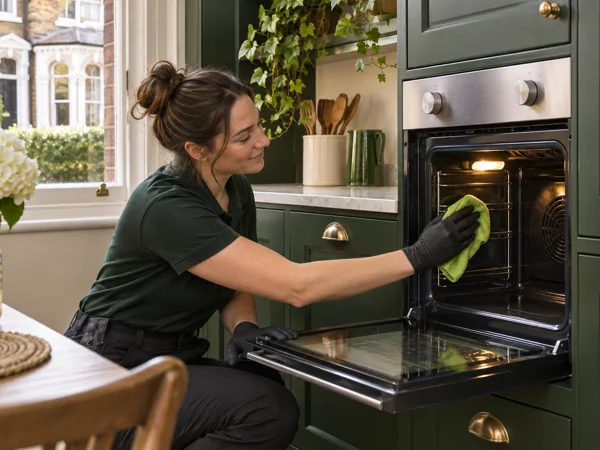
Use reflections and photographs to explain door marks
If the oven glass looks hazy from the middle of the room, note where the mark sits when you stand closer. Look into the cool oven from the open position as well as at the closed door. The accessible surface and the space between the panes are different possible locations. What can be reached depends on the model and condition of the door assembly. Tell us if you can see a damaged edge or loose trim or if anyone has previously moved a panel.
Ask at the inspection what can safely be accessed. A close-up of a mark is useful alongside a wider photo showing which door it is on. If the oven sits below a compact grill with a very similar face, clearly label each picture. Leave all fixed components in place. A practical description of the light and angle that show the point can be more useful than a photo full of reflections. Give the relevant manufacturer instructions if they explain which door features can be handled.
- Identify the door and angle.
- Mention chips, looseness and any earlier intervention.
- Ask which exact glass faces can be reached.
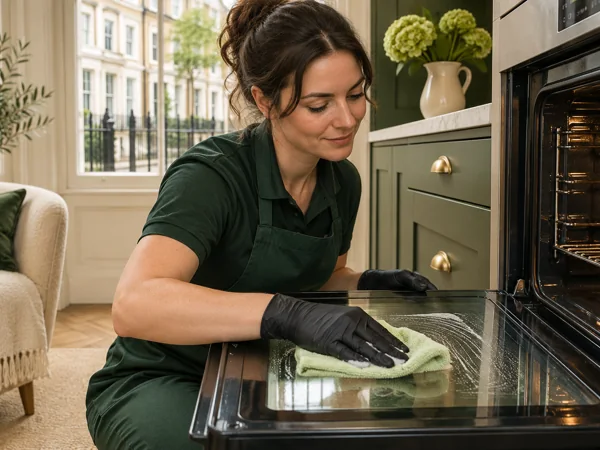
Identify the oven and accessories
| Piece | Supply | What can be confirmed |
|---|---|---|
| Main cavity | Position and model | Space to assess and list of racks |
| Compact grill | Control and tray details | Whether it is a separate unit |
| Sliding assembly | Cavity and sticking position | Suitable handling by condition |
Prepare working space in a small or shared kitchen
Allow enough time for the oven to cool. Remove anything sitting on the counter by the cooker and make a clear path from the agreed entrance. A chair or dining bench may need to move when the oven door opens, even if everyone can walk through while it is shut. Keep the area clear for the technician’s first check. If the fridge is opposite the oven, take out any food you will need during the appointment and keep it away from the working surface.
Arrange for children and pets to stay outside the kitchen while parts and equipment are handled. If someone needs to cross the room to reach a utility cupboard or bedroom, discuss the layout before booking and identify another route where possible. Confirm access to any facilities needed during the work. In a shared property, give others the expected time and tell them who can answer questions. Ask the person meeting us to point out a suitable counter and any restricted part of the kitchen layout.
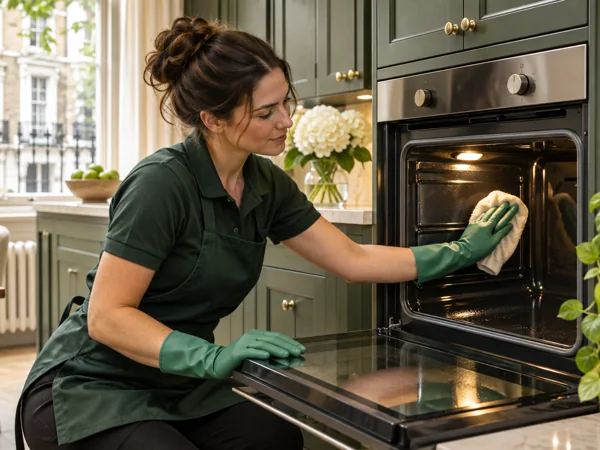
Keep extras clear when the oven sits below the hob
A gas hob and a flat cooking surface can need different treatment. Give the finish, identify the supports or spill area and say if the concern extends to a separate surround. Ask for each requested part to be listed independently. A splashback above the oven may be metal or glass, while the worktop beside it can be a different finish. Name only the areas you want considered and send care advice if it applies. If cooking on another hob is planned that day, tell us where it is and when it needs to be free.
For the extractor, give the approximate height and filter type if known. A filter set inside a ceiling hood is a different access question from grease on an exposed cover at cupboard height. Confirm the cover and filter separately so the agreed work is clear for whoever lets the technician in. You can send the model or relevant manual if the extractor is hidden from view. Explain whether any cabinet or other fitting limits access before you agree to include the extractor in the visit.
- Specify the surfaces and components you want.
- Describe the approximate extractor height and filter.
- Confirm each optional item in writing.
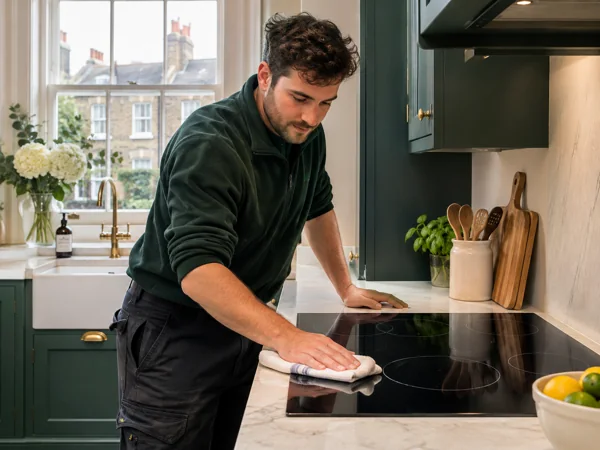
Collect the right information for the handover
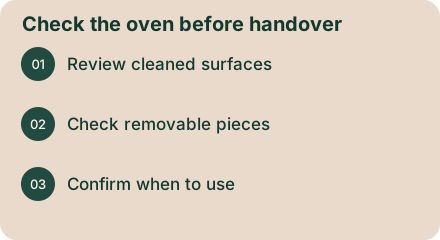
Begin with your full postcode and the cooker details. If you are arranging this from elsewhere, give the authorised entry route to the person at home, along with a labelled photo of the interesting cavity or parts. Agree who can answer questions if the inspection reveals a different finish or accessory than expected. Save the final agreed list. For an empty flat, check who will handle key return or visitor sign-out after the work and when the building expects it to happen.
Ask the technician which parts were cleaned and when the appliance can be used again. Tell everyone who cooks which shelves or trays belong in each cavity. If a mark is still visible because the finish changed, keep a note of its position for a later check. If you need another appliance assessed, collect its own model and parts separately. Close the visit by passing the access instructions and the actual work carried out to the person responsible for the flat where that is different from the person cooking next.
Describe the visible concerns
| Observation | Evidence | What to assess |
|---|---|---|
| Film on glass | Angle and door condition | Reachable face |
| Base spill | Recent use and earlier products | Residue and finish |
| Extractor grease | Filter type and height | Access to cover or filter |
Get an oven cleaning quote in Soho
Request a quote with the oven type, number of cavities and any extra appliances.
Get a QuoteOther Cleaning Services in Soho
Local references · Westminster City Council, Soho Square Gardens
Soho oven cleaning questions
What if my entrance is through a passage next to a shop?
Give the residential address, the start of the passage and the identifier on the correct door.
Should I include photos of both ovens when only one is affected?
A picture of the complete arrangement helps. Mark the specific door you want considered.
Can personal dishes stay outside the oven clean?
Yes. Put them away from the working area and identify only the accessories you want assessed.
Can the technician discuss a mark that is visible only at night?
Yes. Explain which indoor light shows it and where you stand to see it.
What if reception requires someone to sign out?
Confirm that process before booking and give the technician the relevant contact and timing.
Can the separate extractor be quoted from its model?
Provide the model along with approximate height, filter type and the parts you want considered.