 Housekeeper
Plan your kitchen visit
Oven Cleaning in Shepherd's Bush
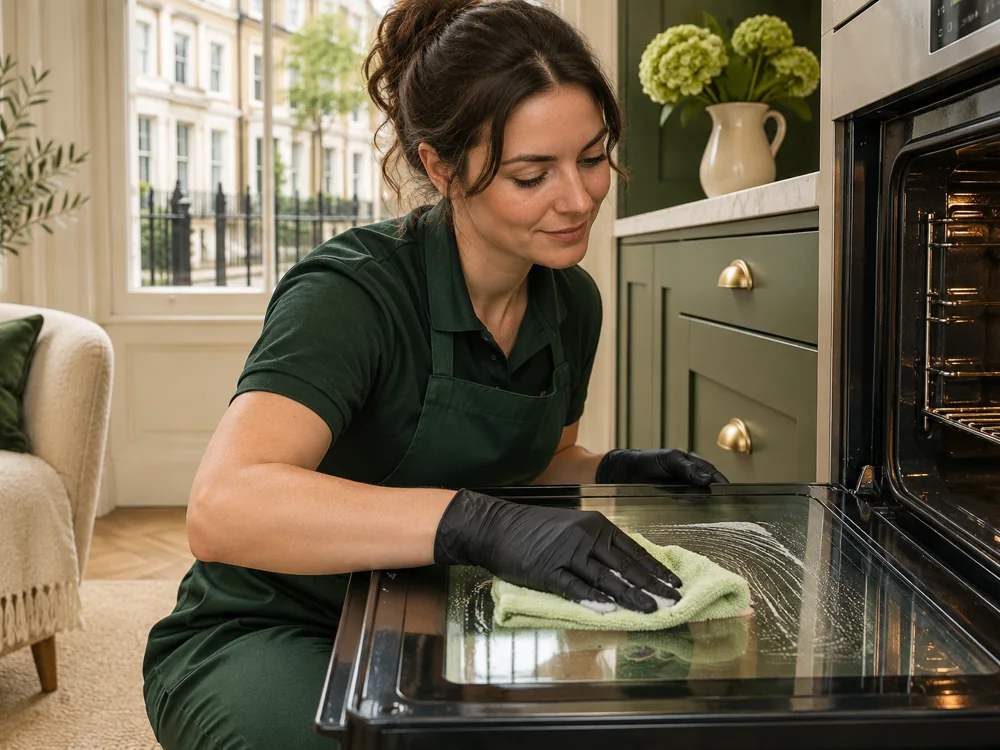
For an oven cleaning enquiry in Shepherd’s Bush, tell us which appliance the household uses and how a visitor can get to it. A clear picture of the front, a list of important parts and a note about the residential door help us discuss the work with the right person.
Can I enquire from a W12 flat above a shop?
Give the full residential address and identify the separate entrance or bell.
Can a flatmate give access?
Yes. Share the agreed appliance list and keep a contact available for any questions.
Check the cooker before arranging who will meet us
If you rent a flat, find out which appliances belong to it by checking the inventory against the kitchen. One entry reading cooker may cover a single built-in oven or a separate oven and grill, with a hob fitted elsewhere. Photograph the appliance front and point to the door you want worked on. Include the model if it is available from the manual or from a label you can see without withdrawing the cooker. Ask the person who will open the property to look at the same image.
If you recently changed rooms in a shared property or took over a tenancy, give the technician what you know about the oven as you found it. A rack may have been placed in a drawer after the last use, or a mark may appear in an area you have never cooked in. Use the quote conversation to agree priorities and clarify who can make decisions in person if the oven needs further assessment. Keep the contact information available to both the person meeting the technician and the person booking.
- Check the inventory against the current kitchen.
- Identify the door to the oven to be checked.
- Confirm who can authorise the requested work.
Make the building entrance easy to identify
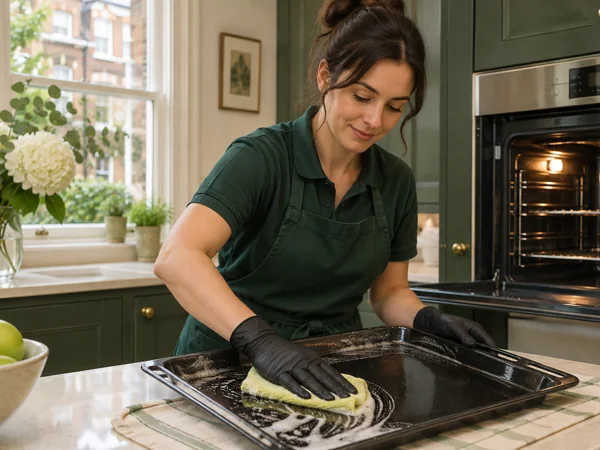
Transport for London gives Uxbridge Road as the address of Shepherd’s Bush Central line station in W12. If this helps place your home, include it in your directions along with the actual street, full postcode and name on the door. A property above a shop may be reached from a narrow hall beside the frontage or a separate street round the corner. Tell us what number appears on the residential bell and which way the person carrying equipment should turn after the main door.
For a shared block, confirm whether a reception desk admits visitors or an occupant has to come downstairs. Give any confirmed loading arrangement and say if the agreed route leaves the kitchen above one or more flights of stairs. Mention steps after a lift and any lock between the landing and the flat. If the technician should call from a particular spot, describe it in the note. Arrival can be simpler if an occupant meets them there and knows where the cooker is.

Tell us how the items fit the oven
| Item | What to identify | What to check |
|---|---|---|
| Original rack | Slot and compartment | Safe removal and finish |
| Grill insert | Tray it fits into | Whether both pieces are intended |
| Loose replacement shelf | Model or other markings | Which cooker it belongs to |
Check glass in the light available in the flat
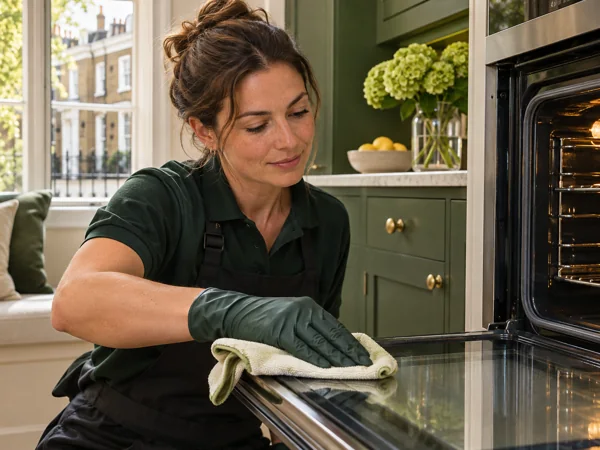
A splash or cloudy streak can be difficult to photograph in a small kitchen. Look at the panel with the cold oven open and again with the door closed, moving to the side enough to avoid your own reflection. Tell us which face seems affected. If you can see a patch through the door but cannot identify the surface, say so. Safe access between panes varies with the door construction and condition, and a mark behind glass may need its own discussion.
Report earlier work on the door or trim, and mention any looseness or chipped edge the technician should see first. If the maker’s notes show how to handle the glass, share them. Leave all fitted panels where they are. If another person is letting us in, flag the exact spot on the photo so they can describe it without trying to find it in a rush. Ask during the initial inspection which faces can be reached and whether the agreed work should include them.
- Identify which door and area are involved.
- Show the light or angle that reveals the mark.
- Report loose trim or signs of earlier work.
Put deposits in the context of what was cooked
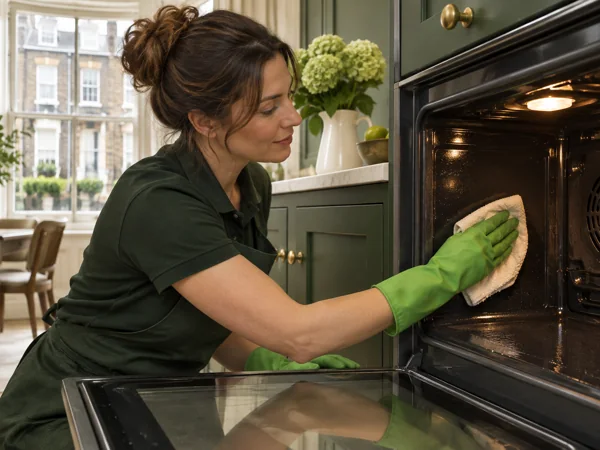
Once the oven is cool, note whether grease sits below the grill or around a tray that commonly holds food with oil or sauce. A line along a side may have formed during a single spill or after repeated use. If the affected area was already wiped, share the product and the surface it was used on. Give the technician information about the liner, bottom panel or floor if a care guide describes it. The assessment considers both the deposit and the material underneath.
Tell us when the oven last ran a built-in cleaning sequence, particularly if you saw a change afterwards. If a patch looks different depending on where you stand, pass on both observations. A permanent change in the finish can remain after accessible residue is cleaned. At the inspection, identify the concern that matters most and ask which areas can be included. If there are two cavities, label the separate photos so a repeat-looking mark on the other door does not cause confusion.
Include removable parts by the job they do
List what the chef or tenant uses to cook, such as ordinary racks, a shallow grill insert and a deeper oven tray. Keep personal cookware separate from parts fixed or supplied with the appliance. Advise us if a shelf runner is hard to slide or if a loose part was already removed. The technician can check which components can safely come out and use a dip tank for suitable pieces. Parts with different coatings or fittings may require separate handling, so show any care notes you have.
Empty food and loose pans once the cooker has cooled. Leave fitted accessories in place for assessment if you are unsure how they can be moved. If a spare rack appears wider than the others, identify the appliance it belongs to if possible. Agree which accessories appear on the quote and tell the person who will be at the flat. This is particularly useful in a shared kitchen, where another person may otherwise assume their own roasting dish has been included or move a tray just before the visit.
- List the supplied shelves and grill pieces.
- Flag any rail or tray that catches.
- Keep spare and own-brand items identifiable.
Describe the approach to the home
| Stage | What to confirm | Extra clue |
|---|---|---|
| Street | Residential number and entrance | Name on the bell |
| Shared building | Who can admit visitors | Lift and floor label |
| Kitchen | Counter and clear passage | Other occupants’ needs |
Keep movement possible in the flat
A dining chair pushed into a narrow hall can make moving equipment difficult. Prepare a clear space beside the cooker and a route from the agreed entrance. Keep daily items, coats and bags off the worktop you have set aside. Move personal cookware to a shelf or cupboard away from the cooker. If space is limited, confirm in advance which part of the room can be used for the pieces that come out and where other occupants will prepare food during the appointment.
Leave pets and children out of the kitchen while the technician works. If this is the only route to another room, check when someone needs to pass and consider whether they can stay elsewhere. A flat with a galley kitchen may have the fridge directly opposite the oven door, so remove anything you will need from it before the work starts. Confirm access to power and water if needed and tell us about any interruption to those facilities in advance. Allow the oven to cool fully.
Decide whether the cooktop or hood is part of the enquiry
A slick patch near the hob may sit on glass, metal or another surface beside the cooking zones. Tell us what each surface is made of and which one you want assessed. Pan supports and knobs can need their own checks, particularly if the maker’s instructions distinguish fixed and removable parts. A hob can be listed independently when you review the quote. Send a photo wide enough to show what belongs to it and what belongs to the surrounding kitchen.
Take the same approach with the extractor. Identify whether it sits under a cupboard or over an open part of the kitchen, include the approximate height and say whether the part you care about is the cover or filter. If you know that the filter is metal or disposable, include that detail. Ask for the agreed extraction or hob work to be specified clearly beside the oven. If a rental inventory calls for a general cooker check, confirm the separate surfaces the owner actually wants considered.
- Confirm the hob material and affected parts.
- Give approximate hood height and filter type.
- Specify optional items before the work is agreed.
Pass on the inspection and return-to-use information
Start with your postcode and compile a short note about the building, oven and accessories. If one occupant wants to decide which parts are cleaned and another will let us in, make sure each has the other’s number. Share any date for a move or an inventory check as part of the enquiry. Ask us to confirm the relevant cavities in writing, and make a note of any details the technician still needs to assess before handling a particular part.
Once the work finishes, confirm when the appliance can be used and which removable pieces were cleaned. Tell the next person about any part on which the technician has given specific advice, including which shelf belongs in the main oven. If another item needs a separate visit, keep the model and exact concern alongside the written quote. For a handover, distinguish the oven from optional items on the list the recipient sees so any later question can be traced to the correct part of the kitchen.

Point to the appliance concern
| Visible issue | What to send | Decision on visit |
|---|---|---|
| Haze | Angle it appears on glass | Reachability by condition and design |
| Grease patch | Position and old product | Treatment of accessible surface |
| Hard-to-move tray | Cavity and sticking point | How it can be handled |
Get an oven cleaning quote in Shepherd's Bush
Request a quote with the oven type, number of cavities and any extra appliances.
Get a QuoteOther Cleaning Services in Shepherd's Bush
Local references · Transport for London, Shepherd’s Bush Central line station
Shepherd's Bush oven cleaning questions
Can we use an old inventory picture to identify the oven?
Make sure it shows the appliance that is fitted now and add a current model reference if you can find it.
Which address should I provide if the door is behind the shop?
Send the full flat address plus the actual approach, including which street or passage to use.
What if one cavity was rarely used by the previous tenant?
Identify it and describe what you see. It can be discussed separately from the everyday oven.
Can the technician inspect a peculiar mark before deciding what to do?
Yes. Point it out at the first check and mention known care instructions or previous treatment.
Should every housemate empty the kitchen?
Agree which cooking items will be moved off the working counter and make a clear route from the entrance.
May I ask to add the hood once I have a model number?
Yes. Share the height and filter type alongside the model, then confirm any additional work before the visit.