 Housekeeper
Signature care for well-used ovens
Oven Cleaning in Seven Kings
For an oven in Seven Kings that has seen several rounds of batch cooking, start with what happens when you open the door. Tell us which shelves carry the heaviest residue and which oven you need first after the visit. We can match the quote to the appliance and the parts you use.
Can I enquire for a home off High Road?
Yes. Enter the full postcode and tell us which door gives access to the kitchen.
Can I request care for one marked cavity?
Yes. Identify the cavity and describe the residue, lining and any loose pieces you want included.
Start with the last spills you remember
Several trays cooked in succession can leave deposits at different levels. If you remember a spill that reached the bottom even though the tin was near the top, describe the route it took. The cleaner can look at the shelf below and at any areas in reach beneath the runners. A fine coating from regular cooking can sit on the same surfaces as thicker residue from one dish. Tell us which of these matters most and whether a photo shows where you noticed it first.
A dish may have released liquid while it went into the oven or left residue that spread when the tray was taken out. Once the appliance is cool, point out the areas you use for taking dishes in and out. That can reveal marks near the door you would miss when looking mainly at the back wall. At arrival, the technician can inspect the affected surfaces and plan an appropriate treatment for each, taking account of material, access and recent products you have used.
- Identify which shelf held the leaking tray.
- Tell us if residue reached the lower lip.
- Mention any product already used on a mark.

Use High Road for orientation and name the actual door
National Rail places Seven Kings station on High Road. If that is the nearest place you use to orient visitors, include the full postcode and the number and street for your own entrance. Someone arriving might be able to see a shop sign or the number on a main frontage without seeing the separate door to your flat. Where the usable access is around the corner, say what the residential entrance looks like and name the road you can meet the cleaner on.
If more than one person can open the door, decide who is responsible for the visit. In a divided house, mention any shared gate or enclosed stair that affects the route with equipment. Let the technician know whether the kitchen is on the same level as the entrance. These instructions can be brief but practical. If you are away when the work starts, leave the appliance list with the person providing access so they can confirm which cooker and which doors you want covered.
- Give the usable entrance and its street name.
- Identify the flat suffix as it appears outside.
- Agree who will be home for arrival.
Count useful compartments and describe them by position
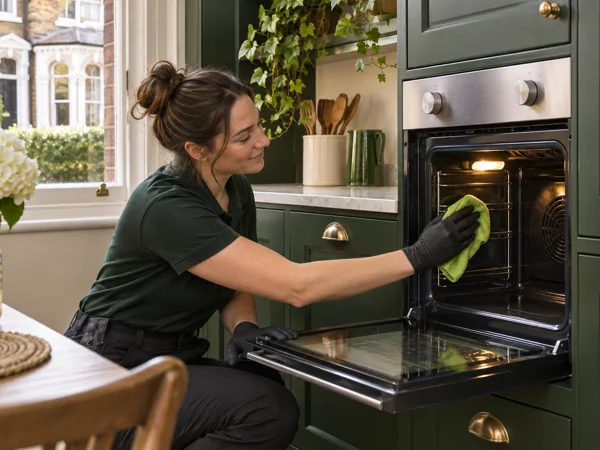
A single cooker with two doors can contain a large cavity and a grill, or two ovens with separate controls. A different installation can put an occasional oven above a frequently used one. Tell us which of those doors you want opened as part of the clean. A photo showing the full cabinet arrangement helps distinguish the appliances. If a model label is visible when the oven is cool, add that information so the office can discuss the type of work and the likely fittings.
Explain how you use each opening. You might grill a small dish in the top compartment and use the lower one for bread, giving the two cavities very different levels of residue. If the top unit is a combination appliance, say which functions you usually use and describe the parts you want assessed. The quote can then account for the specific ovens and accessories rather than relying on the number of handles on the front. Flag any opening that is outside the requested visit.
Identify what sits behind each door
| Opening | Detail to send | What we review |
|---|---|---|
| Large oven | Shelf height and location of residue | Accessible enamel and loose parts |
| Upper section | Independent oven or grill | Type and fittings |
| Combination unit | Model and functions you use | Possible cleaning as a separate appliance |
Set the loose trays beside the racks they belong with
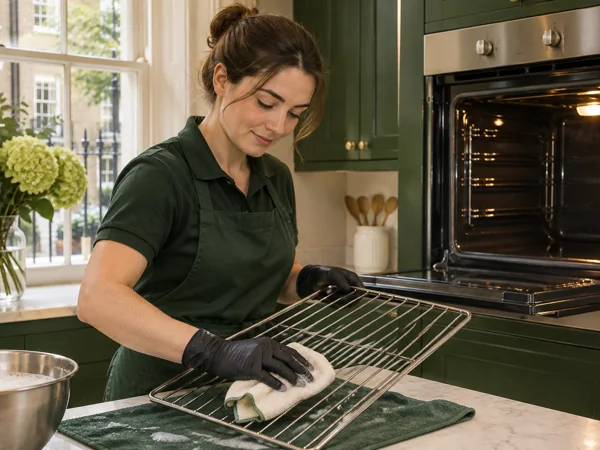
A deep tin that sits on a wire shelf may be ordinary bakeware, while a broad pan with shaped side edges may be designed to slide directly into the appliance. If you have taken either out already, leave the pieces somewhere the technician can identify them. Tell us what you know about the finish and whether you want each one considered. On a cooker with several cavities, some pieces can be easily mixed up, so give the position where the tray or rack usually sits.
We look at whether each part is suitable to remove and clean. Some compatible removable pieces can be treated separately from the inside of the oven. An unfamiliar or stiff support should be left in place for assessment. Where a rack normally sits on sliding supports, show us the arrangement before work starts. If your usual set-up calls for one low shelf to take a heavy dish, say that at handover so you know where the cleaned racks have been returned.
- Separate everyday tins from supplied sliding trays.
- Mention a coating or unusually shaped edge.
- Tell us which pieces are already off the cooker.
Identify the lower enamel and any different wall lining
Inside a domestic oven, the bottom may have a smoother finish than the wall or a removable liner on the side. This matters particularly where the same spill has reached more than one surface. Show the technician its path while everything is cool. If you have a manual that identifies the lining or an automatic cleaning programme, have those details to hand. It gives the cleaner information about the appliance without needing to assume that the visible finish is the same in each area.
An existing chipped edge or a dull patch can look like residue in a wide photo. Describe whether the appearance has changed after previous cleaning and what product or programme was used. The technician can check compatible accessible surfaces before deciding how to work. Where a deposit sits near a fitting or a surface looks worn, discuss what can be reached and what changes in appearance may remain. That gives you a clear basis for reviewing the cavity once the agreed work is complete.
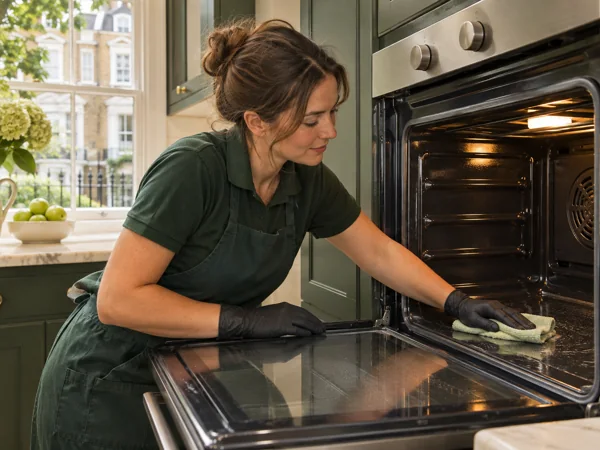
Point to the glass and controls from your cooking position
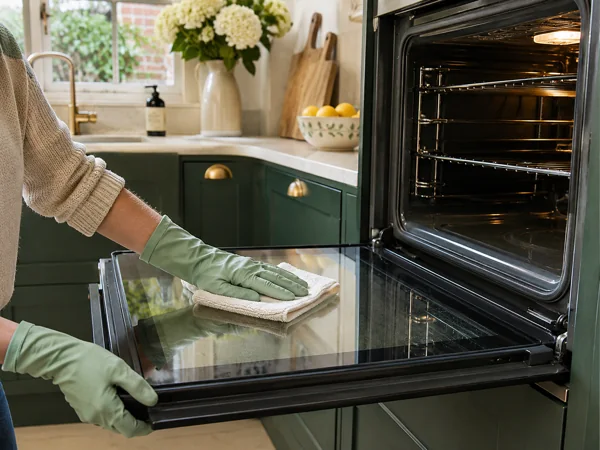
When you stand in front of a dropped oven door, you may see a patch on the inner glass that is much less obvious from across the room. Describe this position, whether the mark can be touched on a cool accessible surface and how close it is to an edge. Where it appears to be inside the door, say so without trying to reach it. Access to sections of a door varies, and the cleaner will check the door design and visible condition before work.
Then show any controls or trim that need particular attention. Printed symbols can fade from use, and a projecting handle can leave an area underneath that collects residue. Point out materials or existing marks before cleaning and ask the technician what external surfaces are included. The purpose is to agree the work around each type of finish and check it together later. If you want a wipe of the accessible door surround, note that separately from the marks you see through the glass.
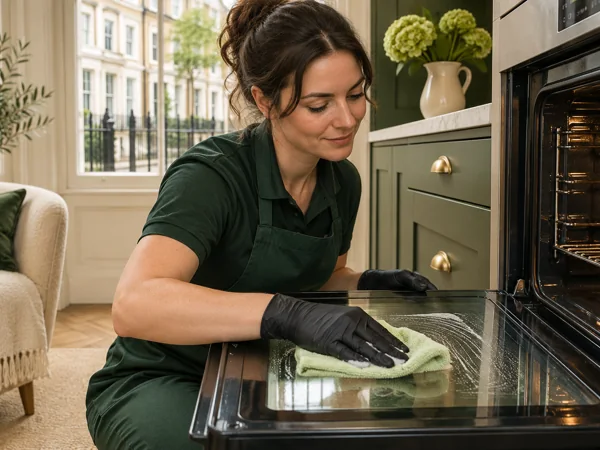
Match parts to the places they fit
| Item | Note for the visit |
|---|---|
| Slide-in pan | Original position and finish |
| Loose rack | Width and cavity |
| Individual baking tin | Whether you want it considered |
Keep one working surface available between cooking sessions
A kitchen in regular use can have wet dishes beside the sink and a preparation board on the only clear counter. Nominate a surface that can be kept empty for the visit and mention if it needs special protection. If an open oven door juts into a passage, let us know how people normally walk around it. This helps the technician plan where to stand, where suitable loose fittings can go and how to keep the door area usable while the work is in progress.
If you are also asking about a hob or extractor, include details before you clear the room. A hob has its own surface and fittings, and an extractor has its own access requirements. Tell us whether either needs to be available while the oven is being cleaned and where the cleaner can work once the cooking surface is cool. The office can clarify each additional item and agree what will be done during the same visit. Give the next person using the kitchen the agreed timing.
- Clear a counter before the agreed arrival.
- Describe any tight space around the open door.
- List the hob or extractor as its own item.
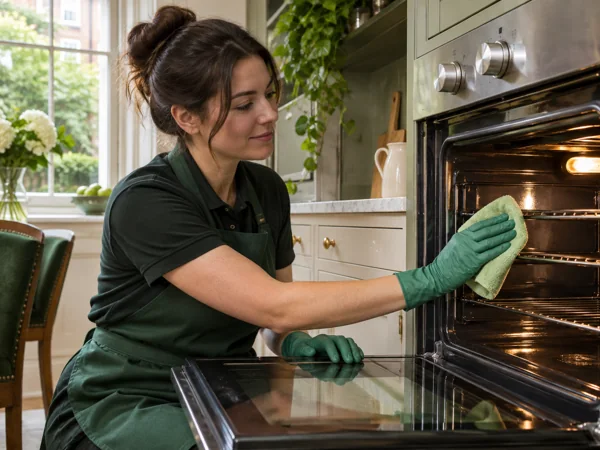
Review the cooker before the next round of trays
At the end of the visit, take the list you used for the quote and walk through the agreed compartments. Ask the cleaner to show where the shelves and any loose pans have been placed. If a surface still looks different from the rest, check what was accessible and what the technician observed. This can be particularly useful with a door you thought was marked inside the glass or a liner that had already changed appearance. Confirm when the appliance can be used again.
Tell the next cook what was cleaned and how the pieces have been returned, especially if they were away during the appointment. A household that uses the oven in shifts can keep a note of which cavity took most of the work. At a later enquiry, add any newly used trays or tell us if one cavity has become the main one. Reconfirm the entrance if the person meeting the cleaner or the expected route into the kitchen has changed since this visit. Keep the model reference with those notes so it is available when you call.
- Compare the result with your requested compartments.
- Ask which areas remained inaccessible.
- Pass the instructions for return to use to the next cook.

Plan the last check in a busy kitchen
| What to check | Who needs to know |
|---|---|
| Parts back in place | Person using the next shelf |
| Remaining marks | Person who booked the work |
| When to use the oven | Everyone planning to cook |
Get an oven cleaning quote in Seven Kings
Tell us the oven type, number of cavities and whether the hob or extractor also needs cleaning.
Get a QuoteOther Cleaning Services in Seven Kings
Local references · National Rail · Seven Kings station
Seven Kings oven cleaning questions
Do you need the High Road entrance if my front door is around the corner?
Give the full address and tell us which street the usable door faces, with a flat suffix or intercom label if applicable.
Can I book the cavity used for batches and leave the spare oven?
Yes. Identify the doors in order and say which one should be cleaned.
Should I take out a pan that slides but feels stuck?
Leave it in place and explain what you noticed. The cleaner can assess the fitting without forcing it.
Can you consider a stain I can only see when the door is open?
Yes. Describe the position and whether it is on an accessible side of the glass. The model and condition determine access.
What if the extractor is meant to stay in use during the visit?
Tell us when you need it and whether it is part of the quote so we can discuss timing and the working space.
What can I tell someone who will use the cooker after I leave?
Confirm when they can cook again and which shelves or trays have been returned to each compartment.