 Housekeeper
Care for built-up cooking residue
Oven Cleaning in Queen's Park
Show us the part of your Queen’s Park oven that is hardest to assess in everyday use. It might be a spill on the oven floor, a greasy grill or a mark that is visible through the window. The model, visible condition and names of loose accessories help us discuss a quote. Send the correct door and postcode with those details.
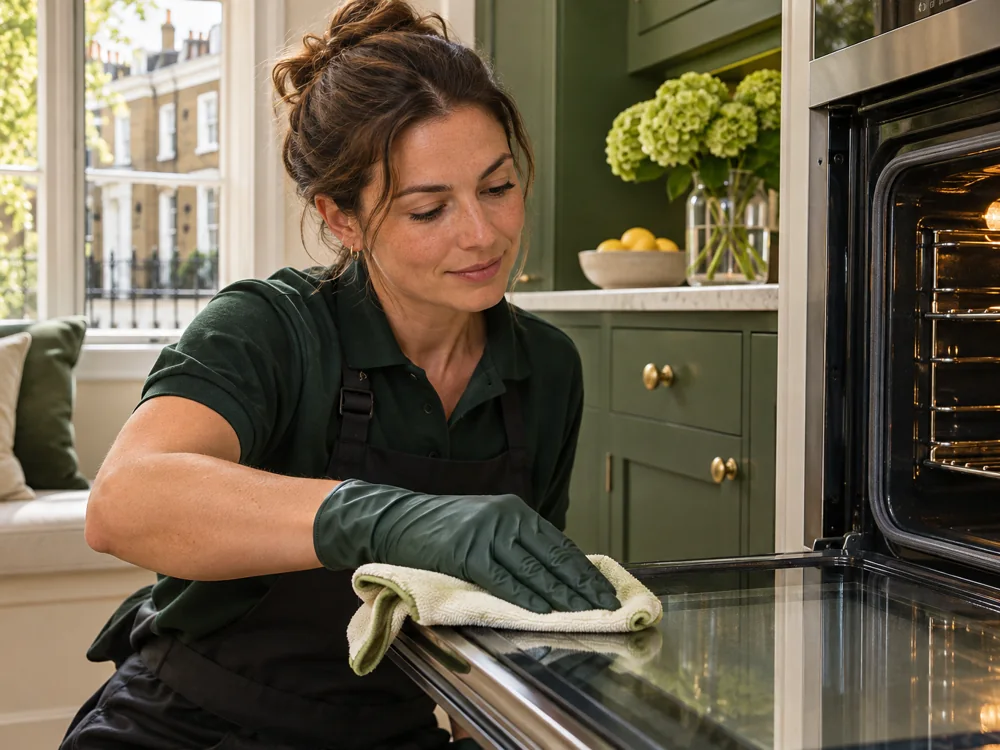
What approach details help near Salusbury Road?
Give your complete NW6 postcode and identify the front, side or communal door serving the kitchen.
Can you discuss an oven stained around its liner?
Give the position of the residue and any details about the lining from the model or handbook.
Identify the oven area with a visible build-up
Grease can be concentrated along the cavity sides or across the glass. A cooked-on spill can cover a smaller area on the oven base and be harder to distinguish from a change in the coating. Look while the oven is cool and tell us which section you would like assessed first. Include the nearest door edge or guide when taking a picture of the deposit. If the cooker has an upper grill and a separate oven below, give a description for each rather than using one picture that could refer to either.
Report any cleaner that has already been used on the affected part, including an appliance programme if you ran one. Tell us if the mark changed after the previous attempt or if the surface has an old dull patch around it. If you do not know the appliance’s history, a current description is enough to begin. The cleaner can assess accessible areas and take the finish underneath into account while discussing the grease or residue. Leave any damaged or unknown surface in position.
- Give the cavity and exact location of the deposit.
- Note an earlier product or cycle if known.
- Describe existing wear near the affected area.
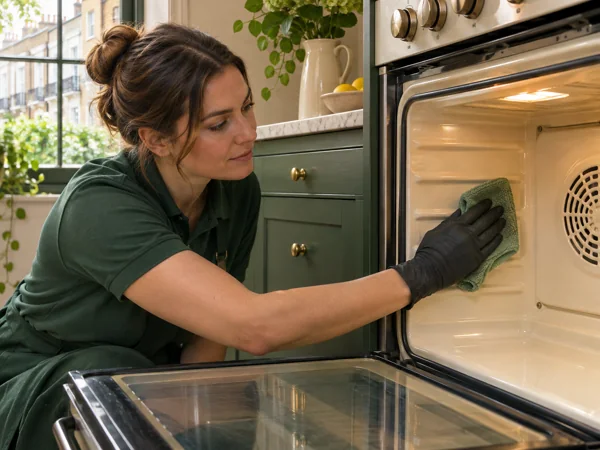
Use the layout to establish which cavity matters
A top compartment may provide the grill you use for toast and a second space for cooking, or it may be a separate appliance with its own settings. Tell us the model where available and describe how you use each one. A view of the whole front can show its controls, which makes it easier to recognise the appliance if you cannot see the name on the door frame. If a separate switch regulates another oven in the same stack, identify the matching door in your message.
For a range cooker, count the working oven cavities separately from drawers and warming compartments. A spare tray may sit in a drawer rather than its usual oven. Say whether you want that piece considered. Keep fixed areas as you found them and explain where the oven fits against the worktop or other cabinet. The model number can help distinguish liners and the construction of the door when you ask about a particular area. Share the name or a picture with the person who will meet the cleaner.
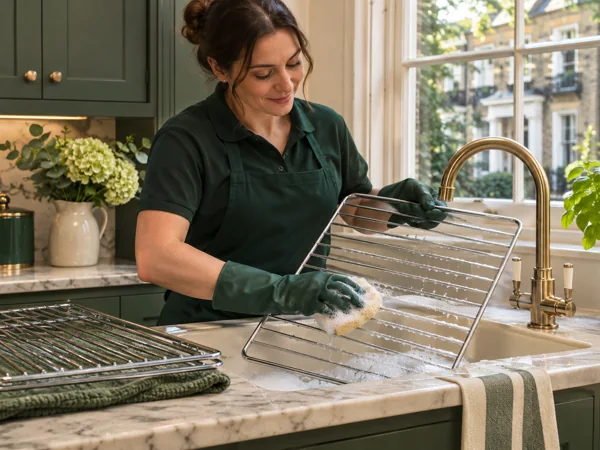
List removable pieces in the order you use them
Begin with the shelf you use most and record the other pieces you want to discuss. If an insert comes out of the grill pan, describe both. If a spare rack has been resting in another cupboard, say where the person at home can find it. Give details of the usual position and whether any surface is coated. A shelf carried on a sliding support may need to be described separately from its guide. Leave any fixed or sticking parts in place. The technician can inspect them in the positions they normally occupy.
Suitable removable parts can be considered for dip-tank treatment. Their fit, finish and condition affect that decision. Point out damage or an uneven coating where you can see it. Store personal cookware separately so the original oven pieces remain easy to identify. If you are leaving the property and a key-holder will review it, give them the parts list and tell them what each piece normally serves. A spare grill insert can then be accounted for without assuming that it belongs to another cooker.
- Count shelves and grill pieces by cavity.
- Mention coatings and fitted supports.
- Set personal trays aside and identify spare oven accessories.
Locate greasy or baked-on residue
| Position | Description to give | Condition detail |
|---|---|---|
| Cavity floor | Nearest seam and shape of patch | Existing chips or dull finish |
| Upper grill | Panel above or below the tray | Previous treatment if known |
| Door area | Affected window or trim | Glass face and existing damage |
Discuss glazing and door edges before the visit
Stand in the usual position in front of the oven while it is cool. Describe whether a mark shows on the kitchen-facing side of the glass or looks further inside. If it is visible when the door is open too, share that view. Access to the faces depends on the construction and condition of the door. Point out where the handle, trim or control panel differs in finish, especially if the grease reaches across an edge. For two doors that look similar, give the upper or lower position and show the panel beside it.
Report a section of seal that appears loose or any existing change to printed settings. There is no need to handle the seal to describe it. If someone already assessed or replaced part of the front, give what you know. A mark near that position can then be identified before the work is discussed. We can consider the exposed parts using the condition you report as context and agree what accessible areas you want to include with the cavity and loose pieces.
Explain how to reach the kitchen from a Queen’s Park street
National Rail places Queen’s Park station on Salusbury Road in NW6. If the station or the road is a reference point, give the full postcode and the street name of the actual residential door. A property whose frontage looks onto one street may have a separate entrance around the corner. If you live in a flat with a shared stair or a front door down outside steps, explain which route leads to the room. Follow a landmark with the correct number or bell so it can be recognised from the pavement.
For an oven in a rear kitchen, give the side gate or courtyard only if you want that approach used and can arrange access. Mention any steps, gate width or change of level. A person meeting the cleaner may need to come to the shared door or guide them from the outside bell. Give a direct contact and agree where they will meet. Keep gate codes and key instructions private until the visit is arranged. If entry is timed, say when the person opening the building will be available.
- Use the residential postcode and correct street door.
- Describe any gate, stair or passage before the kitchen.
- Name the person who can give access.
Decide which pieces to identify
| Part | How it is used | Assessment information |
|---|---|---|
| Spare rack | Usually in the main oven | Location and count |
| Grill insert | Rests in the pan | Material and condition |
| Fitted rail | Supports a shelf along the wall | Model and movement in normal use |
Leave the space around the open oven available
Before the visit, make sure the oven can cool after its last use and take food or personal cookware out. A tight aisle may have room when the door is closed but become difficult to cross when it is open. Remove easy-to-move items like a mat or bin and tell us about anything fixed. If the next cabinet contains a pull-out section, mention whether it passes the oven door. A photo taken from one end of the room can show a restriction that you do not notice when cooking.
Identify a counter or another nearby surface that can be discussed for handling the parts. Keep children and pets clear while the oven is open and pieces are being assessed. If the kitchen is the route to a garden, plan how other people will reach it during the visit. Explain when it needs to be available again if you have another cooking task later in the day. With time and working room discussed in advance, the person at the property can show the areas you asked about.
Keep grease on the hood or hob on a separate list
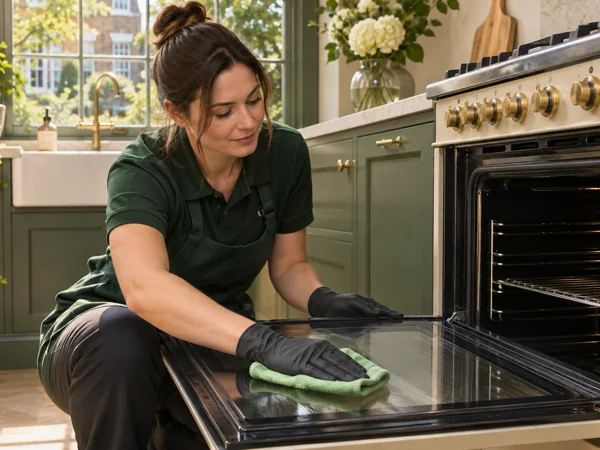
A hob directly above an oven can have grease on its glass, gas supports or a control area. Describe the hob type and the part where you see the problem. A cooking zone or an outer rim can serve as a reference for a mark on glass. A narrow worktop edge that collects residue can be discussed by its own finish and position. If a splashback is of interest, note it separately. A complete photo can show which surfaces belong to the hob and which sit beside it.
For an extractor, give the model or filter description if known and describe the canopy and its mounting height. A hood under a cupboard can make the filter difficult to see, so share any identifying information in the manual. Give the exterior surface and filter their own descriptions. We can discuss each additional appliance on its own line alongside the oven and agreed accessories. Let whoever is home know which extra parts will need to be shown if the booking includes the hob or extractor.
- Name the hob and its affected area.
- Identify the hood’s finish and any known filter type.
- Check which extra has been agreed with the oven.
Return to the original mark at the end of the appointment
When the visit is complete, use the original description to review the affected cavity and glass. Ask which access was possible and which oven pieces went through separate treatment. If a dark mark remains after cleaning, talk through the condition observed on that part of the surface. The location you gave before the work will help identify the same area now. Ask when the oven can go back into use and check that the correct racks, tray and grill insert have been accounted for.
If somebody else will use the kitchen next, give them the details you were told, including which cavity and parts were included. When arranging a key handover, agree who checks the items while there is still access to the property. Keep the model and any manufacturer instructions in the kitchen. If an additional appliance was only raised for later, record it as its own request. A future enquiry can then describe that item separately without confusing it with the areas already reviewed.
Set an arrival plan in Queen’s Park
| Step | Detail to send | Who confirms |
|---|---|---|
| At street | Full postcode and precise door | Person booking |
| Beyond the door | Steps, gate or communal hall | Resident |
| At kitchen | Working room and requested appliance | Person meeting the cleaner |
Get an oven cleaning quote in Queen's Park
Request a quote with the oven type, number of cavities and any extra appliances.
Get a QuoteOther Cleaning Services in Queen's Park
Local references · National Rail, Queen’s Park station
Queen's Park oven cleaning questions
Can I explain the old oven spill if I cannot read the model?
Show the affected cavity and the front controls. Give the location and any surfaces you can identify so the oven can be discussed.
Do I need to take out the shelf runners to ask about them?
Leave unfamiliar or fixed runners where they are and describe how the shelf normally moves.
What if both oven windows look greasy from outside?
Give the location of each window and the door model if you know it. Say which face appears affected when viewed with the cool door open.
Should I give Salusbury Road as an approach if I am on a side street?
Give the correct street door and postcode first. Use the station or Salusbury Road only as a reference if it helps.
Can I discuss a canopy filter with a dark patch on one side?
Yes. Describe the filter position and material or model where known. Leave it in place for the discussion.
What should I tell a person who will cook after the clean?
Confirm the return-to-use guidance and pass along which oven, grill or additional pieces were included.