 Housekeeper
Care for built-up cooking residue
Oven Cleaning in Poplar
Tell us what built up inside your Poplar oven and where it is most noticeable. A pan can spill in one place while frequent grilling leaves residue higher in the cavity. We will discuss the parts you want cleaned and check how to reach your kitchen from the address you give.
Can I enquire near Chrisp Street Market?
Yes. Give the full property postcode and the door facing the usable approach.
Can you quote for a burnt spill on the oven base?
Tell us the appliance type, the location of the spill and what you have already tried.
Separate frequent roasting residue from a single baked spill
An oven used most evenings can build up an overall film even when there is one particularly obvious dark patch. Describe both if you want the technician to assess them. A gravy spill can sit close to the oven lip while residue from frequent roasting reaches higher surfaces. In a cool oven, look from the doorway and say which parts you can see without reaching past a fitting. We can use the description to discuss the likely work and then confirm condition and access at the visit.
Tell us which cavity you notice the marks in. A small compartment with a radiant grill can show very different residue from a lower cavity with shelves. Share the model information you can see on the outside or around a cool accessible frame. If you have tried a cleaner, give its name, the place it touched and what changed. This gives the technician context before working and helps distinguish grease, hardened food deposits and a surface that has changed appearance over time.
- Name the opening with the thickest residue.
- Say whether a known spill reached the front lip.
- Share products used on the same surface.
Choose a Poplar entrance the technician can reach with equipment
Tower Hamlets describes Chrisp Street Market as being in a pedestrian square in Poplar. If the market helps people locate your home, provide the exact entry street as well. A map may place a visitor near the building but on the side that faces shops or a walkway. Tell us where the residential lobby opens and what the number or name on the door looks like. Where visitors need to be met before reaching the flat, say who will come to the door.
A housing block can have a lift and still have steps from the street to the entrance, or from the lift landing to your front door. Mention those changes of level in order. The householder may be used to a shortcut suitable for walking that is less useful for somebody carrying equipment. If the building has a preferred route and you can arrange access to it, tell us which part of the street we should approach and who gives access to that entrance.
- Add the entrance name to your full postal address.
- Explain any steps before and after the lift.
- Confirm which contact can meet the cleaner.
Make the kitchen ready for a cool work area
Arrange a time after cooking has finished and leave the appliance off so it can cool. Let us know about the room around it, especially if the oven door opens into a passage you use to reach a living area. Move loose personal items away from the working zone and identify a surface the technician can use. A counter away from the oven may be suitable if the route between them stays clear. Mention practical restrictions on access to the sink or a surface with a finish you want protected.
If the kitchen also serves as the route from an entrance to another room, explain when other people may need to pass through. A visit can be easier to organise when everyone knows which side of the room is available and when the oven needs to be empty. Identify any fitted cupboard doors that can hit the oven door when both open. That helps the technician position themselves and the agreed loose pieces while they work. Give the cleaner a separate place for the cloths and equipment they will be using.
What to describe for each kind of residue
| Position | What to send | What we assess |
|---|---|---|
| Cavity base | Size and position of known spill | Condition of accessible surface |
| Upper wall | General grease from regular cooking | Lining, fittings and reach |
| Loose tray | Finish and oven it belongs to | Suitability for separate cleaning |
Identify the trays with residue on both faces
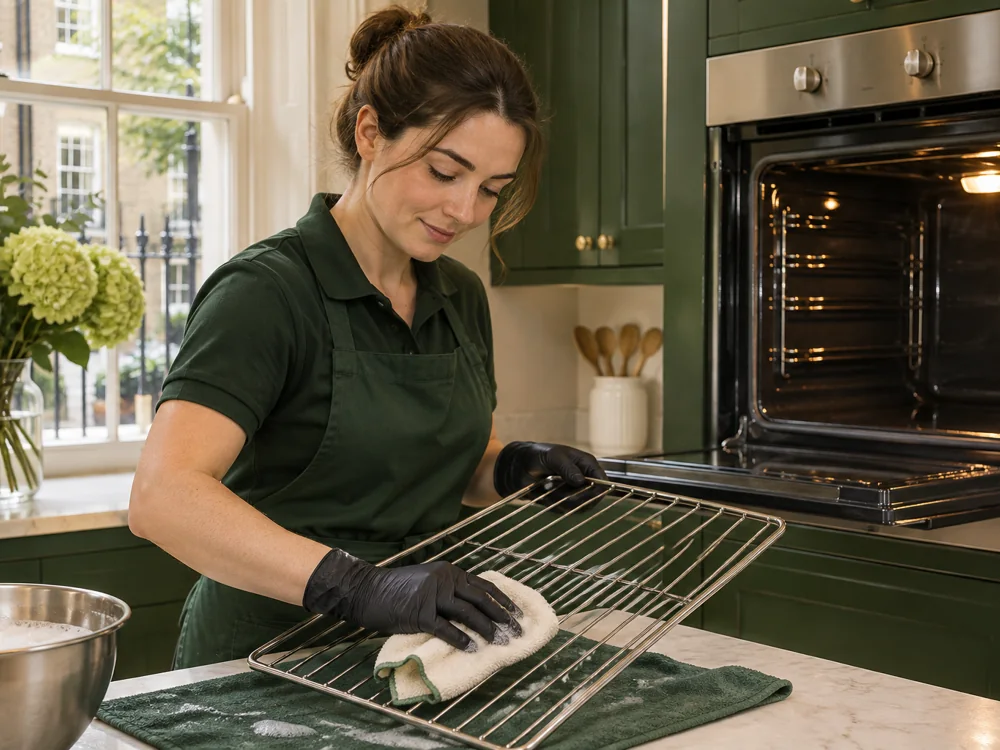
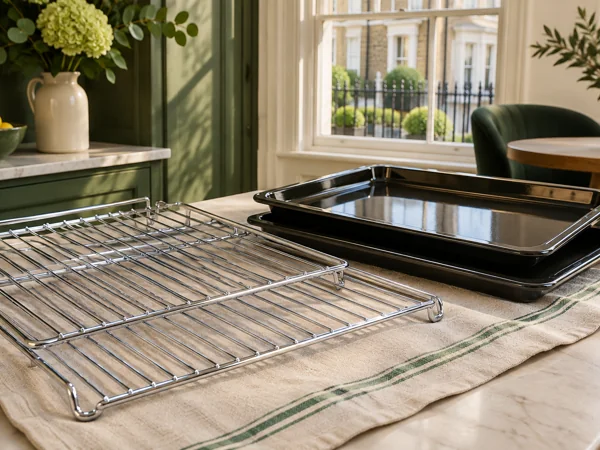
A wire rack can look clean at eye level and still show grease along the underside. If it is already loose, tell the cleaner where you normally place it and what it is used for. Trays can be supplied with the oven, bought as separate bakeware or fitted with grids. List which ones you want assessed and whether you know the material or coating. A tin that rests on a rack can look like a tray that slides into the oven on its own when both are sitting next to the sink.
The technician checks which parts can safely be taken out and which suit separate treatment. Where there are compatible removable items, working on them separately makes it possible to assess more of the accessible cavity. Leave a resistant or unfamiliar fitting where it is. Tell us if the usual shelf has a different stop or width from the spare one. This is useful at handover because the technician can confirm where the pieces have been returned in a cooker with similar-looking compartments.
- Name an insert or grid that belongs to a tray.
- Tell us which pieces have a coating.
- Keep unfamiliar rails in place for assessment.
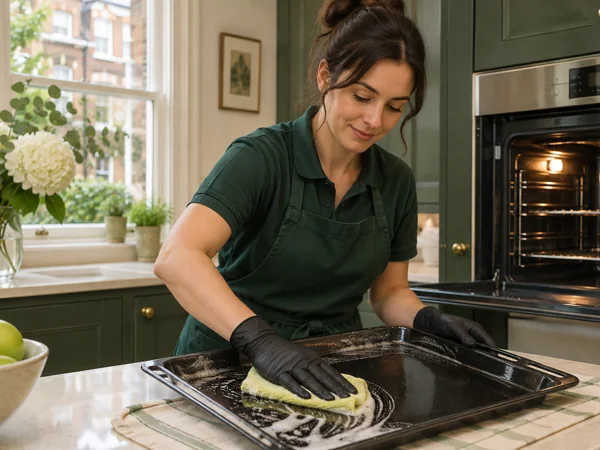
Choose a cleaning approach by the material beneath the grease
A smooth enamel base may be finished differently from a textured panel or the metal around a support. If you have an appliance manual that describes the lining, show it to the technician. A previous cleaning programme can also be worth mentioning because the areas it treats can vary. The cleaner assesses the reachable interior and looks for existing changes before choosing compatible work. Areas close to fixed fittings can have different access from the centre of the floor, even if the visible deposit looks much the same.
If a thick deposit is surrounded by a dull patch, let us see where one finishes and the other starts. An existing change in finish can remain after visible residue is removed. We can describe what we find and explain which surfaces can be cleaned, then revisit that part with you at handover. Mention if the appliance is regularly used with a large dish close to the sides, as the location of that dish can help explain where grease or cooking material has collected.
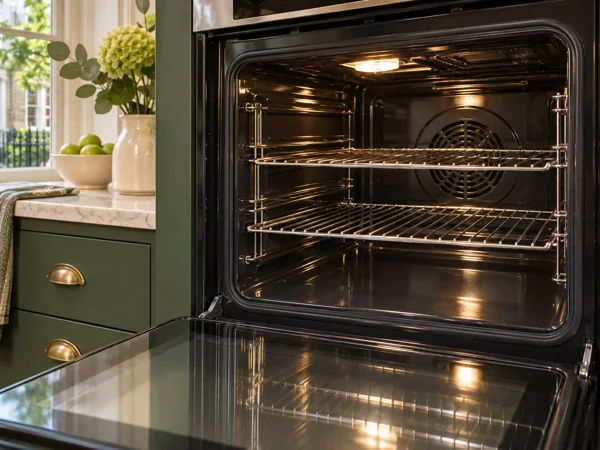
Set out the approach near Chrisp Street
| Point | Information |
|---|---|
| Street level | Entrance name and exact postal address |
| Within the block | Accessible lift or steps and flat number |
| Kitchen | Usable worktop and space around the open door |
Check the lower pane and handle from the room
Some marks are clearest when the door is partly down, while others only show on the outer face when daylight falls across it. Describe where you see the streaks and whether the patch can be identified on a reachable surface. If you suspect something is between panes, note the exact place without trying to uncover it. The cleaner will check the model and door condition before discussing what is accessible. Existing play in trim or a seal that looks displaced should be mentioned before work starts.
A handle can have a different finish from its mounting and the printed controls beside it. Point out wear or faded markings so the technician can take account of them while assessing compatible cleaning. If the accessible face of the glass is on the list, say which angle originally showed the residue. After cleaning, you can review that section using the same lighting as a practical way to identify the area you asked us to address.
Give the cooker top and the hood independent descriptions
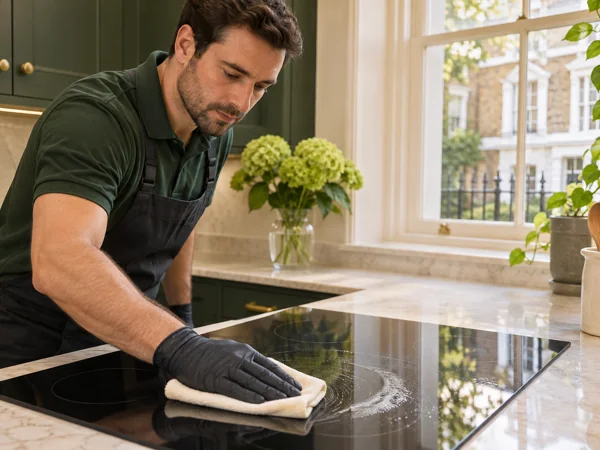
A hob often gathers grease in different places from the oven beneath it. A glass unit can show marks at the edge while a gas hob has fittings around each ring. Describe the surface and the parts you want included. If you regularly use one ring for frying and the neighbouring surface is clear, say where the material is concentrated. Let us know about existing changes on the surface or faded markings around a control. The office can then discuss the hob as its own item.
An extractor enquiry needs a description of the unit and where the cleaner would stand to assess it. It may sit beneath a cupboard, at the edge of a deep worktop or over a cooking area that has little room to one side. Mention whether you can see a filter and whether the outside face is metal or another finish. Leave unfamiliar fittings in place. Agree what is included and keep the area below clear if extractor work forms part of the visit.
- Name the hob surface and fittings.
- Describe the hood position and visible filter area.
- Include extras on the quote before the visit.
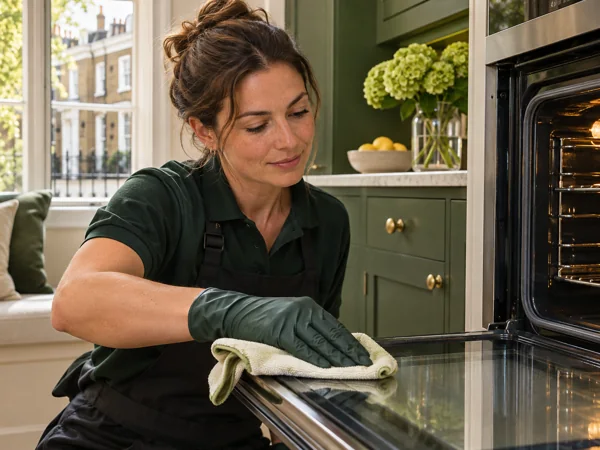
Check each requested area and pass on the cooking instructions
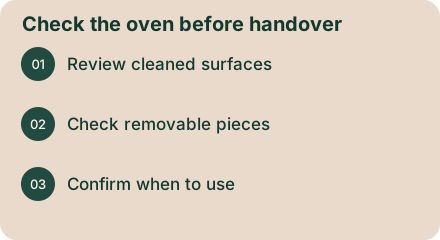
At the end, go through the cavity, agreed glass and removable pieces with the technician. A cooler oven is easiest to review while the shelves are visible and the next meal has not started. Ask which recesses were reachable and whether the appearance of any surface still differs. Confirm where the parts you asked us to clean have been returned and when the oven can be used. If a person not at the appointment will next use the kitchen, leave the instructions where they will see them.
Keep a record of the model and the accessories agreed on the quote if you use several similar ovens or racks. That helps describe the job when you ask about further cleaning, along with any change in the use of the room. If a lift, entrance or building contact changed since last time, include the new details. Checking the entry arrangements again can matter just as much as updating the appliance list for a later visit.
- Use your original list during the review.
- Check the returned shelves and any loose inserts.
- Confirm when the next person can use the oven.
Decide which extras to discuss
| Appliance | Description to give |
|---|---|
| Glass hob | Surface and location of deposits |
| Gas hob | Parts around each ring to consider |
| Extractor | Location, finish and access from below |
Get an oven cleaning quote in Poplar
Request a quote with the oven type, number of cavities and any extra appliances.
Get a QuoteOther Cleaning Services in Poplar
Local references · Tower Hamlets Council · Markets in Tower Hamlets
Poplar oven cleaning questions
Can I give a reference by Chrisp Street if our usable entry is elsewhere?
Yes. Include the actual entrance street and lobby label with the full postal address.
Can you quote when one cavity has different liners on each side?
Give the model if known and describe what you see. The technician can assess accessible materials before choosing how to clean them.
What if a grill grid has been kept inside the wrong oven?
Tell us which grill it fits and put it with the tray it belongs to if it is already loose.
How do I show where the overcooked deposit reached the front edge?
A photograph of the cool cavity from the doorway can show the edge and the area beside it.
Can I have the hob assessed if the cooker is back in use later that day?
Discuss timing and the hob type when you enquire. Confirm the instructions before using any cleaned appliance.
Should I tell the cleaner an oven mark was already there before the spill?
Yes. Point out its location before work and describe how it differs from the newer residue.