 Housekeeper
Signature care for well-used ovens
Oven Cleaning in Paddington
Arrange oven cleaning in Paddington for the cooker and accessories you want assessed. Show the appliance and each separate oven or grill you use. Give the visitor entrance and any building arrangements for reception, unloading or lifts so we can discuss how to reach the kitchen.
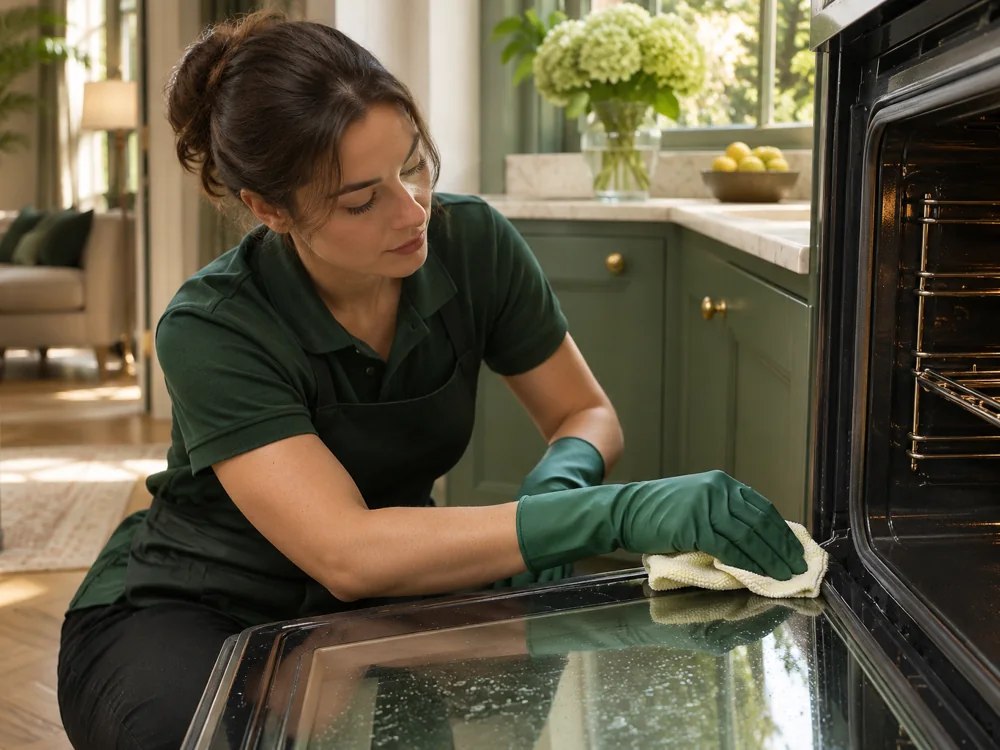
Can I request an oven clean near Paddington station?
Yes. Enter your full property postcode and give the actual visitor entrance, reception or lift instructions.
Can you assess the smaller grill before the main oven?
Yes. Identify both compartments and list the accessories and marks you want discussed in order of priority.
Resolve the entrance and loading instructions before choosing a visit
National Rail identifies the address of London Paddington station as Praed Street in W2. If you normally refer to the station when giving directions, tell us which door belongs to your own address. In a block with separate residential and other entrances, give the flat number, visitor lobby and intercom label. A pedestrian route from the station can differ from the approach a technician with equipment needs to take. Tell us who can confirm access, including any reception checks or collection of a building key before using the stairs or lift.
Check the arrangements with the person responsible for the building if there is a designated unloading point or a lift shared by several addresses. Give the name of the entrance and mention any level change along the route. In a house conversion, the outer door can be easy to spot while the internal route to a lower or upper flat is less obvious. Describe the point at which someone should turn and who can open the final door. If the kitchen opens from a communal courtyard, show the relevant approach.
- Send the actual address and lobby label.
- Confirm the allowed route for equipment.
- Explain steps and how to reach the kitchen after entering.
Identify a single fitted oven among the rest of the kitchen equipment
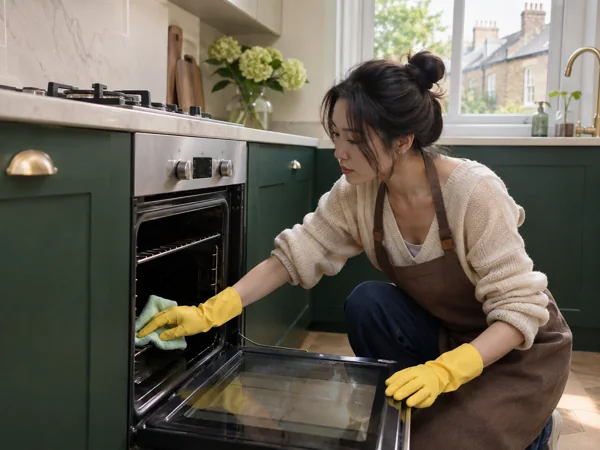
Take a clear photo of the cooker as it sits in the kitchen, including adjoining doors and its controls. Point out the appliance you want considered if a compact cooking unit or microwave has a similar front. For a double oven, name the location of the main cavity and any second cavity or grill. On a range, identify the other compartments by use. Give the model from the paperwork or a label you can read when the oven is cool. Keep the appliance in its present fitted position.
Mention if another cook wants a separate oven to stay available, and explain which cavities are currently working. A smaller grill can be used more often than the main oven and have a different type of residue. Identify the priority area and which accessory belongs there. If a new tray or spare shelf was bought after installation, mention that change. Someone opening the property might know it only as the top shelf, so share a picture and use the same names in your enquiry, quote and instructions at the door.
- Take a photo of the full cabinet bank.
- Identify each working cavity by position and use.
- Note spare trays or replacement accessories.
Describe the affected area using the cooker's features
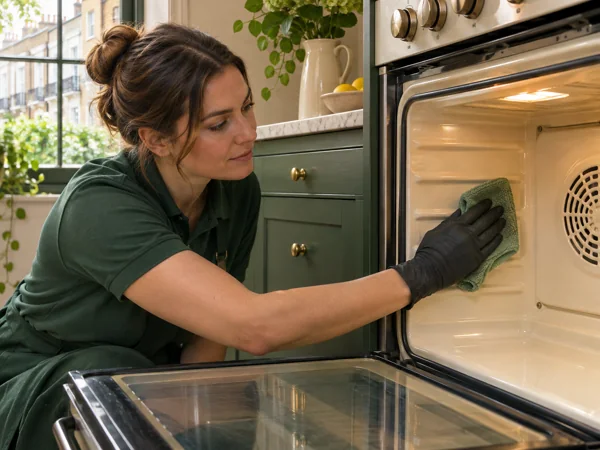
Look at the oven while it is cold. A spill under the front of a dish may have marked the enamel floor, whereas grilling can leave deposits on a tray insert and surfaces above it. Tell us where the grease is most visible and how often you cook that way. Include an overall view and a close-up that shows a shelf edge or the position of the door. Say if the oven was heated again after a spill. Mention if any products or an oven programme have been used since.
A stain can be residue, discolouration or a change in a surface coating. Share any guidance for catalytic or self-cleaning liners and show where the liner meets the enamel or nearby fittings. The technician can review the model and condition before discussing how to handle the surface. If there is a heating fault, seal issue or loosened hinge, mention it before booking and take separate advice from an appliance specialist. Photographs of the present condition can help you explain what you want assessed and mark any existing wear.
- Locate the priority mark inside the cooker.
- Describe earlier cleaning and recent appliance use.
- Share manufacturer guidance for specialist liners.
Confirm the building approach in Paddington
| Stage | Detail to send | Who confirms it |
|---|---|---|
| Street | Property address and unloading point | Resident or building staff |
| Reception | Visitor label and sign-in | Concierge |
| Inside | Lift core and any extra steps | Person providing access |
Separate the correct shelves and grill parts for inspection
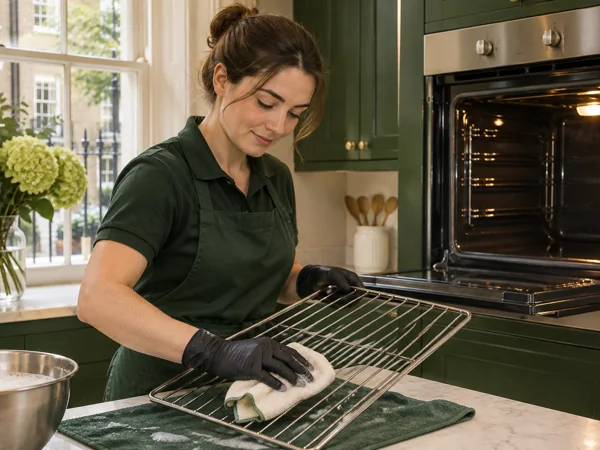
Once the appliance has cooled, remove food, loose foil and everyday pans. Set out the shelves, grill trays or removable pieces you want assessed. Compatible components can be taken out for separate cleaning and may be soaked in a dip tank where suitable. The technician can look at the type of coating, material and current condition first. A wire rack and a coated insert that usually sit together can need different treatment. List replacements or extra accessories separately if you are unsure which oven they were originally made for.
A metal runner can still move part of the way when a shelf is stuck. Leave unfamiliar fitted parts in position rather than trying to release them. Describe where the movement stops or an edge rubs. If your grill has a pan with a detachable handle, put the handle next to the insert and tray. Allow enough adjacent worktop for those loose pieces to be inspected without blocking the cooker door. Leave a note of which part goes with each cavity if somebody else is meeting the technician.
- Group accessories by the oven or grill.
- Identify any bent rack or peeling coating.
- Leave unfamiliar rails for the technician to assess.
Consider glass and surrounding trim by the surfaces you can see
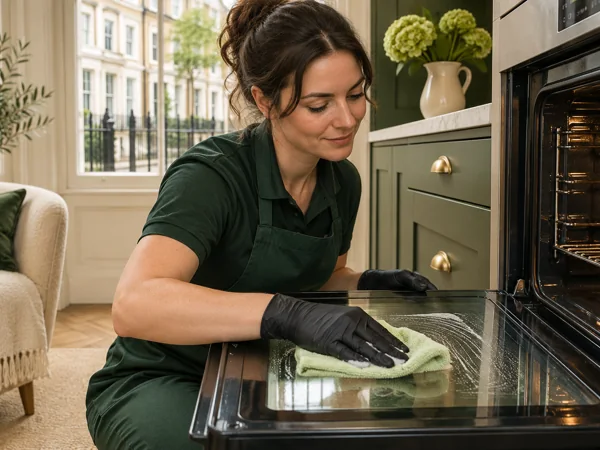
Look at the mark with the door open and closed. A cloudy film on the inner pane can be visible straight on, while a streak deeper in the door may only show when you view it at an angle. Say which description fits and give the model. Tell us about replacement glass or a loose section of trim if known. Access depends on how the door is made and what condition it is in. The technician can inspect the affected area before explaining which surfaces can be reached.
Point out printed markings, cabinet edges and decorative trim separately from the glass. Some finishes already show wear around common settings or the corner of the door. Describe which surfaces you want checked and whether the door catches when it opens. A wide photo helps show how close the neighbouring units are. Report known damage early so the person at the property can identify it before work starts. Explain if there is a single small area you want assessed or if the wider door and handles are also important.
List a hob or hood as its own appliance
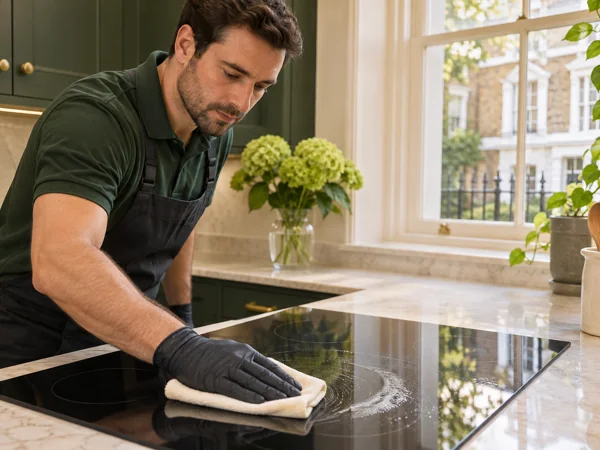
If you want the hob considered, give the type and describe which area or parts need attention. A gas hob can have individual burner caps and removable supports. A ceramic or induction surface can show residue around one cooking zone, an edge or the controls. Photograph it from above where practical, and mention any existing wear. If a separate griddle is fitted to the range, identify its finish and how it sits. Show shared controls in the photo so the cooker layout is clear.
A hood or extractor can be mounted above a worktop, beneath a cabinet or over a kitchen island. State its approximate height, finish and filter type if known. Explain the difference between external grease on the cover and deposits on a filter. Tell us if the filter is reusable metal mesh or a disposable insert. If a fixed cupboard limits the way to the hood, show that in the picture. Ask for any agreed hob and extractor work to be listed as additional appliance entries on your quote.
Identify the relevant cooking surfaces
| Surface or part | What to point out | What it helps clarify |
|---|---|---|
| Upper grill | Door position and separate tray | Which accessories belong there |
| Cavity floor | Spill under a dish | Model and affected enamel |
| Door glass | Film seen with door open or shut | What surface may be reached |
Leave the room ready and give the time you need it again
Arrange for the oven to be cool and out of use when the technician reaches the property. Clear the worktops beside the appliance and make sure the door can swing past a stool or trolley. If the kitchen is also used to reach another room, explain that before the visit. Discuss any restrictions on water or power. Keep children and pets clear while parts are handled. If another person will use an appliance nearby, ask how you can fit that around the working area without moving the stove or its accessories.
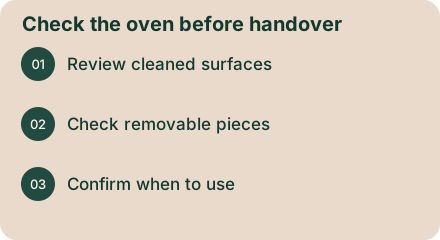
Give the next time the cooker needs to be used. If you cook in a shared household, make sure the person who opens up understands the timetable. At the end, ask when the oven can be used and confirm which parts were treated or left in position. Pass the instructions to anyone else who will cook. If the visit is part of a property handover, make time to transfer this information before the key return so the next occupant knows about returning the oven to use.
- Keep the oven cold and the immediate area clear.
- Confirm the next planned use in advance.
- Agree who will receive the handover.
Keep the quote aligned with the oven that is actually fitted
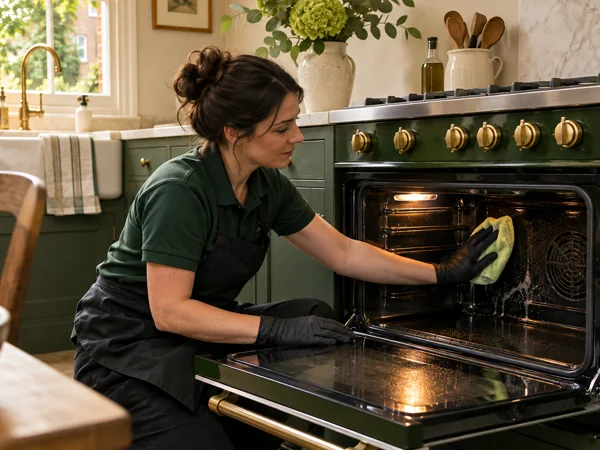
Use the postcode enquiry to send the access details, cooker description and list of the relevant shelves and trays. Include existing faults or worn areas separately from the residue you want discussed. If you need a hob or hood considered, list their own finishes, controls and components. The person holding the keys should have the same photos and priorities, particularly when matching appliances are side by side. Check the quote against the item list so you can recognise the particular oven you wanted assessed.
For a move, compare the available accessories and appliances with the inventory before deciding what to arrange. If keys are held by reception or another agent, clarify how the technician can reach the actual kitchen and who can be present at the end. Send any change to the requested parts or unloading instructions before the appointment. Leave a copy of the agreed list with the person who can identify the relevant marks. Confirm the next cooking time again if completing the plan depends on an incoming occupant or a separate kitchen booking.
Prepare the accessories for inspection
| Piece | Condition to mention | What to agree |
|---|---|---|
| Rack | Whether original and where it fits | Suitable separate cleaning |
| Tray insert | Coating and detachable handle | Which pieces are included |
| Fixed support | Stiffness or uneven movement | Leave in place until assessed |
Get an oven cleaning quote in Paddington
Request a quote with the oven type, number of cavities and any extra appliances.
Get a QuoteOther Cleaning Services in Paddington
Local references · National Rail – London Paddington station
Paddington oven cleaning questions
Is the station postcode sufficient for my enquiry?
Send your own full property postcode. Include the station only as an orientation detail if useful.
Can the oven clean take place if a concierge has to approve equipment access?
Confirm the approved access route and tell us who can manage the process on the day.
Should I take out the glass to show a mark?
Leave the glass fitted. Describe how the mark appears and tell us about the model and previous glass replacement.
Can you include the control panel near the cooker?
Identify it separately and explain any worn markings or finish that affects assessment.
What if I cannot move a telescopic rack?
Leave it fitted and show the technician the point where movement stops.
Can I tell you about a later meal when booking?
Yes. Give the planned time and then confirm when the cooker can return to use at handover.