 Housekeeper
Signature care for well-used ovens
Oven Cleaning in Newbury Park
A cooker kept in regular service can collect residue on several surfaces that need to be assessed individually. For a Newbury Park booking, tell us which cavities and loose parts you use, where you see the build-up and which entrance leads into your kitchen. We can discuss the work before scheduling a visit.
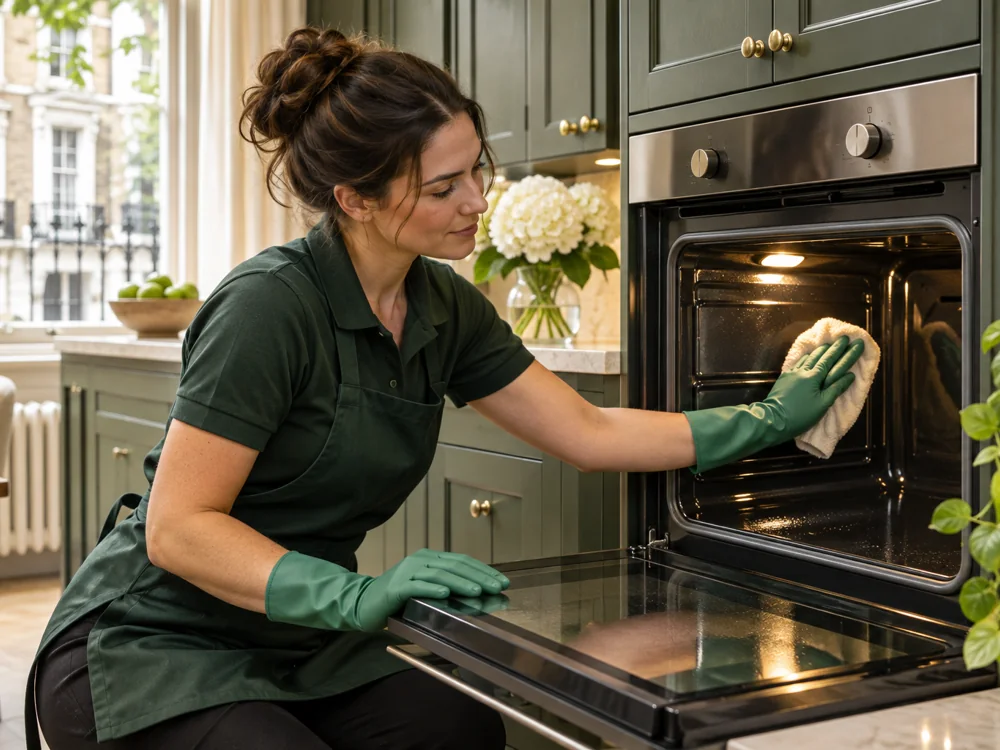
Can I book from a property just off Eastern Avenue?
Yes. Enter the full postcode and give the exact entrance you can open.
Can I request individual range compartments?
Yes. Tell us which doors to include and where the shelves or trays belong.
Read the marks low down and along the oven's working edges
Large dishes pass close to the visible edges of the oven. A spill near one of those edges can leave a darker strip while the centre of the base looks different. Look from the opening when the oven is cool and describe how far a mark extends. If it sits near a rack or a part you cannot reach without moving something, tell the technician where it is. We can assess access and decide how to approach the surface once the appliance is in view.
Think about which cooking habits matter to the enquiry. A dish that frequently sits low in the cavity may leave residue below it, while a pan used under the grill can leave a different kind of build-up higher up. Grease may extend along surfaces that you do not usually inspect when a shelf is in place. Tell us how you use the affected compartment and if you can trace the deposit to a particular tray. The cleaner can identify reachable areas before deciding which pieces need attention.
- Describe whether the mark reaches a front edge.
- Identify residue near a rail or other fitting.
- Tell us which tray was in use when a spill occurred.
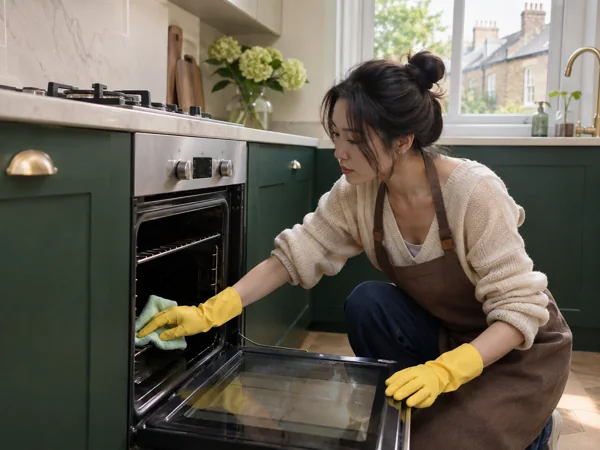
Send the Eastern Avenue approach and the address separately
Transport for London places Newbury Park Underground station on Eastern Avenue in IG2. If you use that landmark to describe your area, follow it with the complete postcode, street and entrance for the property. A home can face one route while the front gate or entrance used by visitors is reached from a side street. If you give the shared name of a block, add the door label and the flat number shown at the bell. Say whether the cleaner should wait at the gate or come to the door.
Tell us if the approach from your chosen entrance includes a step or a sharp turn before the kitchen. A drive can be useful for reaching a side door if that is the route the household has agreed to open. For a flat, mention if the lift serves the front door level or if a flight of stairs follows it. If the owner and the resident are different people, give the details for the person we will meet and confirm the appliance list with them.
- Name the entry street and visible door label.
- Confirm how the door or shared gate will open.
- Describe the route inside to the kitchen.
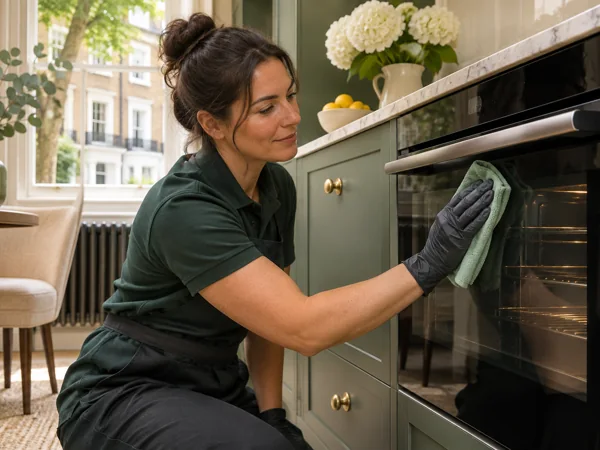
Show each range compartment with its own use
A wide range can have a little-used oven with a smaller rack, a frequently used main oven and a separate grill. Some doors may be for storage. A picture from a distance helps show the layout. Identify each opening you want included and give model details if the label can be read on the cooled appliance. Tell us which compartment has the greasiest deposit or most used shelf. For a cooker with a removable panel or a pair of sliding rails, identify what you can see without taking anything apart.
For two ovens in different cabinets, say which one carries the larger dishes and which racks belong to each. If only one cavity is part of the enquiry, give the location precisely. Where a separate appliance has a microwave or grill function, describe it in its own line. The office can discuss a suitable quote with details about each compartment. This also prevents the person meeting the cleaner from having to guess which of several similar controls is for the unit you booked.
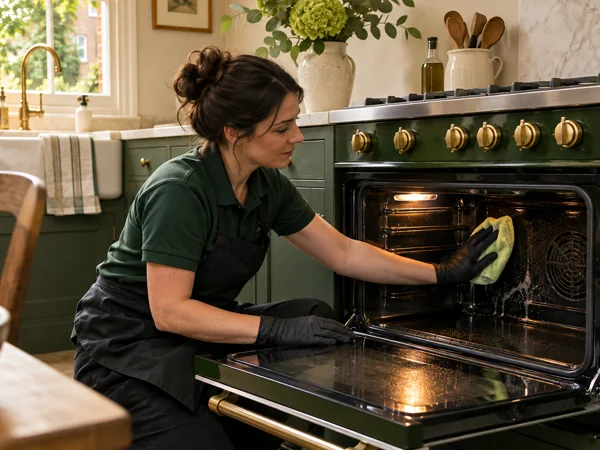
Distinguish the working compartments
| Opening | What to show | Quote discussion |
|---|---|---|
| Main oven | Cavity and heavily used shelves | Reachable interior and fittings |
| Smaller oven | Use and fit of loose racks | Separate cavity work |
| Dedicated grill | Pan, insert and visible surfaces | Agreed grill items |
Set removable shelves aside by their finish and fitting
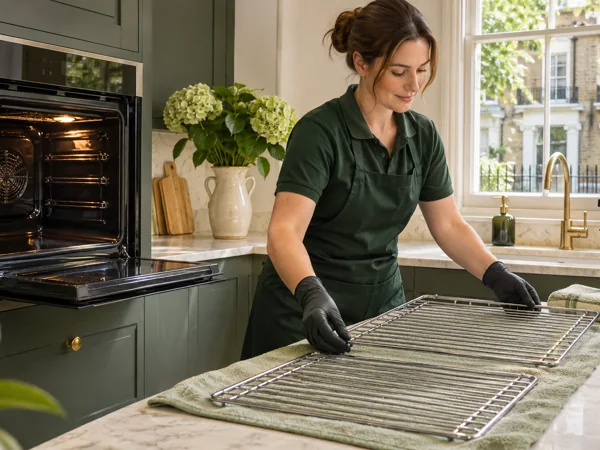
A shiny rack and a coated tray can need different treatment even when both have been used for the same meal. Show us which pieces are already loose and explain whether the tray slides into runners or sits on a shelf. A separate grill grid can be part of a pan that is otherwise stored by itself. Include any pieces you want assessed and let the technician inspect the model before trying to remove something that feels stiff. The condition of the fitting matters as well as the finish.
Some suitable pieces can be removed safely and cleaned separately, which gives improved access to the surfaces around them. Other fittings remain in position when their construction or condition calls for it. Tell us if you normally keep a wider wire shelf lower than the rest for a deep pan. At handover, confirm the position of each clean piece and any item you would rather have put aside. If a household member uses only one of the ovens, give them the relevant part of the instructions.
- Group any loose shelves by cavity.
- Tell us where the grill insert belongs.
- Point out an unusual finish before the parts are assessed.

Distinguish residue from a mark in the oven lining
What looks like a deposit could be a change in the finish, especially if the mark remains through several cooking and cleaning cycles. Tell the technician what it looked like before and what you have tried on it. Name any cleaner or oven programme used and say which parts it affected. If the interior has a special lining or different surfaces on the sides and base, share what the model information says. This gives the cleaner facts to consider alongside the material they can see.
For older build-up, point out the parts you can identify clearly, such as a line along the base or a patch behind an insert. The cleaner checks the affected area and chooses appropriate work on reachable compatible surfaces. Report a visible chip or worn-looking edge in advance. If two areas look different at the end, ask which were assessed and what the material looked like when the residue was cleaned. The practical result depends on the visible condition and access in your oven.
Review glass and external controls without changing how they fit
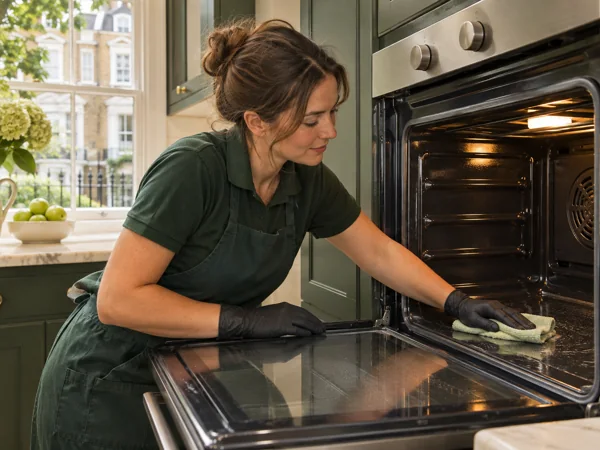
A stripe seen through the door can be on an accessible face or appear between panes. Tell us when it shows most clearly and where it sits in relation to the handle or hinge. The technician can look at the cooled door and assess the reachable areas on that model. If you have noticed unusual movement, a damaged edge or a seal in a different position, explain that at arrival. Leave the door and its fittings in place so the cleaner can see their current condition.
Around the cooker face, one part can have printed settings and another a coating or brushed finish. Ask which can be assessed where you cook and which marks can be reached. Mention fading on a label or wear near a knob where it is regularly handled. Include the external surfaces you would like discussed when you describe the work, so the quote identifies both the cooking compartment and any agreed external area. Look at those areas with the technician during the final check.
Prepare a useful access note
| Detail | Example |
|---|---|
| Street orientation | Full postal address plus actual entry road |
| Entrance | Side door or specific intercom label |
| Inside | Lift floor or steps before the kitchen |
Leave clearance for a wide door and any extras
Make space in front of the oven so the door can open without a chair or moveable trolley in the way. If a nearby cabinet normally crosses the open door, give the technician that detail. Decide on a counter for suitable loose pieces and tell us if it has a finish you need protected. Your worktop does not need to be empty everywhere. What matters is that the agreed space remains clear while the technician checks the parts and works around the appliance.
Name a hob or extractor separately if you want it assessed. Tell us which fittings are visible and the type of surface. For a hood, describe where it sits and what space is available below it. We can discuss the extra items and confirm whether they can be included. If other people in the home need the kitchen that day, decide who will use a different worktop or wait until the appointment is complete. Leave the agreed appliances cool.
- Allow the full door to open.
- Agree a worktop for suitable removable parts.
- Keep any additional appliances on the quote clearly identified.

Work through the two sides of the cooker before signing off
Compare the result with the list used to arrange the booking. Start with the cavity you use most and check the reachable surfaces with the cleaner. If a rack or pan has been returned to another position at your request, show the next user where it is. For glass or a deposit whose appearance changed only partly, ask the technician to point out the surface and explain what was accessible. Confirm when you can use each agreed appliance and pass the instructions to anyone absent.
For a repeat booking, keep the appliance type, shelf positions and intended compartments in one place. If you change the way you use the cooker, update the details before requesting a visit. The access arrangements are worth reviewing again if someone else will open the gate or if a different area of the house has become the main route to the kitchen. This saves time at the beginning and lets the person meeting the cleaner confirm the actual work clearly.
- Review the main cavity and any agreed secondary opening.
- Confirm where the loose pieces were returned.
- Ask when the oven can return to use.
Check the result by item
| Part | Review at handover |
|---|---|
| Enamel and lining | Accessible areas and remaining changes in appearance |
| Racks and trays | Original or agreed new position |
| Cooker and extras | When they can be used and who will use them |
Get an oven cleaning quote in Newbury Park
Tell us the oven type, number of cavities and whether the hob or extractor also needs cleaning.
Get a QuoteOther Cleaning Services in Newbury Park
Local references · Transport for London · Newbury Park Underground Station
Newbury Park oven cleaning questions
Should I use Eastern Avenue as my address if the front gate is on a side road?
Give the actual postal address and postcode. Name the side road and gate if that is the agreed approach.
How do I list a grill with a separate grid inside the pan?
Name the pan and grid together and identify which compartment they fit. Describe their finishes if known.
Can the cleaner check a patch under a side runner?
Point out where it sits. The technician can assess the fitting, finish and reachable areas.
What if there is a chip beside a greasy strip?
Tell the technician before work begins so the surface and the cooking residue can be assessed individually.
Can we use the other end of the kitchen during the visit?
Discuss which areas the cleaner will need and agree a separate place for anyone who needs the room.
Can I have the racks left in a particular order?
Yes. Tell us where the pieces normally sit and confirm their positions at handover.