 Housekeeper
Plan your kitchen visit
Oven Cleaning in Mile End
For an oven cleaning enquiry in Mile End, send the residential address and a view of the cooker you want assessed. Tell us which cavity matters, the removable parts you use and who can open the agreed entrance when the technician arrives.
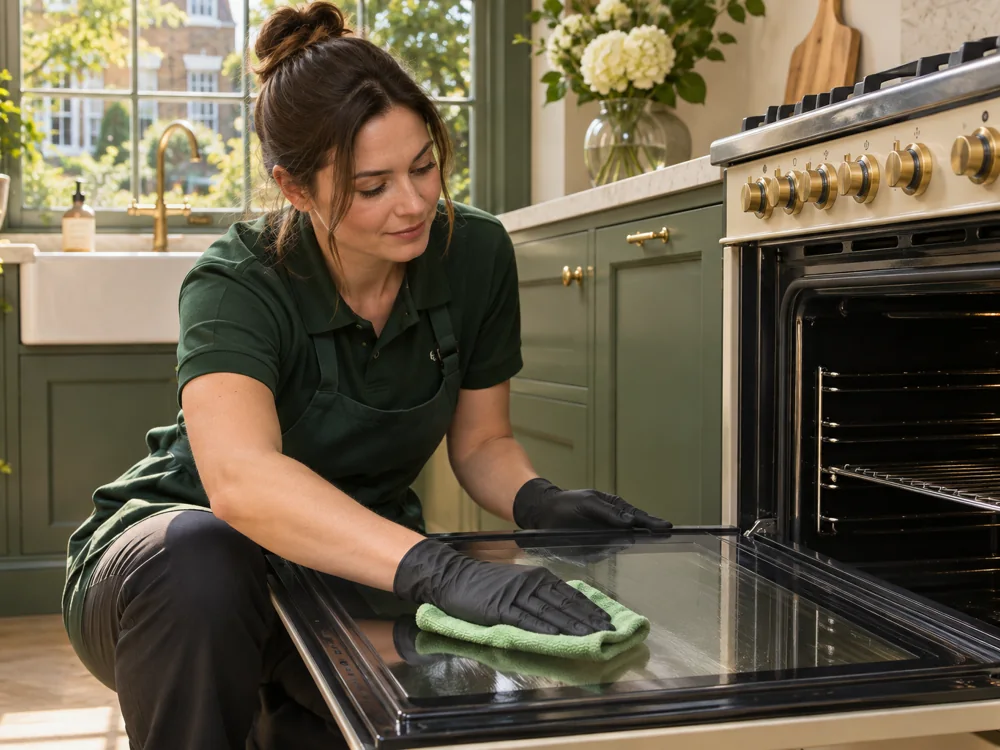
Can I enquire with an E3 or E1 postcode?
Yes. Give the full address and the entrance to the home.
Can another occupant meet the technician?
Yes. Share the agreed oven and access details, and give a contact for decisions.
Confirm the entrance for your Mile End property
Transport for London lists Mile End Underground Station on Mile End Road in E3. If that is a useful reference point, include it next to your full postal address and a description of the actual visitor door. In a block with more than one approach, the main number can be displayed on a different street from the residential entrance. Tell us which gate, bell or lobby to look for, and whether the technician should call a resident before walking down a shared path.
Check the equipment route and permitted unloading location. If a lift leads to a shared landing, tell us which lift and floor labels to use and describe any steps after it. For a home with a side passage or lower entrance, explain how to get from the pavement to the door. If another person opens up, give them the same directions and the correct time. Provide a contact number so the technician knows who can clarify the route if the named gate is closed or the bell cannot be identified.
- Use the complete address and entrance label.
- Give the kitchen level and any steps or lift.
- Confirm where to wait and who will open the door.

Identify the cooking unit rather than the whole cabinet
A glass door beneath a microwave may be a full oven, a combination appliance or one of several cavities. Take a photo showing the controls and doors together and mark the oven you want cleaned. If a lower drawer holds trays, write that detail. A manual or visible model number can be useful when controls offer several modes. Leave fitted parts in position while looking up the reference. If the hob or grill has its own controls, say if you also want to enquire about it.
Identify which cavities are used most and which ones are part of the request. A quote for the oven can list the main cavity and removable pieces without including a separate grill or surround. If the work is requested by one person while another will be home, send the annotated photo to both. Use the name of the cavity from the handbook if available. This helps identify any care instructions for a special lining and keeps a shared cooker’s loosely named compartments from being confused during the inspection.
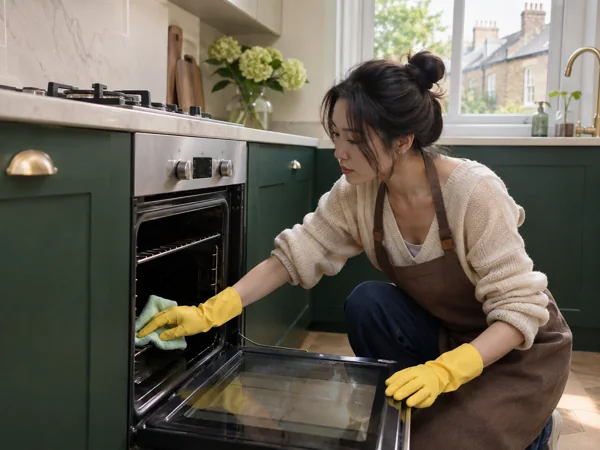
Tell us where to enter
| Stage | Supply | Confirm |
|---|---|---|
| Street | Full postcode and correct residential door | Where to unload |
| Lobby | Lift number or stairs | Floor and any extra steps |
| Kitchen | Oven and clear counter position | Space to handle parts |
Explain the marks where you see them
Examine the cool oven from its opening and note the part that needs attention. A spill may reach the base and leave a line along the edge, while repeated grill use can leave grease nearer the top. Give the shelf position, cooking activity and when you first noticed the mark where known. Note whether it has changed since another meal or previous clean. Show a wider view alongside any close image so the technician can tell which cavity and surface you mean. Leave fittings as they are.
Mention any household cleaner or built-in cleaning programme already used and where. If the tray got a different treatment from the lining, list both. Include instructions for specialist finishes if you have them. A technician can check accessible cooking residue alongside any changes to the underlying material. Wear or discolouration may remain visible after soil is removed. Tell us if a persistent patch on one surface is the main reason for getting a quote so it can be considered early in the visit.
- Match marks to a cavity and finish.
- Say if a product or programme was used.
- Highlight any older colour change or wear.
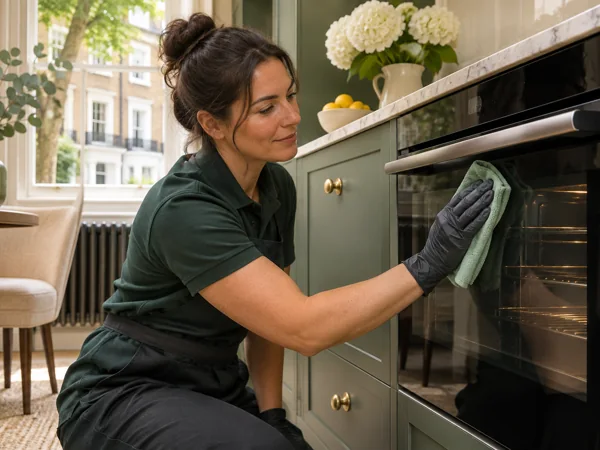
List removable pieces by cavity and condition
Count the shelves, trays and matching grill inserts you want assessed. If there is a rack on sliding rails, mention whether it has started to catch. A normal wire shelf and a telescopic assembly are constructed differently and may need separate handling. Let the technician assess fitted parts in their current position and decide which can safely be removed. Suitable pieces may be soaked in a dip tank after checking the material and condition. Share the manufacturer’s accessory care notes if there are any.
Take out food, loose personal cookware and foil after the oven has cooled. Keep private dishes away from the working surface and separate out an aftermarket tray if you want to ask about it. If a tray has two removable components, name both and say where they normally fit. Let the person meeting the technician see the agreed list so they can identify which pieces are included. A spare shelf may look much like the primary one but belong to a different oven or carry different instructions.
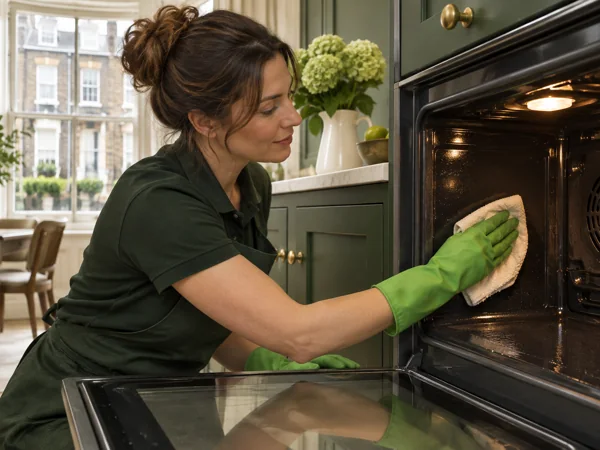
Show what you see on the glass door
Look at the door when it is cool, both in the closed position and from the oven opening. Tell us where the mark stands out and whether a light reflection helps you see it. It may be on a reachable face or visible between panes. The construction and condition of the door affect what can be reached. Mention any chipped edge or section of trim that has changed or moved. Share relevant details of past work on the glass and leave fittings in position for the technician.
If several oven fronts are the same colour, identify the correct one in a photo. Ask which faces can be treated before including specific glass work. The manufacturer’s guide may describe how the accessible glass is cared for. If the part is behind a patterned edge or outlined by an old permanent mark, show that during the first assessment. A change to the existing finish can stay visible even after reachable residue is cleaned. Decide which parts you want included once the technician has checked the position.
- Show which door has the mark.
- Describe the light and condition of nearby fittings.
- Keep the assembly in place during the first check.
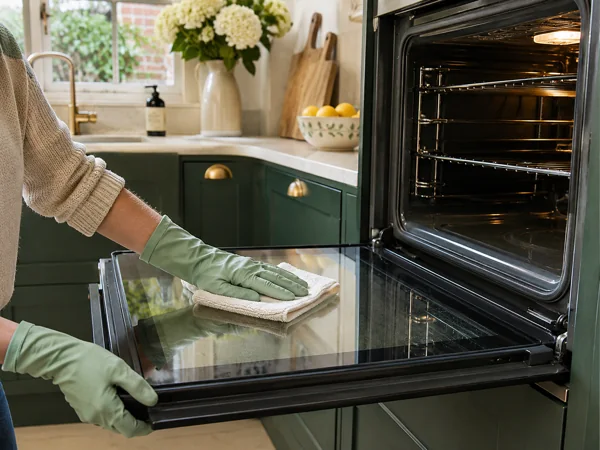
Identify what actually needs attention
| Item | What to give | What to assess |
|---|---|---|
| Main cavity | Controls and model | Exact oven |
| Grill insert | Which tray and compartment | Safe removal and treatment |
| Glass | Angle and edge condition | Reachable face |
Arrange space in a home where the kitchen has more than one use
Clear a stable counter and an approach that stays open when the oven door is down. Move any light furniture or loose items that block the way. Keep children and pets outside the working area as the technician handles components and equipment. If a flatmate needs to reach the fridge or a room beyond the kitchen, choose a route or time that works without passing directly in front of the open oven. Tell us where equipment can be set down and what facilities can be accessed if needed.
If the cooker is near the only clear doorway, leave the nearest surface free as well as room for the technician to walk through. A kitchen may serve as a home office or a space for food preparation before the visit. Clear laptops, bags and other household items first. Tell any person at home which counter can be used and which surfaces need particular care. If the oven is normally kept warm through the day, arrange when to turn it off so the appliance is fully cool at the start.
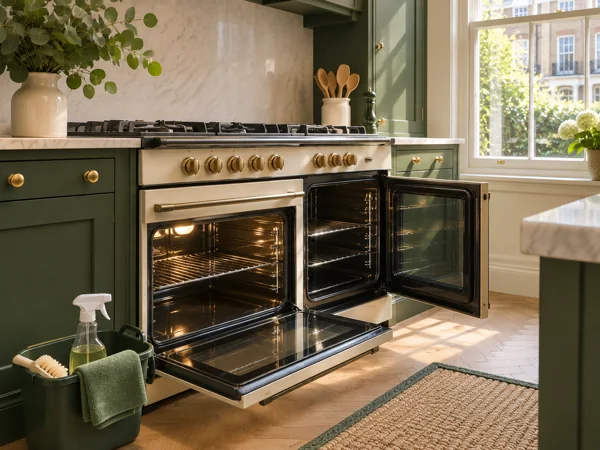
Name any optional extractor or hob parts
A gas hob with physical supports and a flat glass cooking surface need different detail. Describe the finish and the part you want the technician to consider. A border or separate splashback may have care needs apart from the hob. Ask about those parts individually and send an overview of where they sit. If another person wants to cook using a separate hob, check its location and timing against the visit. A well-defined list leaves the person giving access clear on which work has been agreed.
For an extractor, give the approximate height and filter type. A recessed filter, washable metal part and accessible cover are separate options to discuss. If the filter cannot be seen easily, use the model or handbook rather than attempting to take it out. Confirm what can be reached before optional work is added. If the hob and hood are in a different place from the oven, clear that area separately. Ask to see the written list so you can confirm which individual appliance or surface is included.
- Identify the hob material and specific parts.
- Mention extractor type, height and filter where known.
- Get each agreed item on the quote.
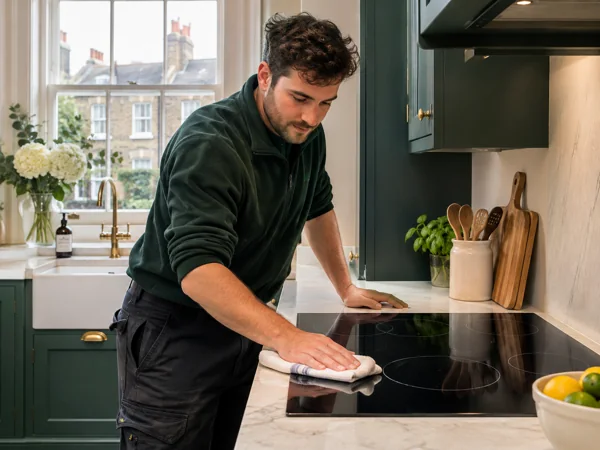
Pass on the return-to-use information at the end
Start with the postcode form. Gather the appliance and access information, and agree who can make decisions during the first inspection. If a tenant or other household member will be there on your behalf, give them the agreed item list and model. Tell us about any relevant limits on a communal entrance or lift. If a key or pass must be returned to someone, organise who takes care of that and when. Ask what can be done before agreeing any changes that the inspection makes necessary.
When the work is complete, ask which parts were treated and when the cooker can be used again. Confirm where the cleaned racks and trays go and share the advice with the next cook. If the technician left a part outside the work because of access, finish or condition, retain a note of the exact surface. Keep it beside manufacturer guidance. For an enquiry about a different cooker later, include its own model and condition instead of using a previous accessory description.

Keep a simple record for the next cook
| Detail | Before | After |
|---|---|---|
| Accessories | Count and position by cavity | Where cleaned parts belong |
| Known marks | Photo and treatment history | Which parts were treated |
| First use | When household needs the oven | Advice from technician |
Get an oven cleaning quote in Mile End
Request a quote with the oven type, number of cavities and any extra appliances.
Get a QuoteOther Cleaning Services in Mile End
Local references · Transport for London, Mile End Underground Station
Mile End oven cleaning questions
Can I enquire if the front door faces Mile End Road but the kitchen approach is from elsewhere?
Yes. Give the complete postal address and written directions to the approved door for equipment.
Can I quote just the single lower oven?
Yes. Show its position and give the model and relevant parts.
Should I remove a shelf that catches on one side?
Leave it for the technician to inspect and describe the position where it catches.
How do I show a mark I can only see through a reflection?
Send the whole door photo and describe the particular light or angle that reveals the mark.
Can I add a separate hob in a shared kitchen?
Yes. Give the hob type and parts to include and discuss how access will work while the kitchen is occupied.
Which contact should I leave for a pass return?
Give the person or reception desk that can recover it and confirm when they are available.