 Housekeeper
Care for built-up cooking residue
Oven Cleaning in Mayfair
Ask for deep oven cleaning in Mayfair when a fitted oven, range or grill has collected grease or spills. Tell us which surfaces and removable parts are affected and show the overall appliance. Give the agreed approach to your kitchen and the next time the cooker is needed.
Can I enquire for a Mayfair flat with a service entrance?
Yes. Provide the full postcode, approved entrance and contact. Give the lift or steps from there to the kitchen.
Can you assess grease where a liner meets enamel?
Yes. Show both areas and share the appliance model, care instructions and any treatment already used.
Write an account of the buildup before anyone reaches for a cleaner
Start with the oven cold. A brown halo around the place where a roasting tin sat can tell a different story from a series of specks up the side walls. Draw a simple line between grease on a removable piece and marks on the fixed lining. If you remember the meal that caused the worst spill, name the position of the dish and whether the cooker was heated again afterwards. Photograph the cavity from the front. Include a shelf or corner as a reference in any close-up.
If an area changed after a spray or self-cleaning programme, explain the sequence without guessing at the cause. A dark patch may be residue, a change in colour or damage to a coating. Ask the technician to identify the surface and assess it before discussing treatment. Grease can collect in the space behind a grill tray even where the glass door looks relatively clear. Include any spot that is visible only when the tray is taken out, provided it can be removed normally and the already cool cooker can be left safely in place.
- Identify the shelf and side nearest a spill.
- Say whether the cooker was used afterwards.
- Photograph the affected part and its surroundings.
Describe whether the door leads to an oven, grill or combination unit
Open or label the relevant door in photographs and describe its ordinary use. A cabinet with three matching fronts might contain an oven, a steam cooking unit and a warming drawer. A wide range may have an independent grill with a pan that looks like a thin shelf. Give the model from the appliance manual or any visible label near the opening. Keep fixed appliances in their housing. If a second cavity has a fault or has been left out of use, tell us before scheduling the clean.
A cooking area can have one low oven and an eye-level appliance that is used less often. The location and sequence of the doors can help if somebody else is showing the technician around. Name which cavity you want assessed on its own before listing the additional pieces. Note whether any trays or shelves were replaced and give a view of their finish. An appointment for the main roasting oven does not automatically describe what is expected for a smaller grill. Review the written items before confirming the visit.
Give the correct entrance and approved route in Mayfair
Westminster’s Mayfair conservation area directory includes Grosvenor Square. Use that as an orientation detail only if it is near your property and give your actual postcode and door. A building can face one street while reception and a service entrance are on a different side. Confirm the authorised point for a technician arriving with equipment. In a divided Georgian property, a lower-ground stair can arrive at a kitchen door independently of the central staircase. Mention the specific approach you want the technician to take.
If the appointment relies on permission from a concierge or building manager, identify the person who can confirm it. Ask where unloading is agreed, how far the route continues after the door and which lift or landing is appropriate. If access is through a shared court, confirm that any rear entry is actually usable at the agreed time. Give the name on the intercom as well as the flat and level. If someone will meet the technician elsewhere, state the point clearly and keep a contact available.
- Identify the building’s actual authorised visitor route.
- Confirm unloading and any required lift or stairs.
- Give the contact who can release a shared door.
Trace the residue to a cooking task
| Observation | What to describe | What the technician can assess |
|---|---|---|
| Halo below a dish | Position and recent use after the spill | Affected enamel and residue |
| Grease near a grill tray | Tray position and removable insert | Working surfaces and suitable parts |
| Mark at a liner edge | Care guidance and previous cleaning | Coating and possible change in finish |
Determine which cooking parts can be treated separately
Once the oven has cooled, clear food, loose foil and ordinary cookware. Put forward the wire racks, grill insert and removable accessories you want discussed. A compatible removable piece may be cleaned separately and soaked in a dip tank if appropriate. The technician can assess the material, coating and condition first. Explain which oven a piece belongs to, especially where two compartments share one width. Give the details of any replacement tray whose finish differs from the original piece.
Do not attempt to take out a shelf slide or side fitting if it catches or you are unsure how it is held. Show the technician the movement you normally see and where the resistance starts. Separate loose grill parts from fixed supports, with a removable handle placed beside its tray. Mention a bent corner or lifting coating before the piece is handled. Have space near the oven for an assessment without stacking all the accessories on the only work surface. Give the person opening the property the same parts list.
- Group loose accessories by cavity and purpose.
- Note worn coatings and replacement parts.
- Leave uncertain fittings for assessment.
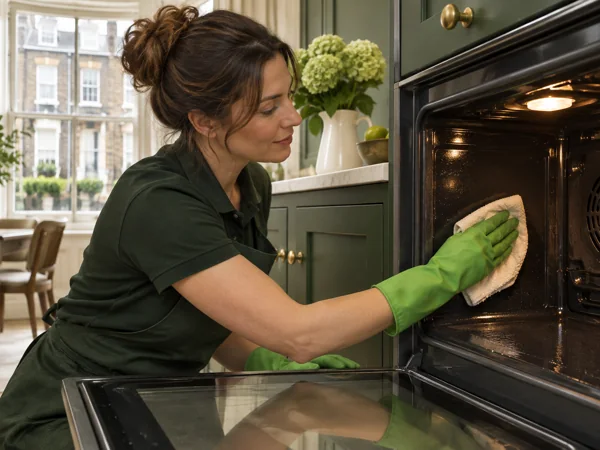
Report what can be seen around glass and enamel
A streak that looks as if it sits behind a pane may show up only from one side of an oven door. Describe whether it is visible open, closed or both. If the oven glass was replaced, point out the relevant panel and let us know about loose trim or a visibly worn seal. Construction and condition affect which surfaces can be reached. An overall picture of the door and a close-up of the streak can help the technician match it to the part of the appliance it appears to affect.
If you know that your oven has catalytic or other specialist liners, share the manufacturer's care information. Look for a change in surface where a liner meets ordinary enamel. Tell us if you already used a spray or programme there. Include pre-existing wear on the handle or nearby control markings when discussing the quote. A hinge or heating fault should be considered separately by an appliance specialist. Give the relevant oven condition before planning the clean so the technician can discuss work around it.
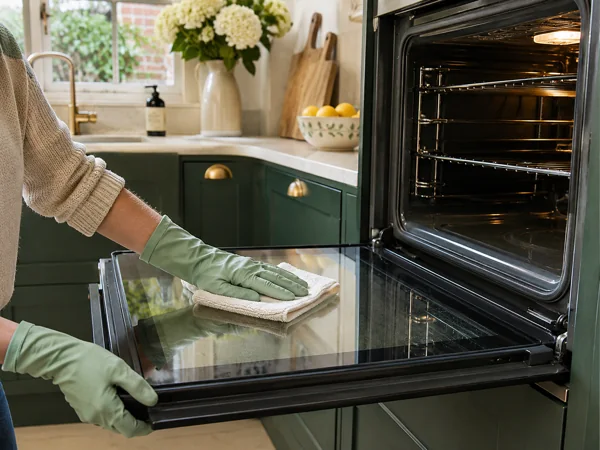
Identify matching doors and accessories
| Part | Useful detail | What to confirm |
|---|---|---|
| Roasting oven | Model and shelf height | Priority cavity |
| Independent grill | Door and pan construction | Parts covered separately |
| Auxiliary compartment | Normal use and control position | Whether the compartment is relevant |
Decide about the hob and extractor while you can see the whole installation
If you want to include a hob, say which type it is and what parts you want considered. A glass plate may need a check at one cooking zone or along an edge. On gas, give the number of supports and mention caps or a removable griddle as separately identified parts. Include any damage already present. Show whether the controls sit on the hob itself or on the oven front. Give the surface finish if known and make the desired areas clear in your photo.
For an extractor, identify the external finish and approximate height above the hob. Some filters may come away while other inserts are disposable. Describe the type you know and mention any cabinets that affect reach. If the hood sits over a kitchen island, describe where a technician can safely approach its visible cover. Ask for the hood, filter assessment and hob work separately if you want them included. Check the applicable items when you review the quote so everyone knows which appliances are supposed to be available.
- State hob type and visible condition.
- Give hood height, filter type and access needs.
- Keep additional appliance requests separate.
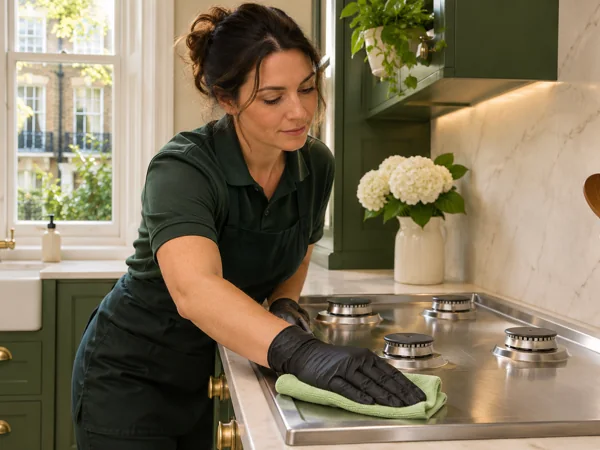
Leave a suitable work area and share the next use time
A large oven door can occupy much of the gap between a worktop and a kitchen island. Move stools and trays away from that route, and set aside an area for inspection. Clear food and everyday cooking items out of the appliance and leave it cool before arrival. Tell other people in the household that the oven and surrounding worktop need to stay clear. Keep children and pets away while the technician works. Agree use of water and power in advance if those supplies are limited because of other activity.
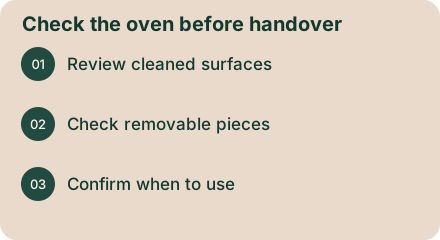
State the next time the oven is needed, particularly if it is being prepared for a meal or guest use. Ask about the expected return to use when you book and confirm it at handover. If someone other than the usual cook receives the handover, ask them to pass on which parts were treated, where each rack belongs and any advice you should follow about use. Keep the instructions with any notes on a surface that was already worn or left untreated.
- Confirm the next dinner or cooking deadline.
- Leave the room clear beside the open oven.
- Make sure the person cooking next gets the handover details.
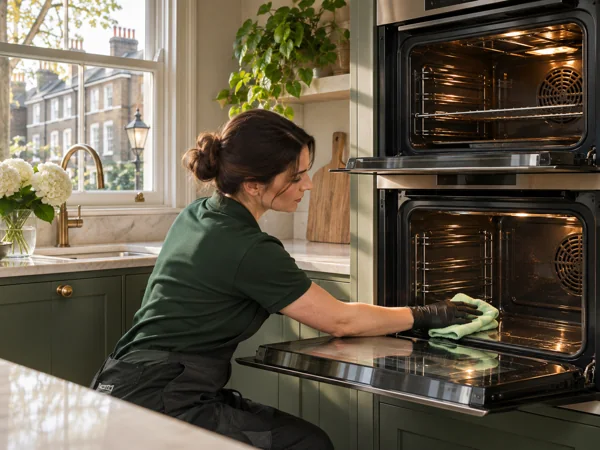
Review a quote that follows the real kitchen layout
Send the full postcode and your exact equipment route with the oven data. Give the model and relevant photos, then list the affected cavity and priority areas. Include the racks and grill parts you want considered and describe any separate hob or extractor. A line noting a visible existing flaw can help whoever meets the technician show the condition. If a second person is due to approve the quote, make sure they have the same appliance names and pictures. A clear description can distinguish several similar fronts in a fitted kitchen.
If the property is being prepared for a handover, compare the oven that is actually present with the inventory and identify any accessories the next occupier expects to receive. Confirm who can open the agreed entrance and who can be in the kitchen at the end. Check the written quote and tell us if a different entrance, appliance or condition changes the work you hope to arrange. Keep the access notes and the final list alongside the next time the cooker is needed.
Check the approved approach and return to use
| When | What to give | Who should know |
|---|---|---|
| Before arrival | Entrance, lift and unloading | Building contact |
| At assessment | Priority residue and accessory list | Person present with the technician |
| At handover | When the cooker can be used | Next cook or resident |
Get an oven cleaning quote in Mayfair
Request a quote with the oven type, number of cavities and any extra appliances.
Get a QuoteOther Cleaning Services in Mayfair
Local references · Westminster City Council – Mayfair conservation area directory
Mayfair oven cleaning questions
Can I request one roasting oven rather than a whole range?
Yes. Identify the relevant cavity and the trays and shelves you want considered.
Do I need to tell reception about the oven model?
Share the model with the person meeting the technician. Reception can confirm the authorised entrance and equipment route if required.
Can you tell what is under a burnt area from a photo?
A photo locates the mark. The technician can inspect the finish and discuss what treatment is suitable.
Should I pull a fixed rail out of its support?
Leave unfamiliar or sticking parts installed and show where movement changes.
Can the extractor be accessed above an island?
Describe its height and the approach from each side. Ask which surfaces and filters can be assessed.
How should a different person receive handover?
Make sure they have the agreed item list and can ask when the oven may be used and pass on that advice.