 Housekeeper
Signature care for well-used ovens
Oven Cleaning in Leytonstone
Arrange oven cleaning in Leytonstone for the cooker, grill or range you use. Identify the exact cavity, glass or trays you want assessed and give a photo of the whole installation. Include the visitor entrance and any steps or gates on the way to the kitchen.
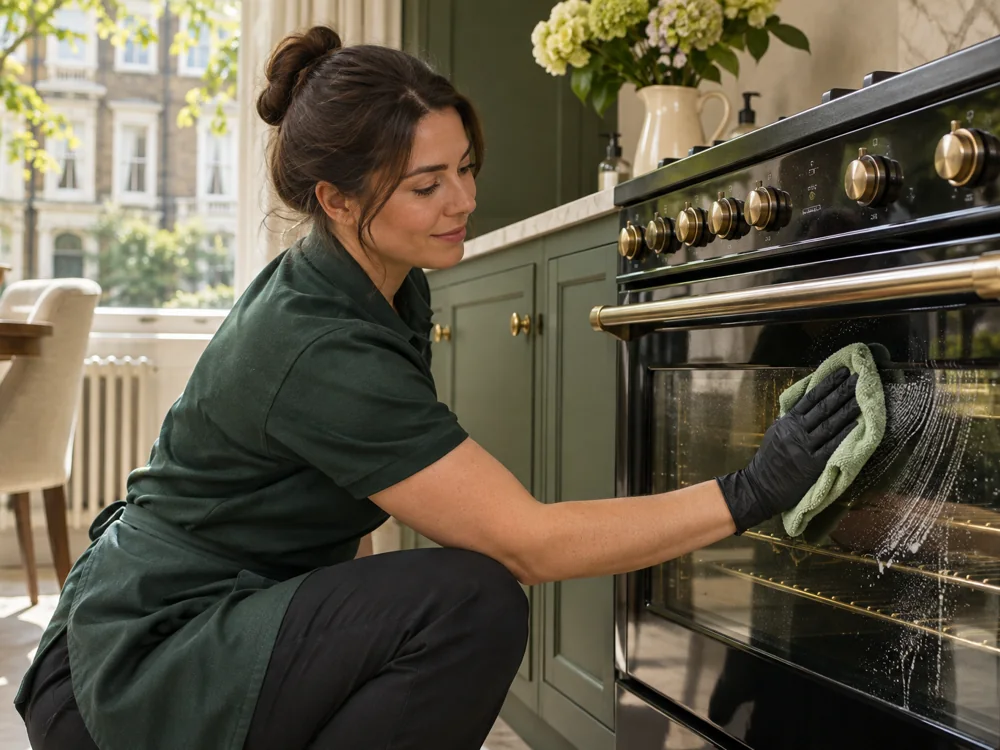
Can I request fitted oven cleaning near Leytonstone station?
Yes. Give the full postcode, your actual entrance and the cooker model or type. Include any steps to the kitchen.
Can I include a tray with a separate coating?
Yes. List the tray, finish and cavity it usually fits so its condition can be assessed.
Begin with the working layout in front of the cooker
Photograph the oven from far enough away to show the door, controls and nearby surfaces. If the fitted cabinets contain a microwave or warming drawer with matching handles, identify the one you want assessed by position and purpose. A separate grill can have a smaller door or share a compartment with a second oven. Give the model from paperwork or a visible label near the opening while it is cool. Leave the oven in its normal fitted position and include a side photo if an island or cabinet affects the way the door opens.
Choose a priority cavity and identify the accessories that usually sit inside it. A range can have separate roasting and baking ovens beside a grill or storage compartment. Say which ones are working and which one you want treated. Report any fault before booking, including a loose door, seal or unreliable temperature, and ask an appliance specialist separately about operation. If somebody else will be home at the appointment, give them the full photo and a short note about the door, affected surfaces and any loose pieces they need to show.
- Identify the actual oven in the full cabinet.
- Show which compartment is the priority.
- Mention any known work or damage to the appliance.
Explain where the Leytonstone property is reached from the street
Transport for London gives Church Lane for Leytonstone Underground station. If you mention the station as a nearby reference, give your own full postcode and the visitor entrance you want used. The written address may direct a person to a frontage that does not serve the kitchen. In a divided house, explain which bell reaches your flat and whether steps or a gate lead to a separate floor. If the apartment has a service stair or another lift, confirm the property allows it for equipment before giving directions.
Give an agreed unloading point and identify each important turn between there and the kitchen. With a shared drive or courtyard, confirm whether a gate belongs to another part of the building and who can open it. Tell us if a narrow entrance or stairs remain across a landing after the lift. If someone is meeting the technician before reaching the front door, agree the exact place. Make sure the person providing access can take them all the way to the appliance and show the area near it.
- Give the actual address and full postcode.
- Say which steps, lift or gate will be used.
- Confirm the route from the agreed unloading point.
Show where the residue has built up and what it is beside
Look into the oven while it is cool and describe the affected area in terms of shelf height and distance from the door. A single baked spill under the lowest rack can look different from drops of grease on the side walls after regular roasting. A grill can have the most residue on an insert or on the edge above its opening. Include one photo of the whole space and one to show the mark. Explain if the cooker was used again after the spill and which food or pans were involved.
Tell us if you have already used a spray or self-cleaning cycle. Some marks are cooking residue, while others show a change in the colour or finish. The technician can inspect the area before recommending treatment. Share the appliance maker’s guidance for any self-cleaning or catalytic liner. Note where a mark crosses a seam between the liner and the enamel. If a patch looks as if the coating is peeling, describe that separately from residue and include a photo of the surrounding finish.
- Describe the location using a shelf or door reference.
- Tell us about continued heating and prior cleaning.
- Identify existing wear beside the mark.
Show the fitted oven in its place
| Feature | Detail to send | What to agree |
|---|---|---|
| Main door | Position and model | Priority compartment |
| Separate grill | Door and tray construction | Which pieces to assess |
| Adjacent furniture | Door swing and clear surface | Available working area |
Separate loose racks and coated pieces from fixed supports
Remove food, ordinary cookware and loose foil from the cool oven. Set out the trays, wire racks and the grill insert you would like discussed. Suitable removable pieces can be cleaned separately and may be soaked in a dip tank depending on their material, finish and condition. A spare tray with a non-stick coating can have different care from the original wire rack. Tell us if any accessory belongs to another cooker or which set was replaced. If a pan has a removable handle, leave it beside the original tray and insert.
Leave a fitted rail in place if the release is unfamiliar or a shelf tends to catch. Point to where the movement changes and explain which side appears uneven. Set out the loose parts by cavity so they are easy to match with the specific oven. Mention a worn finish, chipped corner or bent rack before someone decides whether it can be treated. Keep a clear worktop for the technician to look at each part. If someone else will open the property, tell them exactly where the requested accessories are kept.
- Group the accessories by oven or grill.
- Tell us about replacement trays and chipped finishes.
- Leave unfamiliar fitted supports in their normal positions.
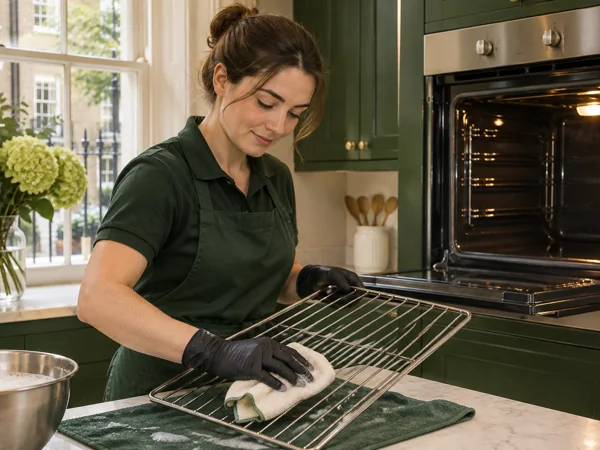
Ask for the correct glass, controls or trim to be assessed
Check the mark with the door both open and shut when the oven is cool. Some film is easier to see from inside the cavity, while a streak behind a pane may only appear from a particular angle. Tell us where it is visible and mention any past glass replacement or loose surround. The technician can assess which surfaces are reachable based on the design and condition of the oven. If the glass is particularly marked by the handle or hinge, include those details in the photo to locate it.
Printed controls and cabinet trims close to the oven may show wear independently of the glass. Identify the exact surface you want inspected and point out already faded lettering or a chip on the edge. Tell us if a cabinet panel catches as the door opens. A photo of the installation as a whole can be useful alongside a close-up. During assessment, ask about each affected material rather than assuming all nearby surfaces are handled together. Report any door problem before the technician is due to arrive.
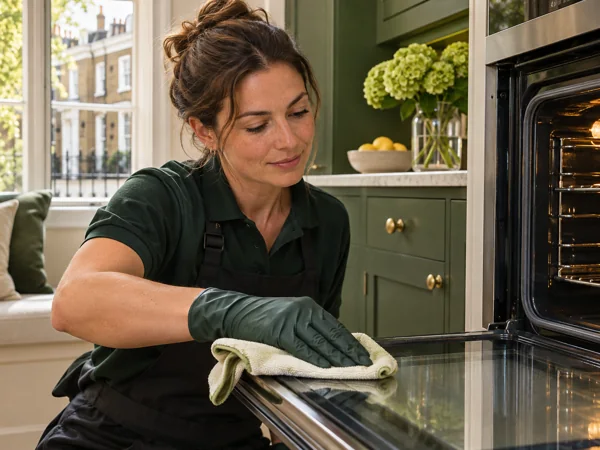
Add a hob or extractor only when you know what to ask about
If you also want the hob considered, give the type and finish. List gas supports and caps separately or identify the cooking zone on a flat plate. A range may have a dedicated griddle with a different coating from the rest. Include the controls in your photo if they sit on the same front as the oven. Give the part you want assessed and any existing chip or mark. Ask for the described hob work to appear separately on the quote rather than assuming it is included with the cavity.
An extractor can be hidden beneath a cupboard or fitted over an island. Show the visible outside cover and give its approximate height above the hob. If you know the filter type, say whether it is metal mesh or a disposable insert. Ask what can be assessed on the cover independently of the filter and show any part of the kitchen that makes access awkward. Check which items are agreed and explain whether another appliance needs to stay in use while the oven is being cleaned.
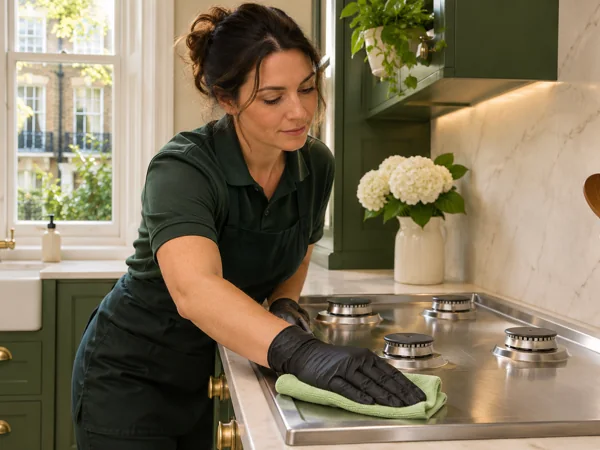
Identify each affected finish or part
| Part | What to describe | What can be checked |
|---|---|---|
| Enamel base | Baked spill and previous products | Deposit and condition |
| Glass door | Mark visible at one angle | Likely surface and access |
| Coated tray | Replacement and signs of wear | Suitable separate treatment |
Leave space for assessment and agree return to use
Stop using the oven before the appointment so it is cool when the technician arrives. Clear food and utensils from the closest worktop and move stools or household items that would limit the door opening. If the kitchen is a shared route to other rooms, explain how people can avoid the work area. Keep children and pets away while parts are handled. Discuss water or power access before the visit if something is restricted. Tell us the next time you need to cook or use another appliance in the same area.
At handover, ask which pieces and surfaces were treated and when the oven can be used again. Check where a removable rack or tray fits and whether a component was left in place. If the person who cooked last is different from the person using the oven next, arrange to pass on the instructions. Leave time for the technician to explain anything about a specialist surface or fitting. If another person holds the keys, give them the agreed description so they can check the results against the list.
- Leave the cooker cool and immediate area clear.
- Give the next time the oven is needed.
- Arrange for the next cook to receive the handover.
Check the quote against the real kitchen before confirming
Use the postcode enquiry to send the actual entrance, model and photos. Name the affected cavity and the parts requiring assessment, then list any separate hob or extractor. Give the next planned use and say who will show the appliance. Mention known faults or changes to accessories independently of cooking residue. Check the quote against the cooker in the room, especially where matching door fronts can be confused. If you find an accessory after the list has been discussed, ask about adding it before the appointment.
For a move, compare the inventory cooker, accessories and separate appliances to those you can see. Coordinate the oven visit with any other work so there is time to prepare the kitchen and receive the handover. Confirm the key holder and actual route from the building entrance. If the planned approach or timing changes, send current information. Leave the final quote and photos with the person who will be there so they can check the agreed items and ask when the next occupier can use the cooker.
Plan access to the Leytonstone kitchen
| Step | Instruction to give | Who can confirm it |
|---|---|---|
| Street | Property postcode and loading point | Resident |
| Building entrance | Correct bell, shared gate or steps | Person opening the door |
| Kitchen | Cooker clearance and next planned use | Person receiving handover |
Get an oven cleaning quote in Leytonstone
Request a quote with the oven type, number of cavities and any extra appliances.
Get a QuoteOther Cleaning Services in Leytonstone
Local references · Transport for London – Leytonstone Underground Station
Leytonstone oven cleaning questions
Can I give a different door from the one used for deliveries?
Confirm the approved route and tell us which door the technician should use with equipment.
How can I identify my oven if the front looks like the microwave?
Show both appliances in one photo and describe each one's position and cooking function.
Can you assess the upper grill separately?
Yes. Give its door position, expected tray and insert, and any residue you want considered.
Can you see whether a door mark is inside or between panes?
Describe the mark from more than one angle. The technician can inspect the door and what is reachable.
Should I take out a fixed runner to let you see the wall?
Leave it in its usual position, particularly if it sticks or you are unsure of the fixings.
Can somebody else ask about oven use afterwards?
Yes. Make sure they receive the handover and pass on what was cleaned and when the appliance can be used.