 Housekeeper
Detail-led care for your oven
Oven Cleaning in Kentish Town
Arrange oven cleaning in Kentish Town around the cooker and fitted finishes in your home. Identify the cavity and accessories to assess, give the model if known and show any specialist lining. Include the actual visitor approach and the time you next need the oven.
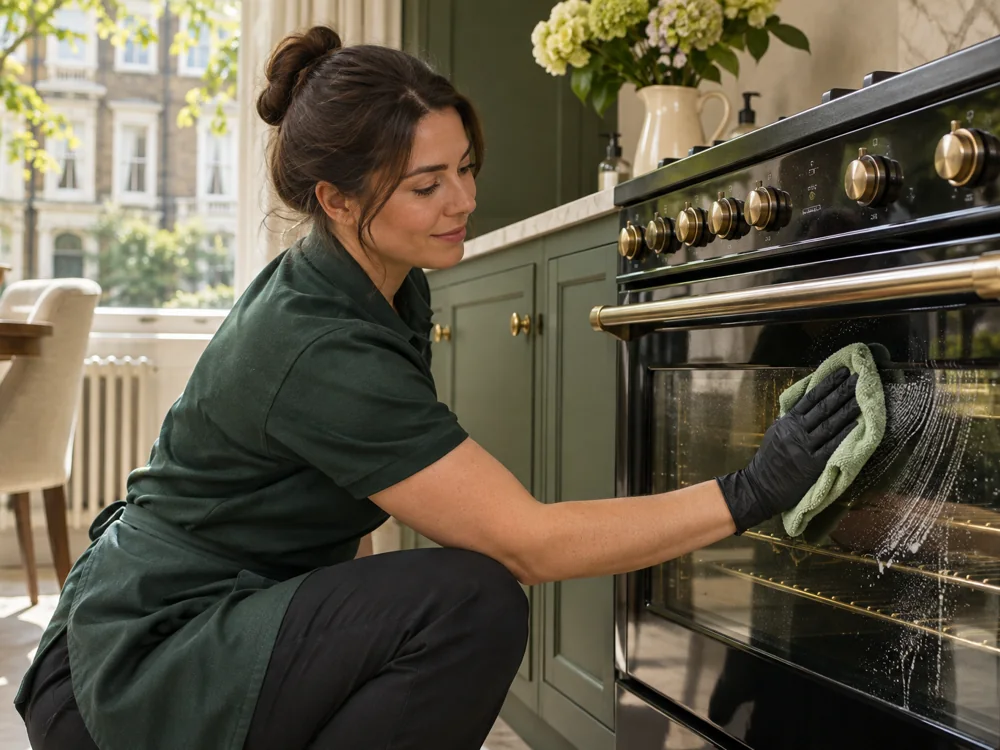
Can I request a fitted oven clean near Kentish Town station?
Yes. Give the address postcode, kitchen level and actual visitor entrance. Tell us about a separate stair or intercom.
Can I include the tray but leave a fitted runner in place?
Yes. Describe both. The technician can assess the parts and condition before discussing which can be moved.
Record the main oven configuration before discussing treatment
If the oven is fitted at eye height, stand back far enough to photograph the entire cabinet. A matching door can conceal an independent grill, a compact cooking appliance or a storage compartment. Identify the door you want assessed and describe what it does. Give the model when available from the paperwork or the visible label near the opening, with the appliance cool and in place. A range with a smaller oven may use one set of controls for both cavities, so include the full panel in a picture.
Tell us how you normally use the cooker and any parts that were replaced after it was installed. A separate upper grill may have had a new pan or replacement insert that needs to be considered by material. If another person will provide entry, send them a photo marking each agreed cavity. That person can show the technician the full set rather than mistaking a matching microwave or warming drawer for an oven. Mention the position of any fixed cupboard that affects access with an oven door open.
- Mark the relevant compartment on a wider photo.
- Include the existing controls and visible model details.
- Identify any parts bought to replace the originals.
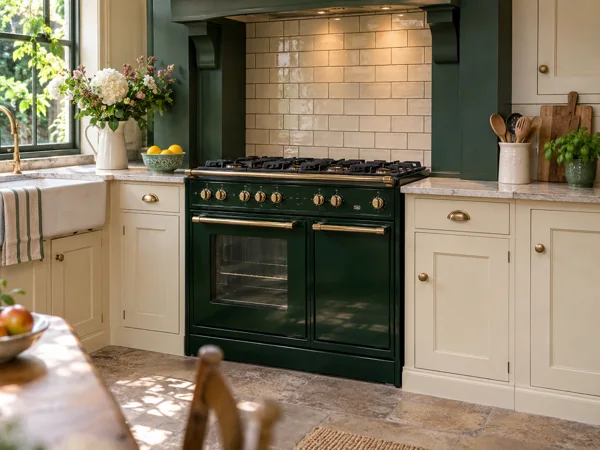
Explain how to reach the Kentish Town property
National Rail lists Kentish Town station on Kentish Town Road in NW5. If people use the station to find your part of the area, give the full address as well, plus the actual doorway a technician should approach. A flat above a street-level shop can have a separate bell or a staircase reached from a side road. Give the label on the intercom and the flat number. If there is an entry below pavement level, describe the steps and explain which door somebody uses once they reach the landing.
Find out where loading is agreed and how the person can get from there to the kitchen. For a divided house, say whether a short shared corridor leads to an inside door. Tell us if a gate or door is normally kept shut and who can provide entry. If the kitchen is farther back than the rest of the flat, give the route through communal parts and any steps on the way. Agree with the person handling the building whether the technician should call from the pavement or wait at a different entrance.
- Give the complete address and visible bell name.
- Explain any lower-ground stairs or side door.
- Confirm the actual route from unloading.
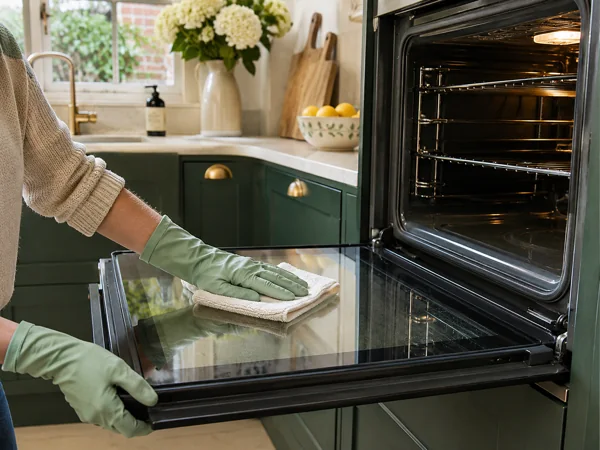
Describe fitted appliances by location
| Part | Photo or detail | What to confirm |
|---|---|---|
| Main oven | Control panel and cavity position | Model and accessories to assess |
| Upper grill | Position relative to oven | Tray and wire insert |
| Cupboard edge | Photo showing door swing | Clear access to the appliance |
Show which surfaces are affected and how they are made
The finish at the base of an oven can be ordinary enamel even when the side wall has catalytic or another specialist liner. Refer to the appliance guidance if it names those coatings. Note where a spill reached and what was used on the area afterwards. A dark mark next to an open seam can be cooking residue, older discolouration or a change to the finish. The technician can inspect the area before discussing treatment. A full view of the cavity shows the panel layout better than a close photo alone.
If you have used an oven spray or run a self-cleaning programme, say when it happened and which surfaces it affected. Explain if any grease remains mainly on the surrounding frame or inside the oven. Show visible wear as a separate point, including worn control markings, cracked trim or a chip. Mention heating or door faults in advance. Ask an appliance specialist separately about any problem with operation, while the technician reviews which parts can be cleaned in their present condition without assuming they can all be handled the same way.
- Share guidance for unusual coatings.
- Describe the treatments already used.
- Point out existing wear and known faults.
Arrange for compatible parts to be inspected separately
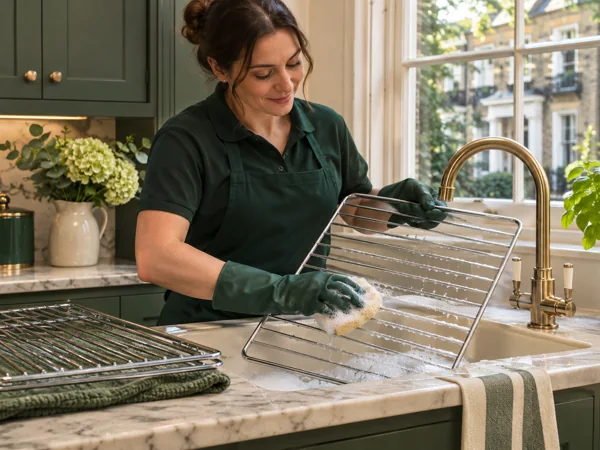
List any racks, trays, removable inserts or shelf sets you would like assessed. Suitable removable components can be washed separately and may be soaked in a dip tank where appropriate. The material of each part, its construction and wear influence what can be discussed. A coat on a tray may have lifted while wire supports remain intact. Tell the technician if an unmarked rack was bought separately and show which cavity it normally belongs in. A curved tray handle or loose insert can be stored apart from the pan it fits.
Take out food, cookware and loose foil when the appliance is cool. Leave a fitted runner in place where you do not know how it comes out. Show any sticking point and explain whether a loaded shelf normally moves along that track. Present only the accessories you want looked at and leave room on a clear worktop to assess them. Keep the smaller oven’s pieces in a separate group. Someone unfamiliar with the cooker can mistake similarly sized trays even if they serve different purposes.
- Name the parts you want assessed.
- Identify original and replacement accessories.
- Show issues with runners without forcing them.
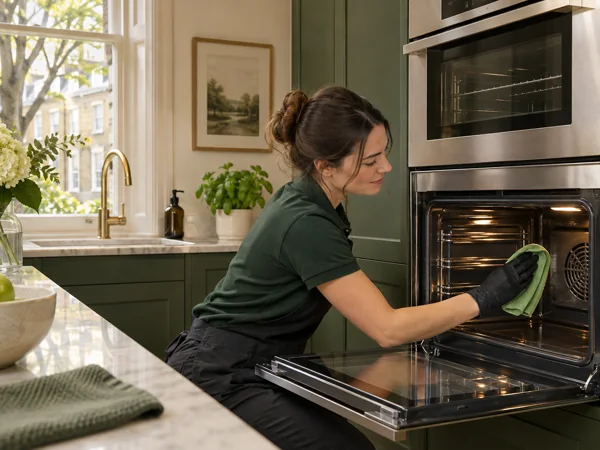
Distinguish surfaces affected by food residue
| Surface | Existing condition to show | Question to discuss |
|---|---|---|
| Specialist liner | Coating guidance and affected area | Suitable treatment |
| Enamel floor | Visible overflow or old mark | Sign of deposit or surface change |
| Door glass | Position and previous replacement | Accessible panes |
Assess the door and nearby cabinet finishes together
Look at the oven glass with the door open and shut while it is cold. Describe which angle makes the grease, cloudy patch or streak visible. If it looks like a mark behind a pane, give the position near the edge or handle. Access to layers of glass can vary by model and condition. Tell us about replacement panes, a loose strip of trim or any seal that already has damage. The technician can check the door before advising which surfaces can be reached.
The control area and cabinetry beside the door can have their own finish. Identify printed markings or polished metal exposed to grease, and mention any existing wear. Take a photo that shows the nearest cabinet edge if it looks like it touches the door while it moves. Clarify if you want the relevant face or handle assessed as well as the glass. The technician can discuss each surface as part of the quote and explain any steps worth taking to keep the surrounding area clear for work.
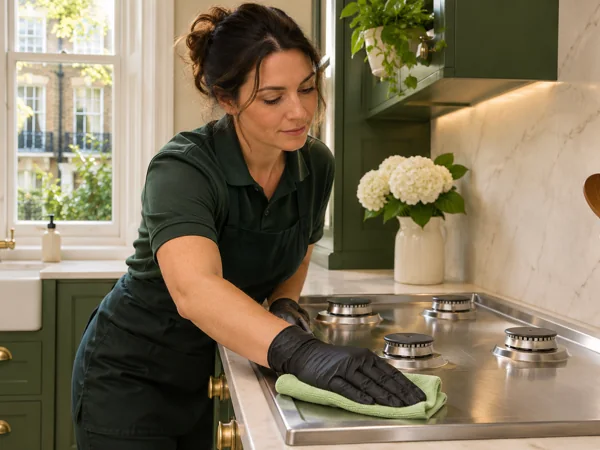
Add a hob or extractor by listing its actual construction
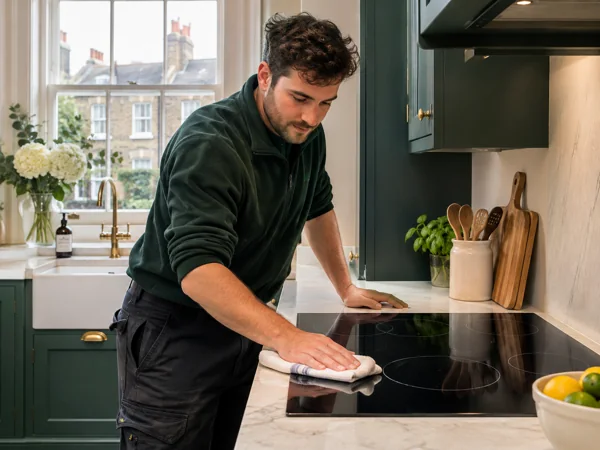
If the hob also needs an assessment, describe the type and controls. With gas, show the separate supports and burner caps and say which ones you would like treated. With a glass surface, mention the specific zone or edge where residue has collected. A range may have a separate griddle plate that is best identified by its material and finish. Send the photo alongside the oven information but keep the hob on its own line in the enquiry so it can be reviewed individually.
Give the approximate height of the hood above the worktop and note how it is mounted. A concealed extractor can have a removable filter that is only visible from below. Mention the appearance of the outer panel and the type of filter if known, distinguishing metal mesh from a disposable insert. If a cabinet or shelf limits access, show the wider area in the photo. Ask to list the agreed components separately so the person confirming the quote can see what is covered.
Clear the door swing and decide when to resume cooking
Before the technician arrives, keep the cooker cool and no longer in use. Make sure the door can open without hitting furniture, and move utensils and food away from the worktop where parts may need to be handled. If the home uses the kitchen as a route to another room or the garden, explain what access needs to remain during the visit. Keep children and pets away from the work. Consult us in advance about power and water where normal kitchen supplies cannot be used.
Tell us when you plan to use the cooker next. If somebody needs to prepare a meal soon after the appointment, give that timing when discussing the booking and check it again during the handover. Ask which parts were treated and how to return the oven to use. Record whose shelves are in each cavity if two cooks keep separate accessories. A short note is helpful when the person who arranged access is not there when the kitchen gets used again.
- Keep the cooker cold and the worktop clear.
- Discuss any other planned kitchen use.
- Ask when you can cook again.
Confirm how to reach the oven
| Location | Useful instruction | Who confirms |
|---|---|---|
| Street | Actual residential door and bell | Occupier |
| Shared approach | Internal door and stairs | Key holder |
| Kitchen | Working space and next meal | Person using the oven |
Share a single quote request with the person who will open up
Use the postcode enquiry to send an itemised list of the ovens and accessories you want discussed, along with the model and photographs. Give any condition that can be seen and the address instructions for the technician. Include the next planned cooking time and mention another appliance if you want it assessed separately. Once the quote is available, confirm that the list matches the actual cavity and parts. Check that the person providing access knows what to show and can answer questions about the kitchen layout.
For a tenancy handover, match the oven and any other quoted appliances to the inventory. Confirm who can provide entry and who will be present at the end. If a spare tray was not on the initial request, or the landlord requires a different entry point, send the new details before the visit. Keep agreed instructions and the appliance list together for handover. This is useful when a resident, agent and new occupier each have a different role in the property.
Get an oven cleaning quote in Kentish Town
Request a quote with the oven type, number of cavities and any extra appliances.
Get a QuoteOther Cleaning Services in Kentish Town
Local references · National Rail – Kentish Town station
Kentish Town oven cleaning questions
Do I need to find the full model number?
Send it if visible in the paperwork or on the oven door label. Include a clear photo of the whole cooker if you cannot read it.
Can I ask about a replacement shelf and original grill pan together?
Yes. Identify each piece individually so the finish and condition can be considered.
What if the oven trim is worn near the handle?
Point it out before the visit and show the mark in relation to the door glass and controls.
Can you reach a lower-ground kitchen?
Describe the entrance, steps and landing when requesting the appointment so the approach can be discussed.
Can I ask about a filter without taking it out?
Yes. Describe the extractor and send a safe view of the cover and model where available.
Do I need to keep the oven cool if just the shelves are included?
Leave the oven cool and explain which shelves are inside or stored separately so they can be assessed.