 Housekeeper
Care for built-up cooking residue
Oven Cleaning in Kensington
When a sticky film collects around the oven door or a tray spills into the cavity, describe what has built up and where. For an oven cleaning enquiry in Kensington, send the appliance details alongside the full property postcode. We can discuss the accessible surfaces, suitable removable parts and the working space at the cooker.
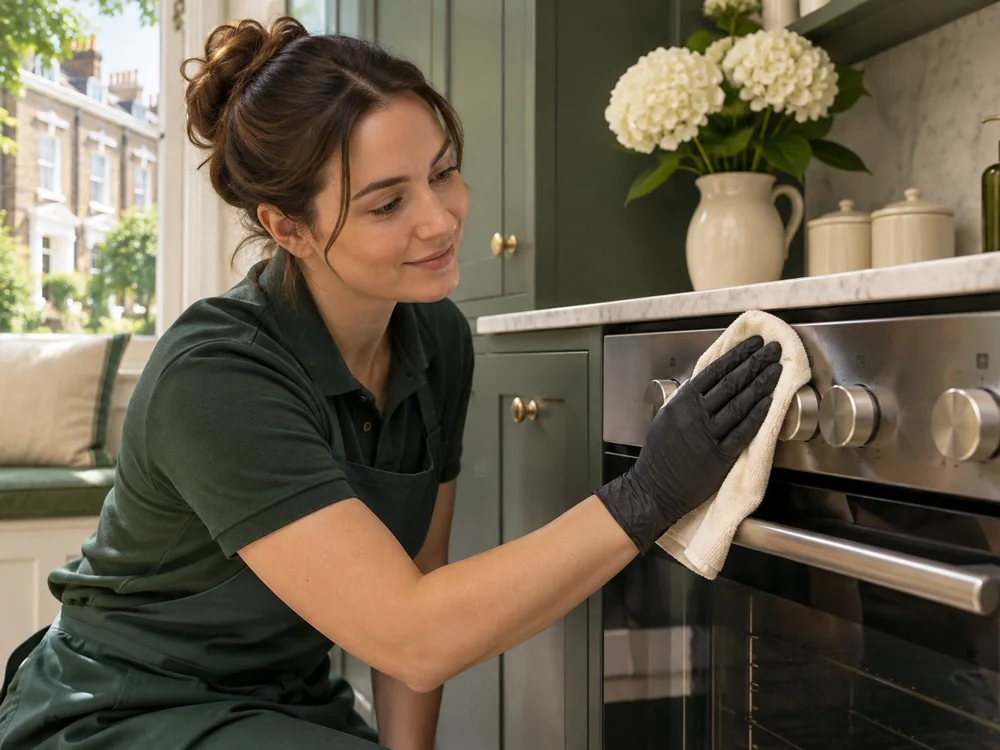
Can I enquire for an oven in W8?
Give the full property postcode and describe the oven so we can check your address.
Can I include sticky racks in the same request?
Yes. Tell us how many racks there are and point out any coated or sliding pieces.
Trace where cooking residue has collected
On a cool appliance, look along the base, the door edges and the ledges that support each shelf. A roasting dish that overflows once can leave a single layer on the floor, while regular use of the grill can leave a coating above the top rack. Mention both if they occur in the same oven. The technician can inspect where the deposits end and the original surface begins. A photograph from the opening can help show which compartment you mean and how far a spill spread.
Tell us how the marks have changed since you first noticed them. If a thin film became hard after several meals, say where it looks thickest now. Include chips or scratches that were already present so the technician can examine the relevant finish before choosing a method. The shape of a mark under a tray can also be useful, especially if it crosses into a recess that is hard to see. Avoid reaching through the opening to get a close-up of a concealed surface.
- Name the compartment with the heaviest deposit.
- State where grease extends beyond the base.
- Point out visible changes to the original finish.
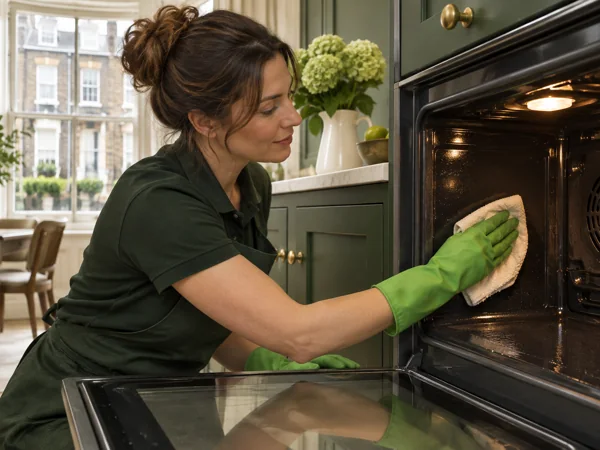
Describe recent treatments before adding another
Write down the name of any spray, paste or other household product used in the affected area, alongside roughly when it was applied. Mention if it was used on the racks, on the main oven floor or solely on the glass. A note about where a product was applied is more informative than a general description that the oven was cleaned last week. Retain a picture of the label if you still have it, so the technician can understand which product was involved.
For an oven with an automatic cleaning programme, tell us what the manual calls the programme and when it last completed. Some models use specialist liners or specify a procedure for their removable shelf supports. Bring those instructions into the discussion before any treatment is agreed. If you find powdery material or a sticky film after a programme, describe the residue separately from food spills. Show the affected area during the initial check, particularly if what you see differs between the lower and the upper cavity.
Make a list of the parts that come out
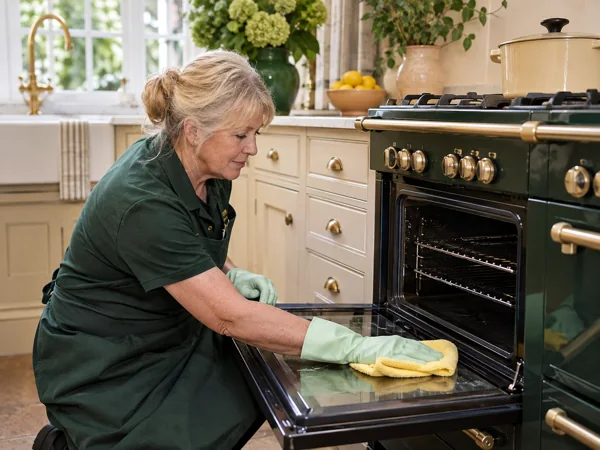
Count the wire shelves, grill inserts and trays you want us to look at. Distinguish original oven accessories from a large roasting dish that was bought later. A tray with a removable insert may have two different materials, and a shelf runner that extends on bearings differs from a plain rack. Say what you know about their finishes when you enquire. The technician can check the design and condition during the visit and determine which components can be removed safely. Suitable parts can be soaked in a dip tank.
If a tray sits on a shelf that has become difficult to move, leave it for the initial assessment after the appliance cools. Tell us which position it sticks in and how often you have used it. Set empty loose dishes aside away from the working area, and mention any loose item you want considered separately on the quote. If the original manual includes an illustration of the runners, have that page available. It may identify fixing points or a coating that affects how the components can be handled.
- Count each plain rack, shelf and grill insert.
- Describe sliding assemblies and unusual finishes.
- Leave parts that are hard to move for inspection.
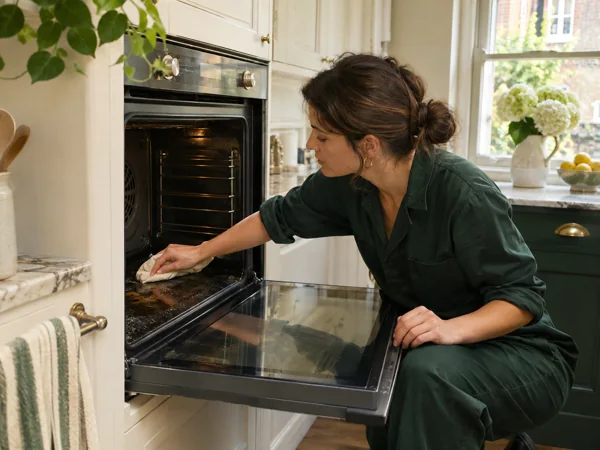
Describe where grease sits
| Location | Observation to send | Assessment on arrival |
|---|---|---|
| Lower floor | Shape and age of a baked spill | Residue and exposed finish |
| Upper cavity | Position relative to the grill | Accessible surfaces and deposits |
| Door | Visible side or possible space between panes | Construction and condition of the door |
Locate haze on the door glass
Look at the glass when the appliance has cooled and the room is bright enough to see an outline. Grease immediately inside the oven door may be accessible from the cavity. A yellow streak visible behind the reflection may sit between panes. Tell us where you can see the mark most clearly and whether it changes as you move around. Access between panes depends on the door construction and condition. Ask about that part if it is important to the quote, particularly when there has been a previous intervention on the door.
Include observations such as trim that shifts or a visible chip along a glass edge. The technician can consider those details before attempting to clean an accessible face or handle a removable part. If a cloudy patch stays in exactly the same place after you have wiped the accessible side, describe that history during the assessment. A photo taken with the door closed and another from the open position can help us understand what you see. Keep fingers away from exposed edges and leave dismantling for the inspection.
Allow space for an in-place assessment
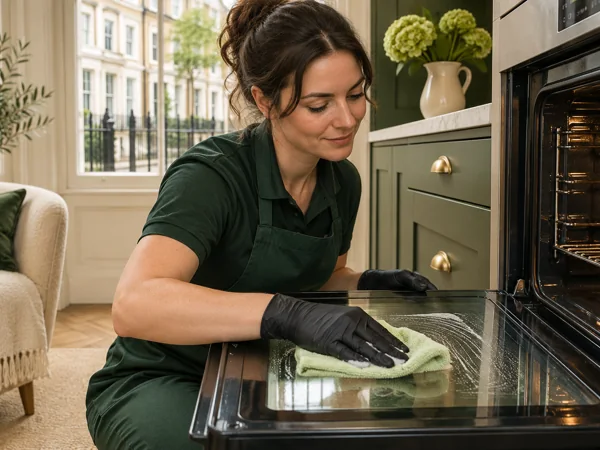
Clear the counter immediately beside the appliance and leave enough room for the door to open. Put ingredients and personal utensils elsewhere so they stay out of the area while parts are being handled. If the oven sits opposite a movable trolley, park it in a different room before arrival. Decide where you will eat or work if the kitchen is also your dining room. A clear path past the cooker is particularly helpful when the kitchen is at the bottom of stairs and the doorway opens towards it.
Leave the cooker off and cool, and discuss any relevant water and power arrangements before the visit. Tell us if room access is restricted by a kitchen fitting, stepped floor or fitted table. A counter near the oven and one on the far side of an island are different working areas when the oven door is open. Keep children and pets away from both areas while work goes ahead. If someone else is meeting the technician, give them the layout details so they can point out the agreed space.
- Clear the counter closest to the oven.
- Move portable obstructions out of the doorway.
- Agree kitchen access if someone else is at home.
List parts by construction
| Part | Detail to supply | Decision to discuss |
|---|---|---|
| Wire shelves | Number and whether all belong to this oven | Suitability for removal and soaking |
| Sliding runners | Position and movement | Safe handling and finish restrictions |
| Grill insert | Whether it sits in a separate tray | Which pieces belong on the quote |
Explain the route into your Kensington kitchen
The Royal Borough of Kensington and Chelsea lists Leighton House on Holland Park Road and names High Street Kensington among the nearby stations. A street or station can help orient an arrival message, but the complete postal address and authorised door are what we need for a visit. Explain if the kitchen is reached through a separate lower-ground entrance or a shared lobby. Mention any steps down from the pavement that an arriving technician might miss when looking at the main entrance from across the road.
For a conversion with door numbers beside two sets of steps, give the number on the bell and say how the visitor should get from the street to that bell. At a block with shared access, check if reception requires visitors to bring equipment through a specific entrance. Tell us about any confirmed loading arrangement and how far it is from the kitchen. If access requires an appointment with a building contact, agree their availability before asking us to confirm the oven visit.
Agree any grease work around the oven
For the hob, identify the material and tell us where the grease has spread. Include a separate request for a gas hob with pan supports or a flat hob with residue concentrated at one side. A built-in cooker may sit below a splashback made of another material, so ask separately if you want that surface considered. Tell us about any manufacturer guidance for the finishes and send a photo showing the actual width and arrangement. We can discuss which items belong alongside the oven on the quote.
Describe the extractor by its position, height and filter type where known. A metal filter that can be reached from below and a disposable insert inside a cabinet are different items to discuss. Mention the upper cover if grease is visible there and ask what accessible surfaces can be included. A quote listing each appliance makes it easier to check that the part you meant is covered. If the hob is in daily use, agree when it can be left free alongside the cooker.
- Describe the hob finish and specific surfaces.
- Tell us where the extractor opens and how high it sits.
- Confirm optional work as separate items.
Check what has been cleaned before cooking again
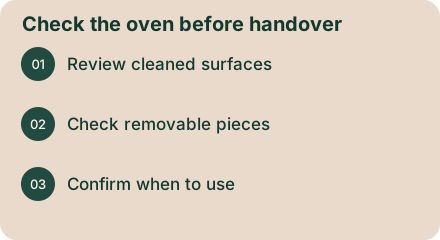
Start your enquiry with the postcode form. Keep a list of the cavities, shelves, trays and optional appliances ready to discuss before you book. Show the technician the areas of greatest concern so they can work through those points during the initial check. Ask which marks may remain visible after cooking residue has been removed. That conversation can be especially useful for older enamel or around a door where the condition of the trim affects access. Keep any instructions from the maker handy for the visit.
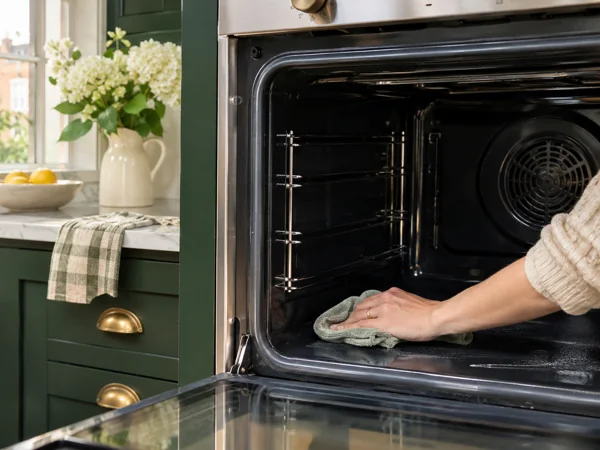
At the end, review the areas discussed and ask when you can use the appliance again. Confirm which removable pieces were cleaned and how the technician positioned them. Pass those details to anyone who will be using the kitchen later. If the visit forms part of a handover, keep a record of the compartments and optional items actually cleaned so you can explain the work alongside any other items on the inventory. If you discover a separate cooker after making the enquiry, send its own details before the visit.
Plan the approach to your kitchen
| Property feature | Detail for booking | Practical reason |
|---|---|---|
| Lower entrance | Steps and correct bell | Equipment can go to the agreed door |
| Reception desk | Arrival procedure and preferred entrance | Visitor can be admitted on time |
| Cooker opposite furniture | Clearance with the door open | Enough room for inspection and access |
Get an oven cleaning quote in Kensington
Request a quote with the oven type, number of cavities and any extra appliances.
Get a QuoteOther Cleaning Services in Kensington
Local references · Royal Borough of Kensington and Chelsea, Leighton House
Kensington oven cleaning questions
Can I enquire after an oven spray left a film?
Yes. Tell us which product you used, where you applied it and when.
Should I photograph the roof of the grill compartment?
A photo from the cool oven’s opening is enough. Describe any area you cannot see clearly.
Can I include an enamel roasting tray that was sold separately?
Ask for it separately and give details of the finish so suitability can be assessed.
What if I can see a haze only when the door is shut?
Tell us how it appears and include a photo if possible. Access depends on where the mark sits and how the door is built.
Who should arrange access for a property with a reception desk?
Have the resident or building contact confirm the entry procedure, arrival times and working route before booking.
Can I book an oven with one cavity still used for storage?
Explain which compartment holds pans and which ones you want cleaned. Empty the agreed working areas before the visit.