 Housekeeper
Signature care for well-used ovens
Oven Cleaning in Kennington
For an oven fitted closely against painted cabinets or set beside a timber floor, tell us where the appliance ends and the kitchen finishes begin. In Kennington we can discuss accessible oven surfaces, trays and glass in the context of your installation. Include the model and the route into the room before deciding which items you want covered.
What access detail helps for an SE11 home off Kennington Park Road?
Identify the actual door, any separate steps and who will open it.
Can I mention a delicate finish next to the oven?
Yes. Send a view of the cabinet or worktop and describe its material if you know it.
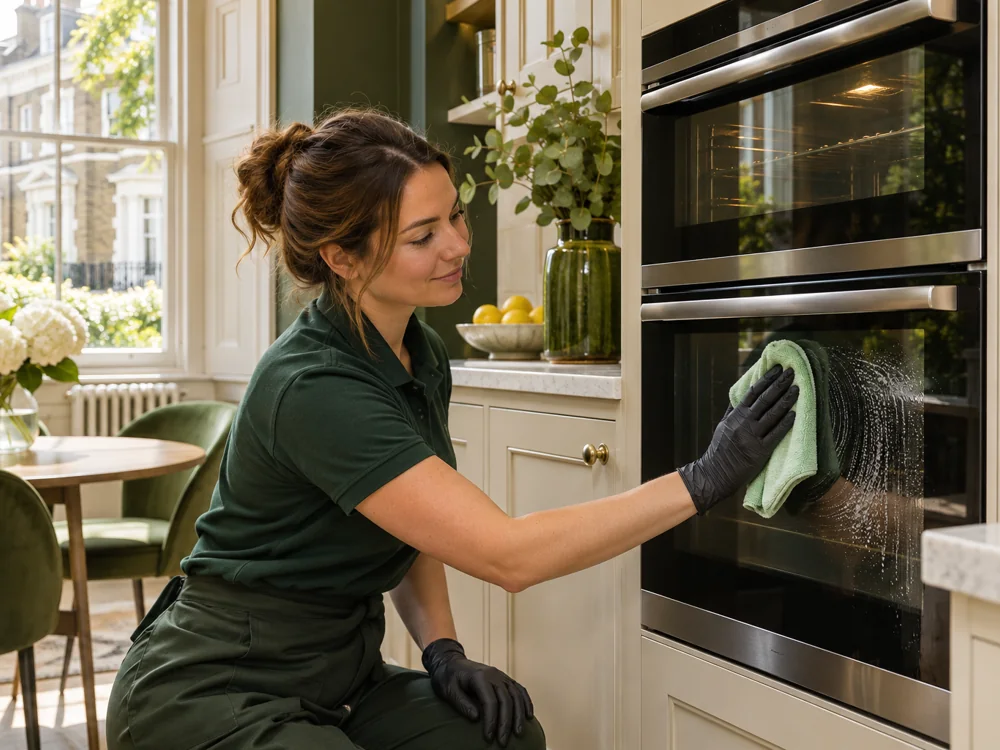
Show the border between the oven front and kitchen joinery
An oven can sit flush with one cabinet and project slightly over another. Include enough of the installation in the photo to show where the metal or glass edge runs beside the joinery. Mention the finish nearest the door or control panel, such as painted timber or a lacquered cupboard. If a gap has been filled or a neighbouring surface has recently been painted, identify that area before agreeing any work. A view from the side can reveal a detail that is hidden in a photograph of the controls taken straight on.
Explain if you usually protect a surface from the opening door or if the door almost reaches a cupboard knob. The approach affects where someone can stand while inspecting the oven. A separate panel, edge or splashback you want considered can go on its own line in the enquiry. Give its material and the location of the marks. Leave panels and cabinets fixed as they are. We can discuss the accessible parts of the oven while taking the finishes around it into account.
- Photograph the oven face with the nearest units.
- Give the finish of bordering surfaces where known.
- Flag any joinery or trim close to the opening door.
Give each oven its own name before deciding which to include
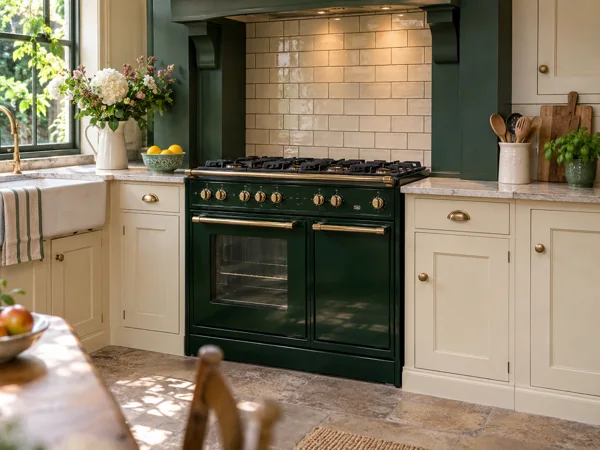
In a kitchen with several matching doors, note how each appliance is used. A top combination oven and a fan oven underneath may have different racks and side fittings even if their handles are identical. Name the requested oven by its height, model and function where possible. If you want both considered, describe their conditions separately. You can take photographs of the open cavities when cool and label the images. A wider view of the kitchen is still useful to show where the stack sits.
If the oven is part of a range, identify the working oven cavities and the separate grill. State whether a smaller door is a warming compartment, storage drawer or something you want to discuss. Tell us if there is a model label visible without moving anything or if you have the handbook. The model can help identify which liners or shelf guides are fitted. A succinct note on the part you use most gives the enquiry a practical starting point before looking at the rest of the cooker.
Identify textured linings and any residue along their edge
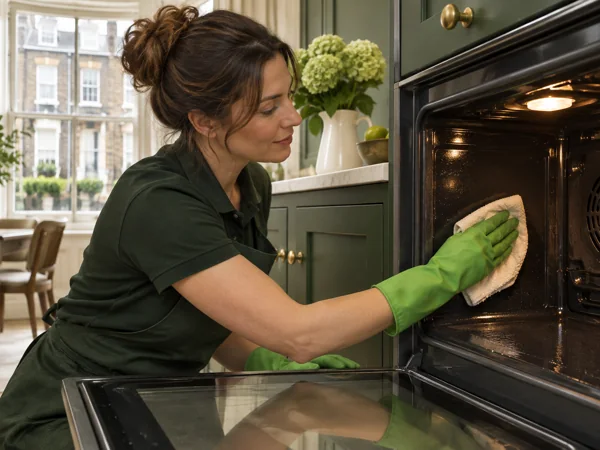
A cooking spill can run across the bottom of an oven and up to the edge of a side liner. Give the position using the shelf supports or door as references. Name a smooth, textured or coated finish separately where it is visible. If the manual uses a specific name for the material, include that information. The oven should be cool and empty before inspection. Leave the liners as they are, including any panel whose surface looks uneven or whose edge appears loose.
Let us know what has been used on an affected area. You might have run a cleaning cycle or wiped a spill before it hardened. Describe what happened to the mark afterwards and any change in gloss or colour. Where access allows, the cleaner can inspect grease and baked-on residue in relation to the existing finish. If there is a chip, scratch or change to the coating, identify it by location as well as the residue next to it. That gives the assessment a clear starting point.
- Report the closest guide, seam or door edge.
- Share prior treatment or cleaning cycles if known.
- Mention wear on a liner before it is assessed.
Describe the border of a fitted oven
| Location | Example surface | Useful detail |
|---|---|---|
| Closest cupboard | Painted timber or lacquer | Door clearance and existing wear |
| Under fascia | Printed glass or coated metal | Affected settings or area |
| Below cavity | Stone edge or wooden floor | Profile and change of level |
Count the pieces that belong in the appliance
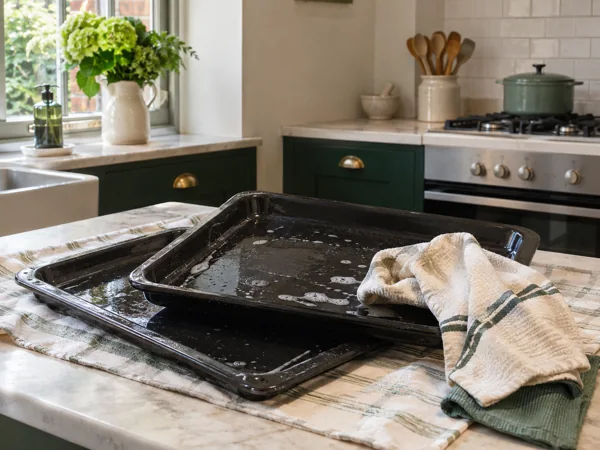
Give us the number of removable racks, trays and grill pieces you want considered for each oven. If a long shelf is stored outside the cavity during normal use, say where it will be. A rack that runs on guides and a removable wire shelf can look similar when kept in the same cupboard. Describe how each is usually fitted and leave any support you have never removed in position. If you have a spare part from a previous oven, keep it apart from the pieces that currently belong to the appliance.
A technician can consider dip-tank treatment for suitable pieces after inspecting their finish and condition. Mention original coatings, bent edges or a handle that has loosened. Keep personal cookware separate and note the location of an unusual tray or insert. In a fitted kitchen with limited space, agree where accessories can be set out for review. The original list should be available when someone else grants access. That person can point out which cavity each piece serves and identify any item you wanted to discuss on its own.
- List accessories by cavity or grill position.
- Mention coated parts and unusual fitted guides.
- Leave unfamiliar fittings as they are.
Choose the exact door for the Kennington address
Transport for London gives Kennington Underground station’s address as Kennington Park Road in SE11. If you use it to describe the area, follow the reference with the full postcode and entrance to the home. A terraced property might have a front door above steps and a separate route to the lower level. Identify where a person approaching from the street should go, with the house or entry number. A property near a corner may be reached from a different street from the one it faces. State the approach you want used for the visit.
If you live beyond a communal door, add the bell name and the route from the entrance to the flat. A property contact may need to meet the cleaner by the street instead of giving a door code. Agree who can open each part of the route and keep entry details in a private exchange. If the kitchen is approached through a yard or side passage, describe its steps or thresholds. Mention any arrangements for unloading that you are able to organise for the specific address.
Discuss the exposed door, controls and seal separately
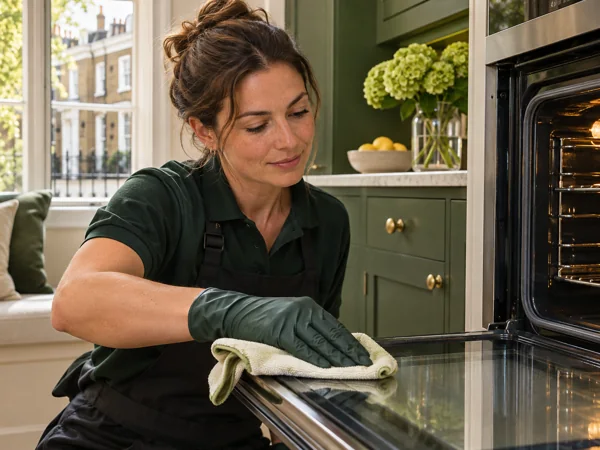
When you report a mark around the oven window, name the affected door and the face on which you think it sits. A mark that remains visible from two sides might be between panes. Send the model because door construction and existing condition affect access. If you want the handle or trim considered, say where the affected section is. Oven fronts can mix glass, coated metal and printed markings. Mention anything you have noticed about its present condition, including faded settings on a control used every day.
Give any existing concern around the edge of the door or cavity without moving the part. A worn section of seal and grease immediately beside it can be described together by position. Tell us if the control panel or glass was changed before the enquiry, if you know. The cleaner can assess the accessible surfaces and consider the marks you reported before discussing treatment. If there is more than one glass front, write down which one you want reviewed so it can be found again at the end.
- Identify the exact door and glass face.
- Report changes to printed settings or trim.
- Describe a seal concern and leave the part in position.
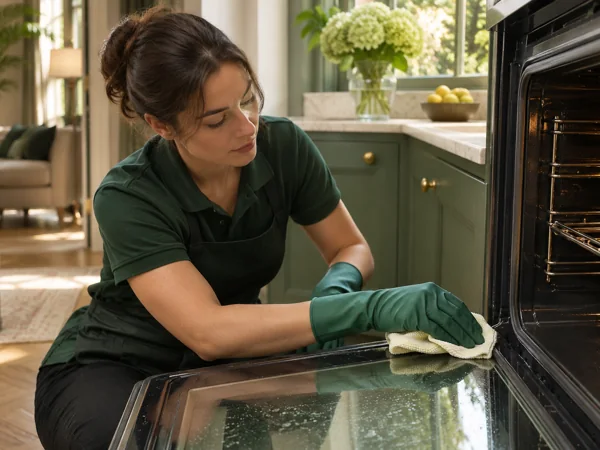
Review original oven pieces separately
| Part | Ordinary placement | Assessment note |
|---|---|---|
| Wire rack | Main oven shelf guide | Quantity and finish |
| Grill insert | Nested in original tray | Coating and condition |
| Side lining | Against the cavity wall | Material and accessibility |
Set a separate request for the hob and extractor
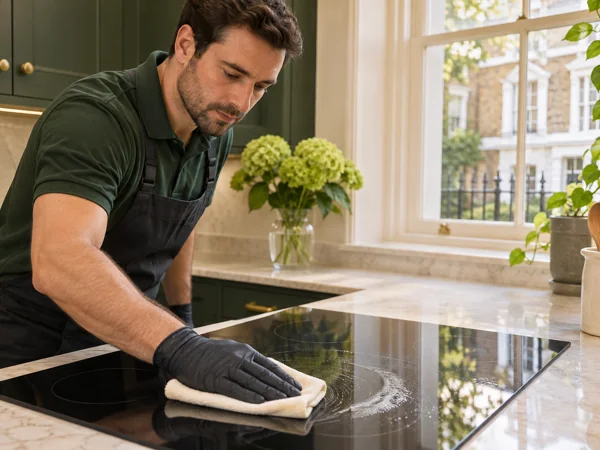
If the oven has another cooking surface above it, describe that surface and give any model information separately. A flat glass hob may sit beside a narrow stone border while a gas top has supports and burner components. Name the area with grease or residue relative to a cooking zone or the controls. If you are also asking about the splashback, give its finish and where it meets the hob. Those details can help us identify where one appliance ends and the adjoining kitchen surface begins.
A hood mounted under a cupboard or built inside decorative casing can be described by its visible finish, height and filter type. A photo taken from below helps when the outer panel has no visible model label. If you recognise the filter from the manual, give that detail without taking it out. State which surface or filter you would like to consider. Before the visit, check the oven quote and any additions by appliance and tell the person meeting the cleaner where they can find each one.
Review the parts and finishes while they can still be identified
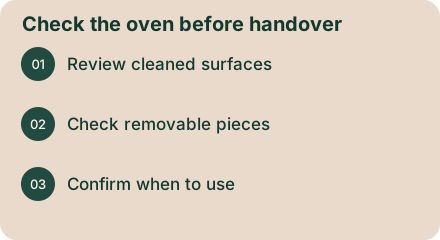
Take a moment at the appliance after the agreed work and go through the items you named. Ask about any mark you pointed out beside a fitted lining or near the controls. The same locations are easier to review if you have the earlier description available. Ask which pieces were removed or treated separately and check they can be matched to their cavities. If the person who arranged the visit is elsewhere, send them the names of the items and any observations they need to understand when they next see the kitchen.
Ask when you can use the oven again and share that detail with anyone who plans to cook there. Keep the appliance manual alongside the information about the parts you discussed, particularly a distinctive lining or removable accessory. If a letting agent will be viewing the property, arrange who can complete the review before the keys go back. For a future visit, keep a separate note for any hood or second oven that was considered this time. It can then be discussed with its own model and finish information.
Record the kitchen approach for Kennington
| Stage | Detail to provide | Who confirms |
|---|---|---|
| Street entry | House number and exact postcode | Person booking |
| Steps or shared entrance | Door label and level | Resident or key-holder |
| Kitchen | Preferred path and work area | Person showing the oven |
Get an oven cleaning quote in Kennington
Request a quote with the oven type, number of cavities and any extra appliances.
Get a QuoteOther Cleaning Services in Kennington
Local references · Transport for London, Kennington Underground station
Kennington oven cleaning questions
How do I show a close gap between my oven and the joinery?
Photograph the side of the front and the cupboard edge together, and say if the door or its handle approaches the adjoining surface.
Can I ask about a secondary oven fitted above the main one?
Yes. Include its own model or function and the racks, trays or glass that belong to it.
Should I report marks on a coated side liner before booking?
Yes. Give the lining type if known and describe the location and any prior products, so the accessible surface can be assessed.
How do I explain a separate street door for a lower level kitchen?
Send the full postcode and identify the street-facing gate or door, with any steps and the person who can open it.
Could a glass mark be assessed if it seems behind the window?
Give the door position and model and describe where the mark is visible. The construction and condition determine what can be reached.
Can I include just the outer metal panel of the hood?
Give the hood model and identify the panel and finish. You can ask to discuss that part independently from the filter.