 Housekeeper
Plan around the family kitchen
Oven Cleaning in Ilford
Arrange an oven cleaning enquiry around the appliance your Ilford household uses most. Share the cavity and removable parts that need assessment, when you can leave the cooker cool and how the technician should reach your kitchen.
Can I send an IG1 postcode for a quote?
Yes. Give the full address and door you want us to use.
Can I request the main oven and its trays only?
Yes. Identify that cavity and list the matching trays or racks.
Choose a time around your household’s cooking
Ask everyone which oven they will use before the appointment. The technician needs the appliance fully cool, so a small grill heated for breakfast has to cool even if the main oven was last used the previous evening. Choose a gap away from other plans for the kitchen. If visitors or a family member are coming to eat, agree where food can be prepared while the oven area is occupied. Mention another cooker you rely on so we can discuss its position and access before you confirm a visit.
Make the quote or agreed list available to the adult meeting the technician. If you need to leave for work or school, decide who can confirm which cavity or parts you want handled. Allow time to move personal cookware, dishes and ingredients off the nearest counter. Keep the route clear and children and pets out of the kitchen work area. Discuss when the next meal is planned, then check the return-to-use advice with the technician before turning anything back on.
- Agree the last time the oven will be used.
- Leave the closest counter clear.
- Give a contact who can discuss the appliance.
Find a gap in the household routine
| Time | What to agree | Preparation |
|---|---|---|
| After last meal | Which oven was used most recently | Switch it off and let it cool |
| During visit | Who needs kitchen access | Clear another route or surface |
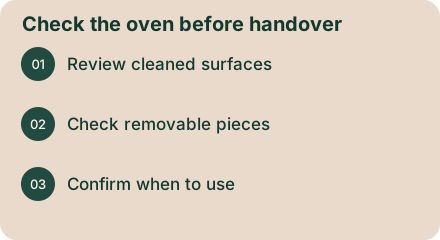
| At handover | When it can be used again | Pass advice to the next cook |
Give the entrance that leads to the kitchen in Ilford
National Rail lists Ilford station on Ilford Hill in IG1. If that gives useful orientation, include it alongside the exact home address, full postcode and the agreed residential door. A property beside a business or a shared drive can be entered in a different way from the one seen from the main street. Tell us which bell has the correct label and where someone should wait if a resident has to meet the technician. A flat should have its number and floor in the arrival note.
Check the permitted place to unload and any access through a communal gate or lift. Mention steps after a lift and bends or narrow sections after an entrance, especially if the kitchen is upstairs or on a lower level. If a house shares a path with the neighbour, describe the turn to the door you want used. Let another occupant know the same details and provide their contact if they will open up. Confirm the equipment route before choosing a time when the gate or door may be closed.
Match the ovens to what the family actually cooks
Take a photograph that shows the controls and every relevant door. A separate grill may sit above a standard oven, or the smaller door might be a combination appliance. Tell us which unit is used for each purpose and select the compartments you want assessed. Use the model where it appears on a visible label or in the handbook. Leave fitted units in position. If a lower door only holds pans, mention that before anyone assumes it is a third cooking space.
Note which cooking mode and shelf are used most for common meals. A shallow grill tray may look much like another pan kept underneath. Describe accessories by their cavity and show where they normally sit. If one unit has a specialist coating or a part with separate instructions, provide that page of the manual. An oven with two cavities can use different finishes in each, so keep model and care information tied to the right part. Ask for separate lines for each requested unit on the quote.
- Use a front photo with the controls in view.
- Identify compartments by position and purpose.
- Give the model and relevant care instructions.
Describe what happened when the oven was in use
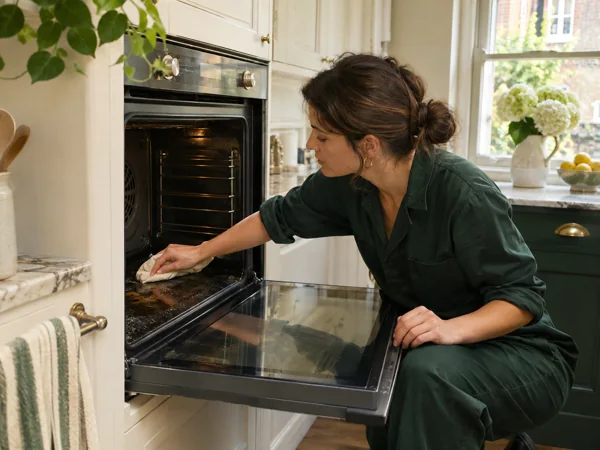
Look into the appliance once it is fully cool. Find the most important deposit and describe where it lies in relation to a tray, rack or door. A sauce overflow can leave a thin line under a shelf and a thicker patch on the base. Grease under a grill may cover a different area. If you can remember when a spillage happened and whether the oven was used after it, share those details. Take any photograph from the opening without moving fixed parts or reaching inside.
Ask others in the household if they tried a product or automatic programme. Write down which part they used it on and give the approximate timing. If a new mark appeared afterwards, identify both the old deposit and the change in appearance. The technician can inspect the area and explain what seems to be accessible residue and what may be wear or permanent discolouration. Mention a textured or coated surface and provide any relevant maker’s directions before the technician selects an approach. An old patch can remain visible after residue has been cleaned.
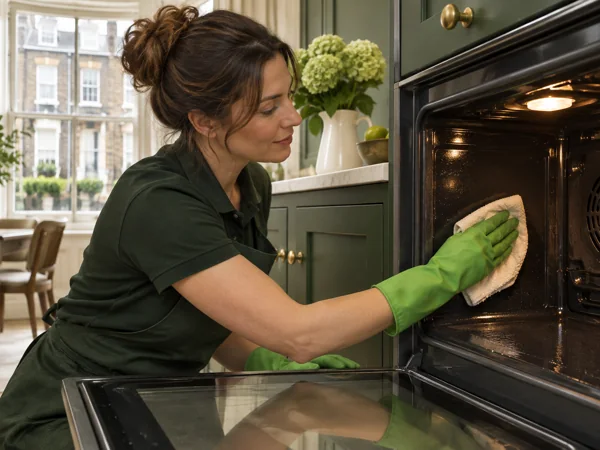
Match each concern to a cooker part
| Part | Information | Check |
|---|---|---|
| Main cavity | Door position and spill | Accessible residue and finish |
| Rack or tray | Which cavity it fits and how it moves | Removal and suitability |
| Glass | Angle and edge condition | Reachable faces |
Put personal cookware away from original parts
Count the original wire shelves, trays and any removable inserts you want considered. If a sliding rail catches, leave it in place and tell us where it stops. Suitable removable pieces can be assessed and may be soaked in a dip tank, taking account of the condition, coating and construction. An attached mechanism can need a different decision from a plain wire rack. Give the technician any cleaning instructions that apply to a particular part, especially where pieces that look similar have different finishes.
Remove food, loose personal dishes and loose foil when the appliance is cool. If a non-original grilling tray is important to you, give it a separate description and identify which cavity it fits. Keep unrelated items away from the working area. If one family member stores racks in a separate cupboard, ask them where each normally belongs and agree which ones they want included. Keep the nearest worktop available for inspection and checking the parts. Confirm the complete list before the technician begins.
- List each original rack and optional tray.
- Report sticking or unfamiliar fittings.
- Separate the agreed items from personal cookware.
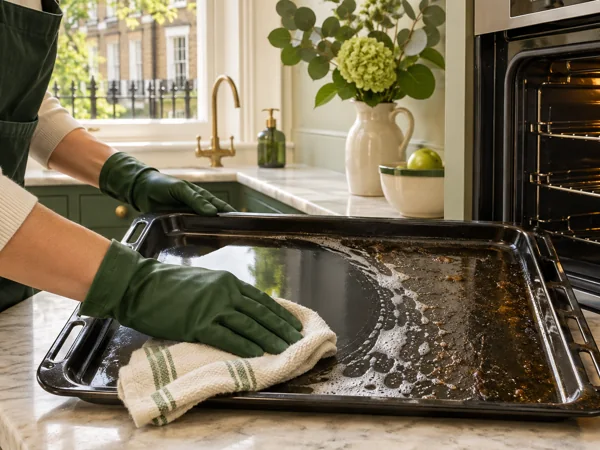
Explain which glass mark affects everyday use
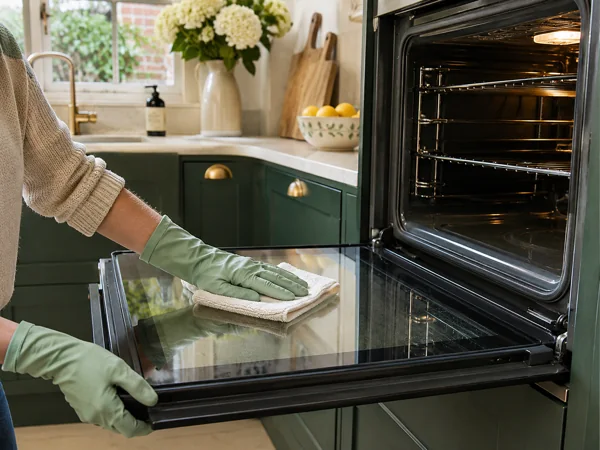
Check the door with the cool oven shut and open. Tell us if light reflects a streak that is easy to miss from a normal standing position. The mark may be on either reachable face or visible between the panes. The technician can assess the door design and condition to discuss access. Report any chip or trim that feels loose. If you know of earlier work to the door, let us know. Leave glass and other fitted pieces in place so the technician can inspect them safely.
Take a full photo of the correct door and a closer one if it helps show the mark. With a stack, the same reflection might appear on both doors, so label the image. If you can see a patch from the dining table or kitchen doorway better than from directly in front, describe that. Ask which face can be treated before the glass work is agreed. The technician can talk through any change to the finish that may remain and which part of the oven can still be cleaned.
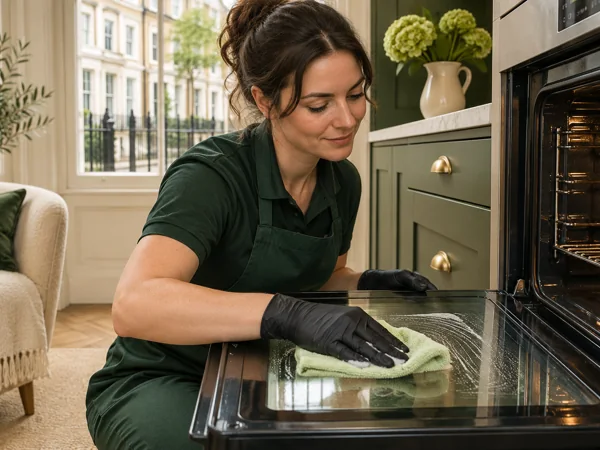
Explain how to reach the home
| Stage | Detail to send | Check in advance |
|---|---|---|
| Street | Address and actual visitor door | Proper unloading point |
| Inside property | Gate, lift or staircase | Who will admit the technician |
| Kitchen | Door clearance and counter | Space the family can set aside |
Make household plans for any work on the hob and extractor
Give the hob material and heating type if you want it included. List any specific pan supports, zone or trim that needs assessment. A splashback or side surround made of another material should be described separately. Tell us if another person needs to cook on a separate hob during the appointment. Include the position in the kitchen so that access can be checked and agree whether it can remain available. Confirm the specific hob items independently of the oven cavity and its accessories.
For an extractor, give the visible cover, approximate height and filter type if known. A disposable insert and a washable metal piece are different parts to discuss. Say where the grease is and whether it is on a cover or set back inside the appliance. The technician can assess accessible areas and agree a suitable approach. A clear picture of the whole cooking area can help show if the hob and extractor need working space in a different part of the room. Confirm the optional items before the visit.
- Describe the hob surface or supports.
- Give the extractor height and filter type.
- Agree how the family will use the kitchen while each item is assessed.
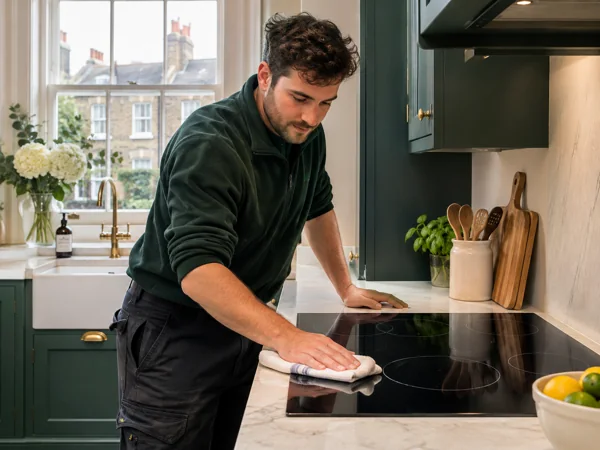
Keep track of the advice for the next meal
Start with the postcode form and prepare the appliance reference, condition notes and entrance details. Let the oven cool and clear the nearest worktop before the technician arrives. Tell us about any water or power arrangement that may be relevant. If somebody else manages access, send the agreed list and identify the right door on a photo. Give them contact information for whoever can answer questions after the first inspection. If another household member is due home, make sure they know to wait before using the oven.
Ask which parts were cleaned and when the appliance can be used again. Tell the next cook where racks and trays go and pass on any care information for a specific finish. If a mark remains because of its location or the condition of the finish, note the model, cavity and visible area. Keep that information with the maker’s handbook in case it is useful for a later enquiry. Confirm who will be available to show the technician out and restore any temporary access agreement.
Get an oven cleaning quote in Ilford
Request a quote with the oven type, number of cavities and any extra appliances.
Get a QuoteOther Cleaning Services in Ilford
Local references · National Rail, Ilford station
Ilford oven cleaning questions
Should the smaller grill cool even if the main oven is already cold?
Yes, when that compartment is part of the visit. Tell us when each affected part was last used.
How do I ask about a shared roasting tray?
Name which cavity it normally fits and whether it was supplied with that oven.
Can I report two different products used by different people?
Yes. Give the approximate timing and the exact surface each product touched.
What if the gate is behind a shared drive?
Explain how to find the gate after entering the drive and who can open it.
Can I add the extractor but leave the hob outside the quote?
Yes. Give the extractor details and identify the accessible components you want considered.
Can someone come home to cook shortly after the visit?
Check the technician’s advice first and make sure the person knows which oven and accessories are ready.