 Housekeeper
Signature care for well-used ovens
Oven Cleaning in Hampstead
Plan your Hampstead oven clean around the appliance you cook with every day. A built-in oven behind painted cabinetry and a freestanding range on a stone floor call for different conversations before the visit. Tell us about the oven cavities, the trays that belong to them and any hob or extractor you would like considered separately. The postcode and a few details about the approach to the kitchen will help us discuss your quote.
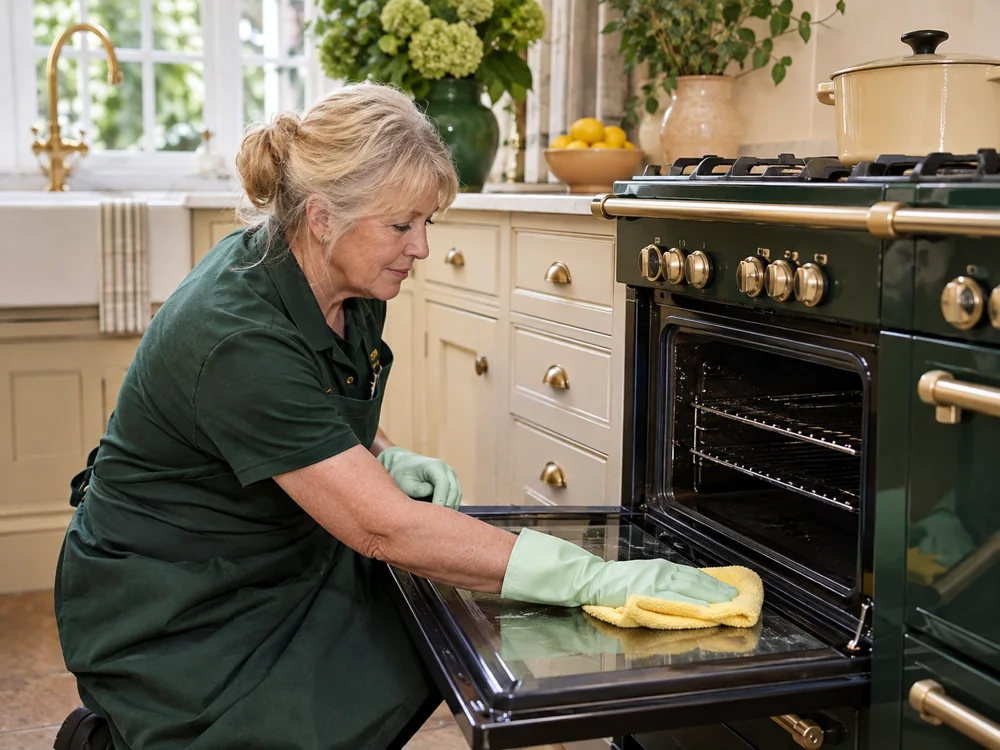
What should I mention for an oven clean near Flask Walk?
Give your full NW3 postcode and say which entrance leads to the kitchen. Mention narrow steps or a shared passage on the approach.
Can I ask about a built-in oven near Church Row?
Yes. Include the model if known, the number of cavities and the finish of any adjoining worktop.
Read the kitchen as well as the appliance
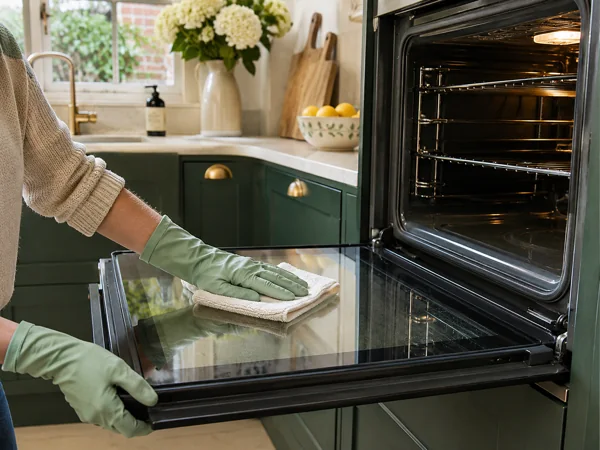
At the centre of a fitted kitchen, an oven is often framed by surfaces with different care instructions. Painted doors may meet an enamel front, while a brass handle and a stone ledge sit within the same small working area. Walk through the room and look at what the door passes on its way down. A projecting knob, a kitchen island or a narrow passage can make the space feel quite different with the oven open. If there is an awkward corner, a wide view of the kitchen is more helpful than a close picture of the door alone.
A quotation can start with three views where you can take them comfortably: the complete oven front, the open cavity and the surrounding cabinets. Use daylight where possible and keep household paperwork out of the frame. Describe any finish whose care matters to you, including old painted joinery and untreated wood. Identify the parts you want considered and flag any nearby surface that you generally protect when you cook. That gives us details to discuss before the visit and saves you having to describe the room from memory later.
- Show the clearance in front of the oven door.
- Identify unusual or delicate finishes next to the appliance.
- Mention which cabinets, flooring and worktops border the oven.
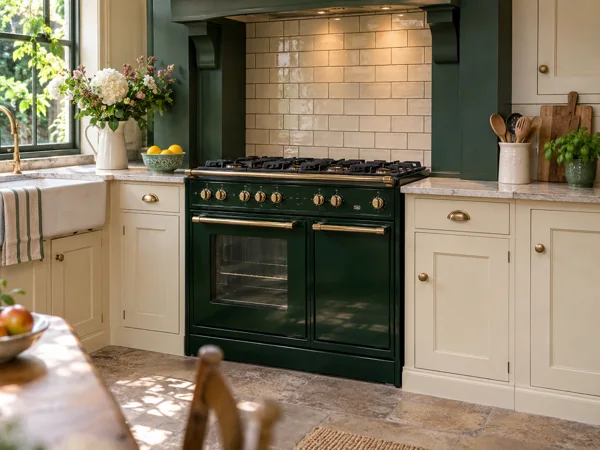
List each cavity and the accessories that belong to it
The controls on the fascia may run more compartments than you expect. A stacked appliance could have a conventional oven below and a separate grill above, while a wide range might include a little-used secondary oven and a storage drawer. In the enquiry, describe what each compartment does and which ones you would like quoted. It helps to mention the cavity you use most and the one that has been left idle, since the condition can differ markedly across the same appliance. If the oven has a combination or steam function, supply the model so it can be identified correctly.
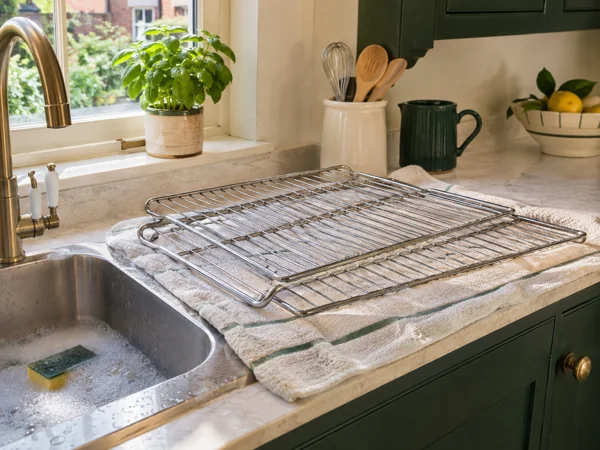
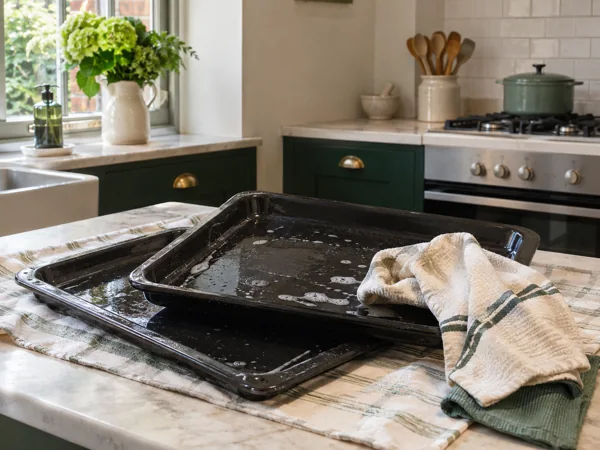
Shelves, shallow trays and grill inserts sometimes move from one compartment to another during normal use. Count the oven accessories you would like discussed and describe any additional pieces bought separately. If a previous owner left a manual, the diagrams can help identify the original fittings. There is no need to remove a fixed part to find its name, and a tray that catches on a rail should be left in place with a short note. Mention telescopic supports or a rotisserie fitting during the enquiry if your model has them.
- Count ovens and separate grill cavities.
- List removable racks, trays and grill inserts to discuss.
- Flag specialist fittings and identify the model if the label is accessible.
Describe the marks you see in a cool oven
A customer who says the appliance is dirty might be describing anything from a few streaks on the glass to a roasting spill that has darkened the bottom of the main cavity. Look when the appliance is cool and say which area concerns you most. A deposit on a rack may need a different conversation from a mark that appears to sit between door panes. If you can give a rough account of the last large spill or the products already used, include that too. You can write ‘unknown’ if the appliance came with the property.
Discuss the difference between a mark that arrived with a spill and an area where the surface already looks worn. If there is a scratch, chipped enamel or a patch that changed colour during previous use, identify its position before asking for the clean. A plain description such as ‘dark patch at the back left, near the lowest shelf’ is enough. Leave the part as it is for the visit. You can set a practical priority, for example a particular rack and the cavity floor, so the enquiry focuses on the areas that matter to you when you open the oven.
Map the appliances in a Hampstead kitchen
| Appliance | What to identify | What to discuss |
|---|---|---|
| Built-in oven | Model and cavity count | Cavity, racks and accessible glass |
| Separate grill | Position and type of insert | Grill cavity, insert and tray |
| Range cooker | Working cavities and storage sections | Which compartments to quote |
| Extractor | Model, exterior and filter type | Which parts to consider separately |
Add a hob or extractor by name
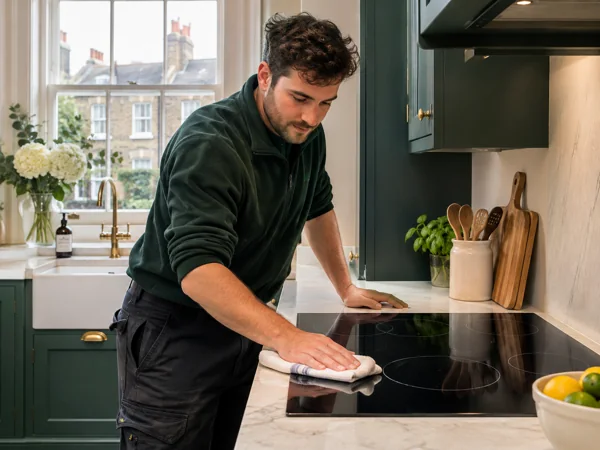
A matching oven, hob and hood may look like one set in a fitted kitchen. For the enquiry, list them individually so you can see what the quote covers. Say if the hob is induction, ceramic or gas, and describe greasy rings, marks on the glass or residue by the controls in the terms you would use at home. A photo of the complete hob shows the control layout as well as the edge that meets the worktop. Check the corners for anything you want mentioned, such as residue near a trim or an area with a different finish.
For an extractor, describe its shape, position and any filter information you have. An angled glass canopy over a hob is easier to describe with a view from below and one from the front. A pull-out hood tucked into the cabinets may be hard to identify from the kitchen doorway, so the model name is useful if you have it. Mention the visible exterior and any filters as separate items for discussion. Record which additions you definitely want and which you are considering, so you can review the quote with a clear list before going ahead.
- Name the hob type and the finish.
- Identify the extractor model or describe its visible filters.
- Mark each additional appliance as a priority or an item to discuss.
Describe the route from the street to the kitchen
Camden’s Hampstead conservation area statement describes the narrow streets and steps that follow the old village pattern and identifies Flask Walk, Well Walk and New End as distinct parts of the Christ Church and Well Walk area. Give a complete address and a route from the entrance a visitor should actually use. At a house with two outside doors, say which bell label can be seen from the street. For a lower-ground kitchen, indicate if the most direct route runs down outside steps or through a shared hall. Mention the tight turn or short flight that is easiest to miss on arrival.
Transport for London lists Hampstead Underground station on Hampstead High Street. If you use the station as a landmark, add the entrance number or a clear street name so the directions remain useful when there is more than one possible approach to the address. In a divided house, point out how the flat is labelled on both the street door and the door inside. If you rely on a porter, key-holder or someone working from home, agree who will open up and how you will get in touch on the day. Share access instructions privately once arrangements are confirmed.
- Give the complete postcode and the entrance to use.
- Point out steps, shared paths and tight turns.
- Confirm who can answer the bell or meet at the door.
Make working space without rearranging the kitchen
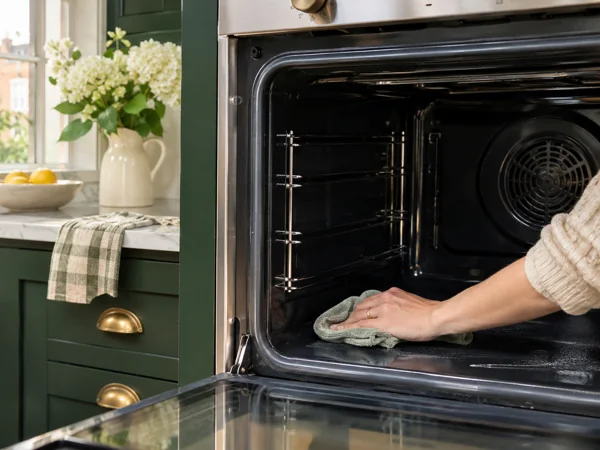
An open oven door uses a surprising amount of space in a narrow kitchen. Put away items you normally store on the floor or keep on the nearest counter, such as dog bowls, baskets and loose kitchen linen. Set aside a surface that can be used by agreement if your main worktop is full. If you use a kitchen table for work or a child does homework at the island, decide where those activities can move for the duration of the visit. Leave furniture you cannot shift comfortably where it is and mention any resulting restriction.
Plan for the oven to be cool and empty. Take out food, cookware of your own and anything you keep there between meals. Keep the appliance accessories you want included together so you can identify them when the visit is discussed. Think through the household timetable as well as the room itself. A lunchtime oven clean may clash with a meal for someone who is home that day. Knowing when the kitchen has to be available again makes it easier to coordinate the visit and discuss a realistic order for the work.
Record the route to the oven
| Point on the route | Detail to give | Why it helps |
|---|---|---|
| Street door | Full number and bell label | Identifies the entrance |
| Shared corridor | Turns and any permissions | Clarifies the approach |
| Lower-ground kitchen | Steps and handrail position | Explains the last part of the route |
| Kitchen | Available space with oven open | Describes working clearance |
Organise an oven clean around a handover
If the oven clean is part of a house move, decide who checks the appliance before the keys change hands. Give a tenant or owner one list of the oven components being discussed so they can review it against their own inventory. Removable parts sometimes disappear into boxes early in a move, especially spare shelves and grill inserts. Set those pieces aside if you want them assessed and label any items that belong to another appliance. Say when the kitchen is expected to be clear of packing materials, as those can make it difficult to reach a low oven or open the door fully.
A handover can also involve a change in who knows the appliance. If the new occupant is bringing their own cookware, leave the manufacturer’s booklet with the property and point out any part whose condition was already known. If someone is checking the visit on your behalf, agree on the components that person should look at and a time when they can enter the kitchen. Keep a short record of any agreed additions so the person doing the handover can distinguish the oven items from broader instructions about the rest of the property.
- Keep spare oven parts out of the moving boxes.
- Agree who will check the appliance before handing over the keys.
- Set one date for kitchen clearance and one for the key return.

Review your quote against the way you use the oven
Read the written description item by item. If you normally use the upper oven on weekdays and the lower oven only for weekend cooking, check both compartments are covered if you want both attended to. Look for the hob and extractor as individual items where you requested them. If the quote mentions a shelf or filter that sounds different from yours, ask which piece it means while you have the model information to hand. If you have several ovens in the property, distinguish them by kitchen or location so the booking reflects the appliance you had in mind.
A short recap is useful when another person will meet the cleaner. Give them the name of the appliance, the main concern and the room you have described. Keep your own contact details available if the person at home cannot decide about an extra item. Before leaving the kitchen for normal use or returning the keys to another person, ask about any component discussed separately and follow the relevant manufacturer’s care instructions. Save the model and accessory list for future reference, especially if the appliance shares a front panel with a different compartment.
Draw up your oven handover list
| Check | Record before the visit | Who can confirm it |
|---|---|---|
| Loose accessories | Which pieces belong with the oven | Current occupant |
| Existing marks | Location and appearance | Person preparing the enquiry |
| Access window | When the kitchen will be clear | Key-holder |
| Review | Agreed appliance items | Person checking before key return |
Get an oven cleaning quote in Hampstead
Request a quote with the oven type, number of cavities and any extra appliances.
Get a QuoteOther Cleaning Services in Hampstead
Local references · Camden Council: Hampstead conservation area statement · Transport for London: Hampstead Underground station
Hampstead oven cleaning questions
Can you quote for only the main oven in a range?
List the compartments and mark the one you want included. Tell us about any shelves or trays that belong to that cavity.
Should I put my enamel roasting tray in the enquiry?
Add it as a distinct item, especially if it was bought separately. Let us know its finish and condition so it can be discussed.
What if there is residue between the door panes?
Describe where the mark appears and include the oven model if known. Discuss access to the affected glass before the visit.
Do I need to move the cooker before the clean?
Leave it in position and describe the clearance around it. If a surface is hard to reach, include that detail when asking for a quote.
Can a key-holder meet you if I am moving out?
Mention the proposed arrangement when enquiring and provide a contact for access and decisions about the agreed appliance items.
Can I ask about the extractor without booking the oven?
Name the extractor and describe the exterior finish and any filter details you know so the request can be considered separately.