 Housekeeper
Detail-led care for your oven
Oven Cleaning in Hackney Wick
Plan an oven clean in Hackney Wick for the fitted cooker, grill or accessories you use. Show the cavity and finishes you want assessed and describe any separate appliance. Include the approved route to your kitchen if the building has a shared yard, lift or another entrance for equipment.
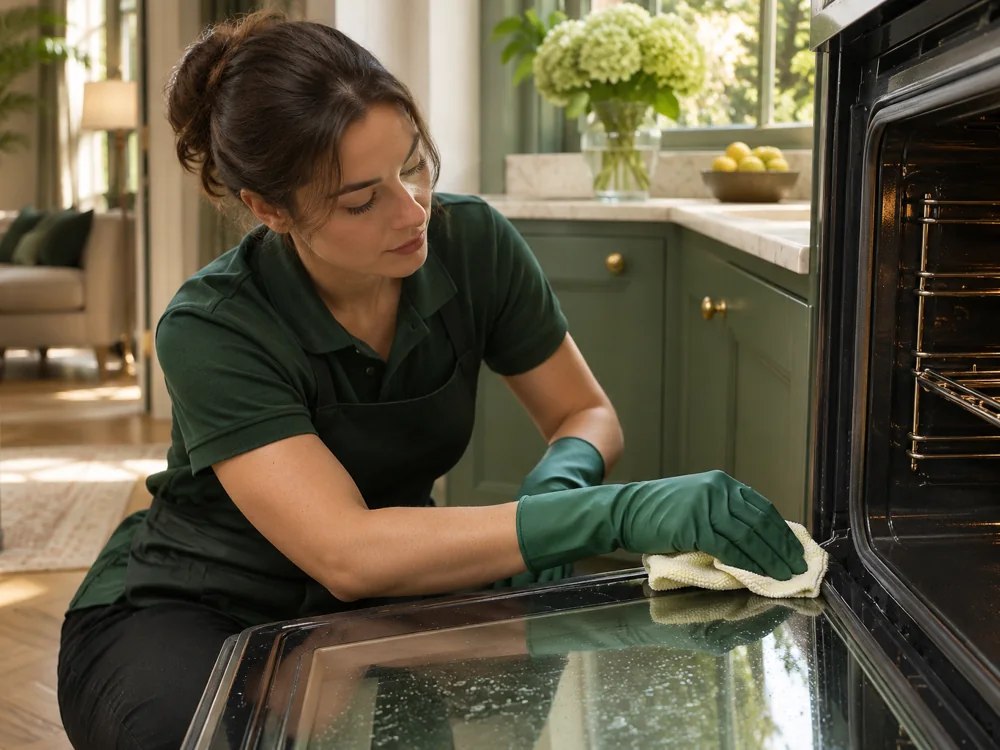
Can I enquire about a fitted oven near Hackney Wick station?
Yes. Give the full property postcode, block and actual visitor entrance, and identify the cavity you want assessed.
Can you assess a specialist liner as well as the enamel floor?
Share the model and any instructions. The technician can review the surfaces separately.
Show the oven in the kitchen rather than as an isolated door
Take a full view of the units, including the oven controls and nearby doors. In an open kitchen, a bank of cabinets may hold the oven, a microwave and a warming drawer with matching handles. Identify the one you want assessed and show its position. A fitted double oven can have a main cooking cavity plus a smaller one used mostly for the grill. On a range, count the working cavities and specify the separate dishes and racks that belong with them. Give the model if visible in the paperwork or at the opening.
Show the relevant cavity when the oven is cool and leave the appliance in its fitted position. If some parts were replaced, note the change with the accessories. Include a photograph of the area in front of the cooker if the door opens towards an island or table. Tell us where a technician can look at loose pieces. A narrow area may still work if the floor and nearest worktop are kept clear. Give the photos to the person who will meet the technician if you cannot be home.
- Photograph the complete appliance and cooking area.
- Distinguish the oven from other matching fronts.
- Identify replacements or added accessories.
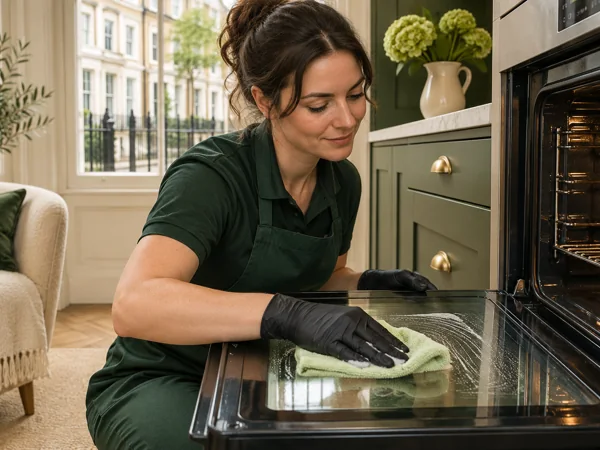
Give the Hackney Wick route from the street that equipment can use
National Rail lists Hackney Wick station on White Post Lane. If you use the station to describe the area locally, begin the enquiry with the actual postcode, building and entrance to your home. A building can face a canal path or a shared yard while residents reach their flats from another side. Give the approved visitor arrival point and the door where the technician can enter with equipment. Include the sign or intercom label. Check if the postal building name differs from the one at the entrance.
Confirm the unloading arrangement and any lift, stair or internal door needed to reach the kitchen. In a converted building, the outer lobby can give access to more than one part of the development. Explain which corridor or lift goes to the right floor. If a porter or resident needs to unlock a separate gate, give the contact and explain where to wait. Note steps after the lift or a narrow turn near the cooker. Agree with the person handling access where they will meet the technician.
- Use the actual address and approved visitor entrance.
- Explain the route from unloading.
- Name the person who can open shared doors.
Identify the appliance in an open kitchen
| Part | What to show | What to discuss |
|---|---|---|
| Fitted oven | Controls and correct cabinet door | Affected cavity and accessories |
| Separate grill | Door and tray position | Coating and removable components |
| Nearby island | Door clearance and wall approach | Working space for assessment |
Describe the finish affected by a spill or grease build-up
When the oven is cold, look at the mark in relation to the shelf and the sides. A spill beneath a tray may affect the base, while frequent roasting or grilling can send deposits around a different area. Tell us how the cooker was used and if it was heated after the mark appeared. Share any recent product or self-cleaning programme and say what it touched. A black patch can involve food residue, discolouration or a change to a finish. The technician can inspect it before discussing what can be done.
The manual may specify care for catalytic or other specialist linings. Identify the model and send those instructions. A smooth enamel floor and a different coating on the sides can meet at the edge of the mark. Take a photo showing that join. Mention notices of wear separately, including visible chipping, loose trim or a worn seal. If a known fault affects heating or operation, report it before the visit and ask a qualified appliance specialist separately for advice about getting the oven to work normally.
- Give care information for specialist coatings.
- Show the position and extent of the mark.
- Report existing wear and known faults.
Prepare only the loose oven parts you want considered
Take out food, ordinary dishes and loose foil when the cooker has cooled. Set out the relevant shelves, grill tray and insert on a clear nearby surface. Suitable removable components can be cleaned separately and may be soaked in a dip tank if their material, coating and condition allow it. Identify any replacement shelf or tray from another cooker. A coated insert may need separate consideration from a wire rack that normally sits above it. Keep a removable handle with its pan, especially when there are several matching trays.
If a shelf rides on a fitted runner, explain whether it moves freely and where any sticking occurs. Leave unfamiliar or fixed support pieces in place before the technician looks at them. Tell us if a tray no longer sits evenly or a coating peels at an edge. Keep the spare accessories away from the ones you have asked about. A picture of the pieces grouped by appliance is useful if a different resident normally uses the kitchen and is not there to show where they belong.
- Group each shelf and tray by appliance.
- Mention wear or changed coatings.
- Leave a fitted runner installed when its release is unfamiliar.
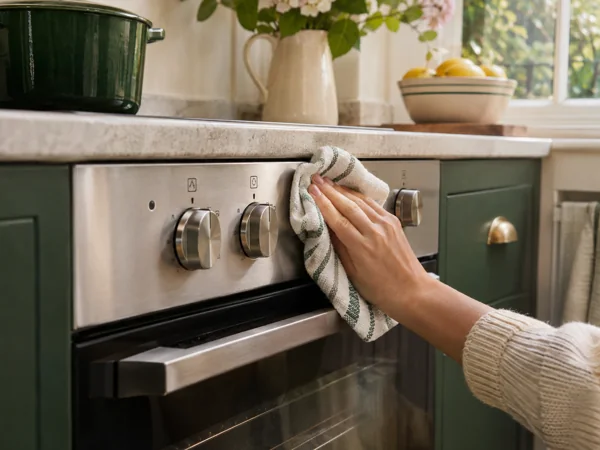
Describe visible conditions before choosing treatment
| Finish | Helpful detail | Assessment point |
|---|---|---|
| Specialist liner | Manufacturer guidance and mark position | Treatment suitable for the coating |
| Wire shelf | Fit and any bent corner | Separate treatment if suitable |
| Outer glass | Streak visible only at an angle | Reachable pane |
Show which side of a cloudy or greasy pane needs assessment
When a streak is visible on the door, check whether you can see it with the oven open, shut or both. It may be outside, on the inner face or appear through the overlap between panes. Give the position and orientation in a photo without attempting to remove parts. If a pane was replaced or one edge has loosened, report it before work. The technician can explain which areas are reachable given the model and condition of the door. A close-up alongside an overall picture helps relate the mark to the right edge.
A grey mark might also appear on a handle, control panel or nearby cabinet. Describe the finish if you know and highlight any existing worn print or chipped paint. If a cabinet catches when the oven door opens, show that in a wide photo. Let us know whether you want the outside considered separately from the inner glass. When a property has several similar ovens, identify which door shows the mark and give that detail to the person who will provide access.
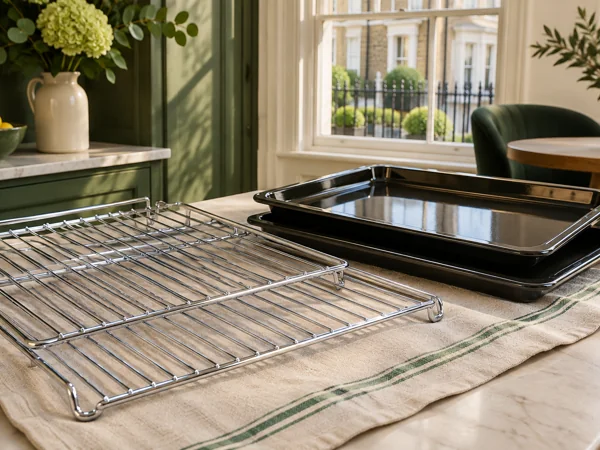
Identify extra surfaces using their own appliance details
If you want the hob assessed, state whether it is gas, induction, ceramic or another type. A gas hob can have multiple removable stands, caps or a griddle. A glass plate may need attention in a particular zone or around the controls. Include the finish and any pre-existing scratches. Show how the controls are arranged if they are shared with the oven. Ask for the hob or individual removable pieces to be listed on their own line so the quote reflects what was discussed.
An extractor can sit above an island or be concealed beneath a cabinet. Give the visible finish, approximate height and type of filter if known. Separate the external cover from any removable mesh or disposable insert. Show cabinets or shelves that affect the approach and explain which part has the most visible grease. Ask which components can be assessed and check that any separate work on the extractor is listed along with the agreed oven cleaning. Mention if another cooker needs to remain usable during the appointment.
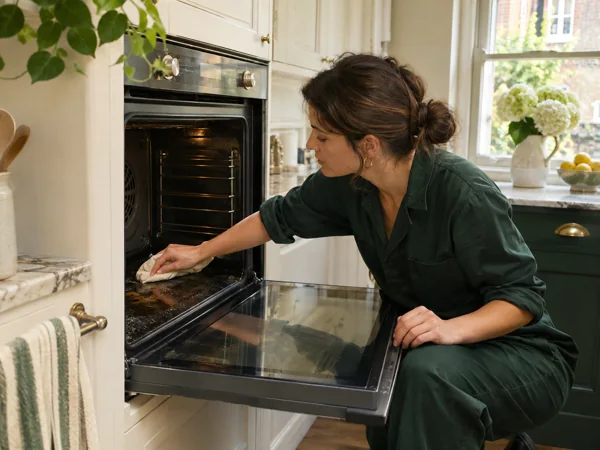
Leave the kitchen ready for assessment and the next cook
Let the cooker cool and stop using it before the technician arrives. Clear food and utensils from the adjacent worktop and move furniture that restricts the door swing. Explain if the kitchen is an access route to another room. Tell the household where to prepare food during the visit and keep children and pets away from the working area. Agree any water and power needs before the day if those facilities are restricted. Give the earliest time somebody else needs to use the cooker or another appliance nearby.
At handover, ask what was treated and when the oven can be used. If a part stayed in place or a surface needs special care, ask for those details in the handover. Pass information about the shelves and trays to the next person who will cook. If only the key holder is at the property for the visit, arrange how they can relay the advice and where they can put the agreed list. Leave enough time after the cleaning to hear what applies to the actual appliance.
- Leave the cooker cool and the immediate area clear.
- Tell us when the kitchen needs to become available.
- Have someone available to receive and pass on the handover.
Confirm the approved entrance in Hackney Wick
| Where | Detail to provide | Check with |
|---|---|---|
| Street | Full postcode and entrance label | Resident |
| Shared yard | Unloading and doors | Building contact |
| Kitchen floor | Lift or stairs and final door | Person providing access |
Check the named parts and access notes before you confirm
Use the postcode enquiry with your own address and the route from unloading to the kitchen. Identify the model, priority mark and affected cavity, then list each tray, shelf and additional appliance you hope to include. Give the agreed contact and next cooking time. If somebody else will be home, send them the photos and item list. Make sure they know which marks are older and which residue concerns the household, so they can show both before the assessment starts.
For a move, check that the inventory cooker and accessories match the ones in the kitchen. Arrange handover and key return separately and discuss how other work affects the oven. Check the quote for the exact cavities and agreed items. If a spare rack, known fault or changed approach appears after initial arrangements, update the enquiry. Give the final description to the person meeting the technician so they can confirm what was treated and hear the relevant advice about returning the oven to use.
Get an oven cleaning quote in Hackney Wick
Request a quote with the oven type, number of cavities and any extra appliances.
Get a QuoteOther Cleaning Services in Hackney Wick
Local references · National Rail – Hackney Wick station
Hackney Wick oven cleaning questions
Can you enter from a shared yard if the main door faces the canal?
Check the approved route for equipment and give the door label, unloading point and person who can provide entry.
Should I remove a fitted grill support?
Leave it in position if the release is unfamiliar and show how it moves during assessment.
How can I check if the liner is catalytic?
Look at the model and manufacturer’s instructions. Send what you find to the technician instead of identifying it by colour alone.
Can you inspect wear to the control area?
Point to the existing wear and tell us whether the panel is a separate part from the glass and cavity.
Can I ask about a hood over a kitchen island?
Describe the mounting position, height, cover and filter. Explain how the hood can be approached.
What if I need the kitchen again for guests?
Share the time before the appointment and confirm when the oven can be used at handover.