 Housekeeper
Signature care for well-used ovens
Oven Cleaning in Goodmayes
Show us where the oven stands in your Goodmayes kitchen and which parts you would like considered. A range with several working doors may need a different list from a built-in oven beside a treated worktop. Give us the model, a clear view of the position and the door you want us to use to reach the property.
What address information helps near Goodmayes Park?
Give the full IG3 postcode and the exact gate or residential entrance.
Can I discuss the finish beside a range door?
Yes. Show the door together with the closest cabinet or floor surface and name the material if known.
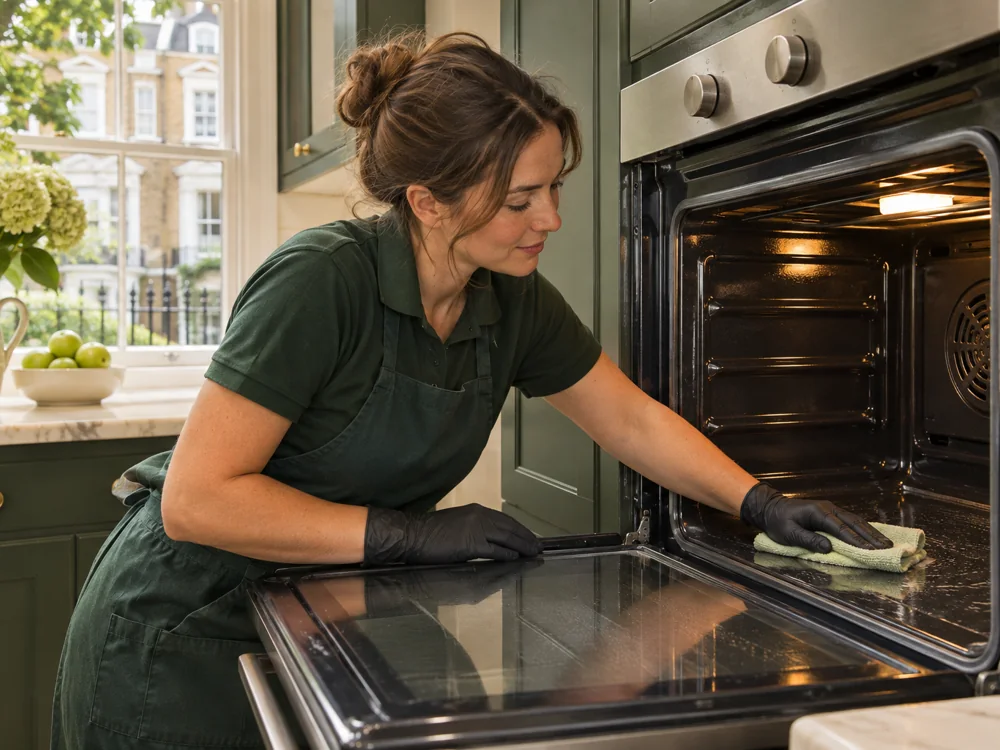
Describe a range or built-in oven in its current position
Take an overall photograph showing the cooker and the nearest cabinet, worktop and floor area. An oven door can open beside a painted cabinet edge or come close to the handle of a drawer. A cooker between two units may have different clearance on either side. Tell us which areas can be reached once the door is open. If the adjacent material has a specialist finish, give its name or photograph it in natural light. Report a worn edge or a patch of discolouration if it will be visible near the intended working area.
Keep the oven and fitted panels where they are. A picture from the side will often establish the fit without moving a heavy appliance. If the door opens across a narrow aisle, describe whether another appliance is opposite or an island is close. Put away only loose objects you can move comfortably. Discuss whether the nearest counter can be used to review removable parts, and note an alternative surface if the worktop beside the cooker has its own care instructions.
- Show the space in front and on either side of the oven.
- Describe the cabinet, worktop or floor material at the door.
- Mention existing surface damage and a place to review parts.
Identify the cooking compartments by their controls and use
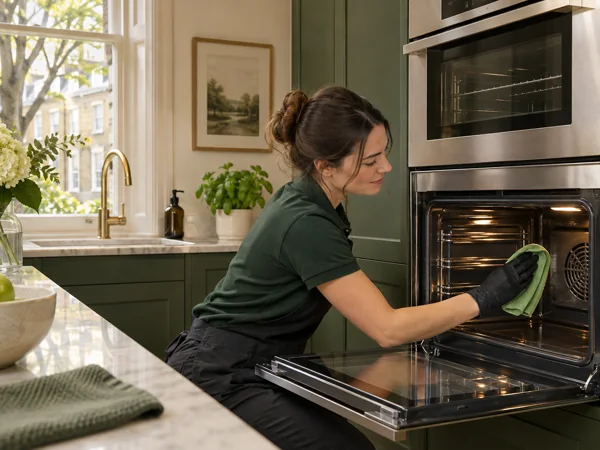
A range with several doors may offer two working ovens alongside a grill and a drawer. Name the function and position of each cavity you want assessed. If the cooker is built into a unit, show the controls and explain which doors they serve. Include the model if there is a label visible inside the door area or a manual in the kitchen. Give a wide view if a separate appliance is mounted in the same cabinetry. Identifying the requested oven prevents confusion between otherwise matching fronts.
If you cannot easily find the model, describe which compartment you regularly use for roasting or baking. A smaller space may have a grill setting or combination function. Give the model for that space separately if it is a distinct appliance. Say if you want to include a grill tray or trays specific to an oven function. Where parts such as guides or liners are described in the manual, mention those terms. We can discuss what is accessible for the model and the parts you name.
Give a separate description of the glass and the trim
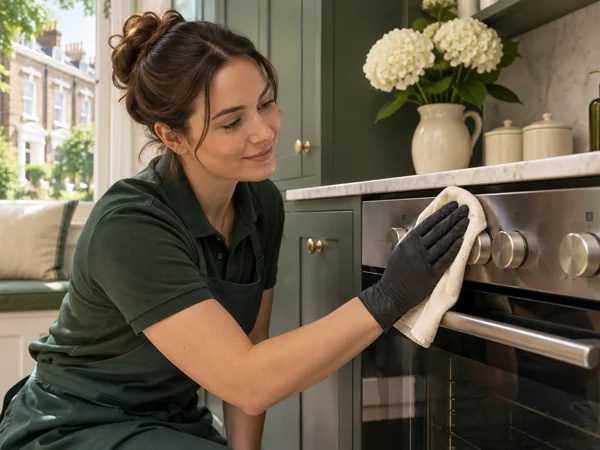
The wide glass on a main oven and a thinner panel on the grill can show different marks. Use the position and face to tell us which one has grease or residue. If a mark appears between panes, name the model and describe it with the cool door open and closed if it opens normally. The door’s design and existing condition affect the faces that can be accessed. A full picture of the door helps show where the mark lies relative to the edge, handle or seal.
For grease near the controls, give the closest selector and identify any faded or worn settings. An enamel front, printed fascia and brushed trim can meet along the same line. If you know the materials, describe the surface that carries the residue. Keep a loose seal or trim in its normal place and mention what you can see. We can inspect accessible areas before discussing treatment and account for the existing condition. The original part names can also be used when reviewing the appliance later.
- Name the affected window and face if visible.
- Report grease near a particular control or setting.
- State existing wear without moving the glass or trim.
Explain how the cooker meets the kitchen
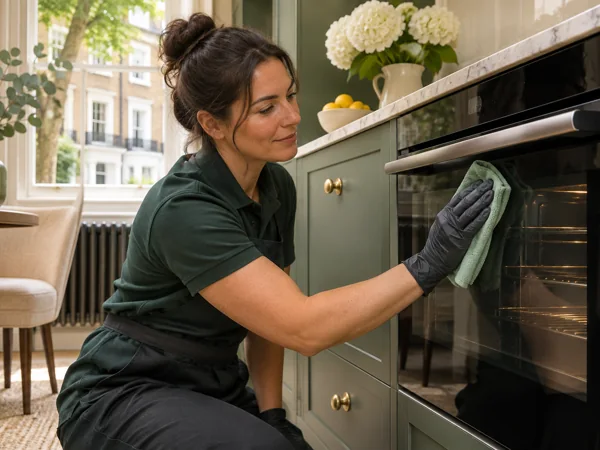
| Location | Example surface | Useful detail |
|---|---|---|
| Beside handle | Painted or lacquered cabinet | Clearance and wear |
| At exterior control | Enamel or printed fascia | Affected setting and existing marks |
| Under door | Tile or timber | Threshold or floor condition |
Record build-up in relation to the side liners and floor
Check for a visible mark when the appliance is cool. A splash might extend from the floor up to a textured panel or sit by a support. Give the approximate position using the nearest shelf slot, edge or corner. If a deposit is on both a smooth area and a lining, describe them separately. Mention the model and the lining material if you can identify it. A close photograph can show the mark, while a wider picture helps locate it in the space you want assessed.
If a product or maintenance cycle was previously used, pass on the details you know and what happened afterwards. A change to gloss or colour may be worth reporting separately from the original deposit. A chip or scratch nearby can be included in the same account with its own position. The cleaner can assess accessible grease and baked-on residue with those details in mind. Keep fitted supports and panels in place so the affected surface can be examined in its current condition.
- Locate the spill by an edge, guide or lining seam.
- Name the material under the deposit where possible.
- Mention previous treatment and any change afterwards.
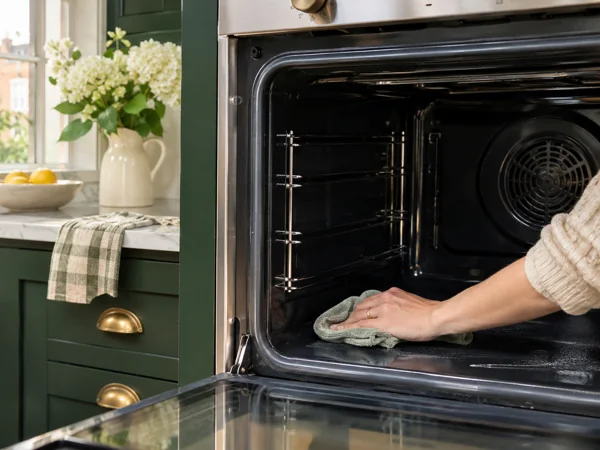
Give the Goodmayes arrival and indoor route in the same message
Redbridge Council’s directory locates Goodmayes Park on Aberdour Road in IG3. If you mention the park as a reference, also give the full postcode and the entrance you want the cleaner to approach. A house can face a different street from the one giving access to the side or kitchen door. A flat may have one block name and another number over a communal entry. Include both where they help. Let us know where the resident or key-holder intends to meet someone approaching from the street.
If the kitchen is at the back of the property, explain the route from the chosen door or gate. Note steps, a threshold or a narrow turn where useful. If the building is shared, specify the stair or lift and identify the correct landing. Ask who is able to confirm visitor access if another household or manager controls the door. If an outside entrance is possible, check who can open it on the day. Entry codes and similar details can be shared privately after arranging the visit.
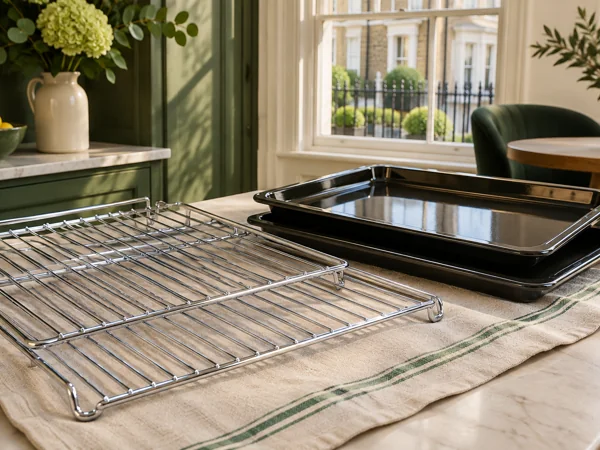
Sort the original racks and trays by the appliance they serve
Look at the loose pieces you use and any spares you keep in a cupboard. Give the cavity for each rack or tray and describe the finish. A grill insert can be listed independently from its pan, even if they are usually stored together. For a shelf on a sliding guide, identify the shelf and support separately and say which one normally lifts out. Leave a tight or fixed part where it sits. Put away personal cookware before the appliance is examined and leave the oven cool.
Suitable removable items can be considered for dip-tank treatment once their construction and condition have been checked. A tray with a coating, worn edge or loose handle can be assessed separately. Mention a missing piece as its own detail rather than assuming it will be there. If another person has the keys, tell them where the requested spare shelf or pan sits. The accepted item list can be reviewed and set alongside the oven model so you can tell which accessories were handled.
- Match original racks and pans to the oven or grill.
- Note unusual coatings or issues with fitted guides.
- Tell the person opening up where to find stored pieces.
Name the appliance parts in your quote
| Piece | Where to locate it | What to give |
|---|---|---|
| Main oven rack | Inside fan oven | Quantity and finish |
| Grill pan | Separate grill | Insert and original handle |
| Sliding guide | At the cavity wall | Model and usual movement |
List the cooking top and overhead items on their own
Describe the hob type and the part you want discussed. In a range, an upper surface can include gas rings, griddle or pan supports. A separate glass top has zones you can use as reference points. Show the area nearest the worktop if it has collected grease. Identify the adjoining material if a mark crosses the edge. Name a splashback separately by finish and position if you are asking about it. A wide image gives us the arrangement of the hob, nearby surfaces and oven.
If you are enquiring about an extractor, describe the position and visible finish. Give filter details from the model or manual if available. The canopy, outer trim and filter can all be discussed independently. Take a picture from below without reaching or removing the cover. We can then consider the accessible parts and give the hob or hood its own place in the quote. Pass the final list to the person meeting the cleaner if they will be showing the appliance for you.
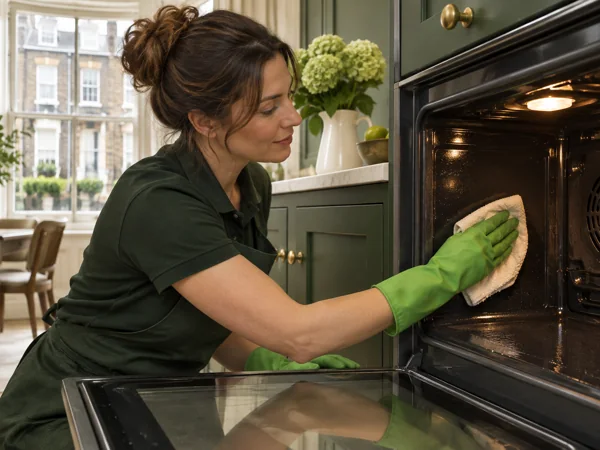
Check the appliance and parts before closing the property
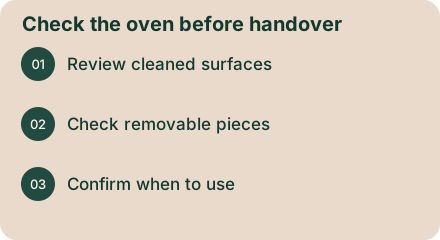
At the end, refer to the named door, cavity and accessories on the accepted list. Ask which pieces were removed, which parts were accessible and what was observed around a reported mark. If you want someone else to handle that review, give them the model and the location of every key item. Ask when the appliance can be used again and tell the next person who is cooking. If the visit takes place before a handover, allow time to check the oven and find the original pieces before giving the keys back.
Keep the relevant instructions and model details beside your appliance list, particularly if you have matching ovens with different fittings. Record any extractor, separate oven or other part discussed for a future appointment. Keep that enquiry independent of the pieces just reviewed. If a resident moves in later, tell them where spare trays and shelves are and which oven they serve. A record of the actual appliance positions can avoid uncertainty when the doors and fascia look very similar across a kitchen.
Give an approach for a Goodmayes home
| Point | What to identify | Who to ask |
|---|---|---|
| Street door | Entrance and full postcode | Resident |
| Communal area | Stair, lift or yard | Key-holder or building contact |
| Kitchen | Oven location and working space | Person opening up |
Get an oven cleaning quote in Goodmayes
Request a quote with the oven type, number of cavities and any extra appliances.
Get a QuoteOther Cleaning Services in Goodmayes
Local references · Redbridge Council, Goodmayes Park
Goodmayes oven cleaning questions
Can I ask about a range door that opens very close to a cupboard?
Yes. Give the cooker model and show the cupboard and door together to explain the clearance.
What if I can only identify Goodmayes Park and not the outside address from memory?
Check the actual door and full postcode before the visit. Use the park only as a nearby reference.
Can I list a coated tray when the manual is missing?
Yes. Describe its appearance and which oven it belongs to. It can be assessed for suitable treatment.
Should I mention a mark that crosses a liner edge?
Show both surfaces in one photo and name the model or lining where known, so the area can be identified.
Can I include a gas support without adding the whole hob?
Give the hob type and identify the support you want considered. We can discuss it as a separate item.
Does a later oven visit need details for a separate grill?
Yes. Record the grill position, original tray and any residue so it can be considered independently.