 Housekeeper
Plan around the family kitchen
Oven Cleaning in Gants Hill
Arrange oven cleaning in Gants Hill around the appliance your household uses every week. Identify the main oven, grill, shelves and trays you want assessed. Give the property entrance and your next planned cooking time so we can discuss a quote and appointment for your kitchen.
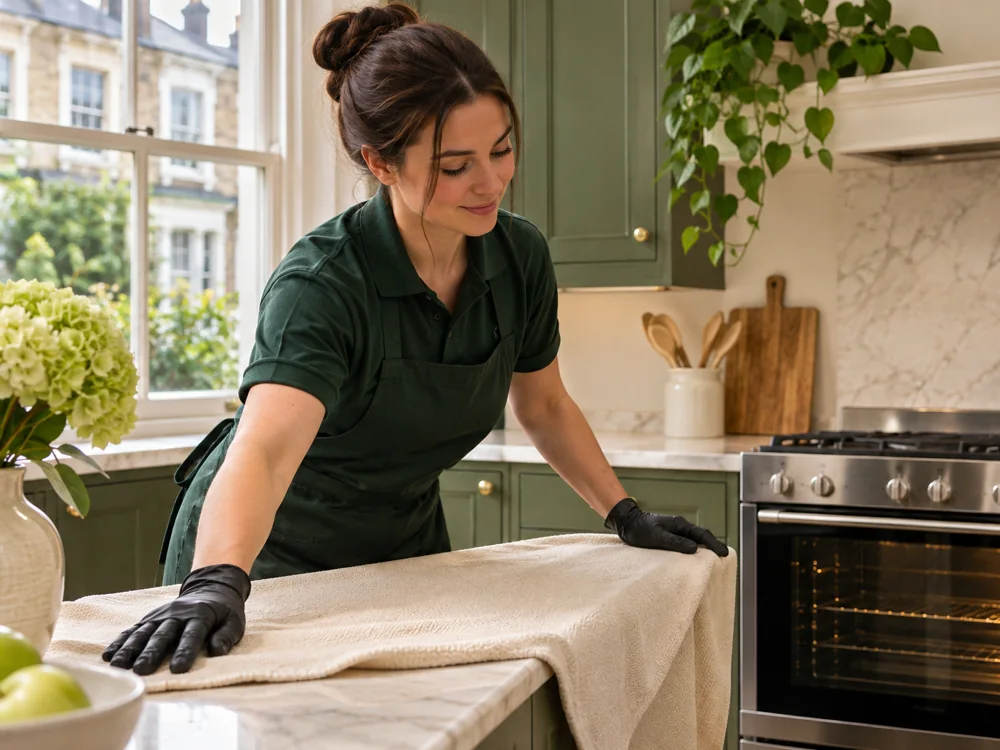
Can I ask for a clean for my double oven in Gants Hill?
Yes. Give the full postcode, main and smaller cavity positions, and the accessories you hope to include.
Can you use our side access?
Tell us which entrance the property can make available and describe the approach, steps and any shared gate.
Decide which oven the family needs to keep in regular use
List the oven or ovens people use over an ordinary week. If one is used for large roasting dishes and the smaller one does most of the grilling, decide where the cleaning should start. Check the cooker and photo while it is cold. Include a full view of the controls and doors, then show a priority mark and its position inside the oven. A cooker can serve several functions without having a separate cavity for each one. Say whether the grill is built into the main oven or has another door.
For older equipment, give the make and model if it can be read from the manual or a label near the opening. Leave the fitted cooker in position. Mention parts that have been replaced, including trays bought after a previous owner moved out. Tell us if any area is inaccessible or a cavity is already out of use. When somebody else is at home, share the oven pictures and describe which rack normally fits where, so they can explain it without turning the cooker on.
- Start with the most frequently used cavity.
- Identify the grill separately even if it shares controls.
- Send a whole-cooker picture with the model if available.
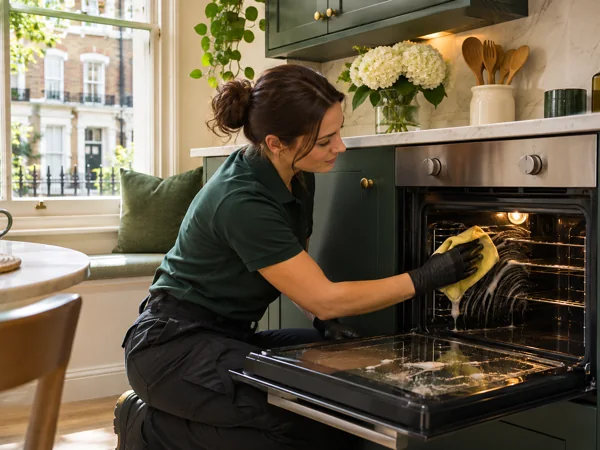
Compare household cooker arrangements
| Cooker | What to identify | Detail for the quote |
|---|---|---|
| Single oven | Main compartment and integrated grill | Usual rack positions and grill tray |
| Double oven | Main and smaller cavity | Which compartment gets regular use |
| Range | Separate oven doors, griddle or warmer | Which part and accessories to consider |
Describe a double oven and any additional cooking area
Use a position to explain each compartment. A small upper oven may also be the grill. A range can have separate ovens, a griddle and a warmer or drawer with matching handles. Show which ones you use and which parts are to be assessed. If one door has not been used because of a fault, state that before the appointment. For problems with heat, ignition or a hinge, seek advice from an appliance specialist separately. The technician can discuss cleaning around the existing condition once the affected areas are known.
A freestanding cooker can also include a hob, while a fitted oven might sit below a hob made by another manufacturer. Check the layout rather than assuming a photo of the oven includes the model of every nearby appliance. Write a separate description for a hob or hood you want considered. Add a tray, rack or detachable part only to the appliance it actually fits. Ask for a separate line on the quote for a different compartment if the household is still deciding what to include.
Give Gants Hill access details that work away from the station
Transport for London lists Gants Hill Underground station on Cranbrook Road. If that helps explain the area, use it with your full postcode and the exact address. Tell us which entrance actually leads to the kitchen, such as a side door past a driveway or a shared lobby with an intercom. In a row of houses you may need to explain the gate beside the right house number. For a flat give the floor and how it is reached, and confirm whether equipment can use the usual visitor entrance.
Check that unloading gives a route into the kitchen rather than ending on the wrong side of the property. Mention a narrow turn or steps after the gate. If a driveway is used by more than one household, tell us where a technician can set down equipment without blocking others. Give the name of the person who can open the correct door and a clear place to meet them. If an agent or family member is arranging access, make sure they know how to reach the kitchen from the agreed approach.
- Send the actual house or building entrance and postcode.
- Confirm an unloading point and route.
- Explain any steps, shared gate or separate intercom.
Tell us what was cooked where the main mark appeared
A dark area under the lowest rack can come from an overflow, while grease around the grill can build up when trays and inserts are used often. Describe the ordinary shelf position and whether the cooker was heated again after a spill. Give a photo showing the cavity as a whole as well as the affected surface. Mention a cleaner or cycle already used and which area it reached. A residue patch and a lasting change in a finish can look alike. The technician can make an assessment before advising how each should be treated.
Show a lining that seems to have a different coating from the enamel. Give the instructions from the appliance maker if you know there is a catalytic or specialist panel. Describe any change you noticed after a self-clean cycle. Point out chipping, worn trim, a bad seal or another issue before work. A glass pane may be greasy on its inner face or it may show a streak between layers. Compare it with the door open and closed, and tell us about past glass replacement before the technician assesses which surfaces can be reached.
- Include a photo of the mark in context.
- Describe recent cooking and cleaning products.
- Share any care instructions for the lining.
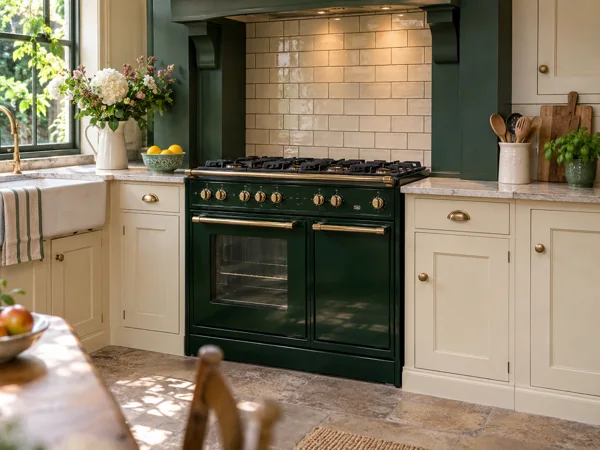
Check frequent use and affected parts
| Use | Possible concern | Useful observation |
|---|---|---|
| Roasting | Grease along side walls | Position and surrounding lining |
| Grilling | Film on tray and insert | Tray coating and detachable handle |
| Baking | Spill below the lower shelf | Whether heat was used again |
Group removable parts by the cooking job they do
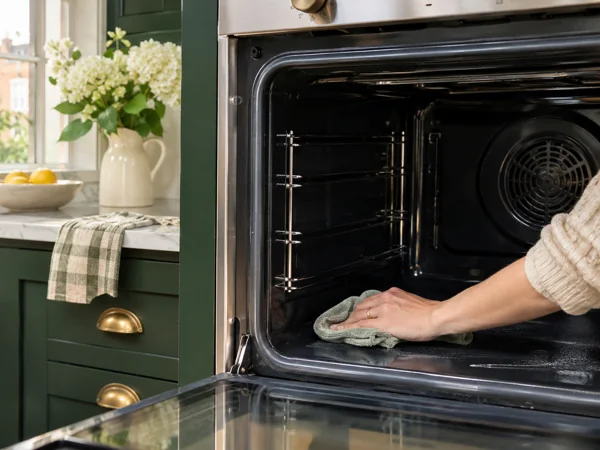
With the oven cold, remove food, ordinary cookware and foil. Set out the trays, shelves and grill accessories you want assessed. A pan with a non-stick coating may need different handling from a wire shelf. Suitable removable components can be cleaned apart from the oven and may be soaked in a dip tank where appropriate. The technician considers the material, finish and condition. Keep a removable handle with the tray and separate insert it fits. Identify the spare racks that belong with a different oven rather than putting them all together.
Leave fitted runners in place if they do not move freely or you are unsure of the fixing. Tell the technician if a rack sits unevenly or catches at a particular shelf height. Mention a damaged coating or a tray that no longer sits flat. Make room on the nearest worktop so the parts can be looked at one at a time. If the household has more than one set of cooking accessories, let others know which should stay in the cupboard. A clear list makes it easier for another person to help at the appointment.
- Set out only the parts you want considered.
- Identify worn coatings and accessory replacements.
- Leave unfamiliar shelf runners fitted.
Add the hob or extractor with enough detail for separate consideration
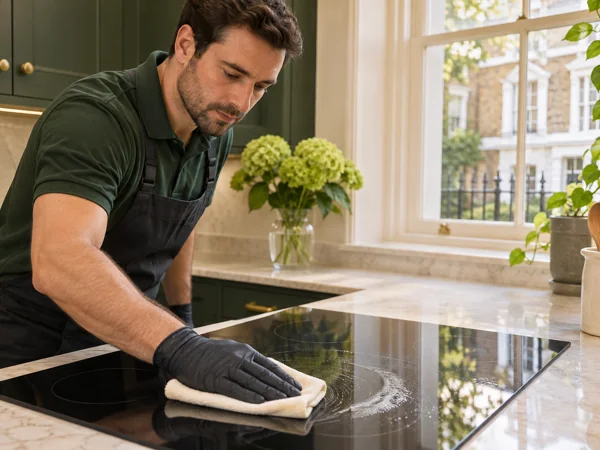
On a gas hob, show the pan supports, burner caps and any drip tray you would like looked at. A ceramic or induction surface may only have deposits around a particular cooking zone. Tell us about visible scratches or damage and give the type if known. List an extra plate or griddle separately. Take a photo showing shared controls if the hob and oven use the same front panel. Ask which of the hob parts can be assessed and confirm the work before adding the kitchen to the booking.
For an extractor, describe the visible cover, approximate height above the cooking surface and filter type if known. A metal mesh filter may need a different discussion from a disposable insert. An outside cover can have separate grease deposits and might sit close to a cabinet that limits reach. Include a view of the full unit taken from an accessible position. Give each item its own place on the quote. Tell the technician if access is needed to a different appliance while the oven is being cleaned.
Agree the kitchen timetable
| Stage | What to do | What to confirm |
|---|---|---|
| Before arrival | Leave the cooker cool and clear a worktop | Entrance and any shared route |
| At assessment | Show the named cavity and loose parts | Priority surfaces and extra accessories |
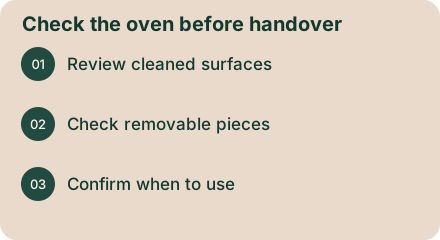
| At handover | Check where parts fit | Return to use and next cook |
Choose a visit time around meal preparation and use of the rest of the room
Arrange for the cooker to be cool and out of use before the technician arrives. Clear the worktop and set aside stools, bags or other items that restrict the oven door. Tell everyone who usually crosses the kitchen if another path is needed for a short time. Keep children and pets away from the work area. Discuss access to water or power if something is restricted. Give the time somebody plans to use the cooker again, and agree the space required if another kitchen appliance is still needed during the appointment.
At handover, ask which surfaces and accessories were treated and when the oven can return to use. If a piece was left in place or an unusual finish needs specific care, ask for that information before someone starts cooking. Confirm where the shelves and tray go and pass the advice to the next person using the oven. Leave time for the person receiving the handover to speak with the technician, especially when different members of the household arrange the booking, provide entry and cook the next meal.
- Allow the oven to cool and clear the work area.
- Tell us when the next meal is planned.
- Pass handover advice to the next cook.
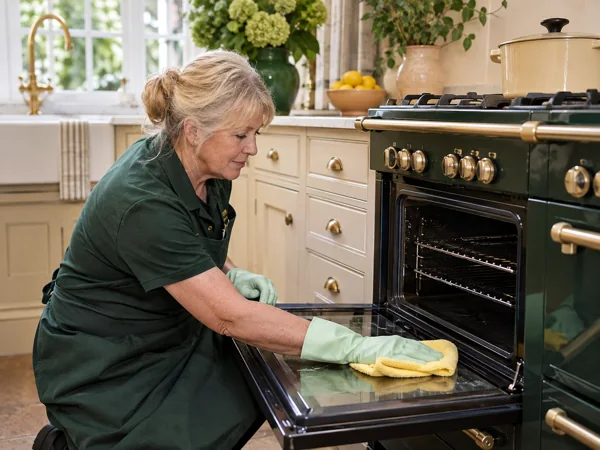
Give one quote request that captures the cooker and what comes with it
Use the postcode enquiry to send the actual address, entrance and appliance description. Include the model, priority cavity and photos. List individual shelves, trays and any extra hob or extractor on separate lines. Give the next planned time for cooking and mention who will show the technician the priority areas. Include known condition separately from the residue. Ask to review the quote if another part or access restriction is found before the visit. Keep the item list and access notes in the same place for the person who will answer the door.
If you are preparing to move out, compare the cooker and parts with the property inventory. Give the dates when other cleaning or key return affects the kitchen. Check who will remain to hear about the work and returning the oven to use. Give the confirmed list to the person opening up rather than relying on them to locate trays from memory. If a new resident needs the oven that day, pass the advice they need along with the correct accessories for each cavity.
Get an oven cleaning quote in Gants Hill
Tell us the oven type, number of cavities and whether the hob or extractor also needs cleaning.
Get a QuoteOther Cleaning Services in Gants Hill
Local references · Transport for London – Gants Hill Underground Station
Gants Hill oven cleaning questions
Can I leave one oven free when you assess the other?
Describe both compartments and tell us which needs to be available. Discuss the working area and timing before the visit.
What if a coated tray is a replacement?
Name it separately and mention differences in finish, fit and condition.
Can I ask about grease around the door handle?
Yes. Identify the finish and any worn parts separately from a mark on the glass.
Can a shared driveway be used to enter?
Confirm the permitted access with everyone who uses it and tell us where unloading and entry are agreed.
Should I check the manual for a special lining?
Yes. If the maker lists care instructions, share them with the model and a photo of the affected area.
When can I plan to bake again?
Give your planned cooking time before booking and confirm when the cooker is ready at handover.