 Housekeeper
Plan your kitchen visit
Oven Cleaning in Croydon
To request an oven clean in Croydon, describe the cooker and the journey from the street to the kitchen. If you are moving between flats or handing keys to an agent, put those details in one message so the person opening the door and the person choosing the work can agree the same plan.
Can I enquire for a flat in CR0?
Send the full postcode, flat number and actual door, so we can check your address.
Can a key holder let you in?
Discuss the access arrangement before booking and provide a contact who can confirm the cooker and agreed tasks.
Start with the condition you inherited
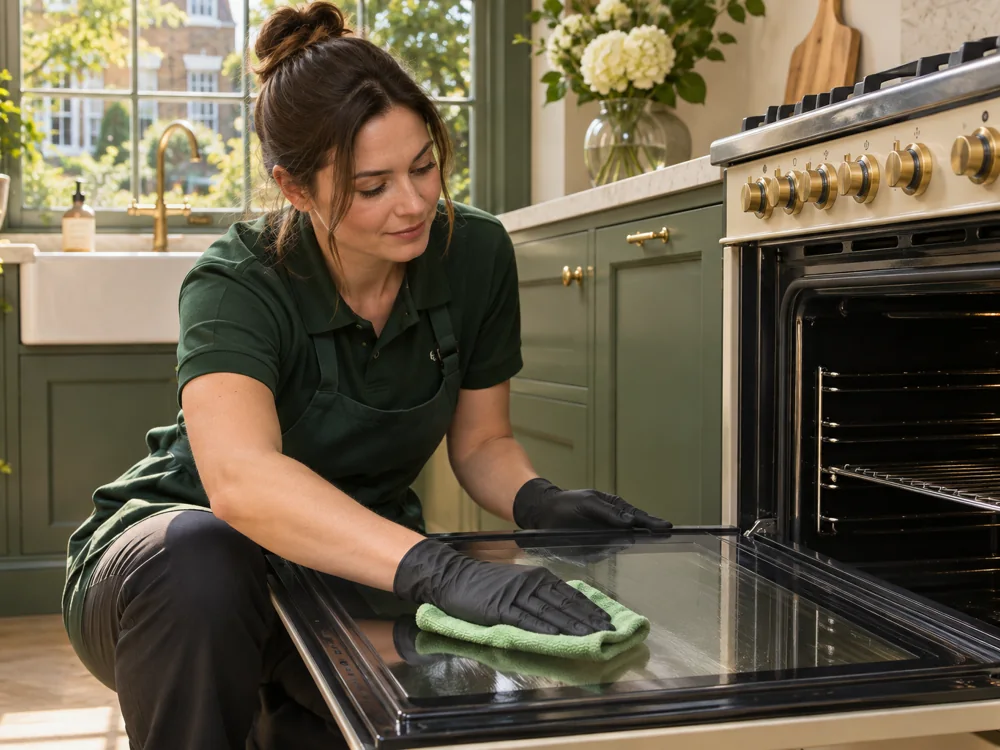
If you have just collected the keys, inspect the oven visually while it is cool and describe the condition as you found it. Record heavy deposits, any changes to the finish and which removable parts are already in the property. An inventory photo may show a tray that was stored in a cupboard when you arrived. Identify it before asking for work on it. If there is a cloudy oven door, tell us where the mark is visible and send a photograph from a comfortable angle.
An empty flat makes it easier to clear the working surface, but it can also mean you have little information about the appliance. Look for the handbook, a visible model label or a move-in guide with an appliance list. Ask the owner or agent for known care restrictions and the history of a part that appears loose. Share any notes you have about a recently used household cleaner. Observations about prior condition let the technician assess the cooker before agreeing which surfaces and pieces can be cleaned.
- Take a photo of the oven as you found it.
- Count any racks and trays already present.
- Ask for care notes for the installed model.
Check how many cavities the tenant actually uses
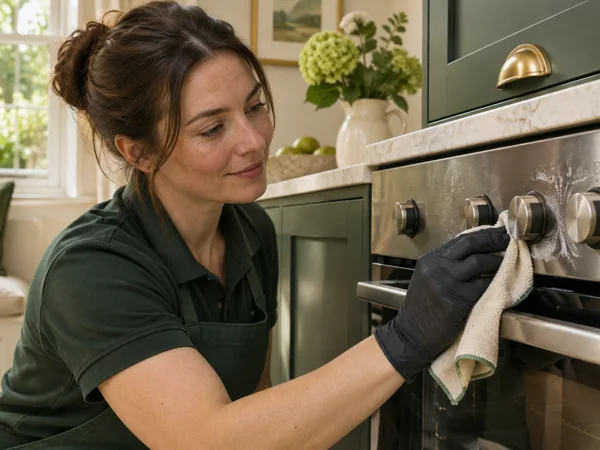
A one-line entry describing a cooker can conceal several compartments. Take a photo of the full front and say which parts have been used for meals. A rental inventory might list an oven and grill together, even where one is in a separate upper unit. Conversely, a warming space can look like an oven in a photograph without the controls visible. Send a wider view and add a reference from a label you can reach without moving the appliance. Tell us which doors belong in the enquiry.
If you plan to leave a separate compartment unused, note its position so the person attending can point the technician to the correct oven. A double unit may have different finishes in its upper and lower cavities. Supply information about each one you want assessed. If you also need to discuss a hob or extractor, give each item a line of its own. It is easier to check the quote against an inventory when the work is grouped by identifiable parts rather than the number of exterior doors.
Move-in oven check
| What you find | Detail to send | Why it matters |
|---|---|---|
| Cavity partly filled with pans | Which accessories belong to the appliance | Separates removable pieces from personal items |
| Small upper door | Photo with nearby controls | Identifies the type of unit |
| Mark in glass | View from inside and outside | Helps locate the affected face |
Confirm access from the correct Croydon street
Croydon Council’s listing places Croydon Clocktower on Katherine Street. If you are describing a home in central Croydon, a well-known building can help orient the approach, but send the full address and the entry door that serves the property. A block can be known by a shop or landmark on one side while the residential door opens on another. Identify the street and sign a visitor should look for and include the name or number that appears on the intercom.
Ask the building contact about arrivals with equipment. Confirm if the main lobby can be used, or give the alternate drop-off and the route from there to the flat. Identify the authorised lift and the floor shown on its controls. If stairs still lie in the route after leaving the lift, mention them before booking. Give the telephone number of the resident or key holder and agree who can meet the technician if reception only takes visitors upstairs once someone has arrived.
- Name the authorised entrance and intercom label.
- Describe the lift and any remaining stairs.
- Give the contact who will be there on the day.
Use a handover note that stays with the keys
When one person opens up and another chooses the work, make a short note that includes the unit address, the date and the quoted items. Identify who can make a decision when the initial check reveals a part that cannot safely be moved. If the caretaker only has permission to open the flat, make sure the owner can be reached to discuss any question. Arrange the time the key must be returned as part of the visit so the work can be planned within the access window.
If the flat is still occupied, agree where to put personal cookware and food before work begins. If it is empty, check the working facilities and tell us how the technician can access water or power where needed. A handover note can also record a working surface next to the oven, especially after a move when boxes are still stacked in the kitchen. Keep sensitive entry details within the agreed private channel, and have a number available if the key holder needs to clarify a changed door or lift arrangement.
Leave the fitted pieces for assessment
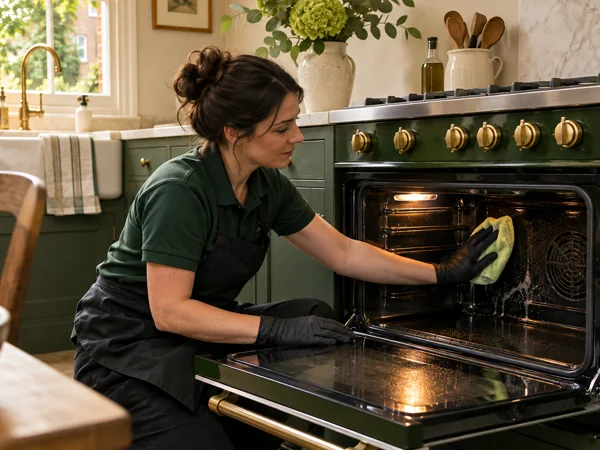
When the oven is cool, remove food and loose personal utensils. Describe a wire rack or grill pan you want included separately from dishes you intend to take to another home. The technician can examine the way the components are fitted and decide which ones can safely be removed and treated. Suitable pieces may be soaked in a dip tank. Report a bent rack, a sliding rail that catches and an insert whose finish you cannot identify, particularly when the appliance has passed through several occupants.
Give an account of the spills alongside the accessory list. A hardened patch at the bottom of the cavity may have formed during repeated cooking, while a blackened tray may be older than the visible deposits elsewhere. Show what you can see without scraping a surface. If the old marks have affected how often you use a compartment, mention that during inspection. Changes to a finish can remain visible after cleaning, so ask what the technician can reasonably assess and which areas the quote will address.
- Keep fitted shelves in place if unsure how they move.
- Tell us what has accumulated in the oven itself.
- Identify matching trays by the cavity they fit.
Confirm access during a key handover
| Who or what | Agree before the visit | Detail to keep handy |
|---|---|---|
| Key holder | When keys may be collected and returned | Name and number |
| Building reception | Which door can take equipment | Intercom or lobby name |
| Person requesting the work | Who can answer appliance questions | Quote and list of agreed items |
Ask what can be reached on the door
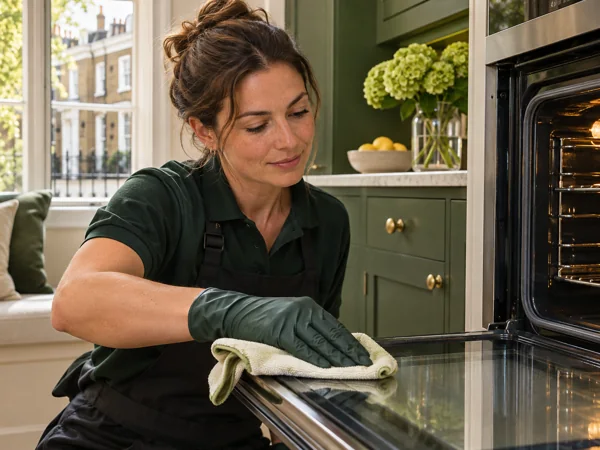
When a viewer can see spotty residue only through the closed glass, it may be hard to locate without an inspection. Describe how it looks with the room light on and from the open position. An accessible face and a space between panes require different access. Tell us if the trim shows a gap or a pane has a chip. The technician can consider the model and condition before handling the door. If the inventory mentions that a panel was changed, provide the relevant note.
Look for a care instruction that refers to the door assembly, then show it to the technician. Avoid lifting a fitted panel yourself. If a first inspection shows a stain is on a reachable face, ask whether it can be included in the planned work. If safe access is uncertain, have the limitation recorded so whoever checks the flat later knows which areas were discussed. Keep the location of a door mark clear, especially when there are two cavities with glass panels beside each other.
Make a separate choice about the hob and extractor
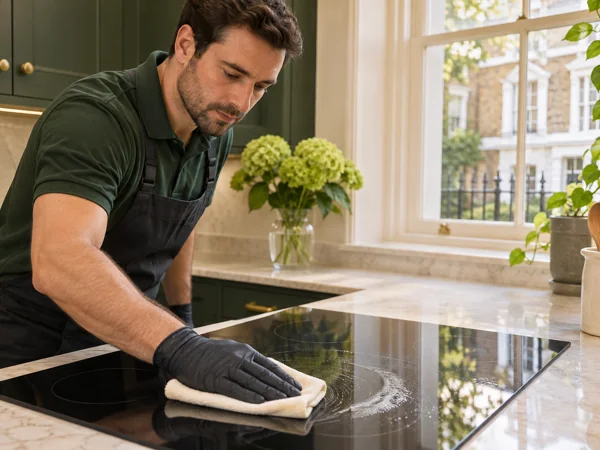
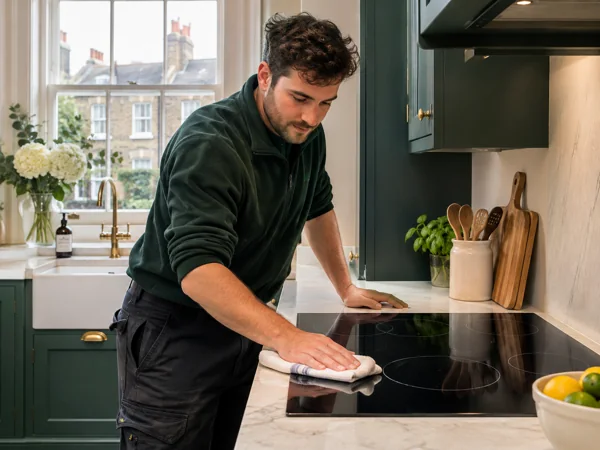
A glazed hob with splash marks around its cooking zones is different from a gas unit with removable supports. Give the finish and say which parts you want included. Tell us if the hob is elsewhere in the kitchen, for example above a different run of cupboards from the oven. A counter lip or decorative surround can be made from a material that needs distinct care. When you send an image, name the surface you are enquiring about and leave unrelated worktop items outside the list.
For the extractor, describe the visible finish, approximate working height and filter type if you know it. Include a picture of the underside taken from a stable position if that helps show which parts are accessible. Keep the cover and any filter as distinct requests. If an inventory groups appliances together, ask us to identify what is included for each one. That will let the person checking the home see which agreed items were cleaned and which need a separate discussion.
- Name the hob finish or type of supports.
- Share extractor height and filter information.
- Confirm optional appliances against the written list.
Finish with current notes for the person using the oven
Begin with the postcode form when you are ready to discuss the work. Pass on the oven photo, notes about the building and the contact for the flat. Ask the technician when the appliance can be used again and which removable items were cleaned. If a resident will arrive after the work finishes, agree how to pass on those instructions. Share the actual work with whoever is keeping the inventory so it can be recorded on the relevant line rather than filed as a general kitchen visit.
If you need to return keys to a nearby office, build the journey into the time available. Ask the person signing for them whether they need to see a record of completed items. Where a second visit is being considered, retain the exact model and the agreed limitations about access or appliance finishes. A later resident or owner can then follow up on a particular item with its own details. If the primary concern is a visible mark, record which compartment and surface it was on after checking the completed work.
Record the agreed kitchen items
| Item | Identify in the quote | Check afterwards |
|---|---|---|
| Oven | Cavity by position and use | Any part that remained outside the work |
| Hob | Material and supports | Which components were handled |
| Hood | Reachable cover and filter type | Return-to-use guidance if given |
Get an oven cleaning quote in Croydon
Request a quote with the oven type, number of cavities and any extra appliances.
Get a QuoteOther Cleaning Services in Croydon
Local references · Croydon Council, Croydon Clocktower
Croydon oven cleaning questions
Can the person with the keys be different from the person paying?
Yes. Agree who admits the technician and who can discuss the work after inspection.
What if a retail address and the flat share the same postcode?
Give the full residential address and the street, name or sign for the actual entrance.
Can I use an inventory photo to identify the appliance?
Yes. Check that the photo shows the oven currently installed and supply a model reference if one is visible.
How can I report a loose grill tray when the property is empty?
Describe where the tray is stored and whether it belongs to the current grill. Ask for it to be assessed as a separate part.
What if the flat is still full of moving boxes?
Leave a passage to the kitchen and clear a stable surface beside the oven before arrival.
Can a kitchen extractor be added after the first enquiry?
Yes. Share its details and ask for an updated quote before the appointment.