 Housekeeper
Detail-led care for your oven
Oven Cleaning in Chelsea
Arrange oven cleaning around your Chelsea kitchen and the appliances you use. Tell us about fitted ovens, separate grills and any adjacent surfaces you would like assessed. Start with the postcode and a description of the oven, then add the finishes, loose accessories and timing that matter to your household.
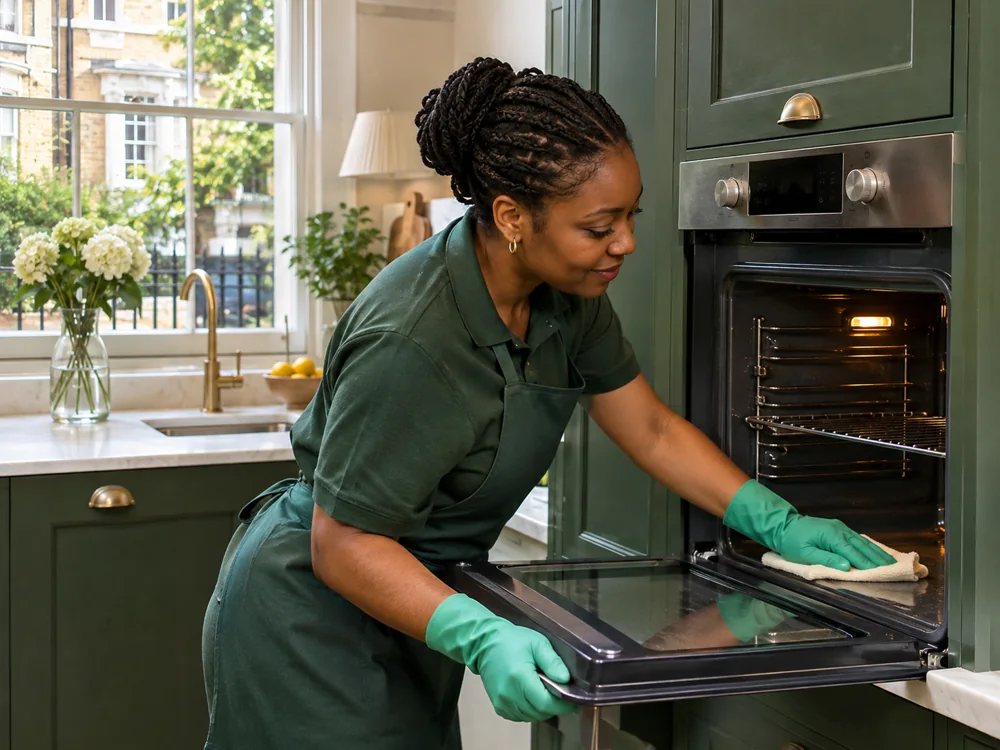
Can I enquire about a built-in oven in SW3 or SW10?
Yes. Give the full postcode, model and number of cavities. Mention a lift or lower-ground entrance. Let us know which cavity has priority.
Can I add an extractor to the same enquiry?
Yes. List the extractor separately and describe the filter, finish and height above the hob.
Start with the appliance you use most
Open the main cooking door while the oven is cool and look at which parts actually collect the spills. If the oven sits underneath a separate microwave, photograph the whole stack as well as each oven door. A photograph narrowly framed around the knobs can make a two-appliance installation look like one cooker. Let us know which cavity you use for roasting, and where the grill is housed. If a combination appliance is among the items you want cleaned, include its model details so it can be considered separately.
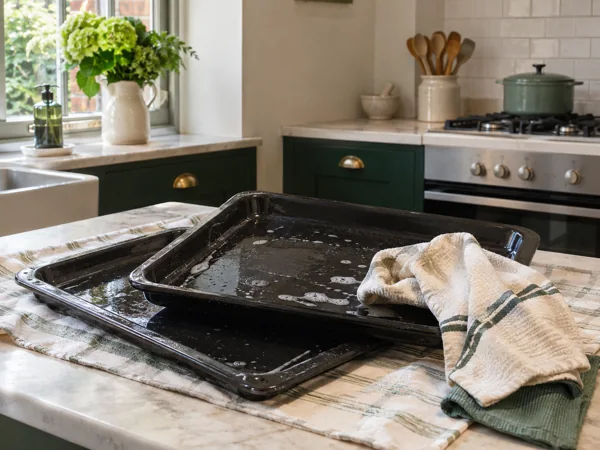
A fitted kitchen may have a second oven on the other side of an island or a matching front on a warming drawer. Choose the items you want discussed before you send your request. Extra trays can be easy to forget when they are stored in a cupboard. Lay those out when identifying them, and mention any shallow enamel tray that is easy to confuse with a loose baking sheet. A quote can then describe the appliance and accessories in language everyone in the household recognises. If you cook on several shelves at once, say which shelf height has the heaviest deposits. That small detail can help distinguish a tray that repeatedly catches drips from a rail that only looks dark because it sits in shade.
- Send a photograph of the appliance front and model label.
- State whether there is a separate grill or warming drawer.
- List trays and shelves that are stored elsewhere.
Describe the entrance from the pavement to the kitchen
The Royal Borough of Kensington and Chelsea lists access to Royal Avenue from King’s Road and St Leonard’s Terrace. A nearby street name can help orient a visitor, but give us the full postcode and the entrance the building actually uses. A serviced flat can have a public-facing doorway and a different entry for contractors. Confirm the agreed door and its bell or reception label. For kitchen access below street level, let us know whether there is an outside staircase or whether the route goes through the main hall.
A kitchen at the rear of the property may be a fair distance from the unloading point, even when it is on the same level. Explain any narrow turns, internal stairs and doorways that cannot be propped or left open. Ask the building contact about lift use if there is a shared lift. Find out when that person is present and how the technician can contact them. Keep access instructions available to the person handling arrival if someone else made the enquiry.

Name each appliance in the fitted cabinet bank
| Item | Detail to send | What to agree |
|---|---|---|
| Built-in oven | Model label and cavity count | Which cavity and shelves are included |
| Combination oven | Make and model plus close-up of the front | How it will be assessed separately |
| Range cooker | Working ovens, grill and warming space | Which compartments are part of the quote |
Identify enamel, specialist liners and exposed finishes
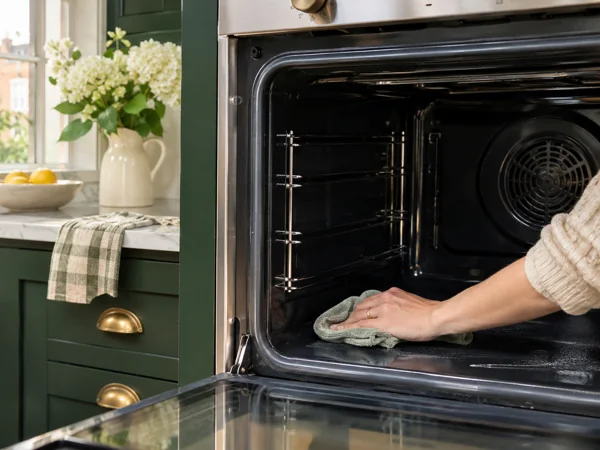
Dark deposits on a plain enamel base often look similar to marks on side panels from a distance. Look at the maker’s guidance if you have it and tell us about any catalytic or self-cleaning liners. The surface behind a shelf and the coated panels it slides against can have different care instructions. Avoid trying to prise out a panel to identify it. A visible model number and a photo taken with the shelves as they are can give us more context before the visit.
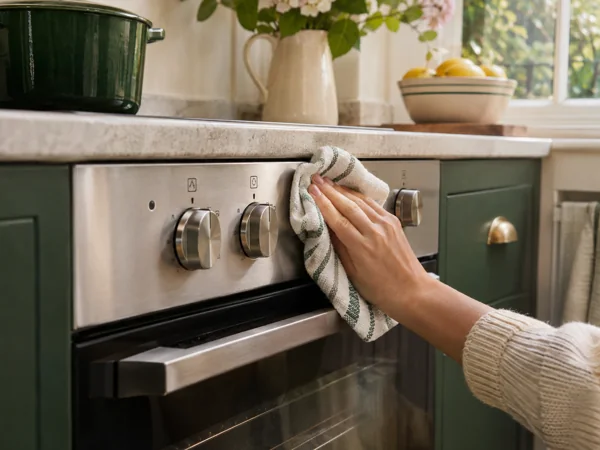
On the outside, identify separate finishes on handles, trim and control panels. Brushed metal may sit alongside glass or printed markings. In some kitchens a decorative panel close to the oven may also be sensitive to moisture or contact. Point out the cabinetry at the side and beneath the appliance when the technician arrives. If the panel has already lifted, a knob is loose or a finish is chipped, explain where you first noticed the issue so it can be recorded before work starts. If you already have photographs, check that the model characters and oven doors are readable before sending them. A short note alongside each photo can show which items you want addressed and which belong to an appliance that stays in use.
- Share care instructions you already have for specialist liners.
- Photograph any chips or marks that concern you.
- Mention delicate trim or adjacent cabinetry.
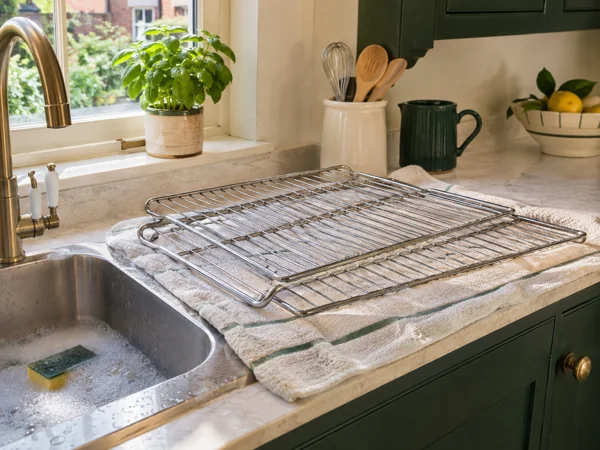
Agree which racks, supports and trays to include
A shelf that slides freely and one on an enclosed telescopic rail can look similar with the door closed. With the oven cool, show the technician the usual shelf positions, including the rack used over a grill pan. The oven cleaning method can include removing suitable pieces and soaking them in a dip tank. Suitability depends on their construction, coating and condition. Freely removable racks can be discussed separately from fitted runners, hinges and parts that a technician needs to inspect in place.
If you have two identical ovens with different accessories, note which shelves stay with each one. The rails can be different heights even if the cavity widths look the same. Flag a tray that rocks or a grill handle that detaches in a specific way. Keep the surrounding work area clear and put away kitchen knives and loose ingredients before the visit. Allow somewhere for removable parts to be handled and keep children and pets out of the working space until it is handed back.
What each finish tells us
| Visible part | Information to share | Point to discuss |
|---|---|---|
| Side liner | Manufacturer guidance or model details | Treatment appropriate to that lining |
| Inner door | Reported position of the streak | Access available on that model |
| Brushed metal trim | Existing scratches or worn markings | Which adjacent finishes need particular care |
Explain which side of the glass needs attention
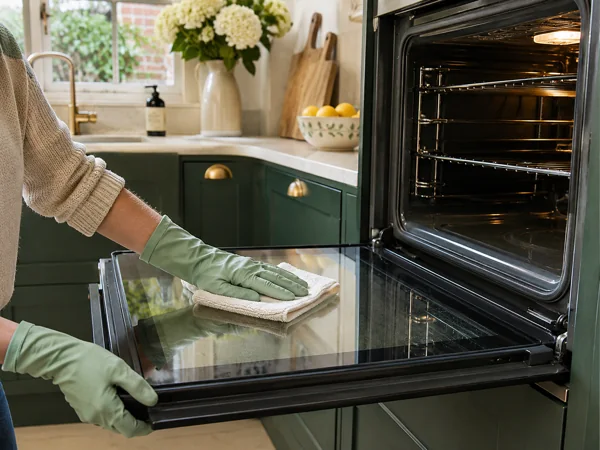
Grease often shows up first against the light when the door is open, while a mark you first notice from across the room can be on the outer face. Mention any streaks that appear to sit between the panes. Door constructions differ, including how the glass is retained and which parts can be reached. Tell us if the glass or hinges were replaced, if the door feels unusually heavy in use or if a seal is visibly damaged. Access between panes can be discussed after the appliance has been identified.
A separate photograph can help if you are concerned about one strip near the vent or an opaque patch at the bottom. If a spray or self-cleaning cycle was recently used, say when and where. Some marks are spills and others are discolouration or changes in the finish. Ask the technician to review your priority area with you before starting. Leave any unusual sounds or temperature problems for an appliance specialist, and tell us about known faults before scheduling the clean.
- Describe the mark and where it is visible.
- Tell us about recent sprays or self-clean cycles.
- Mention known glass, hinge or seal problems.
Decide what to do with the hob and extractor
A hob above the oven usually needs its own entry on the quote. Give the hob type and note the parts you would like assessed. For gas, describe the pan supports and burner caps. For a flush induction surface, give the approximate width and mention scratches or marks at the edges. A separate griddle or barbecue plate on a range deserves its own description, especially if its maker specifies a particular way to care for the finish.
If the extractor is integrated into an overhead cabinet, say where the cover and filter sit and how high they are above the working surface. A ceiling-mounted design or a unit fitted inside a chimney breast can create different access questions. Describe the visible cover separately from the filters and identify reusable metal or disposable pieces if you know the type. Ask which items can be assessed at the address and check that each agreed item appears on the quote. Avoid ordering replacement filters based on a photograph alone.
Keep the cooking schedule and cleaning visit apart
Choose a day when the oven can remain cool and out of use before the appointment. If a cook, guest or other household member normally uses the kitchen in that window, let them know about the plan. Clear food, loose cookware and foil out of the oven. If you use the oven for warming plates, put those somewhere else before arrival. Tell us about any separate appliance that needs to remain accessible throughout the visit, especially if its door opens into the same narrow aisle.
When the technician has seen the property and appliance, confirm where removable parts can be handled and discuss access to water and power. If you are planning an evening meal or setting up the kitchen for guests, give the time you need the area again before agreeing the appointment. During handover, ask which surfaces and accessories were included, whether any areas were left untreated and when the oven can return to use. Pass that information to anyone using the kitchen next.
- Leave the oven cool, empty and out of use.
- Give the time the kitchen is needed again.
- Ask about use after cleaning during handover.
Kitchen access to agree with the building contact
| Point on the route | What to check | What to send |
|---|---|---|
| Reception | Delivery or contractor entrance | Door location and entry hours |
| Shared lift | Stops and permitted use | Floor, access contact and steps beyond the lift |
| Kitchen doorway | Clear approach and working area | Internal stairs or narrow turns |
Put the agreed items in writing before you book
Begin with your postcode and build a list that names the cavities separately. For an oven with a narrow upper grill and a wider lower oven, say which one is a priority and which trays are for each. Add any requested hob or extractor work and tell us how the technician can reach the kitchen. A written list helps you see which items are being considered when a cabinet bank includes more than one appliance or another person is making decisions for the property.
For a flat being prepared for handover, look through the inventory and copy any appliance descriptions that differ from your own, then check them against the photographs. You may find that a second oven or separate grill is listed on its own. If you also need the rest of the property cleaned, ask about arranging the appointments around one another. Keep a final appliance list ready for the person opening the property and let us know if an item, access arrangement or deadline changes before the visit. If somebody else will be at home, tell them where the original accessories are stored and what you discussed. Having one agreed list makes it easier to check each shelf and tray before you put the kitchen back into its normal routine.
Get an oven cleaning quote in Chelsea
Tell us the oven type, number of cavities and whether the hob or extractor also needs cleaning.
Get a QuoteOther Cleaning Services in Chelsea
Local references · Royal Borough of Kensington and Chelsea – Royal Avenue
Chelsea oven cleaning questions
Can you quote for just the main oven in a bank of appliances?
Yes. Tell us which door opens to the main cooking cavity and list the accessories that belong there.
Why do you need the model number for a coated interior?
The model can help identify the manufacturer’s instructions for the lining and whether certain parts can be removed.
Can I include extra loose shelves?
List each extra shelf and say which oven it fits. Suitability for soaking or other treatment depends on the part and its finish.
Do you clean between the panes of glass?
Ask about the particular door when requesting a quote. Access depends on the design, condition and how the panes are retained.
Should I use a self-cleaning cycle before the appointment?
Leave the oven cool and out of use. If it has already run a cycle recently, tell us before work starts.
What if the oven is in a basement kitchen?
Give the actual visitor entrance, the steps on the route and any building restrictions affecting access.