 Housekeeper
Care for built-up cooking residue
Oven Cleaning in Brixton
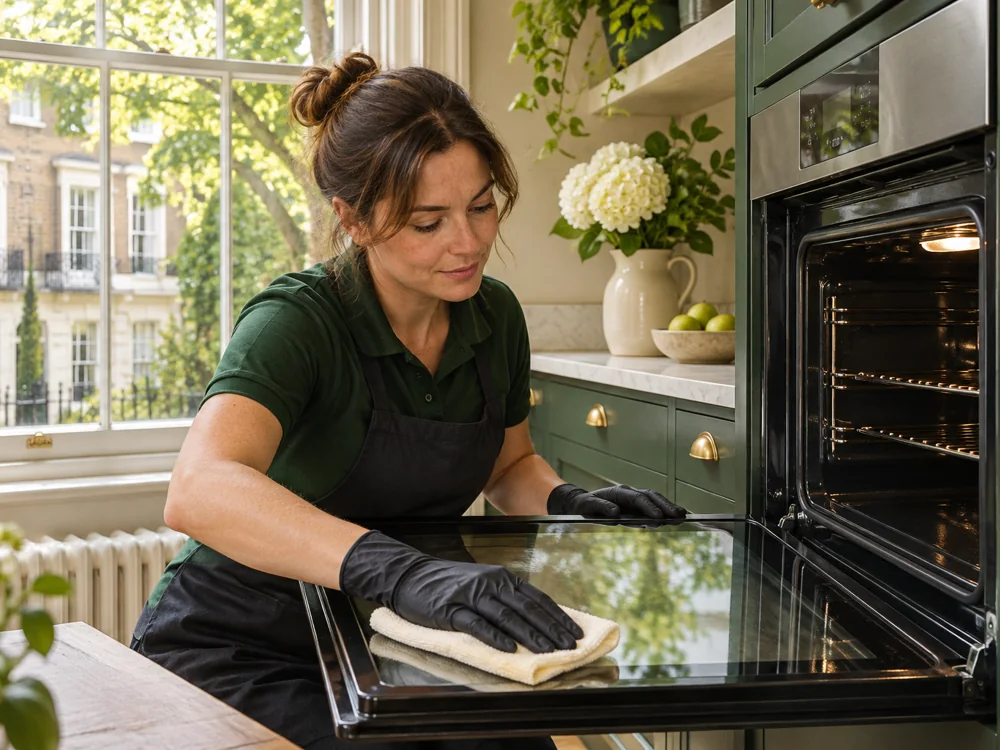
If a roasting spill has baked onto the base or grease is visible across the door, show us where it has collected. For a Brixton oven cleaning quote we look at the type of appliance and the parts you would like attended to. Tell us how long the residue has been there if you can, and mention any previous treatment. We can discuss inspection of the cool oven and separate treatment for suitable removable pieces.
What should I give for a flat behind Brixton's market streets?
Use the full postcode and name the residential approach, including a side road or separate communal door where relevant.
Can you assess residue from an old spill?
Tell us which cavity it is in and where it sits. We can discuss how to assess the accessible surface.
Trace the deposit to a part of the oven
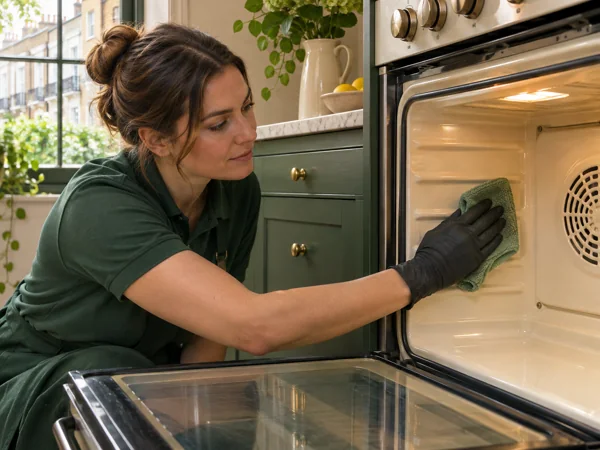
A bubbling pie or roasting tray can leave one concentrated patch on the cavity base. Grease from repeated grilling may mark the upper panel and the glass more broadly. Tell us the location you can see and the kind of cooking you think caused it. The rear corners, the leading edge of a rack and the bottom of a door are useful references. If the appliance has a second cavity, give a separate description of its condition. A picture taken when everything has cooled can show the size of a patch in relation to the cavity.
If you came across the marks after moving in, give the current condition without guessing which meals or products caused them. Tell us about anything you already tried and how the surface looked afterwards. A dry patch that appears lower than the surrounding coating or a change in colour at one corner can be useful to mention. We can assess accessible surfaces and talk through how their condition affects the work. An accurate description also helps decide what you want reviewed first if several areas have built up residue.
- Name the affected cavity.
- Mark the main deposit by its nearest edge or rail.
- Describe any previous treatment you know about.
Use the oven model to identify the cavity surfaces
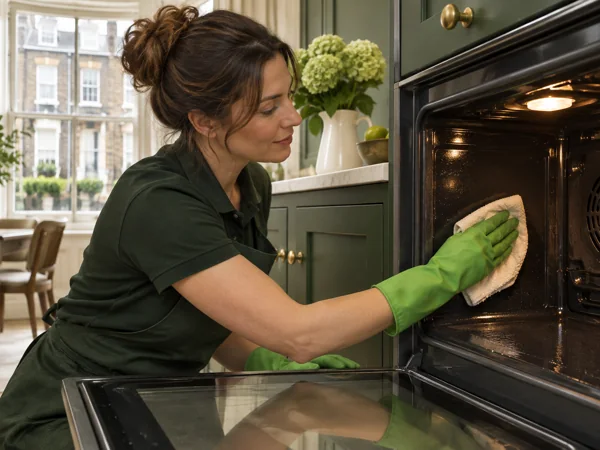
If you have the instruction booklet, look up the description of the interior before you request a clean. A smooth floor, textured side linings and a hinged door can each have different care instructions. A self-clean programme may only apply to particular parts. Mention the model and the material or feature indicated in the booklet. If you tried a programme before enquiring, give its name or describe the setting you selected. There is no need to repeat it or take out a lining in order to send more information.
With a double oven, check which opening sits below the controls and which ones you normally use. In a range, leave space in the description for the smaller oven or grill that you might have placed second on your list. A complete photograph helps show the layout. You can also write a plain description of where the cleaning is requested, such as the lower cavity with two shelf positions in use. Give us a separate view of any removable part you want to identify without opening or removing anything fixed.
Set up suitable shelves and trays for separate treatment
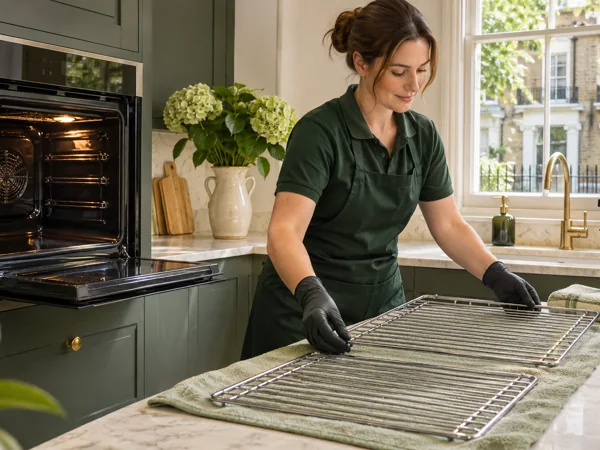
We can discuss removing loose components and soaking suitable parts in a dip tank. Which pieces can be taken out and soaked depends on their construction, finish and existing condition. Start by listing the pieces you want included. A shelf that lifts out during ordinary use belongs on a different part of the list from a runner fixed against the side of a cavity. Add a grill pan and insert separately if both are present. If a piece has a cooking coating, mention that detail when identifying it.
When the visit is arranged, leave an empty, cool appliance and a nearby area where parts can be accounted for. Set aside personal cookware and other accessories that have no part in the agreed clean. A loose shelf or tray stored elsewhere in the kitchen should still be mentioned before the quote if it needs attention. If anybody at the property is unclear about an item, keep a simple list by the oven with the cavity each piece belongs to. Let the technician inspect any fitting that has become awkward to move.
- List pieces that lift free in normal use.
- Mention coated trays and unusual fittings.
- Leave fixed runners and tight fittings in place.
Describe build-up to the technician
| Where you see it | Details to send | Existing condition to mention |
|---|---|---|
| Cavity base | Distance from the door | Coating chips or dull areas |
| Upper panel | Location beneath the grill | Surface or liner type |
| Door glass | Inside, outside or uncertain | Scratch or mark behind a pane |
Show how far the grease reaches around the door
Use the door edge as a reference when describing grease. A film on the inner glass is easier to locate if you note its height or whether it sits beside the handle when the door is shut. If a mark remains visible from both sides, it may be hard to tell which face it is on. Share a picture and explain how it looks from the kitchen as well as with the cool door open. The model helps us discuss access to the affected glass, especially when more than one pane is present.
Give us details of marks that reach the door frame or the area where it meets the cavity. Point out a split or loose section if the seal looks worn, keeping it in place for inspection. If the front also needs attention, describe its finish and the marks around handles or printed settings. Note any labels or adjustments already made to an older appliance. We can discuss accessible parts individually, which helps avoid treating a visible change to a finish as though it were ordinary grease.
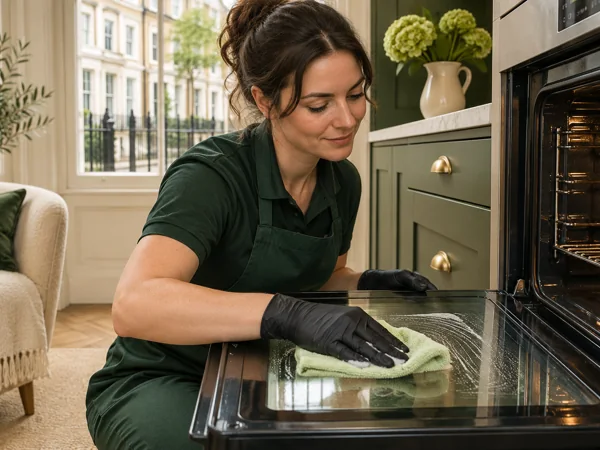
Describe the approach through Brixton town centre
Lambeth Council describes Atlantic Road as a historic part of Brixton town centre with shops and market traders, and documents work there following improvements to nearby Electric Avenue. If you live around those streets, say where the entrance to your flat actually opens. A residential door may sit next to a business or face a smaller road. Keep the address information practical by giving the street, complete postcode and entry label first, followed by the building name or shop frontage if it is helpful. Explain who can meet the cleaner if the street door has no readable number.
For a kitchen beyond a shared corridor, state whether you enter from the street at the same level or go up or down before reaching the flat. In a house, the kitchen might be at the end of a long hallway or behind a side entrance on an adjacent street. Mention the route you use when bringing bulky things into the property and describe any change of level underfoot. If you know of an access restriction on the date you are asking about, provide its details when arranging the visit.
- Use the address of the residential entrance.
- Name the person who can meet the cleaner if the door is hard to find.
- Describe the corridor, stairs or steps leading to the oven.
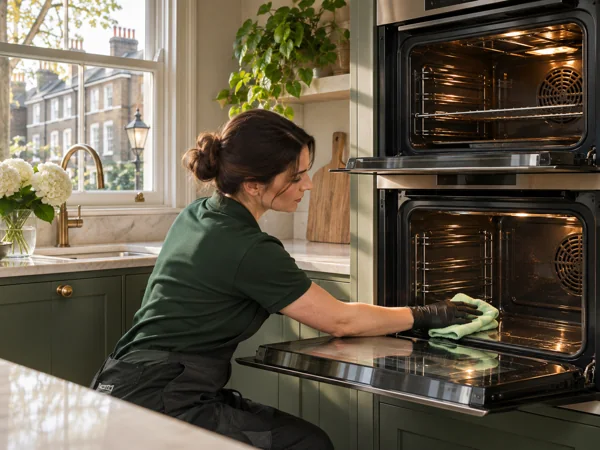
Account for loose oven parts
| Part | Identify it by | What to report |
|---|---|---|
| Wire rack | Cavity and rack position | Residue along the rear edge |
| Grill insert | Its matching pan | Any coating or loose handle |
| Original tray | Dimensions or model | Existing scratches and wear |
Add a grease concern on the hob or extractor
If the same cooking session left deposits on the hob and inside the oven, describe them as separate quote items. For a gas hob, point out the supports and the area around the burners. On a glass hob, locate the mark by the cooking zone or the control strip. Those surfaces may look alike in a photograph taken at close range, so include a wider view when the position matters. If you want a part considered that comes off in everyday use, give its name or show how it sits on the appliance.
For an extractor, check what you can see from floor level. A greasy outer surface can be described by its finish and the position of the deposit. If the filter type is known, mention it together with the hood model. Explain how the canopy is mounted, particularly if it is built into a cupboard or projects over a deep worktop. This information is enough to ask about the addition without first removing a filter or moving any part of the hood.
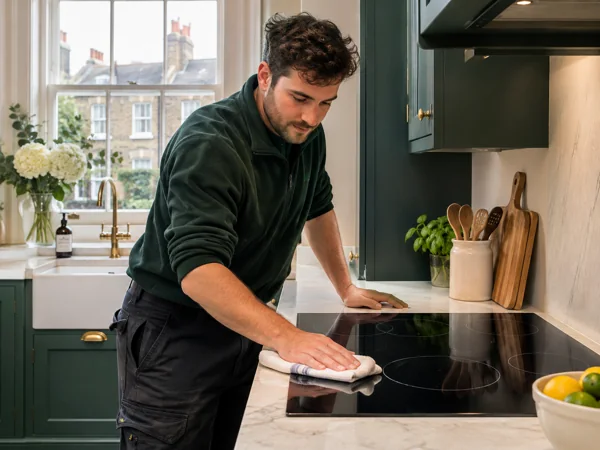
Allow time to cool the oven and clear the adjacent counter
Work out when the appliance will be used for the final time before the visit and leave it out of use long enough to cool. Take away pans or food and leave any pieces you specifically want discussed near the oven. A clear area for the door to open makes it easier to show where residue has collected and for the parts to be examined. If the oven sits at the end of a run of cupboards beside the kitchen door, let us know where you normally stand to open it.
Tell the other people at home how the kitchen will be used while the oven is being cleaned. If a child normally crosses the room or a dog’s bowls sit close to the cooker, plan to keep them clear while the oven and parts are handled. Identify a nearby space that can be used by agreement for loose pieces. A note about limited water or power access is worth raising in advance. An accessible sink, worktop and oven should be discussed with the shape of the room in mind.
- Schedule the final use early enough for the oven to cool.
- Clear loose items from the approach and nearby counter.
- Agree how to keep children and pets away from the work area.
Review the original concern while the appliance is in view
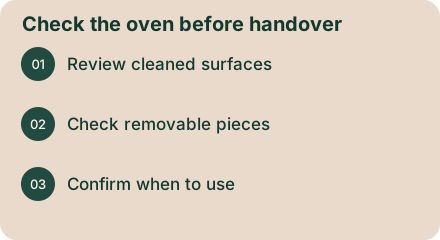
At the end of the visit, use your original description to find the affected part. Compare the condition of the cavity, glass and loose pieces against what you asked to include. If a patch remains, ask what was found when that surface was examined. An older oven can have changes in colour or wear that were difficult to identify through the residue. Ask which components were removed and which accessible surfaces received attention so any later discussion can refer to the same parts.
Confirm when you can use the oven again before putting food in it or planning the next meal. If this is one item on a checkout list, pass the main points to whoever is reviewing the property and make sure the agreed pieces are accounted for. Save the model details and the list of any extras you enquired about. That will help you distinguish a separate hob or extractor visit from the parts already reviewed during the oven clean.
Explain a Brixton market-area entrance
| Wayfinding detail | What to provide | Check with |
|---|---|---|
| Street door | Number, road and full postcode | Resident |
| Alternate approach | Side street or communal courtyard | Person meeting the cleaner |
| Last turn | Internal floor, stairs or rear entrance | Key-holder |
Get an oven cleaning quote in Brixton
Request a quote with the oven type, number of cavities and any extra appliances.
Get a QuoteOther Cleaning Services in Brixton
Local references · Lambeth Council, Improving Atlantic Road
Brixton oven cleaning questions
Can I show you a spill when I do not know what caused it?
Yes. Give its position and approximate size and describe the surrounding surface. A clear picture of the cool cavity can help.
Should I re-run a programme before you see a patch on the cavity base?
Leave the oven cool and explain which cycle ran before. Tell us if the appearance of the patch changed afterwards.
What if shelves from both ovens are stacked together?
Identify the shelves you can and tell us which cavity each usually serves. Mention if you are unsure about any piece.
Can a reusable grease filter go on the same quote?
Name it as a separate item and give the hood model and filter material if known. Access and the parts to include can then be discussed.
Do you need to see my cooker after worktop alterations?
A photo from further back helps show the present clearance. Tell us if a new edge, door or island affects access.
What if the glass has a mark close to a loose door seal?
Identify the area before the visit and leave the seal in place. The condition can be assessed as part of discussing the accessible surfaces.