 Housekeeper
Detail-led care for your oven
Oven Cleaning in Blackheath
If you are looking after a cooker you intend to keep, start by identifying the finishes and fittings that need care. We can discuss a Blackheath oven cleaning enquiry by appliance, with the cavities, removable components and nearby items listed clearly before you agree the work.
Can I send my SE3 postcode for a quote?
Yes. Add the number or building name and tell us which entrance leads to the kitchen.
What should I send for a coated oven interior?
Give the model and any maker’s instructions for the lining, then describe where the mark sits.
Bring the appliance care notes into the enquiry
Gather the handbook or product reference before you show us a mark. A note specific to the appliance can identify surfaces that require different handling, including inserts that look like the main walls but have a distinct coating. Look in the list of supplied accessories for separate advice about wire shelves, runners or trays. Send the relevant pages and explain which part you want us to inspect. If a handbook is missing, send the model details from a label you can see in place and a broad photo of the controls and door.
A cooker may have acquired a replacement accessory since it was installed. Mention a tray or shelf from another supplier instead of assuming the advice for the cavity extends to it. The original manual and a photo of the different part give us a clearer basis for discussing the clean. Make a note if the oven has a programme built in for its own interior and tell us when you used it. The technician can consider that information before choosing a suitable way to handle accessible deposits.
- Collect the exact appliance model and relevant manual pages.
- Label any accessories bought separately.
- Give the last use of the oven’s cleaning programme.
Set priorities for each oven by use
A tall built-in housing sometimes has an oven, a grill or combination unit, and a drawer that stores accessories. Describe each in the order they appear and say which ones have been used for cooking. A small compartment might have the heavier deposit if you use it to finish dishes most evenings. Give it its own note rather than treating it as an afterthought to the main oven. Include recent changes in use, such as a second cavity brought back into regular service after being left empty.
A range can have different depths of shelf or a shallow tray that only fits under one element. Count the trays and racks for the individual compartments and indicate which ones should appear on the quote. If you wish to enquire about only one cavity, say which door it is behind and share the maker’s description of that chamber. The technician can inspect the agreed parts during the visit and explain any concerns before work begins. Tell us if you need another part of the cooker available by a specific time.
Care information for your cooker
| Item | What to provide | How it helps |
|---|---|---|
| Oven liner | Exact model and care page | Identifies the finish to assess |
| Original rack | Location and number | Confirms the pieces for the quote |
| Aftermarket tray | Separate label or coating information | Flags different handling needs |
Check the difference between build-up and a worn surface
Show the technician what has accumulated as plainly as possible. A sticky mark beside a shelf support can be easier to understand if you describe the cooking position the shelf usually occupies. Grease from a grill may sit higher and trace a spread of droplets, while a baking spill can harden at the lowest point. Take a photo from outside the fully cool oven and avoid lifting or pressing the surrounding finish. If you recall what caused the mark, identify it along with its position.
Mention changes to the finish that were visible before the residue formed. The technician can discuss an area that may stay discoloured after accessible deposits are removed. Any previous householder product should be listed with the intended surface and date of use. If you used two different products on separate days, say which area each one touched. Give a rough timeline when you can, especially if the patch became more noticeable after the oven was heated again. This helps distinguish what can be assessed from what an image alone cannot show.
- Identify the shelf position around the mark.
- Share any history of product use.
- Point out marks that existed before the latest spill.
Agree which parts can be removed and handled
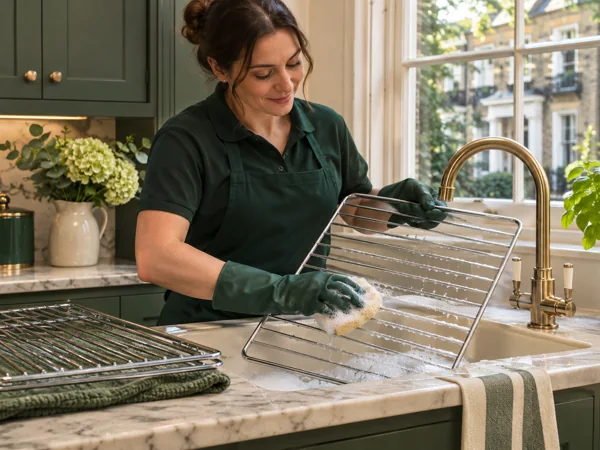
Some shelf rails lift out according to the maker’s instructions, and others have fasteners or a construction that needs closer assessment. Point out a part that makes a noise when pulled across or a tray that is uneven as it moves. Keep the components in place for the technician to check if you are unsure. Suitable pieces that can safely be removed may be soaked in a dip tank. Discussion of coatings, clearances and the condition of the fittings helps identify which pieces can be treated.
Clear loose pans and utensils away first and leave a clean working surface by the cooker. If you have more than one shelf size, group any empty loose pieces according to the appliance they belong to. Let us know if a part was taken out earlier and you would like it considered. Use the quote to confirm which parts are under discussion. Ask about the individual item if you have concerns about its condition or protective finish, since accessories in the same cavity can have different care guidance.
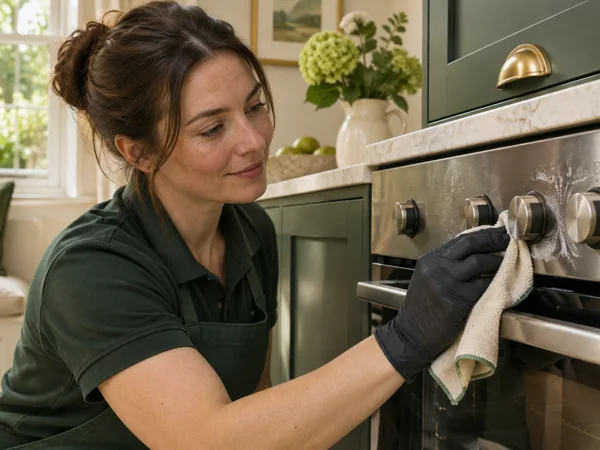
What to explain about the mark
| Visible clue | Before the visit | Discuss on inspection |
|---|---|---|
| Grease spread | Cavity position and photos | Which areas are accessible |
| Clouded glass | Side or angle showing the mark | Potential access to the affected face |
| Older colour patch | Approximate age and treatment history | Whether a visible change may remain |
Describe glass concerns without handling the pane
A line of dried drops may show up on the door when the kitchen window is behind it. Observe how the line looks from inside and from the closed position once the oven has cooled. Mention if it appears behind a reflection or stays visible after the readily reachable face was wiped. Access to glass between panes varies with model and with the condition of the door. Tell us about any edge damage or trim that has previously shifted, so potential access can be discussed during inspection.
Avoid pulling a panel or lifting the door to identify the location of a mark. An image from the side and another from the front can explain what you see without touching the fittings. If you found a door diagram in the handbook, save it for the technician alongside the appliance reference. An inspection can establish what is accessible and how visible film relates to the surface. Discuss that part before agreeing extra work around the frame. Light and angle can make a permanent concern look like something nearer the surface.
- Show the mark from both viewpoints if practical.
- Report glass or trim concerns beforehand.
- Supply the door diagram when the manual gives one.
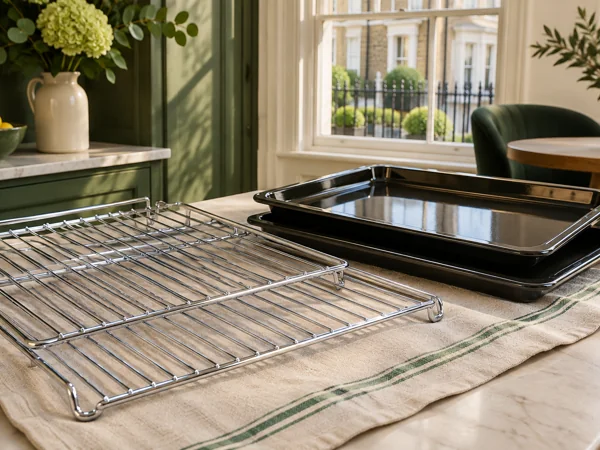
Give a useful arrival note for Blackheath Village
National Rail lists Blackheath station on Tranquil Vale in SE3. If the station helps place your home on an arrival note, use it as an orientation point and include your complete postal address and the required entrance. In a building with separate approaches, say which side the residential door faces and how to recognise the bell or gate. A visitor may otherwise see the correct building name but take a path that leads to another property or an entrance that is kept locked.
Tell us who can open the entrance and how they will meet the technician. If the most direct route to the kitchen starts below pavement level, include the number of steps and describe any gate or turn at the bottom. If the building uses visitor access controls or has a loading arrangement you have checked, give the exact steps from arrival to the kitchen. The aim is for the person carrying equipment to know where to go without relying on directions from a different door.
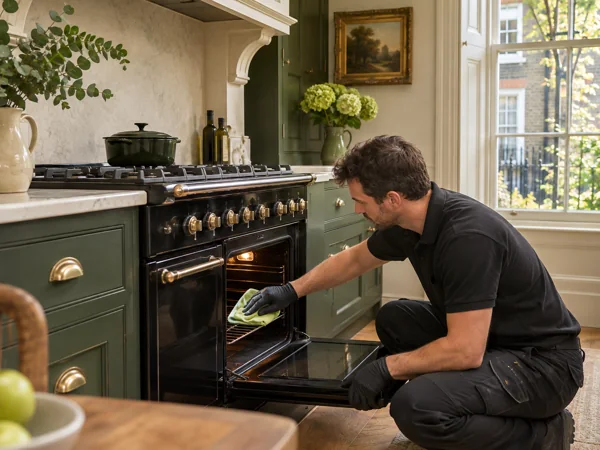
Put optional extractor or hob work on its own line
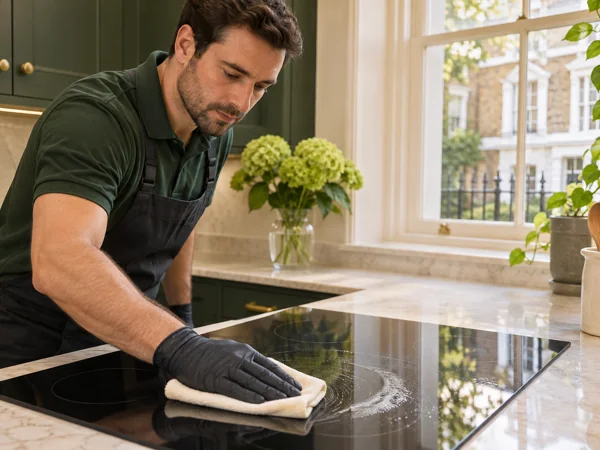
A hob may be fitted in the top of the cooker or set into a separate counter. Specify the surface and the particular areas you want to discuss. One request might be for removable pan supports and another for marks around a flat glass cooking zone. If a surround is made of a different material, record it as a separate surface. A clear image of the arrangement can show how close the wall or splashback comes to the hob and identify any relevant difficulty with the working space.
With an extractor, say whether it is hidden inside a cupboard, projects from the wall or sits over an island. Estimate how high the filter is and describe any details about its construction that you know. Discuss reachable surfaces on the cover and the filter individually. Ask to see the items listed alongside the oven so you can check that the enquiry covers the parts you intended. Have the installation instructions handy if a finished surround or integrated fitting affects which parts can safely come away.
- Separate the hob and any splashback request.
- Record the extractor’s position and filter type.
- Confirm the agreed items in writing.
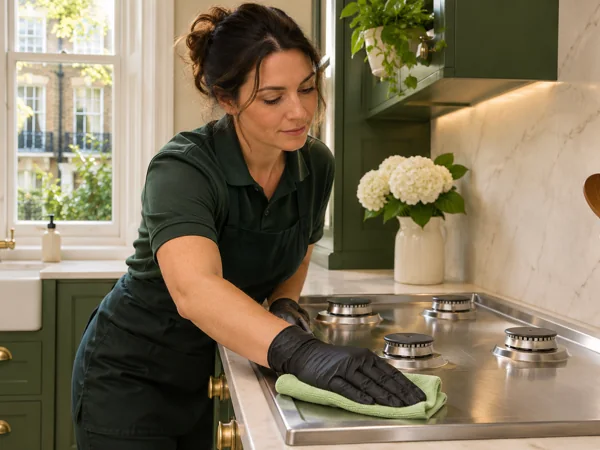
Plan the route and working space
| Access detail | What to confirm | Why it matters |
|---|---|---|
| Village address | Complete postcode and house or flat number | Identifies the exact property |
| Separate entrance | Gate sign and route to the kitchen | Directs the technician with equipment |
| Clear counter | Space next to the open oven | Allows room for safely handled parts |
Prepare for the inspection and end-of-visit checks
Complete the postcode form to begin the quote conversation. Share the specifics of any coated lining, hard-to-move part or door mark that is important to you. For the visit itself, leave the oven cool, move loose cookware and clear a stable surface next to the cooker. Keep children and pets outside the work area. If family members need to use a nearby route or counter, work out how they can do so without passing through the immediate area while the appliance is being handled.
At the end of the work, ask which parts were cleaned, which finishes needed different handling and when you can use the oven again. If there is a point you want to note for future enquiries, record the appliance and exact compartment so it can be found again. Make sure anyone cooking later hears the return-to-use advice. Retain the relevant handbook pages alongside the accessory details if you are uncertain which shelf belongs in another cavity. When someone else is opening up, share the same information with that person.
Get an oven cleaning quote in Blackheath
Request a quote with the oven type, number of cavities and any extra appliances.
Get a QuoteOther Cleaning Services in Blackheath
Local references · National Rail, Blackheath station
Blackheath oven cleaning questions
Can I request the lower oven and leave the top unit out?
Yes. Identify the intended cavity and give the lower oven’s model or controls where possible.
What if the liner has a different appearance behind the rack?
Show that area and provide any maker’s instructions. The technician can assess the finish before choosing what to do.
Do removable shelves all go through the same treatment?
Suitable parts can be soaked. The coating, construction and condition determine how each can be handled.
Will a scratch in one glass pane affect the visit?
Point out the scratch and record any other damage when you enquire so the glass can be checked on arrival.
How should I describe an entrance to the rear of a property?
Send the postal address with the street or passage name, distinctive door details and any steps to reach it.
Can you discuss a metal hood over the range?
Yes. Specify its height, the finish and filter type if known, and ask for the agreed extractor work on the quote.